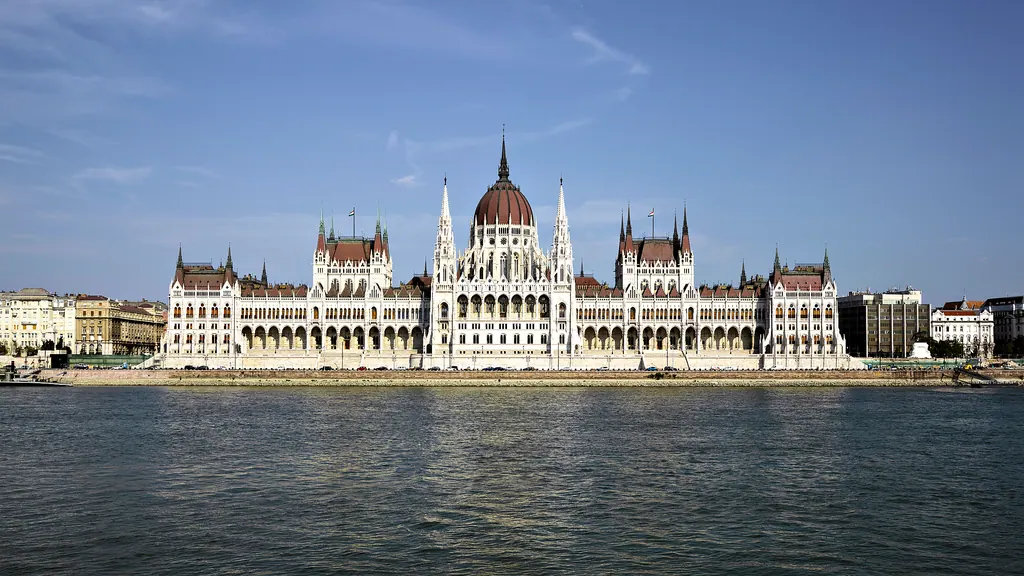
Budapest is two historic cities facing each other across the Danube. Buda rises in hills, castle walls, and lookouts. Pest spreads out in avenues, markets, and the great Gothic Revival Parliament on the riverbank. That split is the key to a first visit: you are never far from water, and you can see one side clearly from the other.
The list below is not a complete inventory of Hungary's capital. It is a set of ten places and experiences that earn their time on a first trip, with enough practical detail to help you book the ones that sell out.
The ten that are worth planning around
1. Tour the Hungarian Parliament
The Parliament Building (Országház) is the postcard of Pest, a long stretch of spires and a central dome on Kossuth Square. The view from across the river, or from an evening river walk, is free. Going inside is not, and it is one of the visits you should book before you fly.
The official tour lasts about 45 minutes and is offered with a guide or an audioguide, including in English. From January 1, 2026, a standard ticket for non-EEA visitors (that includes U.S. citizens) is 14,000 forint (about $44). EEA visitors pay 7,000 forint (about $22). Children under 6 enter free. Buy in advance on Jegymester.hu, which the Office of the National Assembly names as the official vendor. Same-day tickets at the Visitor Center are limited, and large bags are not allowed through security. Photography is forbidden in the Dome Hall, where the Holy Crown is displayed.
2. Spend a morning in the Buda Castle District
The Castle District on the Buda side is part of a UNESCO World Heritage area that also includes the Danube banks and Andrássy Avenue. You come for the terraces, the views back toward Pest, and a cluster of museums and historic buildings rather than a single interior.
Walk the streets instead of treating the palace as a quick photo stop. The changing light on the river is the reason to be here in the morning or late afternoon, when the paths are easier and the views are clearer.
3. Climb through Fisherman's Bastion
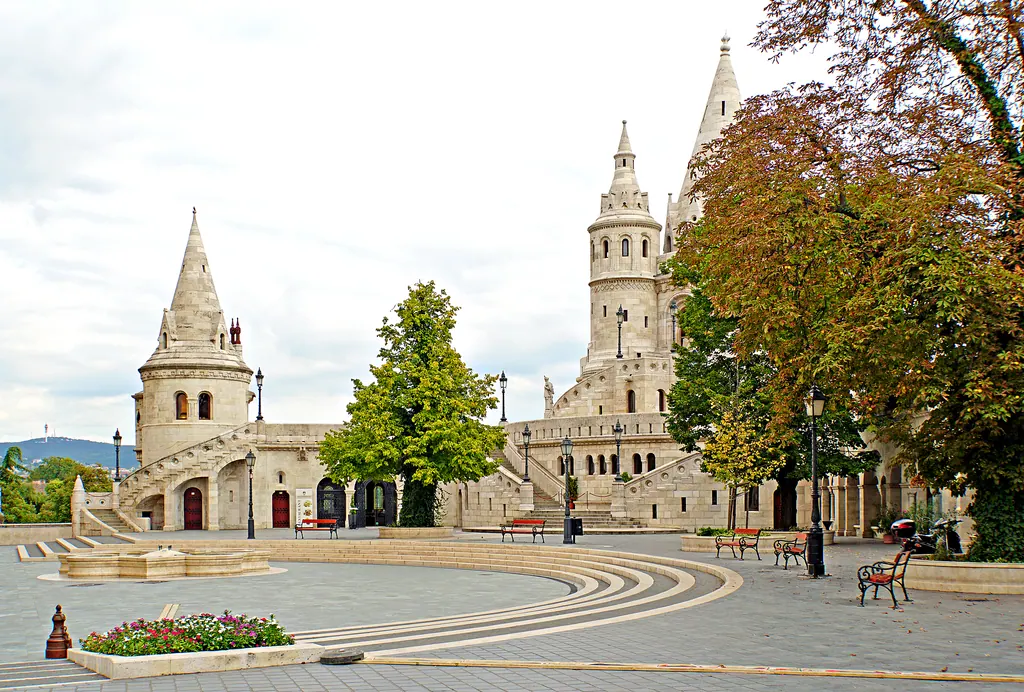
Just north of the palace, Fisherman's Bastion is a white stone lookout of turrets and arcades, built at the turn of the 20th century. It is one of the best places to look back at Parliament and the Pest riverfront. Parts of the terraces have been free to walk; some upper towers have charged a separate ticket in recent years, so check the posted price on the day.
Matthias Church stands beside it, with a patterned tile roof that is easy to spot from the Pest side. Together they make a natural pair: church interior, then the bastion viewpoints.
4. Soak in a thermal bath
Budapest sits on thermal springs, and a bath visit is not an optional extra. Széchenyi Thermal Bath, in a yellow palatial complex inside City Park, is the one most first-time visitors choose: outdoor pools even on cool days, indoor thermal pools, and a straightforward locker ticket.
In 2026 the official daily ticket with a locker was 13,200 forint (about $41) Monday through Thursday, 14,800 forint (about $46) on Fridays and weekends, and 15,800 forint (about $50) on holidays and in peak season. Earlier "Good morning" tickets cost less if you enter by 9 a.m. Buy on the official Széchenyi site if you want to skip the longest line. Bring a swimsuit; the baths sell them if you forget, but rental service is not offered.
Gellért and Rudas are the usual alternatives if you prefer a different building or a more local evening atmosphere. All of them have rules about showering before you enter the water. Follow the posted signs rather than improvising.
5. Walk the Danube, the Chain Bridge and the Shoes
The river is the city's main street. The Széchenyi Chain Bridge, first opened in 1849, is the historic link between the two sides and a simple, satisfying walk. From the Pest embankment you can look back at the castle; from Buda you face Parliament.
A short walk south of the Parliament along the Pest quay brings you to the Shoes on the Danube Bank, a memorial of iron shoes that marks the Jews who were murdered here in 1944-1945. It is not a long stop, and it should not be treated as a photo backdrop. It belongs on a first visit because it tells a part of the city's 20th-century history that the grand buildings do not.
6. Browse the Great Market Hall
The Great Market Hall (Nagyvásárcsarnok) at the Pest end of Liberty Bridge is a 19th-century market with a tiled roof and stall after stall of produce, paprika, cured meats, and bakery goods on the ground floor. The upper level leans toward souvenirs and sit-down snacks.
It is a stable, named place rather than a restaurant tip: you can shop for paprika and baked goods without needing a reservation. Go in the morning if you want the market at its liveliest and before tour groups fill the aisles. Cards are widely accepted in Budapest, but a little cash in forint still helps at smaller stalls.
7. Step inside St. Stephen's Basilica
Pest's largest church is a landmark in its own right, with a dome you can climb (ticketed) for a wide view over the city. The interior holds the Holy Right, a relic of King Saint Stephen. Even if you skip the dome, the square outside is a useful orientation point between the river and Andrássy Avenue.
The basilica is an easy add on a Pest walking day: Parliament or the river in the morning, the church and nearby streets in the afternoon.
8. Cross Heroes' Square into City Park
Heroes' Square, at the end of Andrássy Avenue, is a monumental space framed by the Millennial Memorial and two art museums. Behind it, City Park (Városliget) holds Széchenyi Bath, seasonal outdoor activities, and enough lawn and tree cover to sit down.
The yellow M1 metro line, the Millennium Underground, runs under Andrássy Avenue to this part of town. It is a practical ride and part of the same UNESCO listing as the avenue itself. If you have already been to a grand city break capital such as Washington, D.C., the combination of a formal square and a large public park will feel familiar, even if the architecture is not.
9. Visit the Jewish Quarter and the Dohány Street Synagogue
The Dohány Street Synagogue is generally described as the largest synagogue in Europe, a Moorish Revival complex with a museum and memorial courtyard. It is an essential stop for the history of Jewish Budapest, which includes a thriving 19th-century community and the devastation of the Holocaust.
The surrounding streets of District VII, often called the Jewish Quarter, are also where many of the city's ruin pubs opened in unused buildings. Szimpla Kert is the best-known named example. Go for an hour in the evening if that atmosphere appeals; it is not required to understand the neighborhood.
10. Slow down on Margaret Island
Margaret Island sits in the Danube between the two sides of the city, a long park with gardens, a musical fountain, running paths, and very little traffic. It is the place to go when you have had enough interiors.
You can walk or rent a bike and see the water on both sides. It is also a useful breather between the Castle District and Pest, rather than a sight you have to photograph from every angle.
How to fit them into two or three days
A simple pattern works better than zigzagging the river all day. Give one morning to Buda (Castle District, Matthias Church, Fisherman's Bastion) and the opposite morning to Pest's riverfront (Parliament tour, the quay, the Chain Bridge). Put Széchenyi with Heroes' Square and City Park on the same outing, since they share a corner of town. Save the Great Market Hall for a morning when you want to combine it with the nearby riverside, and leave Margaret Island for the afternoon you need a pause.
Budapest is walkable by district and well served by metro, trams, and buses. Taxis and ride-hailing are easy to find; agree on the app or a metered ride. U.S. citizens can visit Hungary visa-free for short stays (up to 90 days in any 180-day period in the Schengen Area). As of November 8, 2026, the European Union's official ETIAS site stated that the travel authorization was not yet in operation and that no applications were being collected. Check travel-europe.europa.eu before you fly, because the launch date can be announced with a few months' notice. Your passport should be valid at least three months beyond your planned departure from the Schengen Area.
The U.S. Department of State listed Hungary at Level 1, Exercise Normal Precautions, as of April 15, 2026. Everyday manners around money are covered in our guide to tipping in Europe. For more destinations on the same continent, start at our Europe page.
If you have three full days, you will not see everything, and you do not need to. Book Parliament and a bath first, then let the river tell you which side to walk each morning.
Frequently asked questions
Do Americans need a visa for Hungary?
U.S. citizens can visit Hungary visa-free for short stays of up to 90 days in a 180-day period in the Schengen Area. As of November 8, 2026, ETIAS was not yet in operation.
How much is a tour of the Hungarian Parliament?
From January 1, 2026, a standard ticket for non-EEA visitors is 14,000 forint (about $44). Book on Jegymester.hu.
How much does Széchenyi Bath cost?
In 2026 a daily locker ticket was 13,200 forint (about $41) Monday through Thursday and 14,800 forint (about $46) on Fridays and weekends.
Is Budapest a walkable city?
Districts are walkable, and the two sides are linked by bridges and a strong transit network of metro lines, trams, and buses.
When is a good time to visit Budapest?
Late spring and early autumn are often pleasant for walking. Summer is warmer and busier. Winter is colder and brings Christmas markets.