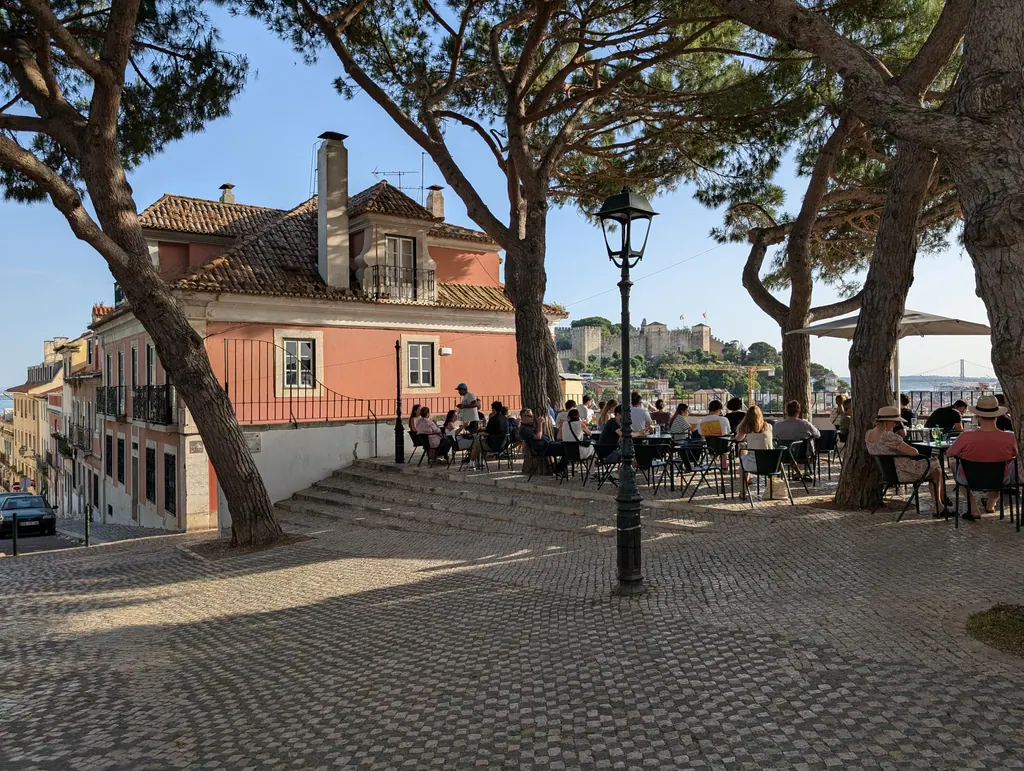
The check arrives at a sidewalk table in Lisbon, Rome or Vienna, and the familiar American math kicks in: 18 percent, maybe 20 for a friendly server. Then you notice there is no tip line on the slip, the waiter is already waiting with a card reader in hand, and the couple at the next table just left a couple of coins and walked off.
Tipping is one of the small things that makes Americans feel most unsure in Europe. The rules are not written down anywhere, they shift from country to country, and a few charges on European bills look like tips without being tips. Below we go through how it works in restaurants, cafes, bars, taxis and hotels, what the extra lines on a bill actually mean, and how much people really leave in 26 countries.
Why don't Europeans tip like Americans?
The short version is wages. In the United States, many servers earn a low base wage and depend on tips to make a living. In most of Europe, restaurant staff are paid a regular wage, and the price on the menu is meant to cover the cost of service. In several countries this is built into the system: in France, menu prices include service by law, and the words "service compris" mean exactly that. In Switzerland, service has been included in hospitality prices since 1974 through the industry's collective labor agreement, and in Denmark, Iceland and Finland service is simply part of the price.
That does not mean Europeans never tip. They do, but a tip is a small thank you rather than part of the server's pay. Travel writer Rick Steves sums up the common view well: in many countries 5 percent is adequate and 10 percent is a nice tip, while 15 or 20 percent is unnecessary. Many locals just round up or leave the change.
So the biggest risk for an American is not under-tipping. It is paying twice, by adding a full tip on top of a service charge that is already on the bill.
How much should you tip, country by country?
The table shows what is normal for a sit-down meal with table service. "Round up" means leaving the coins or bumping the total to a round number, for example 28 euros to 30. These are customs, not rules, and they apply when no service charge is already on the bill.
| Country | Restaurants | Cafes and bars | Taxis | Watch for |
|---|---|---|---|---|
| United Kingdom | 10-12.5% if no service charge | Nothing at the bar in pubs | Round up or about 10% | Discretionary service charge of around 12.5% |
| Ireland | About 10% | Nothing per pint | Round up | Service charge on bills, often for groups |
| France | Round up or a few euros | Leave small change | Round up | Service is included by law |
| Italy | Round up, 5-10% for great service | Leave small change | Round up | Coperto (cover charge) and servizio |
| Spain | Round up or 5-10% | Leave small change | Round up | Tipping is relaxed, rarely expected |
| Portugal | Round up or 5-10% | Leave small change | Round up | Unordered starters cost extra |
| Greece | Round up or 5-10% | Round up | Round up | Tip in cash |
| Malta | 5-10% if service not included | Leave small change | Round up | Check for service on the bill |
| Turkey | About 5-10% | Round up | Round up | Service and cover charges banned since 2026 |
| Germany | 5-10%, said out loud when paying | Round up | Round up | Don't leave coins on the table |
| Austria | 5-10%, said out loud when paying | Round up | Round up | Same habit as Germany |
| Switzerland | Round up | Round up | Round up | Service is included in prices |
| Netherlands | Round up or 5-10% | Leave small change | Round up | Service is included |
| Belgium | Round up | Leave small change | Round up | Service is included |
| Luxembourg | Round up or 5-10% | Round up | Round up | Service is included |
| Denmark | Not expected, round up if you like | Nothing | Nothing | Service is included |
| Sweden | Round up or 5-10% | Nothing | Round up | Card terminals may ask |
| Norway | Round up or 5-10% | Nothing | Round up | Service is included |
| Finland | Not expected | Nothing | Nothing | Service is included |
| Iceland | Not expected | Nothing | Nothing | Service is included |
| Estonia | Round up or about 10% | Leave small change | Round up | Check for a service line |
| Czech Republic | About 10% | Round up | Round up | Terminals that ask for a tip |
| Hungary | 10-15% if no service charge | Round up | Round up | Service charge often added |
| Romania | About 10% | Round up | Round up | Tipping is expected here |
| Croatia | Round up or about 10% | Leave small change | Round up | Tip in cash |
| Poland | About 10% | Round up | Round up | "Dziękuję" can mean keep the change |
Two broad patterns stand out. The Nordic countries, Switzerland and the Benelux treat a tip as optional pocket change. Central and Eastern Europe, especially the Czech Republic, Hungary, Romania and Poland, are closer to a firm 10 percent norm in sit-down restaurants, even though tipping is still voluntary there too.
What is the coperto on an Italian bill?
The line that confuses American travelers most in Italy is "coperto," sometimes written "pane e coperto." It is a cover charge per person, usually a few euros, that pays for the table setting and bread. It is not a tip and does not go to your server, and it is legal as long as it is shown on the menu.
In Lazio, the region around Rome, a 2006 regional law banned the coperto. Many Roman restaurants charge for bread ("pane") instead, which is allowed when it is on the menu. You can usually decline the bread basket if you don't want it.
The second line to look for is "servizio," a service charge that some places add, especially in tourist areas such as central Venice and Florence. If it is there, the service is paid for. With only a coperto on the bill, Italians typically round up or leave a euro or two per person if they were happy. Nobody expects 20 percent.
Portugal has its own version of this surprise. Bread, olives, cheese or small plates that appear on the table without being ordered are not free. If you eat them, they go on the bill, and if you don't want them, you can send them back untouched.
Service charges: when the tip is already on the bill
A service charge is a percentage added to the bill by the restaurant, and it is the main reason to read your check before reaching for your wallet.
United Kingdom. In London and other big cities, many restaurants add a "discretionary" or "optional" service charge, most often 12.5 percent. Since October 1, 2024, the Employment (Allocation of Tips) Act has required employers in England, Scotland and Wales to pass all tips, gratuities and service charges to their workers without deductions other than tax. The UK government's code of practice treats a service charge as voluntary only when it is made clear to the customer that there is no obligation to pay it. In practice, that means you can ask to have it removed if the service was poor, and you should not tip on top of it. Some London restaurants have swapped the service charge for an "admin fee," which is not covered by the same rules, so read the wording. In pubs, where you order at the bar, nobody tips per drink. That applies across England, Scotland, Wales and Northern Ireland, from Edinburgh to London.
Ireland. Dublin restaurants often add a service charge for larger groups, and some add it for every table. If it is not there, about 10 percent is the normal thank you for good table service. Since a 2022 law, Irish businesses must also show how they share out tips and service charges.
Hungary. Many Budapest restaurants add a service charge, "szervizdíj," usually between 10 and 15 percent. Hungary's competition authority has reminded diners that this is a fee set by the business, separate from a voluntary tip ("borravaló"). If it is on the bill, you are done.
Turkey. Since a regulation from the Ministry of Trade took effect on January 30, 2026, restaurants and cafes in Turkey may no longer charge service, cover ("kuver") or table fees. Voluntary tips are still allowed but cannot be made mandatory. Turkish prices change fast, so it is easier to think in percentages: around 5-10 percent in a sit-down restaurant, and nothing at simple lunch places.
The card terminal that asks for a tip
The handheld card reader is the new face of tipping in Europe. In cities with a lot of visitors, from Prague and Lisbon to Amsterdam and London, more terminals now pop up a screen with preset percentages, often 10, 15 and 20 percent. This can make a non-tipping culture feel like an American one, but the numbers on the screen are a software setting, not a local norm.
A few rules of thumb help:
- Choose "no tip" or a custom amount if the suggested percentages are higher than what locals leave. Nobody will be offended.
- Say the total before you pay. In Germany, Austria, the Czech Republic and much of Central Europe, the usual way to tip is to tell the server the total you want to pay, for example "35, please" on a bill of 32 euros. This works for cash and card.
- Cash reaches the server most reliably. Not every restaurant passes card tips on in full, so a few coins or a small note handed to your server is the surest way to thank them.
- Pay in the local currency. If the terminal offers to charge you in dollars, say no. The conversion rate is almost always worse than your card's.
In Germany and Austria, leaving coins on the table and walking away is seen as a little rude. Hand the money over instead.
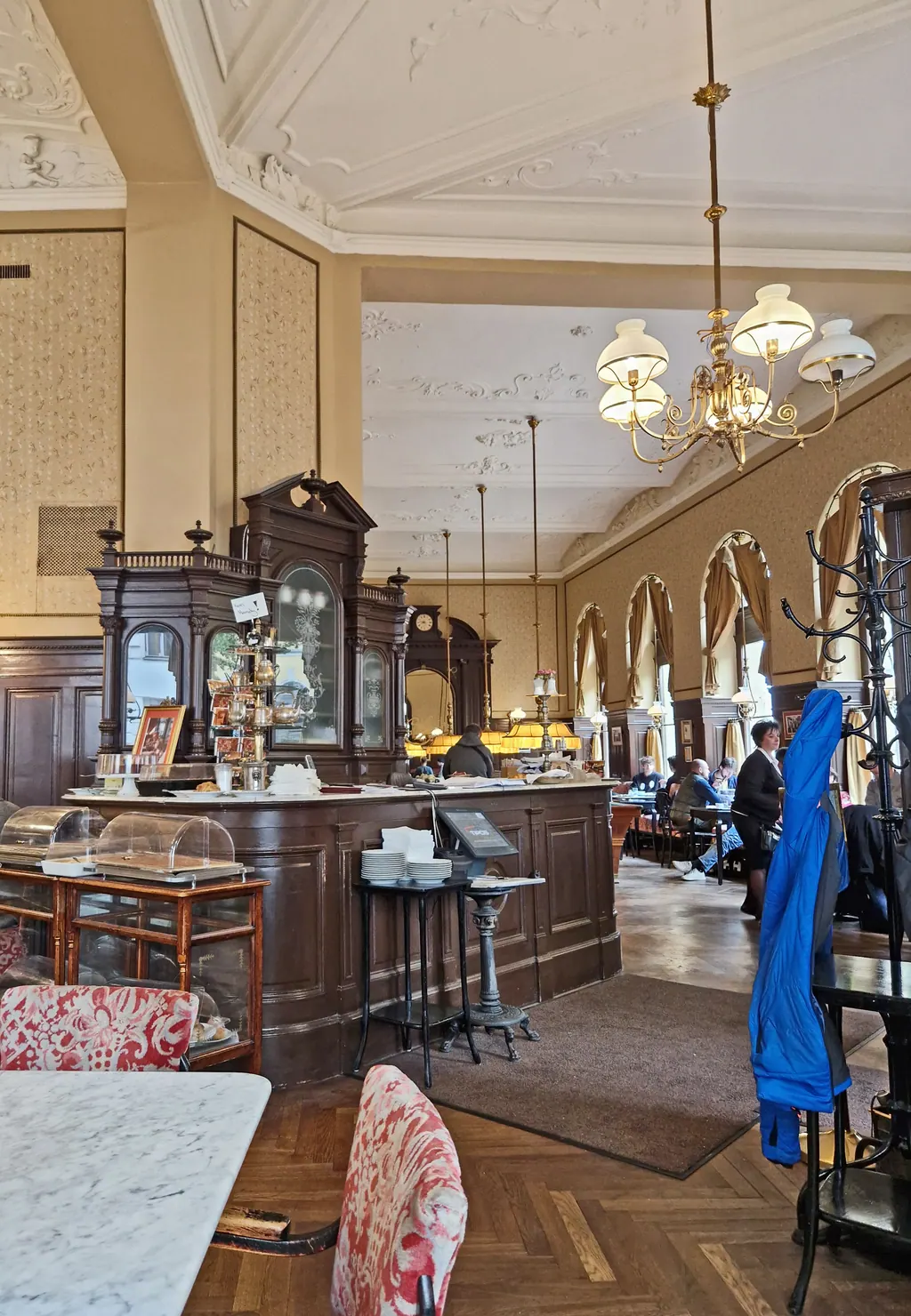
Tipping in cafes, bars and Vienna's coffee houses
At a counter, tipping is rare almost everywhere. An espresso at a bar in Madrid or Rome, a pint in a Dublin pub or a coffee to go in Copenhagen does not need a tip. A tip jar by the register is optional.
Table service in a cafe is different. Most people leave small change or round up: a coffee for 3.60 euros (about $4) becomes 4 euros. The grand coffee houses of Vienna, a tradition that is listed as intangible cultural heritage in Austria, follow the same Germanic rule as restaurants: round up and tell the waiter the total when you pay.
Taxis, hotels and guides
Outside restaurants, tipping in Europe gets even simpler.
Taxis. Rounding up is the norm almost everywhere. A fare of 13 euros becomes 14, and a long airport ride of 46 euros might become 50 (about $58). If the driver helps with heavy luggage, a little more is a nice touch. In Copenhagen, Helsinki or Reykjavik, nobody expects anything at all. With ride-hailing apps, a tip in the app is optional.
Hotels. Porters usually get 1-2 euros (about $1-2) per bag. Leaving a few euros for housekeeping at the end of a stay is kind but optional, and much less common than in the United States. A concierge who books a hard-to-get table might get 5-10 euros (about $6-12). In the UK, the equivalent amounts are in pounds: about £1-2 (about $1-3) per bag.
Tours and guides. If you paid for a tour in advance, a tip is optional. For group walking tours, a few euros per person is generous. "Free" walking tours, common in cities such as Prague, Amsterdam, Madrid and Athens, are different: the guides earn their income from what you give at the end, so plan to pay what the tour was worth to you.
Our rules of thumb for Americans in Europe
If you remember only a handful of things, make it these:
- Read the bill first. Look for "service compris," "servizio," "szervizdíj," "service charge" or a percentage line. If it is there, don't tip again.
- Think 5-10 percent, not 20. For a good meal with table service and no service charge, 5-10 percent is generous in most countries. In the Czech Republic, Hungary, Romania and Poland, aim for about 10 percent.
- Rounding up is always fine. From Iceland to Greece, rounding up to a convenient number is a polite tip in a restaurant, a cafe or a taxi.
- Don't tip at the counter. Pubs, coffee bars and takeaway counters don't expect it.
- Ignore the preset percentages. Pick "no tip" or a custom amount on card terminals when the screen asks for more than locals pay.
- Carry some coins. A few 1 and 2 euro coins, or small local notes, make it easy to leave a real tip in cash.
For more practical advice on money abroad, see our travel tips.
Frequently asked questions
Is it rude to not tip in Europe?
No. In most European countries service is paid for through wages and menu prices, so not tipping is not seen as rude. Rounding up or leaving small change for good service is a friendly gesture, and in countries such as the Czech Republic, Hungary and Romania about 10 percent is customary in sit-down restaurants.
Should I tip in euros or dollars in Europe?
Always tip in the local currency. Dollar bills are hard for staff to exchange and often lose value in the process. In euro countries, a few 1 and 2 euro coins are ideal for small tips.
Can I add a tip when paying by credit card in Europe?
Often, yes. Many card terminals now offer a tip screen, and where they don't, you can tell the server the total you want to pay before they run the card. Cash still reaches the server most reliably.
Do you tip bartenders in European pubs and bars?
Generally not when you order at the bar. In British and Irish pubs nobody tips per drink. With table service in a bar, rounding up the bill is common.
Do I need to tip a tour guide in Europe?
For tours you paid for in advance, a tip is optional. For so-called free walking tours, the guides live on what guests give at the end, so you should pay what you think the tour was worth.
- Rick Steves: Tipping in Europe
- GOV.UK: Code of practice on fair and transparent distribution of tips
- legislation.gov.uk: Employment (Allocation of Tips) Act 2023
- Department of Enterprise (Ireland): Payment of Wages (Amendment) (Tips and Gratuities) Act 2022
- Republic of Türkiye Ministry of Trade: Amendment to the Price Tag Regulation
- The Local Italy: Should you really get mad about Italy's table charge?
- UBS: Tipping in Switzerland, between tradition and law