Some of Europe's best meals never involve a reservation. They happen under iron-and-glass roofs, beside fish stalls, or at a counter where the cook plates whatever came in that morning. Food markets are where a city shows its everyday appetite: fruit stacked for locals, cheese cut to order, and a stool free if you time it right.
This is a reading list of markets worth building a morning or a long lunch around, from Barcelona to Lisbon, Florence and London. It is not a ranking of every hall on the continent. It is a set of places that consistently reward a hungry traveler.
La Boqueria, Barcelona
La Boqueria opens off La Rambla and has been a market site for centuries, with the current Modernista hall dating to the early twentieth century. Walk past the first tourist-facing fruit cups and keep going: the better seafood, jamón and produce stalls sit deeper in the aisle. Small bar counters inside the market serve tapas while the hall works around you.
Go early on a weekday if you want room to breathe. Sundays are closed. Prices near the entrance skew higher; a few rows in, you are closer to what neighborhood shoppers pay. Pair the visit with a later walk through the Gothic Quarter rather than eating every sample in sight.
Borough Market, London
Borough Market sits by London Bridge and the Thames, part open to the sky and part under railway arches. It is London's showcase for British cheese, bread, oysters and cured meat, mixed with international stalls. It is also busy and not cheap. Thursday mornings are calmer than Saturdays.
Eat standing up: a half dozen oysters, a grilled sandwich, a wedge of cheese for later on the train. The market is easy to combine with the South Bank walk or a short hop to the Tate Modern. If you only have one food-market morning in London, this is still the one most visitors should choose.
Mercato Centrale, Florence
Florence's central market splits into two moods. The ground floor remains a working produce, butcher and deli market. Upstairs, a food hall serves pasta, pizza, panini and Tuscan plates into the evening. That upstairs level is a practical lunch stop after a morning with the Duomo or Uffizi, when restaurant lines look long and you want something local without a dress code.
The ground floor winds down by mid afternoon; the upstairs keeps later hours. Come once for groceries and porchetta, then again upstairs if you want a seated plate of ribollita or fresh pasta.
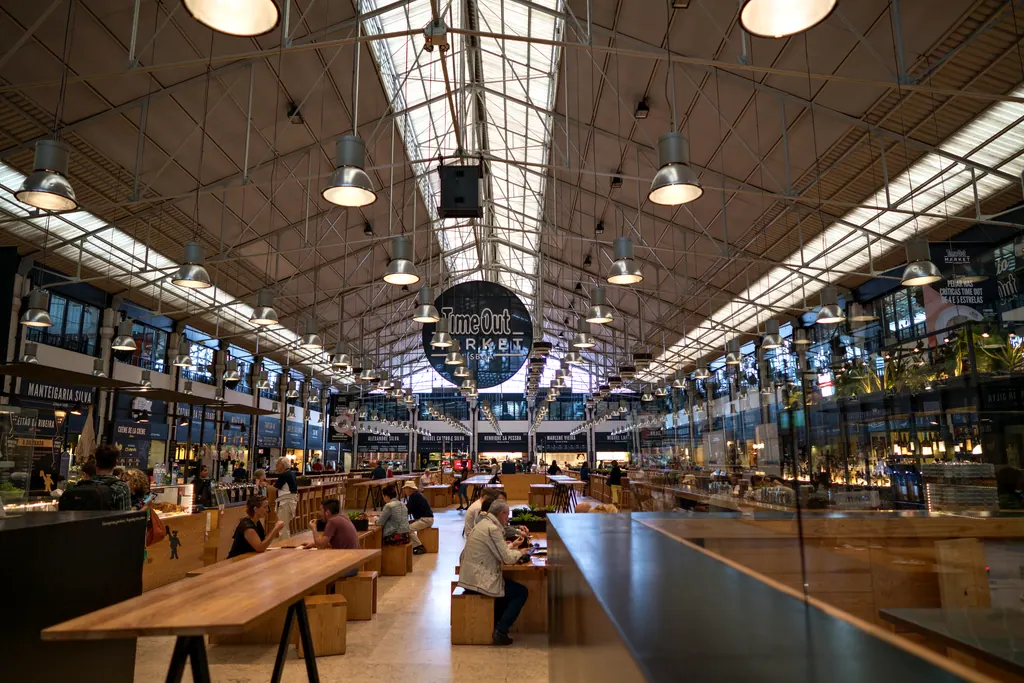
Time Out Market, Lisbon
Inside the old Mercado da Ribeira at Cais do Sodré, Lisbon runs a hybrid: traditional stalls on one side, and a curated chef food hall (Time Out Market) on the other. It is louder and more designed than a classic neighborhood market, and individual plates often run about 15-25 euros (about $16-27 in 2026). The tradeoff is range. You can taste several Portuguese kitchens in one visit without locking into a single restaurant.
Late lunch beats peak dinner for seating. Pair it with a walk through Bairro Alto or a tram ride afterward. If you want a quieter traditional hall, ask locally about neighborhood markets beyond the Time Out brand.
How to use a European food market well
- Arrive hungry but not starving. Sample strategically; save one sit-down counter for a real plate.
- Watch where locals queue. A short line at a fish or cheese stall beats a stacked fruit display at the door.
- Carry small cash and a card. Many stalls take cards in 2026, but tiny producers may still prefer cash.
- Ask before photographing people at work. Produce displays are fair game; faces behind the counter deserve a nod.
- Mind the closing rhythm. Traditional floors often shut mid afternoon; food halls upstairs may run into the evening.
Markets versus food halls
A traditional market sells ingredients first and meals second. A food hall flips that: chefs and counters are the point, with groceries as a side. Europe now mixes both inside the same buildings, which is why Mercato Centrale and Mercado da Ribeira feel like two visits in one. Neither format is "more authentic" by default. The question is what you came for: a picnic assembled from stalls, or a plated lunch without a reservation war.
A note on customs and what you can bring home
Vacuum-sealed cheese, chocolate and shelf-stable goods are the easy wins. Fresh meat, plants and some soft cheeses can cause trouble at U.S. Customs and Border Protection on the way home. If you buy specialty food to pack, keep receipts and declare what you are carrying. A market picnic eaten the same day is simpler than a suitcase full of surprises at immigration.
Five more markets if you have extra days
- Mercado de San Miguel, Madrid: smaller and more tapas-oriented than Boqueria, handy between Plaza Mayor and a palace morning.
- Markthalle Neun, Berlin: evening street-food energy more than a morning grocery run.
- Nagytétény and the great market hall in Budapest: paprika, pickles and river-fish snacks under a historic roof.
- Mercato di Porta Palazzo, Turin: one of Italy's largest open markets when you want sprawl over polish.
- Mathallen, Oslo: a Nordic food hall for seafood and New Nordic snacks when your itinerary swings north.
You do not need all of them. One great market morning per city is enough to change how you remember the place.
Where this fits on a trip
If you are building a city-break week, put one market morning on the calendar the way you would put a museum. It anchors you in the city's ingredients and costs less than a tasting menu. For more on eating well on the road, see our Food & Drink theme and city breaks. Europe's hotel breakfast buffets will still be there afterward. The markets are where the day starts with better stories.
Frequently asked questions
What is the most famous food market in Europe?
La Boqueria in Barcelona is among the best known, with a long history on La Rambla and a Modernista hall packed with produce, seafood and tapas counters.
When should you visit European food markets?
Go in the morning on a weekday when possible. Traditional floors often close mid afternoon, while some upstairs food halls stay open for dinner.
Are European food halls the same as food markets?
Not exactly. Traditional markets sell ingredients first. Food halls focus on chef counters and plated meals. Many buildings now combine both.
Can you bring market food home to the United States?
Shelf-stable goods are easiest. Fresh meat, plants and some cheeses can be restricted. Declare food at U.S. Customs and check CBP rules before you pack.