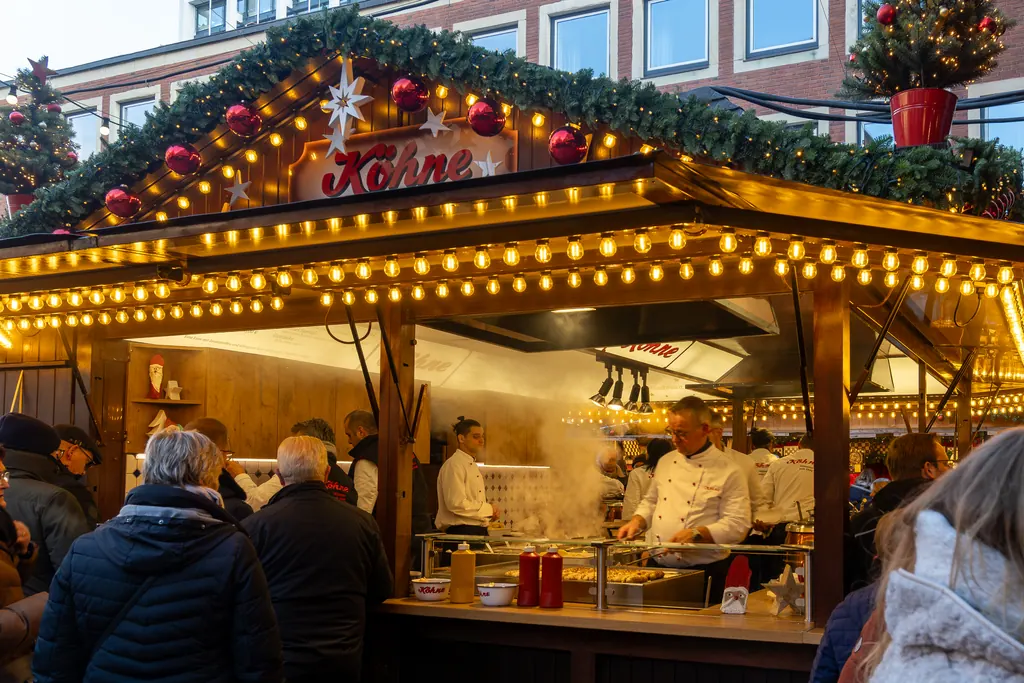
Follow your nose. At a German Christmas market the smell arrives before the lights do: cloves and orange peel from the wine kettles, charcoal smoke from the sausage grills, toasted sugar from the almond stands. Most visitors come for the wooden huts and the ornaments, then end up spending most of their time, and money, at the food stalls.
The choice can be overwhelming, and the signs are in German. This guide walks you through what to eat and drink at a German Christmas market, which specialties belong to which city, and how the mug deposit and other small customs work. Most big markets open in late November; Nuremberg's Christkindlesmarkt, for example, runs from November 27 to December 24, 2026.
What to Drink
Glühwein
Mulled red wine, heated with cinnamon, cloves, star anise and citrus, is the fuel of every market. Many stalls also sell white Glühwein and fruit versions made with blueberry or cherry wine. Ask for it mit Schuss if you want a shot of rum or amaretto added. At big city markets such as Nuremberg, expect to pay around 5 euros (about $6 in 2026) for a mug.
Feuerzangenbowle
The showpiece drink. A cone of sugar soaked in rum is set on fire over a kettle of hot wine, and the caramelized sugar drips into the punch. Some markets set up giant kettles just for it.
Eierpunsch and Kinderpunsch
Eierpunsch is a warm, thick eggnog-style drink made with egg liqueur and wine, often topped with whipped cream. Kinderpunsch is the alcohol-free fruit punch for children and drivers, and it is good enough that plenty of adults order it too.
What to Eat: The Savory Classics
Bratwurst
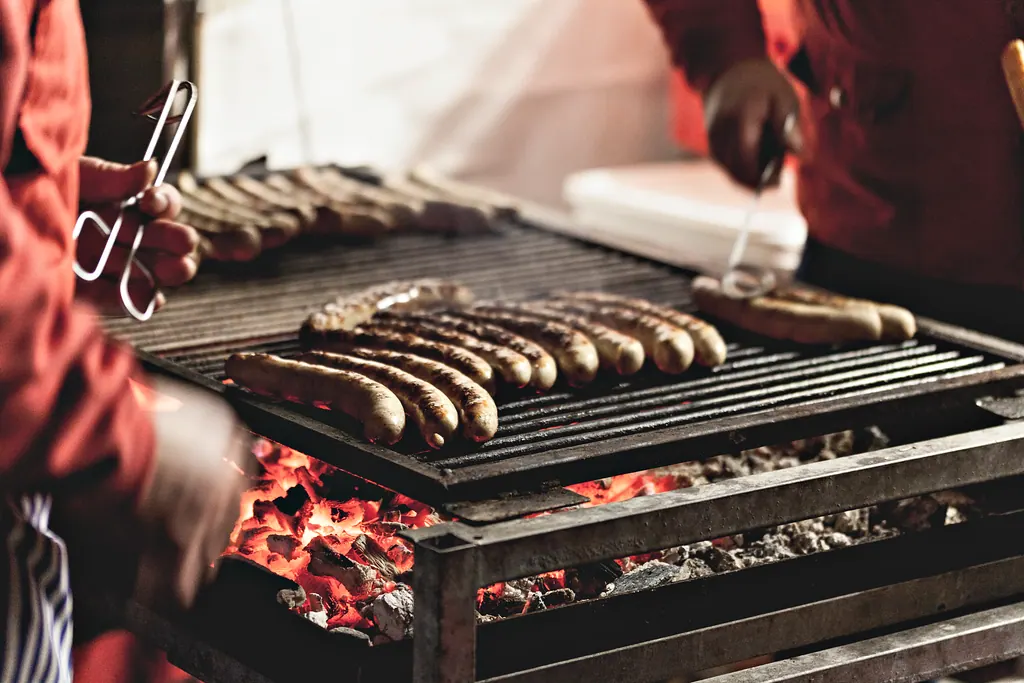
You will see grills everywhere, but the sausage changes with the region. The Thüringer Rostbratwurst is long, thin and seasoned with marjoram. In Nuremberg, look for Nürnberger Rostbratwürste: little finger-sized sausages, 7 to 9 cm (about 3 inches) long, protected by an EU geographical indication. The local order is "Drei im Weggla", three of them in a bread roll with mustard.
Currywurst
Berlin's contribution: sliced sausage under a ketchup and curry powder sauce, usually with fries or a roll. Every market in the capital has at least one stand.
Reibekuchen or Kartoffelpuffer
Crispy potato pancakes fried in oil, served with applesauce in the west of Germany and sometimes with garlic sauce or smoked salmon. The name changes by region, but the queue looks the same everywhere.
Champignons
Pan-fried mushrooms in garlic and herb sauce, served in a paper cup. It is one of the easiest vegetarian options at the market.
Flammkuchen
A thin, crisp flatbread from Alsace and the southwest, topped with crème fraîche, onions and bacon. Vegetarian versions without bacon are common.
Schupfnudeln
Finger-shaped potato noodles fried in a giant pan with sauerkraut and often bacon. Filling, cheap and very southern German.
Sweet Things to Try
Lebkuchen
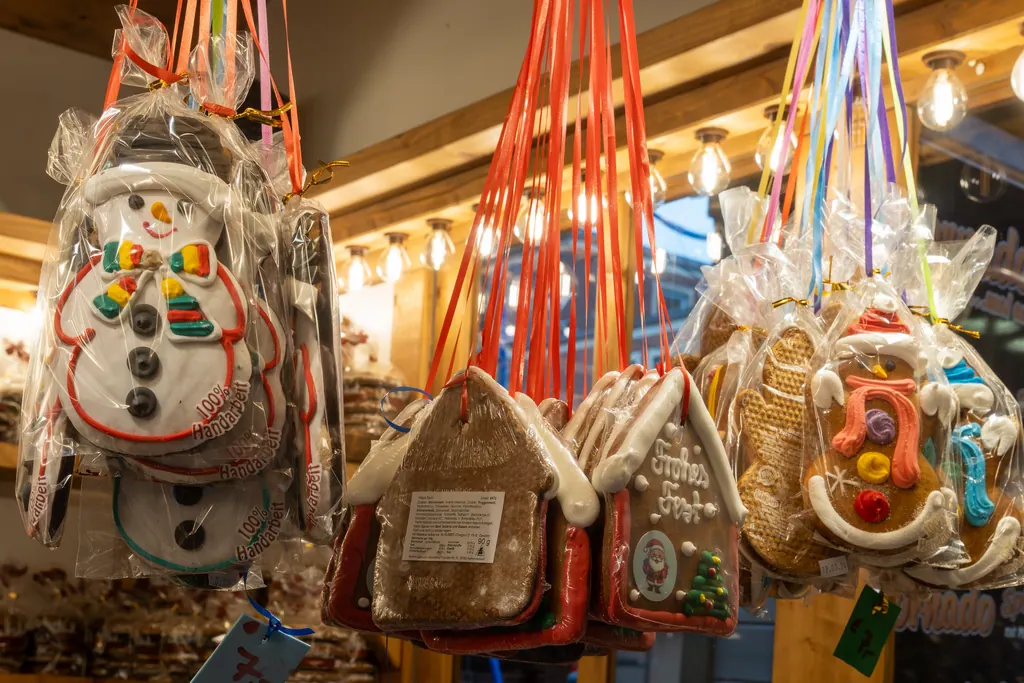
Germany's spiced Christmas cookie. Nürnberger Lebkuchen is a protected product, and the finest grade, Elisenlebkuchen, must contain at least 25% nuts and no more than 10% flour, according to Nuremberg's tourist office. The big decorated gingerbread hearts hanging from the stalls are a different thing: they are made to be given and hung on a wall, and they are usually too hard to enjoy eating.
Stollen
A dense fruit bread with raisins, candied peel and marzipan, dusted with powdered sugar. Dresdner Christstollen is protected as a regional specialty, and Dresden's Striezelmarkt, first held in 1434, is named after the old word for stollen. Buy a whole loaf to take home; it keeps for weeks.
Gebrannte Mandeln
Almonds roasted in sugar and cinnamon in a copper kettle until they turn glossy and crunchy, sold warm in paper cones. They are the smell you notice first.
Schmalzkuchen and Quarkbällchen
Small deep-fried dough pieces and fluffy curd-cheese doughnut balls, both rolled in powdered sugar and sold by the bag.
Maronen
Roasted chestnuts, peeled and eaten warm from a paper bag. Simple, and a good way to warm your hands.
How the Mug Deposit Works
Drinks come in ceramic mugs, and each market or stall designs its own, often with the year printed on it. You pay a deposit (Pfand) on top of the drink price, at many markets a few euros and at Nuremberg 5 euros in 2026. Return the mug to any stall that uses the same design and you get the deposit back, or keep it as a cheap souvenir.
Tips for Eating Your Way Through the Market
- Bring cash. More stalls take cards every year, but smaller vendors and mug returns are often cash only.
- Go early or on a weekday. Evenings and Saturdays are packed at the famous markets in Nuremberg, Dresden and Cologne.
- Share. Portions are made for eating standing up, so a group can taste five or six things without feeling stuffed.
- Tipping is not expected at food stalls, though rounding up is appreciated. Our guide to tipping in Europe explains the rules in restaurants and cafés.
Where to Go Next
If you are building a winter trip around food, our guide to Europe's great food markets covers the halls that stay open all year, and the Christmas markets of Tallinn, Riga and Vilnius offer a different, quieter take on the tradition. For more about the country itself, see our Germany page.
Frequently asked questions
What is the most popular drink at German Christmas markets?
Glühwein, hot mulled wine with spices, is the classic. Most markets also sell white and fruit versions plus alcohol-free Kinderpunsch.
How much does Glühwein cost at German Christmas markets?
At big city markets expect around 5 euros (about $6) a mug in 2026, plus a refundable mug deposit of a few euros.
Can you keep the mug from a German Christmas market?
Yes. If you do not return the mug, you simply lose the deposit and keep the mug as a souvenir.
Are there vegetarian options at German Christmas markets?
Yes. Garlic mushrooms, potato pancakes, vegetarian Flammkuchen, roasted chestnuts and sweets such as candied almonds and Lebkuchen are widely available.