Smoke drifts off a row of oil-drum grills. Someone is chopping pork on a wooden block with a cleaver, a sound system is warming up, and the line for fried fish is longer than the line for the bar. Versions of that scene play out across the Caribbean every weekend, yet the food on the plate changes completely when you cross a few miles of sea.
That is the joy and the confusion of eating your way around these islands. Jamaica, Barbados, Martinique and Curaçao were colonized by different European powers, received people from different parts of Africa and Asia, and grew different crops, and you can taste every bit of it. Below we go island by island through the dishes worth seeking out, the places locals actually eat them, the rum distilleries that welcome visitors, and where the night goes after dinner.
Why does the food change so much from island to island?
A few ingredients tie the region together: plantains, rice and beans, salt fish, Scotch bonnet peppers and rum. Everything else follows history. The British islands lean toward one-pot dishes and fried snacks. Martinique and Guadeloupe cook Creole food, with French technique, African roots and spices brought by Indian workers who arrived after slavery was abolished in 1848. The Dutch islands mix Dutch cheese with Latin American cornmeal, and Puerto Rico and the Dominican Republic build meals around pork, plantains and slow stews.
If you are still choosing where to go, our guide to which Caribbean island suits you covers the bigger picture. Here we stick to the table.
Jamaica: why is Boston Bay the place for jerk?
Jerk is Jamaica's most famous export, and Boston Bay, a small surf beach in the northeastern parish of Portland, is widely considered its home. The technique is usually traced to the Maroons, people who escaped slavery and lived in the mountains, who preserved and cooked meat with spices over slow fires. Roadside pits in Boston Bay have been selling jerk pork since at least the middle of the 20th century, and today a cluster of stands, known together as the Boston Jerk Centre, cooks pork and chicken over pimento (allspice) wood under sheets of zinc.
Proper jerk is smoky first and hot second. The marinade is built on Scotch bonnet, allspice, thyme and scallion, and the meat comes chopped, with hard dough bread, roasted breadfruit or festival, a slightly sweet fried dumpling. Expect a quarter chicken with a side to cost around J$1,000-1,500 (about $6-10) at a roadside stand in 2026, more at a beach bar on the north coast.
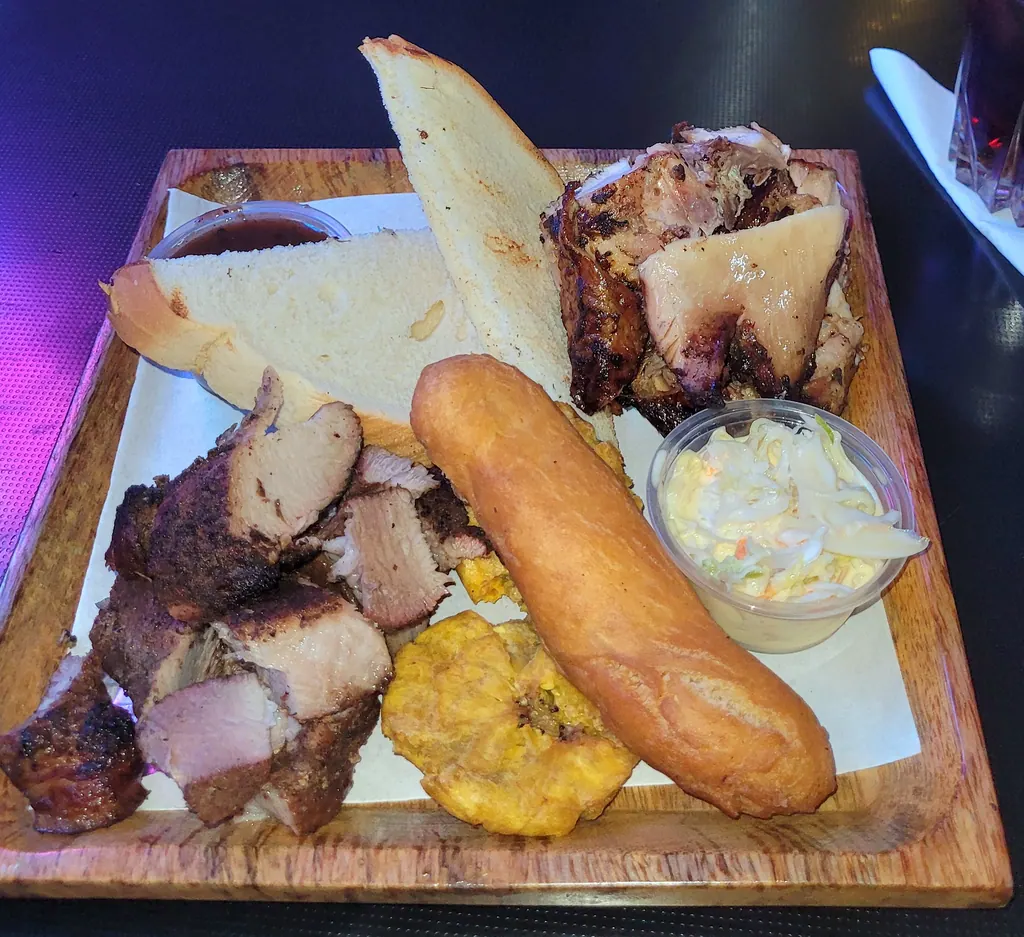
Do not leave without trying ackee and saltfish, the national dish, usually eaten at breakfast with fried dumplings or boiled green bananas. Patties, flaky pastries filled with spiced beef, are the island's everyday fast food.
For rum, the Appleton Estate in the Nassau Valley of St. Elizabeth parish is the classic distillery visit, best combined with a trip to the south coast.
Barbados: what makes Friday night at Oistins special?
Barbados is the most food-proud of the English-speaking islands, and its national dish says a lot about the place: cou-cou and flying fish. Cou-cou is a smooth cornmeal and okra mash, close to polenta, served with flying fish steamed in a sauce of tomato, onion, thyme and local herbs. It is traditionally a Friday lunch, so look for it at rum shops and local cafeterias at the end of the week. Be aware that flying fish catches have fallen sharply in recent years, so it is not always on the menu.
The Friday night fish fry at Oistins, a fishing town on the south coast, is the island's best-known food event. Dozens of stalls grill and fry marlin, mahi-mahi, tuna, swordfish and flying fish, served with macaroni pie, rice and peas, fried plantain or breadfruit. Music starts in the evening, and families, tourists and locals share long tables between the stalls. A fish plate typically costs around BDS$30-50 (about $15-25) in 2026. The Barbados dollar is fixed at two to the US dollar, and dollars are accepted almost everywhere.
Mount Gay, which traces its history to 1703, has a visitor center outside Bridgetown, and St. Nicholas Abbey, a plantation house in the north with a small distillery, shows how rum is made. For a sit-down dinner, the west coast around Holetown has the island's most expensive restaurants.
Martinique, Guadeloupe and Saint Martin: what is Creole cooking?
On the French islands, a meal often starts with accras, small fritters of salt cod and herbs, and a ti' punch: white rhum agricole, a slice of lime and a spoon of cane syrup, mixed by each person to taste. The main course might be a colombo, a curry of chicken, pork or goat made with a spice blend of the same name brought by Indian workers. In Guadeloupe, look out for the bokit, a fried bread sandwich sold from roadside trucks.
Rhum agricole is the real reason many travelers come. It is distilled from fresh sugarcane juice rather than molasses, which gives it a grassy, fruity taste, and Martinique's rum has carried a French protected designation of origin (AOC) since 1996. Martinique has the densest cluster of visitable distilleries in the Caribbean. Saint-James in Sainte-Marie has a rum museum and moved there after the 1902 eruption of Mount Pelée destroyed Saint-Pierre. Depaz, at the foot of the volcano near Saint-Pierre, has a château and gardens. Habitation Clément in Le François combines a historic estate, a botanical park and a contemporary art foundation, and is the most polished visit on the island.
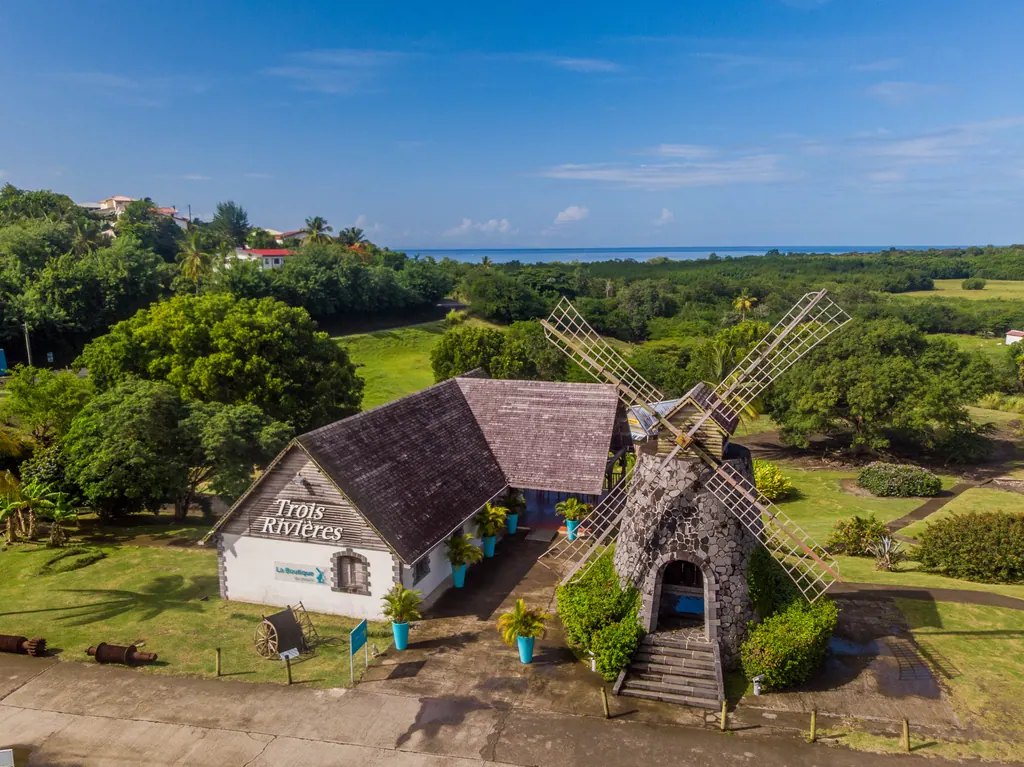
Guadeloupe's distilleries are smaller and more family-run, and the island of Marie-Galante, a ferry ride away, has three of its own: Bielle, Bellevue and Père Labat. Both islands use the euro.
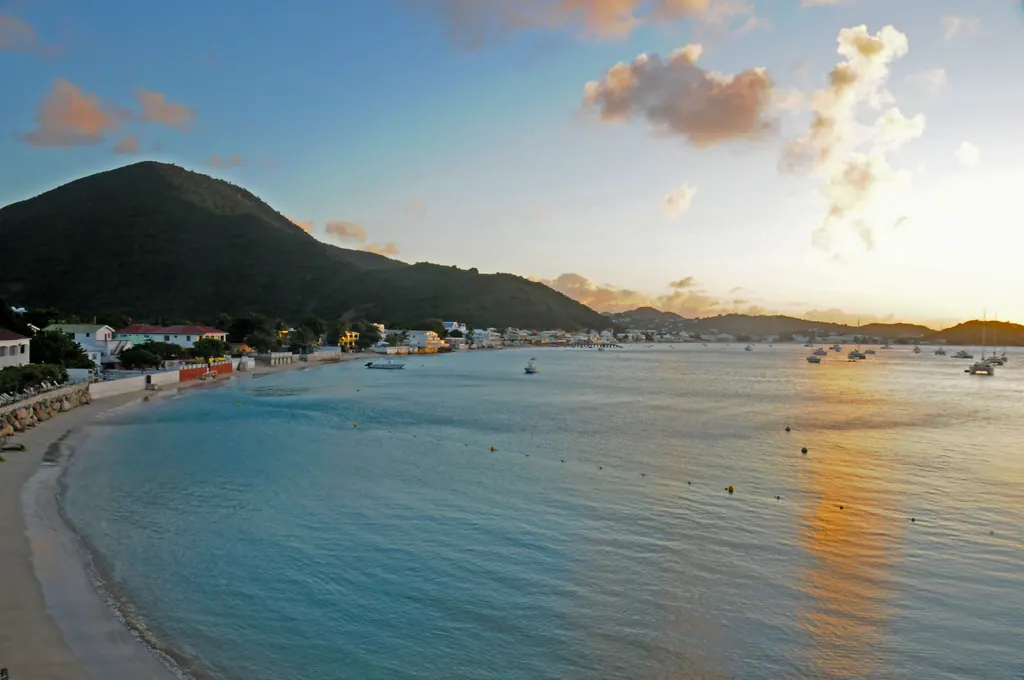
On Saint Martin, the French half of the island shared with Dutch Sint Maarten, the village of Grand Case is the dining destination. One side of the main street is lined with French restaurants that are among the most expensive on the island. The other is home to the lolos, open-air barbecue stalls serving ribs, chicken, grilled fish and lobster with rice and peas, at a fraction of the price. In 2026 the street hosted its Tuesday night party, Les Mardis de Grand Case, with music and stalls from 6 to 10 p.m. on six Tuesdays starting February 24. The French side uses the euro, but US dollars are widely accepted. Across the border, Sint Maarten has its own drink: guavaberry liqueur, made from a small wild berry.
The Bahamas and Turks and Caicos: where is the best conch?
In the Bahamas and Turks and Caicos, conch is the dish. The large sea snail is served as conch salad (raw, diced with onion, pepper, tomato and plenty of lime juice, much like ceviche), cracked conch (pounded, battered and fried), conch fritters and conch chowder.
In Nassau, the place to eat it is Arawak Cay, known locally as the Fish Fry, a row of brightly painted food shacks on a strip of reclaimed land west of downtown, within walking distance of the cruise terminal. Vendors make conch salad to order in front of you. Sunday evening, when local families come out and bands play, is the liveliest time. Many stalls take cash only. The Bahamian dollar is fixed one to one with the US dollar, and both are used interchangeably.
In Turks and Caicos, the Thursday Fish Fry at Bight Park on Providenciales is the weekly gathering, typically from 5:30 to 9:30 p.m., with grilled fish, lobster in season, conch salad and a junkanoo parade after sunset. The Conch Festival, usually held on a Saturday in late November in the settlement of Blue Hills, has conch recipe competitions and live music. Turks and Caicos uses the US dollar.
Curaçao and Aruba: what is keshi yena, and where do locals eat lunch?
The Dutch islands have one of the region's most unusual dishes: keshi yena, a round of Edam or Gouda cheese filled with spiced chicken or beef, olives, raisins and capers, then baked. It is said to have started as a way to use the cheese rinds left over in colonial households. Other staples are stoba (slow-cooked stews of goat, beef or papaya), funchi (cornmeal similar to polenta) and pastechi, fried pastries sold at breakfast.
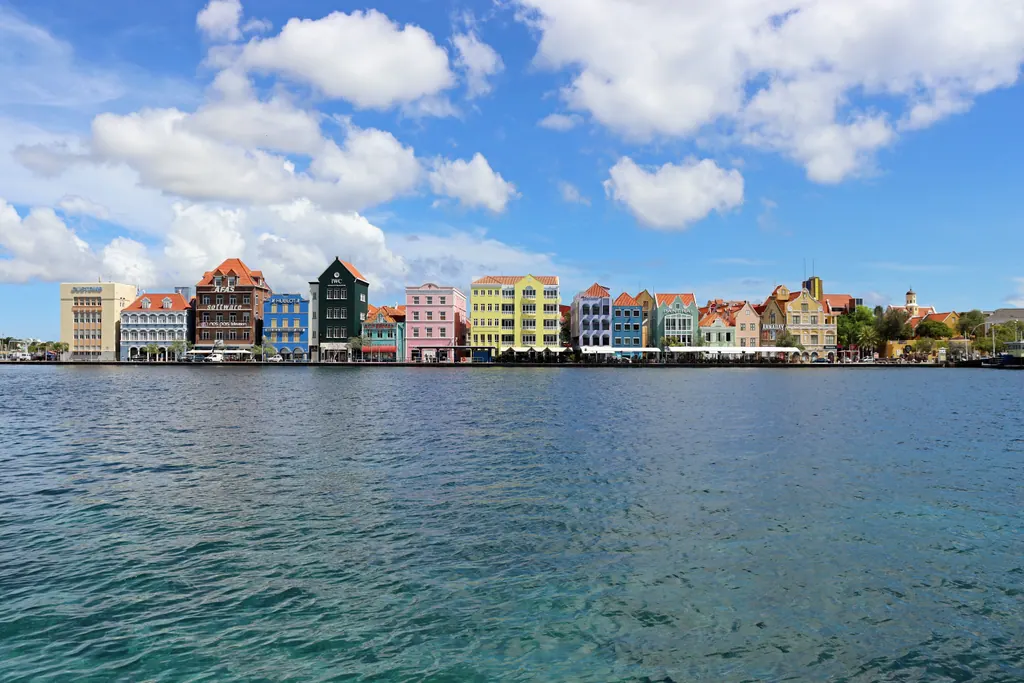
In Willemstad, the capital of Curaçao, the best introduction is Plasa Bieu, the old market hall in Punda. Several family-run kitchens cook in the open and serve lunch at shared tables, Monday to Saturday, and only at lunchtime. Arrive before about 1:30 p.m., because popular dishes sell out. Expect a full plate to cost around Cg 20-30 (about $11-17) in 2026. Curaçao and Sint Maarten switched to a new currency, the Caribbean guilder (Cg), in 2025, at a fixed 1.79 to the US dollar, and dollars are widely accepted.
Curaçao is also home to the liqueur of the same name, made from the dried peel of the laraha, a bitter orange. Landhuis Chobolobo, an old country house outside Willemstad, is where it is produced and offers tours and tastings.
Aruba shares many of the dishes, though its dining leans international along Palm Beach. The Aruban florin is also fixed at 1.79 to the dollar.
Puerto Rico and the Dominican Republic: pork, plantains and sancocho
Puerto Rico's signature dish is mofongo: green plantains fried, then mashed in a wooden pilón with garlic and crispy pork skin, and often served with shrimp, stewed chicken or a broth poured over it. The other essential is lechón, whole pig roasted slowly over a fire until the skin crackles.
The pilgrimage for lechón is Guavate, a mountain neighborhood of Cayey, about 40 minutes south of San Juan. Discover Puerto Rico, the island's tourism board, calls the stretch of Route 184 there the "Pork Highway." Roadside lechoneras started appearing in the 1950s and 1960s, and on weekends they fill with families, live music and dancing. Get there before noon on weekends, when traffic builds quickly. Pork is sold by the pound, with sides like rice and pigeon peas, yuca and tostones. Puerto Rico uses the US dollar.
Closer to San Juan, the beach kiosks of Piñones sell bacalaítos (salt cod fritters) and alcapurrias (stuffed fritters of green banana and taro). San Juan also claims the piña colada, with two places in the city each saying they invented it.
In the Dominican Republic, breakfast is mangú, mashed green plantains topped with pickled red onions and served with fried salami, fried cheese and eggs, a combination called los tres golpes. Lunch, the main meal, is often la bandera: rice, red beans and stewed meat. Sancocho, a thick stew of several meats and root vegetables, is what Dominicans make for gatherings and on Sundays. The country's rum makers include Brugal, whose visitor center is in Puerto Plata. The Dominican peso trades at around 61 to the US dollar (October 2026), so a plate of food at a local comedor might cost around 300-400 pesos (about $5-7).
Which rum distilleries are worth a visit?
Rum is the region's common language, but styles vary as much as the food. Here are the visits that are easiest to fit into a trip.
| Island | Distillery or visitor center | Why go |
|---|---|---|
| Jamaica | Appleton Estate, Nassau Valley | The best-known Jamaican rum, guided tour and tasting |
| Barbados | Mount Gay, St. Nicholas Abbey, Foursquare | Old brands, a historic plantation house, real production |
| Martinique | Habitation Clément, Saint-James, Depaz | Rhum agricole with gardens, museums and volcano views |
| Guadeloupe | Damoiseau, Longueteau, Bologne | Family-run agricole distilleries, free or cheap tastings |
| Puerto Rico | Casa Bacardí, Cataño | Easy half-day trip from Old San Juan by ferry |
| Dominican Republic | Casa Brugal, Puerto Plata | The country's best-known rum, on the north coast |
| Curaçao | Landhuis Chobolobo | Not rum, but the original Curaçao liqueur |
Tour times and prices change often, so check before you go, and arrange a driver if you plan to taste.
Where does the night go after dinner?
Caribbean nightlife ranges from mega-clubs to a single beach bar with a reggae band, and each island has its own habits.
- Negril, Jamaica: Rick's Café on the cliffs of the West End is famous for sunset and cliff jumping, with platforms up to about 35 feet above the water. It is touristy and packed at sunset, but the setting is spectacular. Later, bars along Seven Mile Beach host live reggae.
- Barbados: St. Lawrence Gap on the south coast is the island's nightlife hub, with bars and clubs open late, especially on weekends. Oistins on Friday is a good warm-up.
- Punta Cana, Dominican Republic: Most visitors stay in all-inclusive resorts with their own bars, but two clubs draw crowds from all of them: Coco Bongo, a show nightclub with acrobats and tribute acts, and Imagine, a club built inside natural limestone caves in Bávaro. Both usually sell packages with hotel transfers. Bring ID.
- Aruba: The Palm Beach strip has the most bars and casinos, while Oranjestad has a smaller downtown scene.
- Anguilla: Nightlife is low-key and built around beach bars and live music. The Dune Preserve, a driftwood beach bar on Rendezvous Bay owned by the reggae musician Bankie Banx, is the best known.
For safety at night, the usual rules apply: use registered taxis, keep an eye on your drink, and avoid walking alone on empty beaches after dark. Our guide to safety in the Caribbean goes through it island by island.
Is duty-free shopping still worth it?
Duty-free shopping is a big part of the cruise-port economy, but the savings are smaller than the signs suggest. Front Street in Philipsburg, Sint Maarten, is the best-known strip, lined with jewelry, watch, electronics, perfume and liquor shops. On Aruba, the shopping streets and malls of Oranjestad sell similar goods. In Grand Cayman, George Town has duty-free stores close to the cruise tenders, and the Cayman Islands have no sales tax. Cayman rum cake, sold in vacuum-packed tins, is the classic edible souvenir.
Check prices at home first, as jewelry and electronics are often only marginally cheaper, if at all. Local rum, hot sauce, Blue Mountain coffee from Jamaica and spice blends are usually better buys. If you are flying home to the United States, check the current duty-free allowance with US Customs and Border Protection.
Practical tips before you eat your way around the islands
- Carry cash. Fish fries, lolos, jerk stands and market kitchens often take cash only. US dollars work on most islands, but you get better value paying in local currency where it exists. Our guide to money in the Caribbean explains which islands use what.
- Check the service charge. Many restaurants, especially on the French and Dutch islands and in Barbados, add a service charge to the bill. Read our guide to tipping in the Caribbean before you add more.
- Go on the right day. Oistins is best on Friday, the Turks and Caicos fish fry on Thursday, Guavate on weekends, and Plasa Bieu only at lunch, Monday to Saturday.
- Leave the resort at least once. These dishes are rarely on the buffet. Our guide to getting around the Caribbean explains taxis, buses and ferries.
For more ideas on eating and drinking around the world, browse our food and drink section.
Frequently asked questions
What is the national dish of Barbados?
Cou-cou and flying fish: a smooth cornmeal and okra mash served with flying fish steamed in a tomato, onion and herb sauce. It is traditionally eaten on Fridays.
What is the difference between rhum agricole and regular rum?
Rhum agricole is distilled from fresh sugarcane juice, while most rum is made from molasses. That gives agricole a grassier, fruitier taste. Martinique's version has had a French protected designation of origin since 1996.
What night is the Oistins Fish Fry in Barbados?
Friday is the big night, with music, dancing and the most stalls open, from early evening until late. Some stalls also serve food on other evenings, but the atmosphere is much quieter.
Is Caribbean street food safe to eat?
Busy fish fries, jerk stands and market kitchens are generally a safe bet, since food is cooked to order over high heat and turnover is fast. Choose stalls with a local crowd and drink bottled water where tap water is not recommended.
Can you bring rum home from the Caribbean to the US?
Yes. Adults can bring alcohol home, though amounts above the duty-free allowance may be taxed. Check the current limits with US Customs and Border Protection, and pack bottles in checked luggage unless they are sealed in a security bag at the airport.
- Guide to Guavate and La Ruta del Lechón, Discover Puerto Rico
- Fish Fry at Arawak Cay, The Islands of The Bahamas
- St. Lawrence Gap, Visit Barbados
- Top distilleries and rhummeries, Martinique Tourism
- Distilleries and rhumeries, Les Iles de Guadeloupe
- Tuesdays in Grand-Case, Office de Tourisme de Saint-Martin
- Where to eat in Port Antonio, Visit Jamaica
- Caribbean guilder becomes official currency in Curaçao and Sint Maarten, Curaçao Chronicle