Hand over a 20-dollar bill at a beach bar in Barbados and you may get your change in Barbados dollars. Do the same on Curaçao and the change could come in a currency that did not exist until 2025. On Martinique, the bartender may simply shake their head and point you to the nearest ATM. The Caribbean looks like one long holiday from the airplane window, but on the ground it is a patchwork of a dozen currencies, one of them brand new, and a price range that runs from cheap local lunches to some of the most expensive cocktails in the Western Hemisphere.
This guide goes island by island through what money is used, where your US dollars work and where they do not, how to handle cards and ATMs without losing money on fees, and which islands will stretch a budget and which will test it. You will find more money advice for other regions on our money and tipping page.
Why so many currencies?
The answer is history. The islands were colonized by Britain, France, the Netherlands and Spain, and the currencies still follow those lines. Former British colonies mostly have their own dollars, the French islands are part of France and use the euro, the Dutch islands have guilders, florins or US dollars, and the Spanish-speaking countries use pesos.
The good news is that most of these currencies are pegged to the US dollar at a fixed rate that has not moved in decades. Once you know the peg, the math is the same every day. Only a few currencies float freely, most importantly the Jamaican dollar and the Dominican peso.
Which currency does each island use?
| Island or country | Currency | Rate to the US dollar | Are US dollars accepted? |
|---|---|---|---|
| Barbados | Barbados dollar (BBD) | Fixed, 2 BBD = $1 | Yes, widely, at 2:1 |
| Antigua, Saint Lucia, Grenada, St. Kitts and Nevis, Anguilla, Dominica, St. Vincent | Eastern Caribbean dollar (XCD) | Fixed, 2.70 XCD = $1 | Yes in tourist areas, often at a slightly worse rate |
| Bahamas | Bahamian dollar (BSD) | Fixed, 1:1 | Yes, everywhere |
| Bermuda | Bermudian dollar (BMD) | Fixed, 1:1 | Yes, everywhere |
| Cayman Islands | Cayman Islands dollar (KYD) | Fixed, 1 KYD = $1.20 | Yes, widely |
| Aruba | Aruban florin (AWG) | Fixed, 1.79 AWG = $1 | Yes, very widely |
| Curaçao and Sint Maarten (Dutch side) | Caribbean guilder (XCG) | Fixed, 1.79 XCG = $1 | Yes, very widely |
| Martinique, Guadeloupe | Euro (EUR) | Floating | Rarely, plan on euros |
| Saint-Martin (French side), St. Barts | Euro (EUR) | Floating | Often, but card payments are usually charged in euros |
| Jamaica | Jamaican dollar (JMD) | Floating, around 160 JMD = $1 in 2026 | Yes in resort areas, less so elsewhere |
| Dominican Republic | Dominican peso (DOP) | Floating, around 60 DOP = $1 in 2026 | At resorts and tour desks, less so elsewhere |
| Puerto Rico, US Virgin Islands, British Virgin Islands, Turks and Caicos, Bonaire | US dollar | Same currency | It is the local currency |
Strictly speaking, Bermuda lies far out in the Atlantic, not in the Caribbean, but it is so often lumped in with the islands that it belongs in the table.
The new Caribbean guilder on Curaçao and Sint Maarten
If you last visited Curaçao or the Dutch side of St. Maarten before 2025, your leftover notes are now souvenirs. On March 31, 2025, the Caribbean guilder (XCG, written Cg) replaced the old Netherlands Antillean guilder, which had outlived the Netherlands Antilles itself by almost 15 years. The two circulated side by side for three months, and the old guilder stopped being legal tender on July 1, 2025. Commercial banks exchanged old notes until March 31, 2026; after that, only the Central Bank of Curaçao and Sint Maarten swaps them.
For visitors, very little changed. The new guilder keeps the old peg of 1.79 to the US dollar, and US dollars are still accepted almost everywhere on both islands. On Sint Maarten many prices are posted in dollars to begin with. The one practical difference is that the notes look new (10, 20, 50, 100 and 200 guilders), so do not be surprised by unfamiliar change.
Three things are easy to mix up here:
- Aruba never switched to the Caribbean guilder. It has had its own Aruban florin since 1986, also pegged at 1.79 to the dollar, and the 2025 change did not affect it.
- Bonaire, along with Saba and Sint Eustatius, switched straight to the US dollar on January 1, 2011. There is no guilder on Bonaire.
- Saint-Martin, the French half of the same island as Sint Maarten, uses the euro. In practice, dollars are widely accepted on the French side too, but card terminals usually charge in euros.
Can you pay with US dollars?
On most of the islands, yes, but there is a difference between "accepted" and "a good deal."
Barbados is the textbook case. With a fixed rate of 2 to 1, prices are easy to convert, and most shops, restaurants and taxi drivers take US dollars without fuss. You will often get your change in Barbados dollars, though, so if you pay in dollars all week, you end up with a pocket full of local coins. One exception: the government buses run by the Barbados Transport Board want the exact fare of BDS$3.50 (about $1.75), give no change and do not accept foreign coins.
The Bahamas and Bermuda are the easiest of all. Their dollars are pegged one to one with the US dollar, US notes circulate freely, and some of your change may come back in local money of the same value. On Bermuda's buses the cash fare must be paid in coins, around $3.50 for up to three zones or $5 for the whole island in 2026, and drivers give no change. Tokens, tickets and day passes are cheaper and are sold at the visitor centers and the Hamilton bus and ferry terminals.
The Cayman Islands reverse the usual picture: the local dollar is worth more than the US dollar. One Cayman dollar costs $1.20. Shops take US dollars but typically value them at about 80 Cayman cents, so a price tag of CI$10 means about $12.50 if you pay in US cash. Check whether a menu is in CI or US dollars before you order, as both are used.
Aruba, Curaçao and Sint Maarten take US dollars almost everywhere, and many businesses quote prices in dollars. Paying in dollars is convenient, but small shops sometimes round the rate in their own favor.
The Eastern Caribbean islands, such as Antigua, Saint Lucia and Grenada, accept US dollars in hotels, taxis and tourist businesses, but local shops, buses and markets work in EC dollars. Many shops use a rate slightly below the official 2.70, so if you are on the island for a week, withdrawing some EC dollars usually pays off.
Jamaica and the Dominican Republic are different, because their currencies float. Resorts, excursions and many restaurants in Montego Bay, Negril, Ocho Rios and Punta Cana price everything in US dollars, but once you leave the tourist zone, local money works better. The rate a street vendor uses for dollars is rarely in your favor.
Martinique and Guadeloupe are not the place for US cash. The euro is the only currency, and the official Guadeloupe tourism office advises exchanging dollars at the airport or downtown exchange offices, or simply withdrawing euros from an ATM.
Cards, ATMs and how to avoid the fees
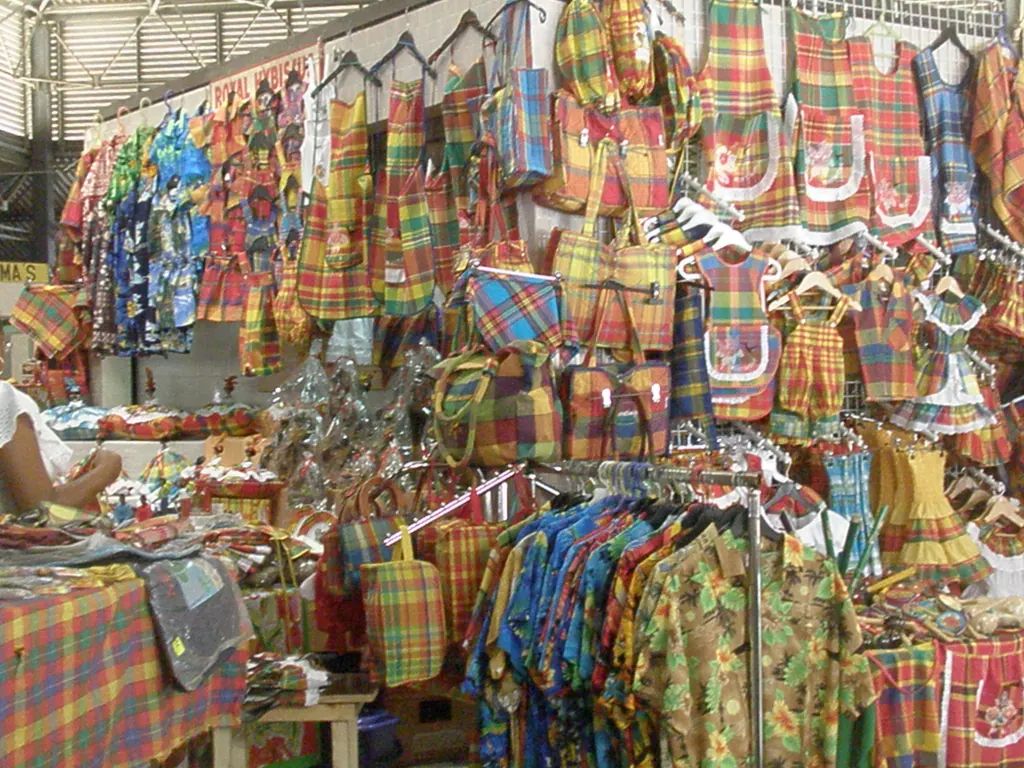
Credit cards are widely accepted at hotels, restaurants, car rental companies and larger shops across the Caribbean. Visa and Mastercard are the safe choices; American Express is accepted at many hotels and upscale restaurants but far from everywhere, particularly on the French islands. Cash still rules at beach bars, food stands, markets, local buses and with most street vendors.
A few habits save real money:
- Bring a card with no foreign transaction fee. On a week of card payments, a typical 3% fee adds up quickly.
- Always pay in the local currency. Card terminals and ATMs often offer to charge you in US dollars. This "dynamic currency conversion" comes with a poor exchange rate. Choose the local currency and let your own bank convert.
- Use bank ATMs. ATMs inside banks or at the airport are generally more reliable than standalone machines in bars and shops. Local banks often charge their own fee per withdrawal on top of your bank's fee, so taking out larger amounts less often is usually cheaper.
- Expect a choice at some ATMs. On pegged islands such as Aruba and Sint Maarten, some ATMs dispense US dollars as well as local currency. Local currency is usually the better choice for small purchases.
- Carry small notes. Taxi drivers and vendors on smaller islands often cannot change a $100 bill, and many visitors find $1, $5 and $10 notes handy for tips and small purchases.
- Tell your bank where you are going. A card blocked for suspicious use on day one is a common and avoidable headache.
On the smaller islands, such as Les Saintes and Marie-Galante off Guadeloupe or the Grenadines, there are fewer ATMs, so withdraw before you take the ferry.
Taxes and service charges that change the price
Menu prices in the Caribbean are often not the price you pay. Several islands add tax and service on top, and it is worth knowing before you sit down.
In the Dominican Republic, restaurant bills usually add 18% ITBIS (the national sales tax) plus a 10% legal service charge, so the total can be about 28% above the menu price. The service charge is shared among all staff, which is why many guests still leave a little extra for the waiter.
In Barbados, VAT was 17.5% on most goods and services in 2026 (and 8.75% on hotel stays), and many restaurants add a 10% service charge. Some menus include VAT, others do not, so read the small print.
Elsewhere the pattern repeats in different forms: government taxes and resort fees on hotel rooms, and a service charge on restaurant bills that may or may not be included. On the French islands, by contrast, prices are shown with tax included and service is part of the price, as in mainland France.
Which islands are expensive, and which are cheaper?
Almost everything on a small island is imported, from beer and cheese to building materials, and import duties push prices up across the region. Still, the gap between the most expensive and the cheapest islands is huge.
The most expensive are the islands that built their economy on high-end tourism or finance. Bermuda and the Cayman Islands are regularly named among the priciest places in the Western Hemisphere, with supermarket and restaurant prices well above those in most US cities. St. Barts, Anguilla, Turks and Caicos and the British Virgin Islands are aimed squarely at the luxury market, and even simple meals cost more than most visitors expect. The Bahamas follows close behind, especially on the Out Islands.
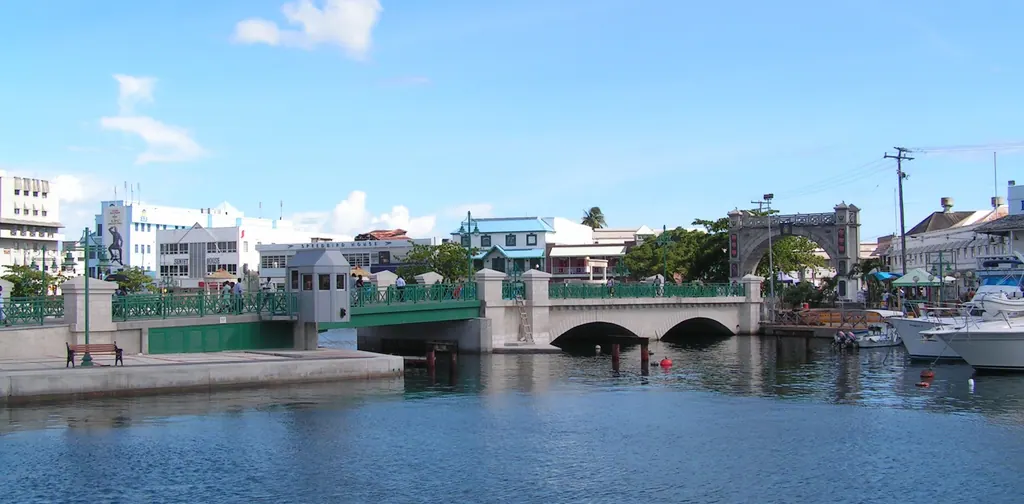
The middle ground includes Barbados, Aruba, Curaçao, Sint Maarten, Antigua and Saint Lucia. Hotels and restaurants in the tourist areas are expensive, but you can bring the cost down a lot by eating where locals eat and using public transport. In Barbados, a ride on a Transport Board bus costs BDS$3.50 (about $1.75), which makes it one of the cheapest islands to get around without a rental car, and a fish cutter from a roadside stand costs a fraction of a beachfront restaurant meal.
The French islands fall in the middle too. Martinique and Guadeloupe have supermarkets stocked much like those in France, and a picnic from the bakery and the market is a sensible way to keep costs down. Prices are in euros, so your budget depends on the euro rate, which was a little above $1.10 per euro in October 2026.
The cheaper options are the large islands with their own economies. In the Dominican Republic, an all-inclusive in Punta Cana is often one of the best-value beach holidays in the region, and outside the resorts, local food, buses and guesthouses cost far less than on the smaller islands. Jamaica is similar: the all-inclusives along the north coast are priced in dollars and not cheap, but local food, route taxis and small guesthouses are inexpensive. Puerto Rico uses the US dollar and has prices closer to the US mainland than to the small luxury islands, which makes it good value by Caribbean standards.
For more on getting the most out of a limited budget, see our budget travel tips.
How much cash should you bring?
There is no need to arrive with a thick envelope of notes. On the islands where US dollars are accepted, a modest amount of US cash in small notes covers taxis, tips and the first day. After that, cards and ATMs do the rest. On Martinique and Guadeloupe, bring a card that works in euro ATMs rather than dollars to exchange. And in Jamaica and the Dominican Republic, take out local currency from a bank ATM if you plan to explore beyond the resort.
The simplest rule for the whole region: pay by card in the local currency where you can, carry small US notes for tips, and get local cash on the islands where the currency floats or where the euro rules. For island-by-island inspiration, start on our Caribbean destination page or read more about Barbados.
Frequently asked questions
Do I need to exchange money before traveling to Barbados?
No. US dollars are widely accepted in Barbados at a fixed rate of 2 Barbados dollars to 1 US dollar, and cards work in most hotels, restaurants and shops. Withdraw a few Barbados dollars at an ATM if you plan to ride the government buses, which need the exact fare in local coins or notes.
Can I still use Netherlands Antillean guilders on Curaçao?
No. The Netherlands Antillean guilder stopped being legal tender on July 1, 2025, after the Caribbean guilder replaced it. Commercial banks exchanged old notes until March 31, 2026, and the Central Bank of Curaçao and Sint Maarten continues to exchange them.
Is the US dollar accepted on Martinique and Guadeloupe?
Only occasionally. Both islands are part of France and use the euro, so plan to pay by card or withdraw euros from an ATM. Dollars can be exchanged at the airport and some exchange offices, usually at a poor rate.
Is Punta Cana expensive?
Punta Cana is one of the better-value beach destinations in the Caribbean, especially on all-inclusive deals. Restaurant bills outside the resorts usually add 18% tax and a 10% service charge to the menu price, so factor in about 28% extra.
What is the most expensive island in the Caribbean?
Bermuda (technically in the Atlantic), the Cayman Islands, St. Barts, Anguilla and Turks and Caicos are generally the most expensive, with high prices for food, drink and hotels. The Dominican Republic, Jamaica outside the resorts and Puerto Rico are among the cheaper options.
- Eastern Caribbean Central Bank: About the ECCB
- Curaçao Chronicle: Caribbean guilder officially legal tender in Curaçao and Sint Maarten
- De Nederlandsche Bank: Payments in the Caribbean Netherlands
- Guadeloupe Islands Tourist Board: Currency and exchange in Guadeloupe
- Barbados Transport Board: Fare policy
- Government of Bermuda: Public transportation fares
- International Trade Administration: Barbados country commercial guide