Ask Americans to name a European Christmas market, and you will hear Nuremberg, Strasbourg or Vienna. Fewer people think of Tallinn, Riga and Vilnius, the three Baltic capitals that sit a few hours apart along the eastern edge of the Baltic Sea. That is a pity, because they combine medieval old towns, a long Christmas tradition and markets that feel local rather than packaged.
Two of the cities even argue over who put up the first Christmas tree in a public square. You can visit all three in one trip and decide for yourself. Here is what each market offers, the dates announced for the 2026 season and how to connect the cities, as checked on November 1, 2026.
A Friendly Argument Over the First Christmas Tree
Both Tallinn and Riga claim the first public Christmas tree in Europe, and both credit the same organization: the Brotherhood of Blackheads, a guild of unmarried merchants active in the Hanseatic trading towns of the region.
Tallinn says a tree stood on its Town Hall Square as early as 1441. Riga points to 1510, when the guild is said to have decorated a tree, and marks the spot with a plaque on its own Town Hall Square. Historians debate the details, but the story gives both markets a strong sense of place, and it is a good opening line when you are standing in front of either tree with a mug of something hot.
Tallinn: Town Hall Square Under a Gothic Spire
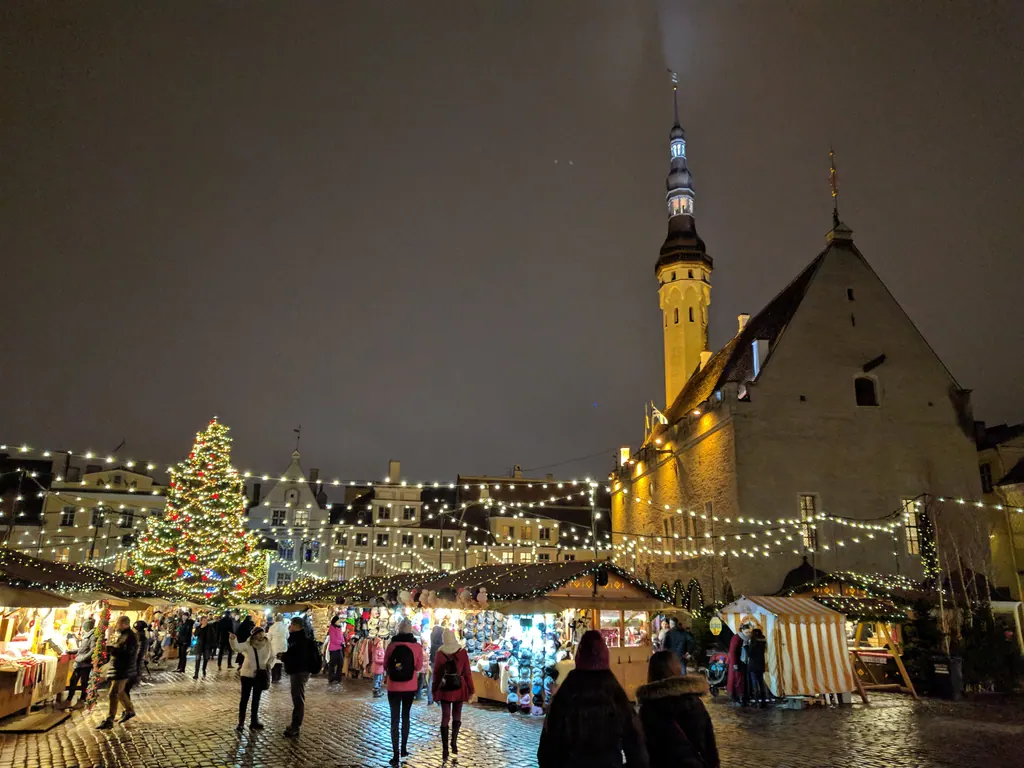
Tallinn's Christmas market fills Town Hall Square (Raekoja plats) in the heart of the walled Old Town, beside the Gothic Town Hall, completed in the early 1400s. For the 2026 season, organizers list these dates:
- Season: November 20, 2026 to January 6, 2027
- Opening: the tree is lit on November 20 at 6 p.m.
- Hours: 10 a.m. to 8 p.m. daily, with hot drinks served until 10 p.m. (11 p.m. on Fridays and Saturdays)
The market is compact, which is part of the charm. Wooden stalls ring the tree and sell wool socks and mittens, felted slippers, handmade ceramics and Estonian gingerbread (piparkoogid). Food stalls serve hearty winter dishes such as blood sausage with sauerkraut, and the classic drink is hot glögi, the Nordic take on mulled wine.
Tallinn's Old Town is one of the best preserved medieval centers in Northern Europe, and a UNESCO World Heritage Site. Walk up to the Toompea viewpoints for the classic view of red roofs and church spires, which looks especially good with a dusting of snow.
Riga: Dome Square and Art Nouveau Streets
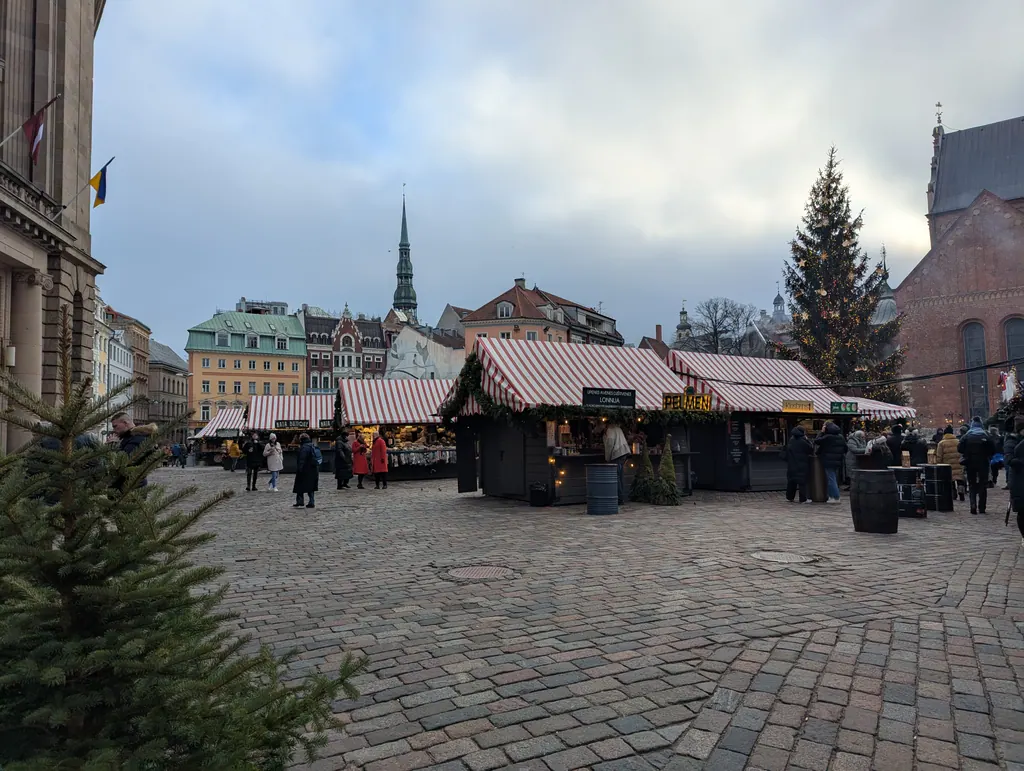
Riga's main market is the Old Town Christmas Market on Dome Square (Doma laukums), beside Riga Cathedral. The market has been held there since 2000. In the 2025 season it ran from late November to early January with more than 80 traders, and the city typically follows a similar pattern. The official 2026 dates had not been confirmed on the city's website when we checked, so look at riga.lv before you book.
Expect stalls selling amber jewelry, knitted mittens with traditional Latvian patterns, woven baskets, wooden toys and gingerbread (piparkūkas). The local twist on hot drinks is Riga Black Balsam, an herbal liqueur that often turns up in hot black currant juice or mulled wine.
Outside the Old Town, walk across to the Art Nouveau district around Alberta iela. Riga has one of the largest collections of Art Nouveau buildings in the world, and the ornate facades are a welcome contrast to the medieval lanes. Smaller seasonal markets also appear in Esplanāde Park and other parts of the center.
Vilnius: A Tree That Changes Every Year
Vilnius approaches Christmas a little differently. Rather than one traditional tree, the city builds a new design on Cathedral Square every year, and the Vilnius tree has become something of a European celebrity, regularly appearing in "best tree" lists. Each year's design is kept quiet until the lighting.
For 2026, the city's tourism office lists:
- Christmas tree on Cathedral Square: November 28, 2026 to January 6, 2027, with the lighting on the evening of November 28
- Christmas market on Cathedral Square: November 28 to December 27, 2026
- Ice rink on Town Hall Square: November 29, 2026 to January 25, 2027
- Christmas train through the city: November 28, 2026 to January 3, 2027
Note that the Vilnius market closes after December 27, earlier than the markets in Tallinn and Riga. Lithuanian Christmas traditions focus on Kūčios, the Christmas Eve dinner, which traditionally includes 12 meatless dishes. Look for kūčiukai, small crunchy biscuits often eaten with poppy seed milk, at bakeries in December.
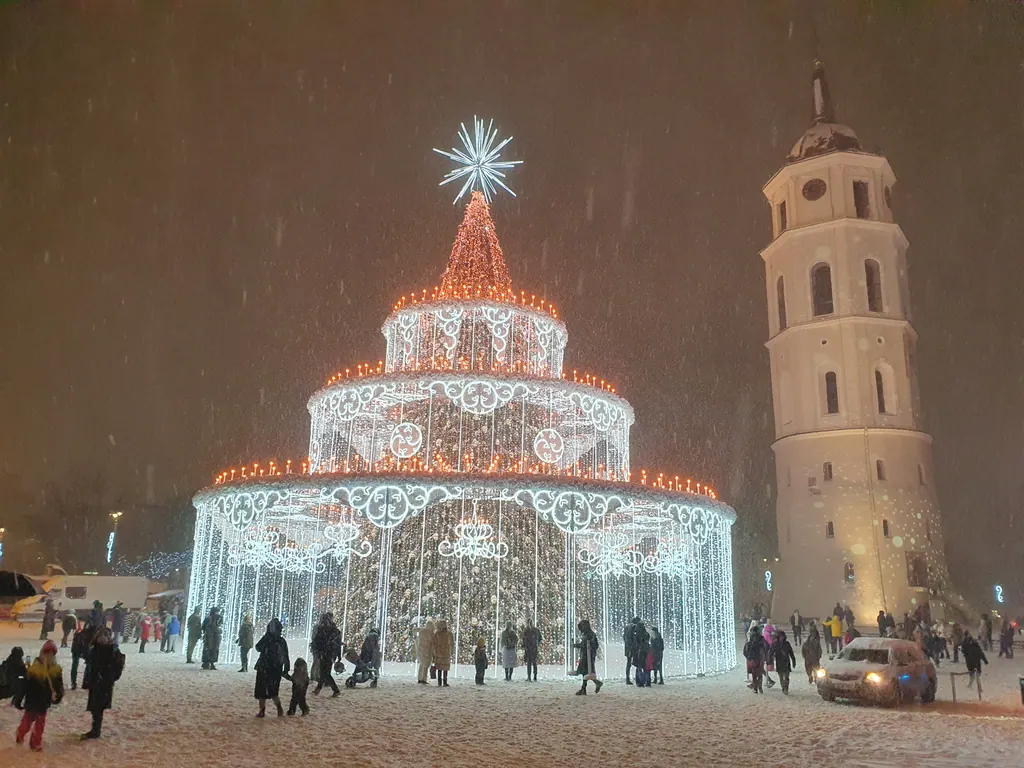
The Old Town of Vilnius is one of the largest in Central and Eastern Europe, with Baroque churches on almost every corner. It is worth a walk in daylight before the market lights come on.
Getting Between the Three Capitals
The Baltic capitals are close enough to visit in one trip of five to seven days. Tallinn to Riga is roughly 190 miles (about 310 kilometers), and Riga to Vilnius is roughly 180 miles (about 290 kilometers).
- By bus: Long-distance coaches run several times a day between all three cities, and the trip between neighboring capitals takes around four to five hours. This is the simplest option for most visitors.
- By air: airBaltic and other airlines fly between the capitals in about an hour, which helps if you are short on time.
- By train: Rail links between the Baltic states are improving, but routes and schedules have been changing. Check current options before planning a rail trip around this route.
Most Americans arrive via a connection in a major European hub, such as Helsinki, Copenhagen, Frankfurt or Warsaw. Tallinn is also a two-hour ferry ride from Helsinki, which makes it easy to add Finland.
Cold Weather, Short Days and What It Costs
Plan for real winter. December highs in the Baltic capitals are typically around or just below freezing, about 28°F to 34°F (minus 2°C to 1°C), with wind off the sea and the possibility of snow. Daylight is short: around the winter solstice, Tallinn gets only about six hours of daylight. The upside is that the markets look their best in the long blue evenings.
Pack a warm insulated jacket, a hat, gloves and boots with good grip for icy cobblestones.
All three countries use the euro. In general, prices for food, drinks and hotels are lower than in Western European Christmas market cities like Munich or Vienna, though Old Town hotels fill up on December weekends, so book early. Tipping in restaurants is modest and optional; our guide to tipping in Europe explains the local norms.
Estonia, Latvia and Lithuania are all in the Schengen Area. U.S. citizens can stay up to 90 days in any 180-day period without a visa. The EU's Entry/Exit System registers your fingerprints and photo at the external Schengen border, and ETIAS, the planned travel authorization, was not yet required as of November 1, 2026.
Planning Your Baltic Christmas Route
A natural route runs north to south or the other way around. Start in Tallinn, where the market opens first on November 20, then move to Riga and finish in Vilnius. Or start in Vilnius in early December, when its market is in full swing, and work north to Tallinn, where the market stays open until January 6.
Whichever way you go, the first weekend of December is a good compromise: all three markets are open, the trees are lit and the busiest holiday crowds have not arrived yet. For more ideas, explore our coverage of culture and the rest of Europe.
Frequently asked questions
When is the Tallinn Christmas market in 2026?
Organizers list November 20, 2026 to January 6, 2027 on Town Hall Square, open daily from 10 a.m. to 8 p.m., with hot drinks served later in the evening.
When does the Vilnius Christmas market close?
The market on Cathedral Square runs from November 28 to December 27, 2026, while the Christmas tree stays lit until January 6, 2027.
Which Baltic city had the first Christmas tree?
Both claim it. Tallinn says a tree stood on Town Hall Square in 1441, while Riga points to 1510. Both stories credit the Brotherhood of Blackheads merchant guild.
How do you travel between Tallinn, Riga and Vilnius?
Long-distance buses run several times a day and take around four to five hours between neighboring capitals. Short flights take about an hour.
Do Americans need a visa for Estonia, Latvia and Lithuania?
No. All three are in the Schengen Area, and U.S. citizens can stay up to 90 days in any 180-day period without a visa.