Three countries, three capitals, three old towns on the UNESCO World Heritage List, and you could drive from the first to the last in a single long day. The Baltic states are one of Europe's most compact road trips, yet few Americans plan one.
Lithuania, Latvia and Estonia share a coastline, the euro and the Schengen zone, so there are no border checks and no currency to change between them. What they do not share is a personality. This route runs from Vilnius in the south to Tallinn in the north and picks up a lakeside castle, a hill covered in crosses, a baroque palace and a river valley on the way.
The Route at a Glance
| Leg | Distance | Driving time | Highlights |
|---|---|---|---|
| Vilnius to Trakai | about 17 miles (28 km) | 30 minutes | Trakai Island Castle |
| Trakai to the Hill of Crosses | about 140 miles (225 km) | 2.5 hours | Kaunas on the way |
| Hill of Crosses to Rundāle | about 50 miles (80 km) | 1 hour 15 minutes | Rundāle Palace |
| Rundāle to Riga | about 50 miles (80 km) | 1 hour 15 minutes | Riga Old Town |
| Riga to Sigulda and Cēsis | about 55 miles (90 km) | 1 hour 15 minutes | Gauja National Park |
| Cēsis to Pärnu | about 105 miles (170 km) | 2.5 hours | Estonia's summer capital |
| Pärnu to Tallinn | about 80 miles (130 km) | 2 hours | Tallinn Old Town |
The direct drive from Vilnius to Tallinn is only about 375 miles (600 km). With the detours above it is closer to 500 miles (800 km), which fits comfortably into seven to ten days.
Days 1 and 2: Vilnius and Trakai
Vilnius has one of the largest surviving medieval old towns in Northern Europe, full of baroque churches, courtyards and the self-declared "Republic of Užupis," an artists' quarter with its own tongue-in-cheek constitution. Give it at least a full day before you pick up the car.
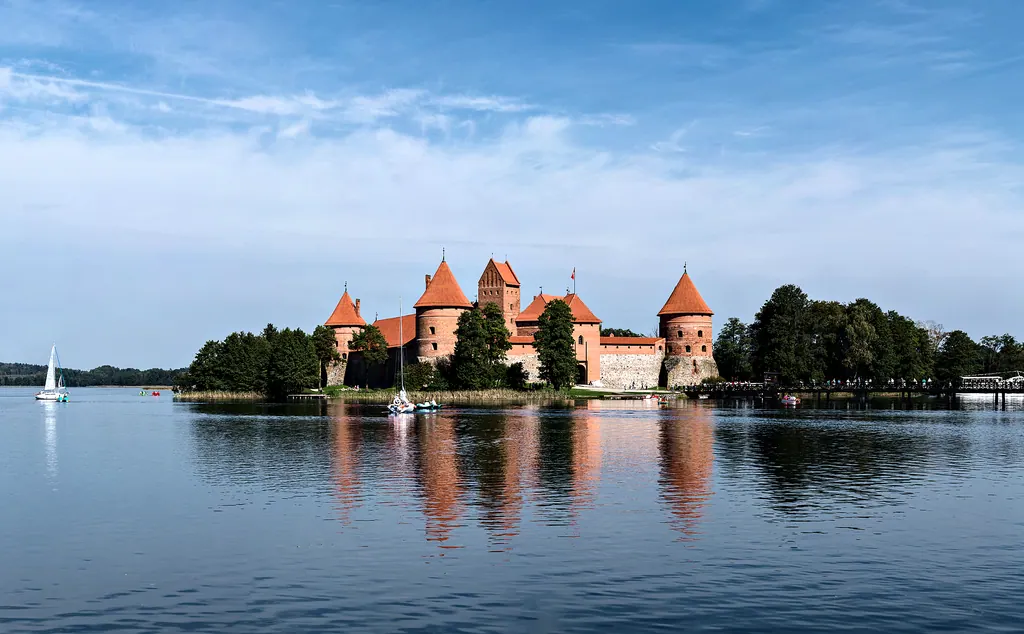
Trakai is the reason to start here. The red-brick Island Castle stands in Lake Galvė, reached by a wooden footbridge, and the surrounding lakes are dotted with sailboats in summer. Try kibinai, crescent-shaped pastries brought by the Karaim community, who have lived in Trakai since the Middle Ages.
Day 3: The Hill of Crosses and Rundāle Palace
North of Šiauliai, a low mound in the fields holds an estimated 100,000 to 200,000 crosses, rosaries and statues, left by pilgrims and visitors over generations. During the Soviet era the authorities bulldozed the hill several times, and each time crosses reappeared. It is a short stop, but few travelers forget it.
Just across the border in Latvia, Rundāle Palace looks as if it was lifted from St. Petersburg, and in a sense it was: it was designed by Bartolomeo Rastrelli, the architect of the Winter Palace. The French-style gardens with their rose collection are at their best in June and July.
Days 4 and 5: Riga
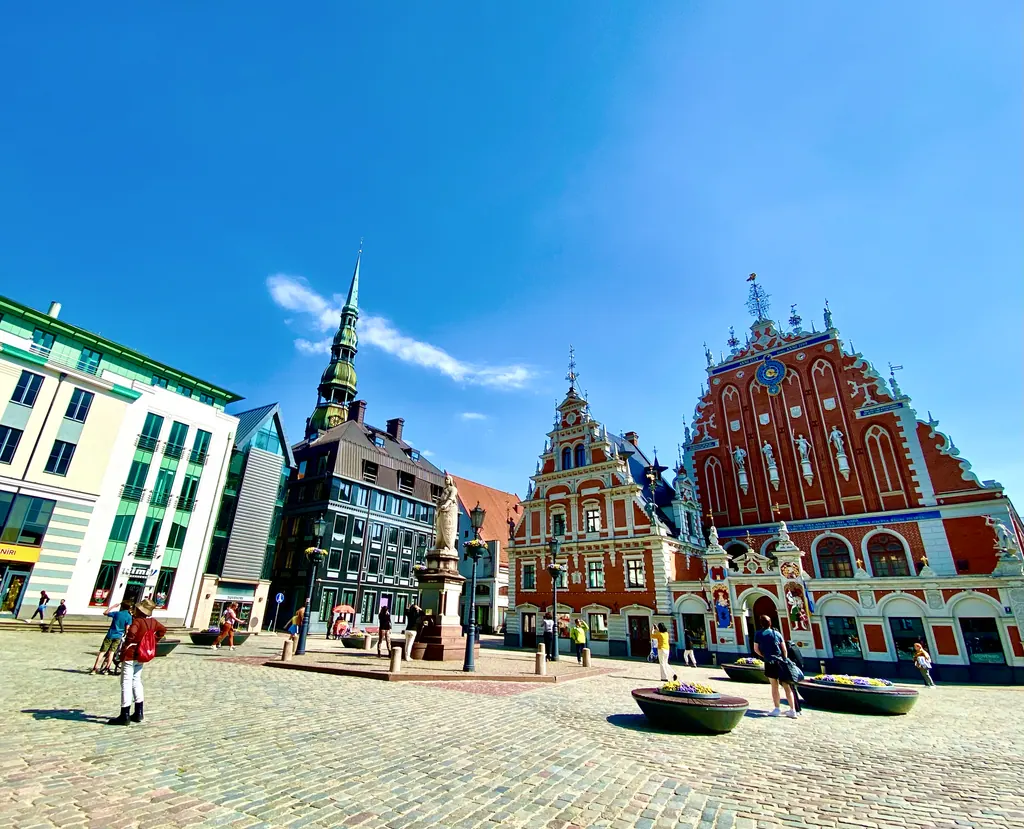
Latvia's capital is the biggest city in the Baltics and the most cosmopolitan. Spend one day in the Old Town, with the rebuilt House of the Blackheads and the view from St. Peter's Church, and another in the Art Nouveau district, where around a third of the city center's buildings are in the style. Riga Central Market, set in five former zeppelin hangars, is the place for smoked fish, rye bread and berries.
Park the car while you are in the city. The Old Town is largely pedestrian, and you will not miss it.
Day 6: Sigulda, Cēsis and the Gauja Valley
An hour northeast of Riga, the Gauja River cuts a sandstone valley through Latvia's oldest national park. Around Sigulda you can visit the brick Turaida Castle, walk to Gutmanis Cave and ride a cable car across the valley. Cēsis, a little farther on, has a medieval castle where visitors explore the towers by candlelight lantern. In autumn the valley's forests turn gold and red.
Day 7: Pärnu
Pärnu is where Estonians go to the beach. Its long sandy shore, wooden villas and spa hotels make it a relaxed stop between the two capitals, especially from June to August. Out of season it is quiet, which some travelers prefer.
Days 8 and 9: Tallinn
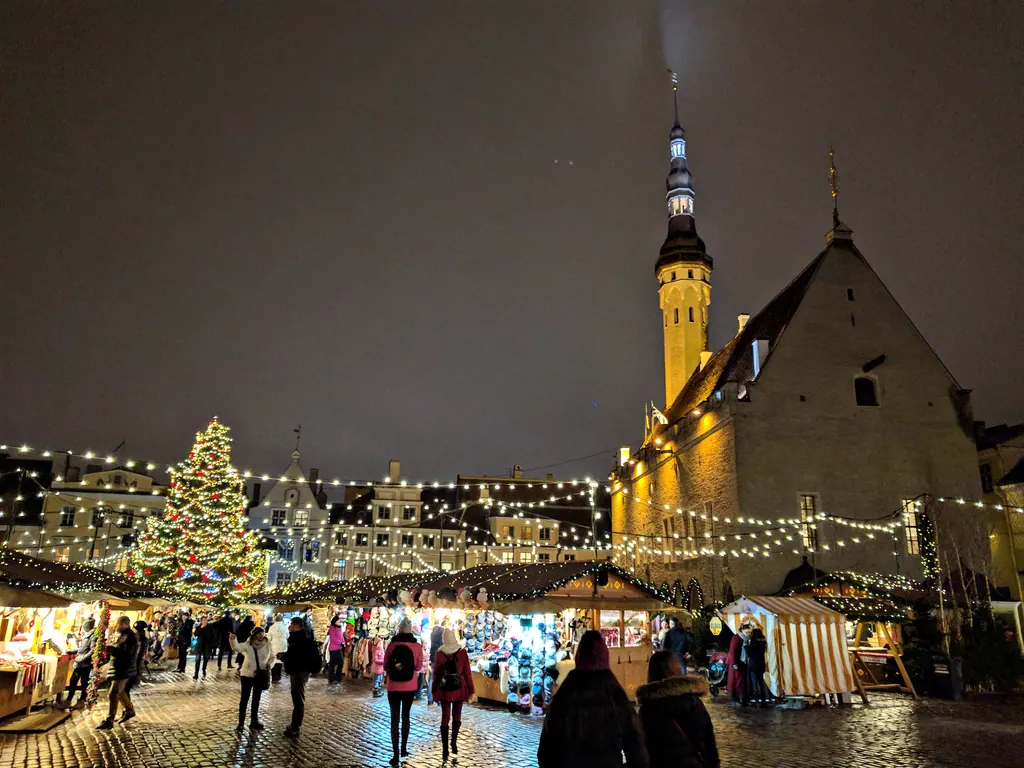
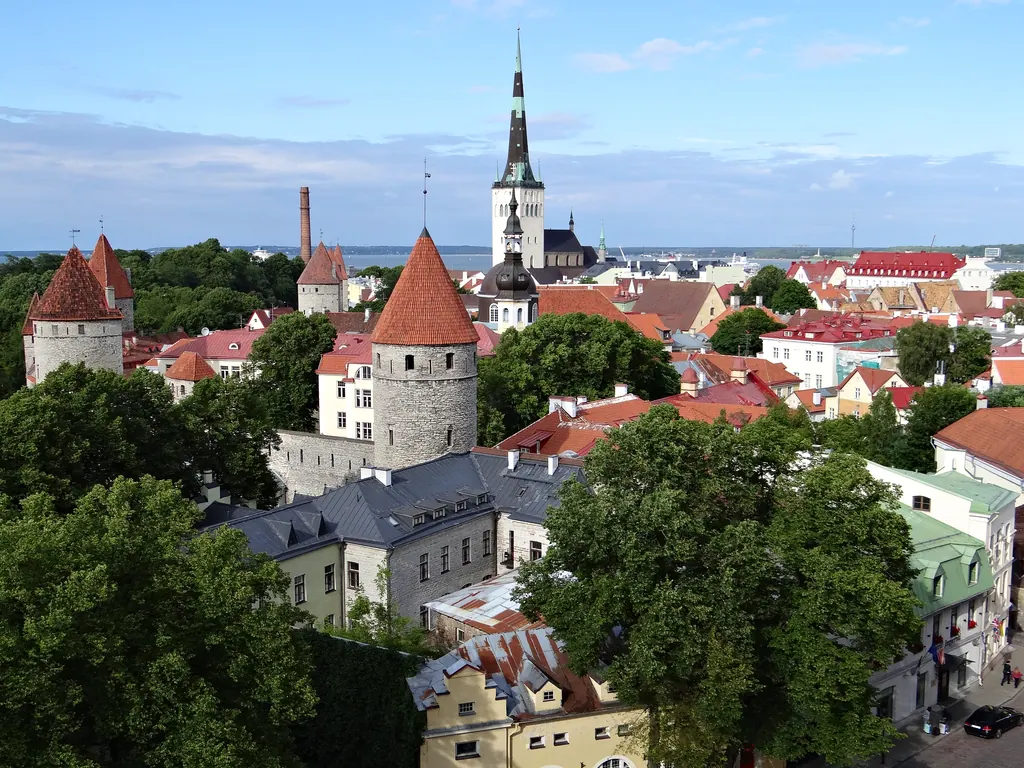
The finale is the best-preserved medieval old town in the region: city walls with more than 20 towers, a Gothic town hall and the upper town of Toompea with its viewing platforms over the red roofs. Beyond the walls, the old industrial district of Telliskivi is full of cafés and design shops, and Kadriorg Park holds a baroque palace built for Peter the Great.
Practical Tips for Driving the Baltics
- When to go: May to September has long days, open guesthouses and green countryside. December brings Christmas markets, see our guide to Christmas markets in Tallinn, Riga and Vilnius, but daylight is short.
- Winter tires: they are mandatory in Lithuania from November 10 to April 1 and in Latvia and Estonia from December 1 to March 1. Rental cars should come equipped, but confirm when you book.
- Headlights: dipped headlights must be on at all times, day and night, in all three countries.
- One-way rentals: picking up in Vilnius and dropping off in Tallinn usually adds a one-way or cross-border fee. Compare it with a round trip by train or bus back to the start.
- Driver's license: carry your U.S. license, and consider an International Driving Permit from AAA as a backup translation.
- Entry: U.S. citizens can visit the Schengen area visa-free for up to 90 days in any 180-day period. The EU's ETIAS travel authorization had no launch date as of November 14, 2026, so there is nothing to apply for yet.
How to Make the Most of It
If you only have a week, drop Pärnu and drive straight from the Gauja Valley to Tallinn. If you have two, add the Curonian Spit, a sliver of dunes and pine forest on Lithuania's coast, or a ferry from Tallinn to Helsinki to finish in a fourth capital. Either way, start in Vilnius and end in Tallinn: the old towns get more polished as you go north, and Tallinn's skyline is a fine last image. More road trips are waiting on our Road Trips page, and you can read more about each country under Europe.
Frequently asked questions
How long does it take to drive from Vilnius to Tallinn?
The direct route is about 375 miles (600 km) and takes roughly eight to nine hours of driving. Most travelers spread it over a week or more.
Are there border checks between Lithuania, Latvia and Estonia?
Normally no. All three are in the Schengen area, so you drive across the borders without passport checks, although carrying your passport is still required.
Do you need winter tires in the Baltics?
Yes, in winter. Lithuania requires them from November 10 to April 1, and Latvia and Estonia from December 1 to March 1.
What is the best time for a Baltic road trip?
May to September offers long days and the best weather. December is atmospheric thanks to the Christmas markets, but daylight is short.