Oregon has about 363 miles of coastline, and U.S. Route 101 follows almost all of it, from the mouth of the Columbia River at Astoria to the California border south of Brookings. Thanks to the Oregon Beach Bill of 1967, the beaches along the way are public, so you can stop and walk on the sand almost anywhere. The drive itself takes about eight hours without stops. It is the stops that make it worth doing, and they need more time than most people plan for.
How many days do you need for an Oregon Coast road trip?
We suggest at least four nights, and five or six if you like to hike or want slow mornings. Four nights give you one base on the north coast, one or two on the central coast and one on the south coast. With fewer days, you will spend most of your time in the car and miss the short walks that are the real reason to come.
A simple plan with overnight stops could look like this:
- Astoria to Cannon Beach: history, the first big beach views
- Cannon Beach to Pacific City: cheese, capes and dunes
- Pacific City to Newport or Yachats: whales, lighthouses and tide pools
- Yachats to Bandon: sea lions, dunes and sea stacks
- Bandon to Brookings: the wildest stretch of the coast
Driving north to south has one small advantage: you are in the lane closest to the ocean, which makes it easier to pull into viewpoints.
What should you see on the north coast?
Start in Astoria, the oldest American settlement west of the Rockies. Climb the 164 steps of the Astoria Column for a view over the Columbia River and the forests. The town has a working waterfront with old canneries and good spots for fish and chips.
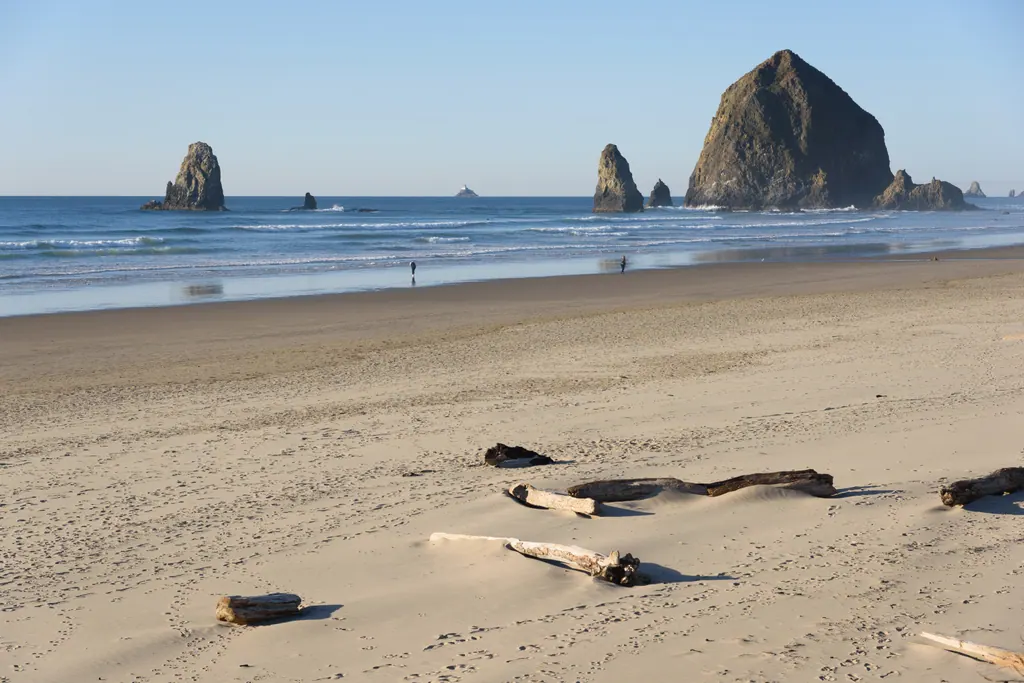
Half an hour south lies Cannon Beach and Haystack Rock, a sea stack about 235 feet tall. At low tide, you can look into the tide pools at its base, where you will find sea stars and anemones, and from spring to summer you can often see tufted puffins nesting on the rock. Just north of town, Ecola State Park has trails through Sitka spruce forest with views back toward the rock.
What are the highlights of the central coast?
At Tillamook, a stop at the creamery is almost obligatory, especially for families. Then leave Highway 101 for the Three Capes Scenic Route, which passes Cape Meares, Cape Lookout and Cape Kiwanda. At Pacific City, you can climb the big sand dune at Cape Kiwanda for a view over the surf.
Depoe Bay calls itself the whale watching capital of the Oregon Coast. A group of gray whales stays near the coast through summer and fall, and many more pass during the migrations in winter and spring. Newport has the Oregon Coast Aquarium and the Yaquina Head Lighthouse, which at 93 feet is the tallest lighthouse in Oregon.
South of Yachats, Cape Perpetua is a highlight for many travelers. At high tide, waves crash into Devil's Churn, and Thor's Well looks like a hole draining the ocean. Watch the sea at all times here, as sneaker waves can reach far up the rocks without warning.
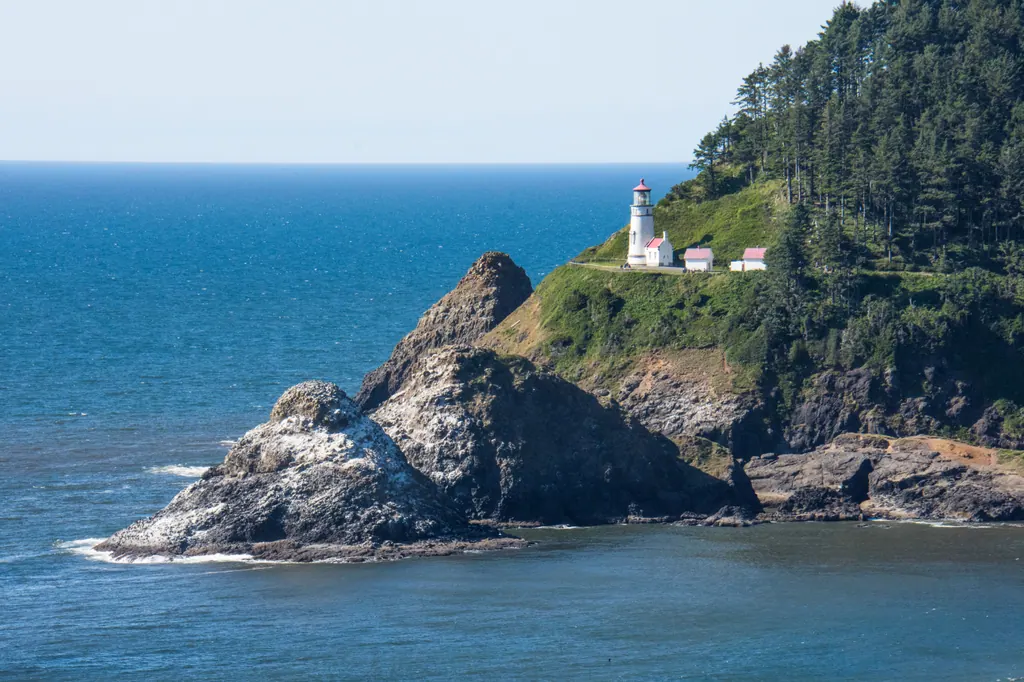
A few miles further south, Heceta Head Lighthouse stands on a cliff above a small beach. Just after it come the Sea Lion Caves, a privately run attraction where an elevator takes you down to a large sea cave where Steller sea lions often rest, especially in fall and winter.
Where are the Oregon Dunes?
Between Florence and Coos Bay, the Oregon Dunes National Recreation Area stretches for about 40 miles. Some of the dunes reach about 500 feet above sea level. Part of the area is open to dune buggies and off road vehicles, and other parts are reserved for hikers. The John Dellenback Dunes Trail is a good place to walk into the sand without hearing engines.
What is special about the south coast?
The south coast is quieter, with fewer towns and more empty beaches. In Bandon, the beach is scattered with sea stacks, including Face Rock, which in local legend is a young woman turned to stone. The town also has good seafood and a small old town on the harbor.
The last big stretch before California is the Samuel H. Boardman State Scenic Corridor, about 12 miles of forested cliffs, natural bridges and secret coves. Short trails lead from the parking areas to viewpoints such as Natural Bridges and Arch Rock. Many travelers say this is the most beautiful part of the whole drive, so try to save a few hours of good light for it.
When is the best time to drive the Oregon Coast?
July to September is the driest and most reliable time, with highs around 65°F (18°C) on the coast, cooler than inland Oregon. Morning fog is common in summer and usually burns off by midday. Book accommodation early for summer weekends.
Spring and fall have fewer people and lower prices, and September and early October often bring the clearest days of the year. Winter is wet and stormy, but storm watching has its fans, and the gray whale migration peaks around late December and late March.
What should you know before you go?
- Tides: Check tide tables before visiting tide pools or walking around headlands. It is easy to get cut off by the incoming tide.
- Sneaker waves: Never turn your back on the ocean, and keep away from logs on the beach, which can be rolled by waves.
- Parking: Some Oregon state parks charge a day use fee, and federal sites such as Yaquina Head and the Oregon Dunes have their own fees or passes.
- Water: The Pacific here is cold, usually around 50°F to 55°F (10°C to 13°C), even in summer. Most people wade rather than swim.
Want more ideas for the open road? Browse all road trips on Travel80, or explore more of the USA.
Frequently asked questions
How long is the Oregon Coast drive?
U.S. Route 101 covers about 363 miles along the Oregon Coast from Astoria to the California border. It takes about eight hours without stops.
How many days do you need for the Oregon Coast?
Plan at least four nights. Five or six nights give you time for hikes, tide pools and slow mornings.
When is the best time to drive the Oregon Coast?
July to September is the driest period. September and early October often bring the clearest days with fewer crowds.
Are Oregon beaches public?
Yes. The Oregon Beach Bill of 1967 keeps the ocean shore open to the public, so you can walk on almost any beach along the coast.