Most of the world drives on the right, like the United States. A large minority does not. Around 75 countries and territories keep to the left side of the road, home to roughly a third of the world's population, and several of them are among the most popular destinations for American travelers. If you plan to rent a car in Britain, Australia, Japan or much of the Caribbean, here is the full list by region, plus the paperwork and habits that make the switch easier.
Europe: Fewer Than You Might Think
Only four independent countries in Europe drive on the left:
- United Kingdom (England, Scotland, Wales and Northern Ireland)
- Ireland
- Malta
- Cyprus
The Isle of Man, Jersey and Guernsey also keep left. Gibraltar, a British territory, is a notable exception: it drives on the right, like neighboring Spain. Everywhere else on the continent, from France to Norway, traffic keeps right.
Sweden was the last major European country to switch. It moved from left to right on September 3, 1967, a day Swedes call Dagen H.
Asia: The Biggest Group by Population
Left-hand traffic covers much of South and Southeast Asia:
- Japan
- India, Pakistan, Bangladesh, Sri Lanka, Nepal, Bhutan and the Maldives
- Thailand, Malaysia, Singapore, Indonesia, Brunei and Timor-Leste
- Hong Kong and Macau, even though mainland China drives on the right
The border crossings between Hong Kong or Macau and mainland China are among the few places in the world where drivers switch sides at a single checkpoint.
Australia, New Zealand and the Pacific
Every major country in Oceania keeps left:
- Australia and New Zealand
- Fiji, Papua New Guinea, Samoa, Tonga, the Solomon Islands, Kiribati, Nauru and Tuvalu
Samoa is the most recent country to change sides. It switched from right to left on September 7, 2009, largely so residents could import cheaper right-hand-drive cars from Australia, New Zealand and Japan.
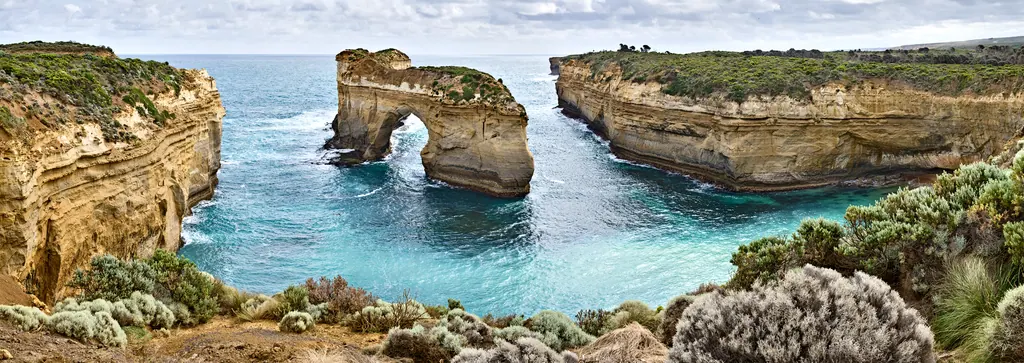
Australia's long coastal routes are a big reason Americans end up driving on the left for the first time. Rural roads there can have few services for long stretches, and animals on the road at dawn and dusk are a real hazard.
Africa: Mostly in the East and South
Left-hand traffic in Africa follows the former British sphere in the east and south:
- South Africa, Namibia, Botswana, Zimbabwe, Zambia, Mozambique, Malawi, Lesotho and Eswatini
- Kenya, Tanzania and Uganda
- Island nations Mauritius and Seychelles
Many popular self-drive safari routes, including in South Africa and Namibia, are on the left. Gravel roads in Namibia and Botswana add another layer of difficulty, so give yourself shorter driving days than you would at home.
The Caribbean and South America
This is the group that surprises Americans most, because it includes islands a short flight from Miami:
- Jamaica, The Bahamas, Barbados, Trinidad and Tobago, Antigua and Barbuda, St. Kitts and Nevis, St. Lucia, St. Vincent and the Grenadines, Grenada and Dominica
- British territories including Bermuda, the Cayman Islands, Turks and Caicos, the British Virgin Islands, Anguilla and Montserrat
- The U.S. Virgin Islands, the only part of the United States where traffic keeps left
- Guyana and Suriname in South America, plus the Falkland Islands
In the U.S. Virgin Islands, most rental cars are left-hand drive American models, so the driver sits on the side nearest the curb. It feels odd at first and makes passing harder to judge. If you are deciding between islands, our guide to choosing a Caribbean island and the overview of getting around the Caribbean cover when a rental car is worth it.
Do You Need an International Driving Permit?
An International Driving Permit (IDP) is a translation of your U.S. license recognized under international road traffic conventions. It is not a license on its own, so always carry both.
- In the U.S., only AAA and the American Automobile Touring Alliance (AATA) are authorized by the State Department to issue IDPs. Online sellers of other "international licenses" are not valid.
- An IDP from AAA costs $20 in 2026, plus a $10 photo fee and shipping if you apply online. It is valid for one year and cannot be renewed; you apply for a new one.
- You can apply up to six months before the permit's start date. Permits are printed and mailed from the U.S., with no digital version, so sort it out before you leave home.
Rules vary by country. Japan requires an IDP for U.S. drivers, and rental companies there will turn you away without one. In the UK and Ireland, a valid U.S. license is generally accepted for short visits, though some rental companies still ask for an IDP. Check the requirements for each country on the State Department's country pages before you go.
How to Adjust When You Get Behind the Wheel
A few habits help in the first days:
- Rent an automatic. In the UK, Ireland, Malta and many other left-driving countries, manual transmission is the default and automatics cost more. Shifting with your left hand while thinking about lane position is too much for most first-timers. Book early, since automatics sell out.
- Skip the first day. Pick up the car after a night's sleep, not straight off an overnight flight.
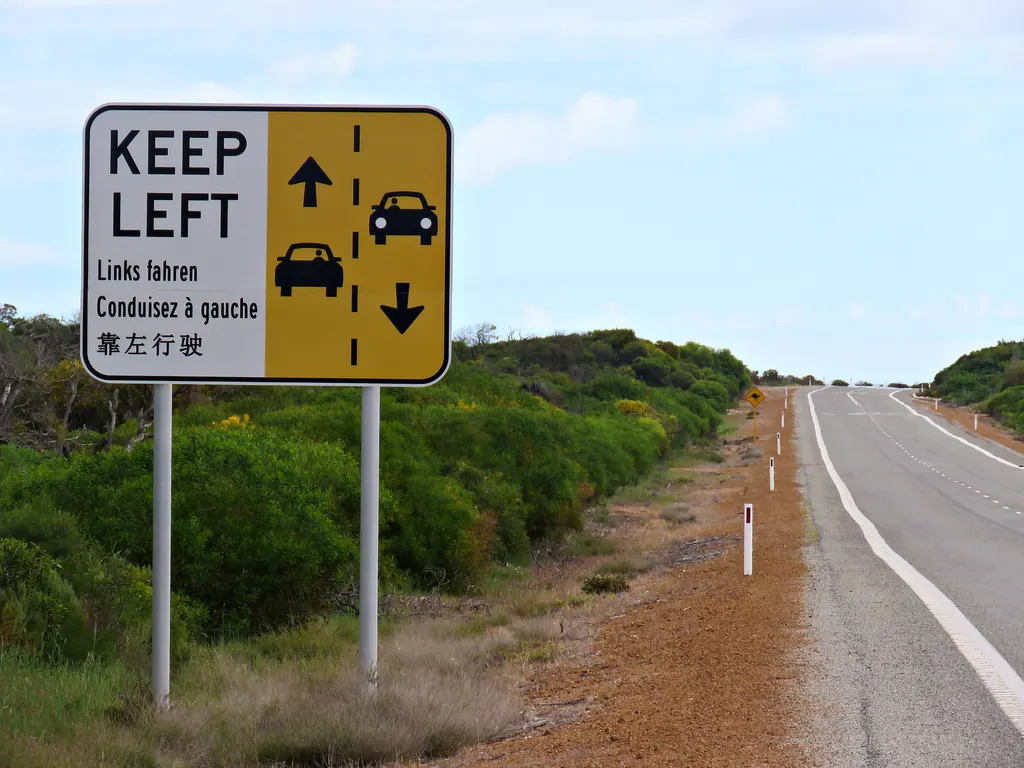
- Keep your body toward the center line. In a right-hand-drive car, the driver sits near the middle of the road. If you sit near the curb, you have drifted.
- Look right first at junctions and crossings, and say "keep left" out loud after every turn and when pulling out of a parking lot. Those are the moments when drivers tend to slip back into habit.
- Go clockwise at roundabouts, giving way to traffic already on the roundabout from your right.
- Buy full coverage. Narrow lanes and stone walls in Britain and Ireland take a toll on mirrors and hubcaps, and some U.S. credit card coverage excludes Ireland and a few other countries.
Pedestrians need to adjust too. Many crossings in London are painted with "look right" or "look left" for exactly this reason.
Planning a Road Trip on the Left
Driving on the left is a skill most people pick up within a day or two. The bigger challenge tends to be everything around it: unfamiliar signs, tight village streets and long distances. Start with a quiet stretch of road, keep your first day short, and build up. For more ideas, browse our Road Trips guides or compare with a classic route at home, like the Oregon Coast road trip.
Frequently asked questions
How many countries drive on the left?
Around 75 countries and territories drive on the left, including the UK, Ireland, Japan, India, Australia, New Zealand, South Africa and many Caribbean islands. Together they are home to roughly a third of the world's population.
Does any part of the United States drive on the left?
Yes. The U.S. Virgin Islands are the only part of the United States where traffic keeps left. Most rental cars there are still left-hand drive American models.
Which European countries drive on the left?
The United Kingdom, Ireland, Malta and Cyprus. The Isle of Man and the Channel Islands also keep left, while Gibraltar drives on the right.
Do I need an International Driving Permit to drive on the left?
It depends on the country. Japan requires one for U.S. drivers, while the UK and Ireland generally accept a U.S. license for short visits. In the U.S., IDPs are issued only by AAA and AATA.