Most famous ancient cities are ruins: places where people lived for centuries and then left. The cities on this list are different. People never stopped living in them. Someone is buying bread, driving to work or hanging laundry on the same ground that was settled thousands of years before the pyramids at Giza were finished, or long before Rome was founded.
Ranking them is harder than it sounds. Archaeologists disagree about where a village ends and a city begins, and whether "continuously inhabited" allows for a few centuries of decline. So rather than pretending there is one official list, we have gathered the places that turn up again and again in the debate, with what the evidence actually says and whether you can visit them in 2026.
How Do You Measure a City's Age?
There are two common yardsticks. One is the oldest trace of permanent settlement on the site, often a few walls or house floors found deep in an excavation mound. The other is the length of time the place has been lived in without being abandoned. A site can score high on the first and low on the second.
The ages below are therefore approximate, and different sources give different numbers. Where we could, we used the descriptions from UNESCO, which evaluates many of these sites as World Heritage properties.
| City | Country | Lived in since (approx.) | U.S. advisory, November 19, 2026 |
|---|---|---|---|
| Jericho | West Bank | Around 9000 BC | Level 3 (Israel, West Bank and Gaza) |
| Byblos | Lebanon | Neolithic period, about 7,000 years | Level 4 |
| Damascus | Syria | 3rd millennium BC or earlier | Level 4 |
| Plovdiv | Bulgaria | About 6,000 years | Level 1 |
| Athens | Greece | Neolithic settlement on the Acropolis | Level 1 |
| Jerusalem | Israel | About 5,000 years | Level 3 |
| Luxor (Thebes) | Egypt | Capital from about 2000 BC | Level 2 |
| Varanasi | India | At least 3,000 years | Level 2 |
1. Jericho, West Bank
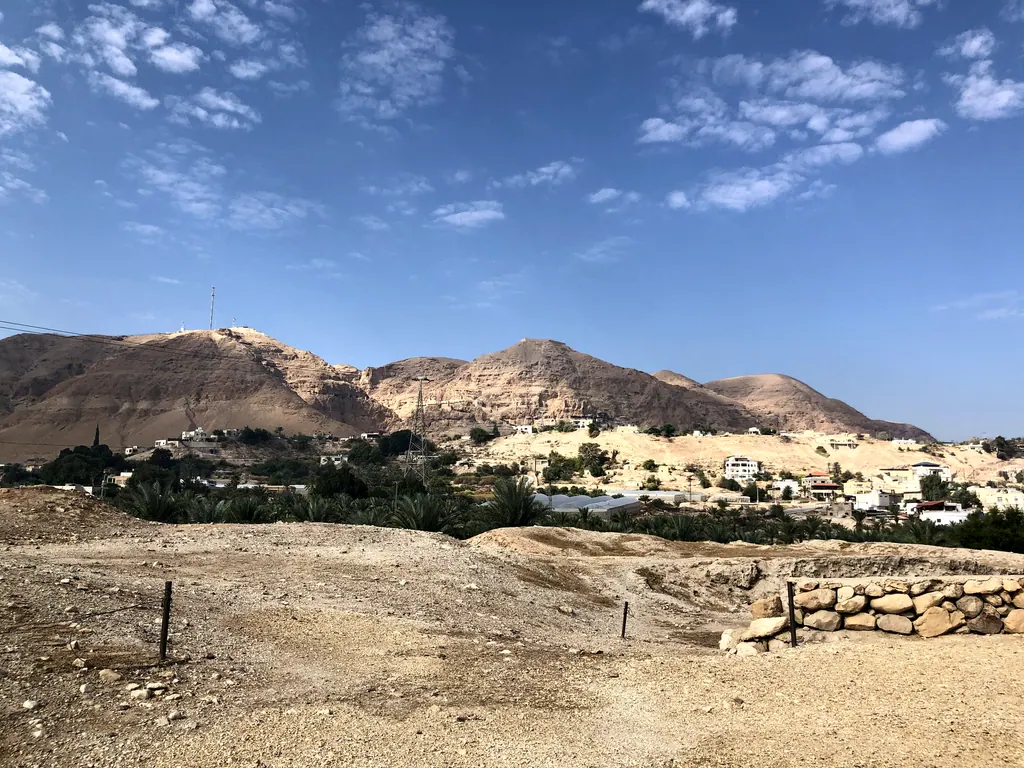
Jericho usually tops the list. Its ancient mound, Tell es-Sultan, was added to the UNESCO World Heritage List in 2023, and the excavations there revealed a Neolithic settlement from the 9th millennium BC, including a stone tower and walls that are among the oldest known anywhere. The modern city sits right next to the mound, in an oasis about 850 feet (260 meters) below sea level, which also makes it one of the lowest cities on Earth.
Visiting is possible, often as a day trip from Jerusalem, but it is in the West Bank. The State Department's advisory for Israel, the West Bank and Gaza was at Level 3, Reconsider Travel, when we checked on November 19, 2026. Read the full advisory before you plan anything, and see our explainer on what the travel advisory levels mean.
2. Byblos, Lebanon
UNESCO describes Byblos, on the Mediterranean coast north of Beirut, as continuously inhabited since Neolithic times. It was a major Phoenician port, and the Greek word for papyrus, byblos, is linked to the city because Egyptian papyrus was traded through it. That word later gave English "bible" and "bibliography."
Today the old harbor, a Crusader castle and layers of ruins from Bronze Age temples to Roman columns sit in one compact site. The catch is the security situation. The State Department rated Lebanon Level 4, Do Not Travel, as of November 19, 2026, so Byblos belongs on a someday list for now.
3. Damascus, Syria
Damascus is often called the oldest continuously inhabited capital city in the world. UNESCO, which listed the Ancient City of Damascus in 1979, notes that it was founded in the 3rd millennium BC, and its Umayyad Mosque stands on a site that has held a temple, a church and a mosque in turn. Aleppo, in northern Syria, makes a similar claim.
Syria remained at Level 4, Do Not Travel, on November 19, 2026. Both cities are on UNESCO's list of World Heritage in Danger.
4. Plovdiv, Bulgaria
For travelers who want to stand in one of the world's oldest cities without a security briefing, Plovdiv is the easy answer. Bulgaria's second city grew up on a cluster of hills above the Maritsa River, and archaeologists have found settlement traces on Nebet Tepe hill that go back roughly 6,000 years. It is often called the oldest continuously inhabited city in Europe, a title that newer research has questioned, but the case is still strong.
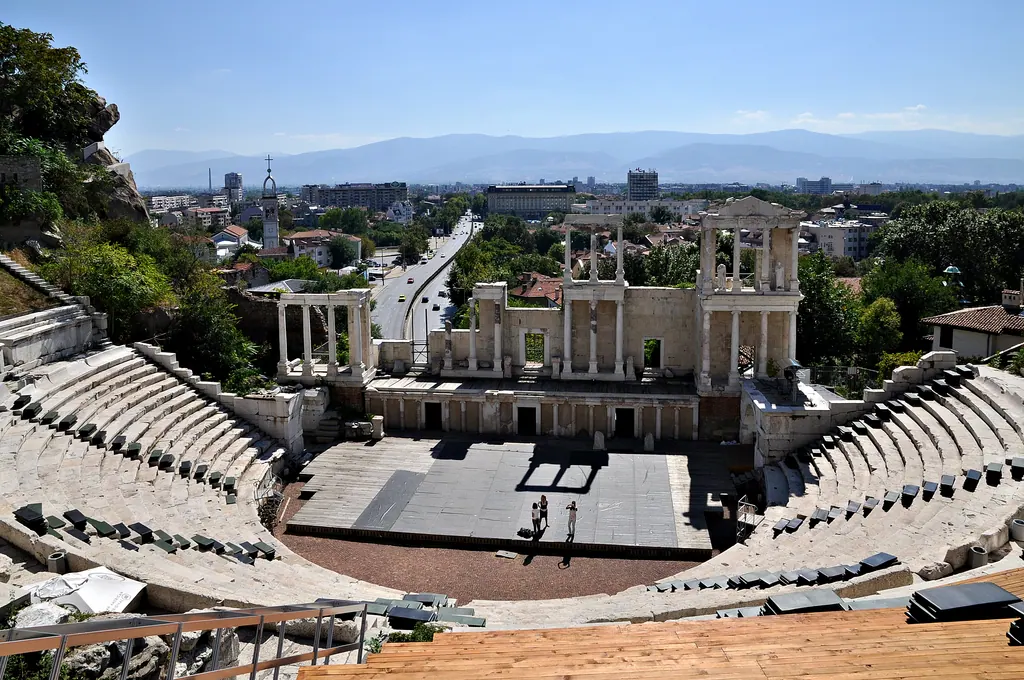
The Roman theater from the 1st century AD, uncovered by a landslide in the 1970s, is used for concerts again, and the cobbled Old Town is full of 19th-century merchant houses. Plovdiv was a European Capital of Culture in 2019 and is an easy trip from Sofia. Bulgaria is also one of the cheaper countries in the EU, as we explain in Is Bulgaria Cheap?.
5. Athens, Greece
People lived on and around the Acropolis rock in the Neolithic period, long before the Parthenon was built in the 5th century BC. Athens shrank to a modest town at several points in its history, but it was never abandoned, which is why it earns a place on most lists of the oldest cities in the world.
What makes Athens special is how visible the layers are. You can walk from the Acropolis to the ancient Agora, then past Byzantine churches and Ottoman-era buildings, all within a mile or two. Greece is at Level 1, the lowest advisory level.
6. Jerusalem
Settlement around the spring below the City of David goes back about 5,000 years, and Jerusalem has been fought over, destroyed and rebuilt many times since. The Old City, with its Jewish, Christian, Muslim and Armenian quarters, fits inside walls less than a mile across and holds sites sacred to three religions.
Jerusalem falls under the same Level 3 advisory as the rest of Israel and the West Bank as of November 19, 2026, with stricter warnings for some areas. Check the latest advisory before you go.
7. Luxor, Egypt
Luxor is the modern city on the site of ancient Thebes, which became the capital of Egypt around 2000 BC and reached its peak during the New Kingdom. UNESCO lists Ancient Thebes with its necropolis, including the Karnak and Luxor temples on the east bank and the Valley of the Kings on the west bank.
Unlike some cities on this list, Luxor is firmly on the tourist map, with direct trains and flights from Cairo. Egypt is at Level 2, Exercise Increased Caution. We cover the temples in detail in Temples of Egypt Along the Nile.
8. Varanasi, India
Varanasi, on the Ganges in northern India, is one of the holiest cities in Hinduism and one of the oldest continuously inhabited cities in Asia. Excavations suggest the site has been lived in for at least 3,000 years. Mark Twain, who visited in 1896, wrote that the city was "older than history, older than tradition, older even than legend, and looks twice as old as all of them put together."
The ghats, the stone steps that lead down to the river, are the heart of the city, especially at sunrise and during the evening aarti ceremony. India is at Level 2.
What About the Americas?
The Americas were settled much later than the Middle East, so no city here competes on age. The oldest continuously inhabited communities in what is now the United States are pueblos in the Southwest. Acoma Pueblo, known as Sky City and built on a mesa in New Mexico, dates its settlement to at least 1150 AD, and Taos Pueblo, a UNESCO World Heritage Site, has been lived in for about a thousand years. Both can be visited on guided tours run by the communities themselves.
Which One Should You Visit First?
If you want the experience without the risk, start with Plovdiv or Athens. Both are safe, easy to reach from Europe's main hubs, and combine ancient sites with lively modern neighborhoods. Luxor is the strongest choice for monumental scale, and Varanasi for a city where ancient rituals are still part of daily life. Jericho and Jerusalem can be visited, but only after a careful look at the current advisory, while Byblos and Damascus are best saved for later.
For more ancient places worth the trip, browse our sights section.
Frequently asked questions
What is the oldest city in the world?
Jericho, in the West Bank, is most often named as the oldest, with a permanent settlement dating to around 9000 BC. Byblos and Damascus are also strong contenders for the oldest continuously inhabited city.
What is the oldest city in Europe?
Plovdiv in Bulgaria is usually given that title, with settlement traces going back about 6,000 years. Athens is also among the oldest continuously inhabited cities in Europe.
What is the oldest city in the United States?
St. Augustine, Florida, founded in 1565, is the oldest continuously inhabited European-founded city. Native American communities such as Acoma Pueblo in New Mexico, settled by at least 1150 AD, are much older.
Can Americans visit Jericho?
Yes, Jericho is often visited as a day trip from Jerusalem, but it is in the West Bank, which was under a Level 3 State Department advisory as of November 19, 2026. Check the current advisory before you go.