Most first trips to Egypt are built around Giza, and for good reason. But the pyramids are tombs, and to see how ancient Egyptians worshiped, celebrated and showed off, you have to travel south along the Nile. Between Luxor and the Sudanese border stand temples that still have their roofs, their painted ceilings and their carved stories of gods and kings. Here are the ones we think deserve a place on your route, from north to south.
Why is Dendera worth the detour?
The Temple of Hathor at Dendera, about 40 miles north of Luxor, is one of the best preserved temple complexes in the country. Most of what you see dates from the Ptolemaic and Roman periods, so it is young by Egyptian standards, but that is exactly why so much survives. The ceiling of the great hypostyle hall has been cleaned in recent years and shows deep blue skies full of astronomical figures.
Climb the stairs to the roof, where small chapels once held rituals for the god Osiris. The famous Dendera zodiac, a round sky map carved in stone, was removed in the 1820s and is now in the Louvre in Paris. The one you see in place is a cast. Many travelers combine Dendera with Abydos on a long day trip from Luxor.
What makes the Temple of Seti I at Abydos special?
Abydos was the holiest burial ground for the god Osiris, and the temple built by Seti I around 1290 BC has some of the finest relief carving in Egypt. The figures are delicate, with fine details in faces and hands that are hard to match anywhere else. In one corridor you will find the Abydos King List, a carved row of royal names that historians still use to reconstruct the order of the pharaohs.
How much time do you need for Karnak and Luxor Temple?
Luxor, the ancient city of Thebes, has more monuments than any other place along the river, and it is easy to spend three days there. Karnak is the largest religious complex built in ancient times, added to by pharaohs for about 2,000 years. Its Great Hypostyle Hall has 134 enormous columns, and walking between them is one of the most memorable moments of any trip to Egypt. Give Karnak at least half a day.
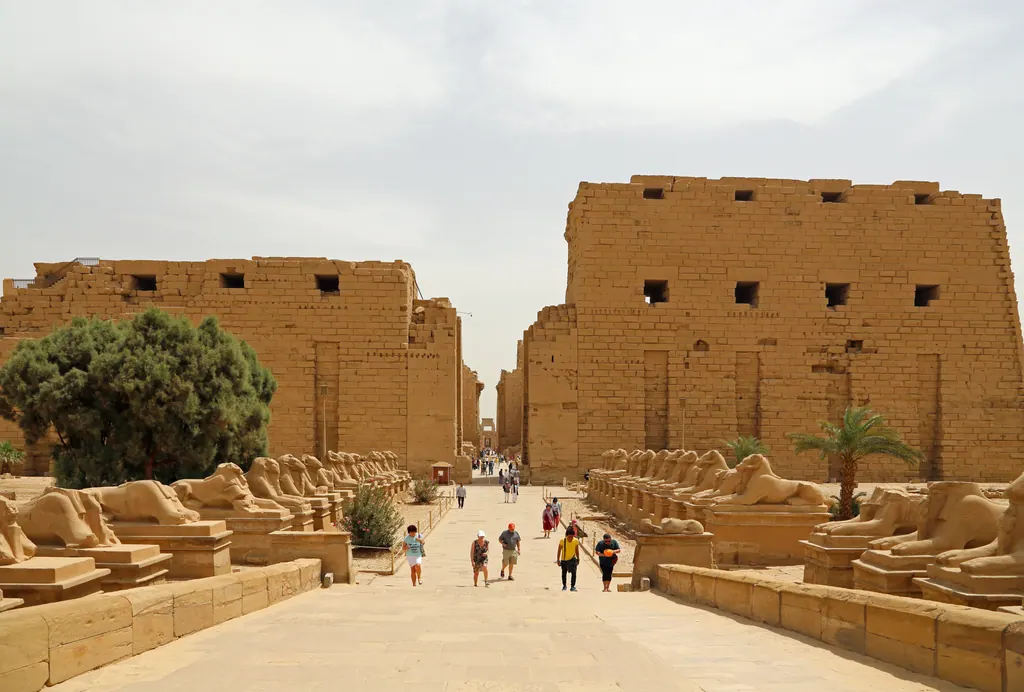
Luxor Temple sits in the middle of town, about 2 miles south of Karnak. The two were once joined by an avenue lined with sphinxes, which has been excavated and reopened as a walking route. Luxor Temple is lit up in the evening, which makes it a good visit after a day in the heat.
On the west bank, the Mortuary Temple of Hatshepsut at Deir el-Bahari rises in terraces against the cliffs. It honors one of the few women who ruled Egypt as pharaoh. Nearby, Medinet Habu, the temple of Ramesses III, is often quieter than the big names and still has strong colors on its carved walls.
Which temples can you see between Luxor and Aswan?
This stretch is the classic route for Nile cruises, which usually stop at two temples on the way.
- Edfu: The Temple of Horus at Edfu is the most complete temple in Egypt. It was built between 237 and 57 BC, and its pylon, courtyard and dark inner sanctuary give a clear idea of how a temple worked as a whole.
- Kom Ombo: This is a double temple on a bend of the river, dedicated to the crocodile god Sobek and the falcon god Haroeris. Each half has its own entrance and sanctuary. A small museum next door displays mummified crocodiles found in the area.
If you are not on a cruise, both are easy to reach by car from Luxor or Aswan.
Why did they move Philae?
The Temple of Isis at Philae was one of the last places where the old religion was practiced, well into the Christian era. After the first Aswan Dam was built, the temple stood partly under water for much of the year. When the High Dam was planned, UNESCO led an international campaign, and in the 1970s the whole complex was taken apart and rebuilt on the nearby island of Agilkia, shaped to look like the original.
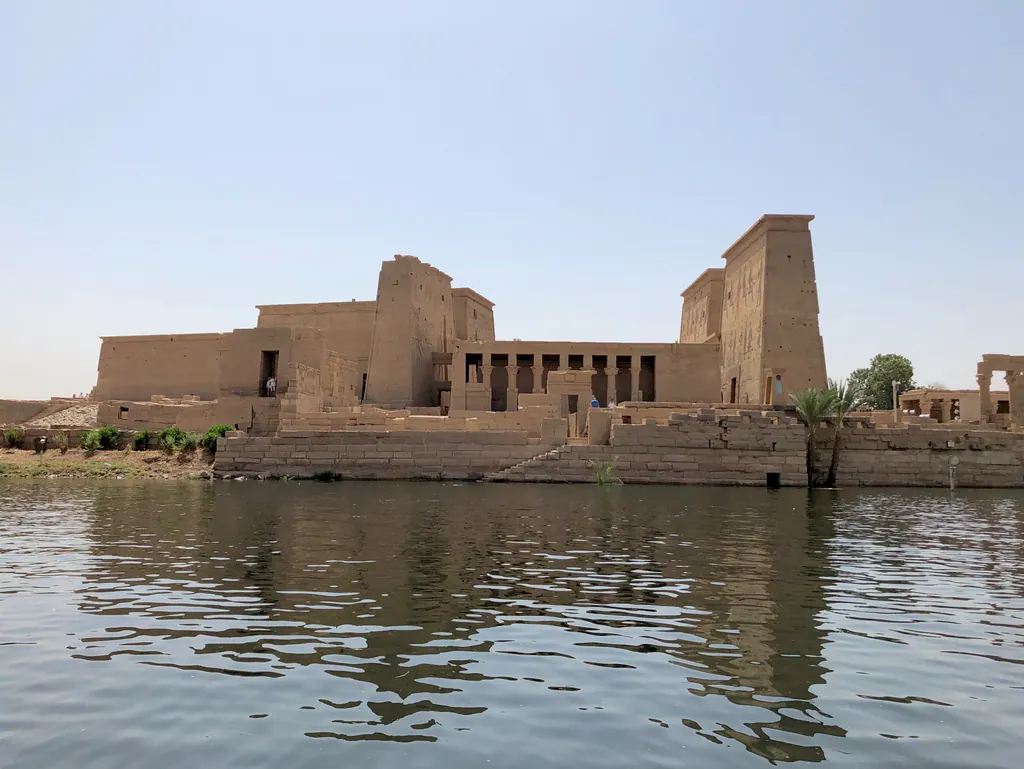
You reach Philae by a short motorboat ride from Aswan. Go early in the morning, when the light is soft and the boats are fewer, or come back for the evening sound and light show.
When can you see the sun festival at Abu Simbel?
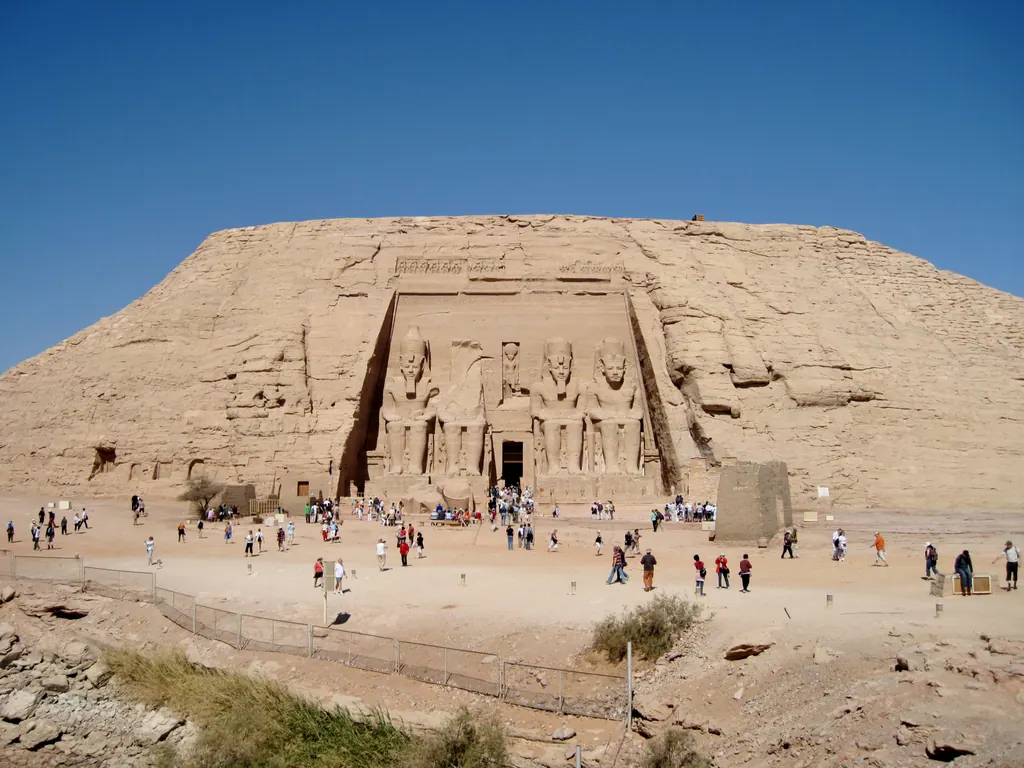
The two temples of Abu Simbel were cut into a sandstone cliff by Ramesses II, about 170 miles south of Aswan. Four seated statues of the king, each about 66 feet tall, guard the entrance to the Great Temple. Like Philae, the temples were moved in the 1960s to save them from the rising waters of Lake Nasser, cut into blocks and reassembled higher up.
The temple was designed so that on two days of the year, around February 22 and October 22, the first rays of the morning sun reach deep inside and light up the statues in the sanctuary. The festival days draw large crowds, so book early if you want to see it. Most visitors come on an early day trip from Aswan by road or fly in for a few hours. The smaller temple next door is dedicated to Queen Nefertari and the goddess Hathor.
How do you plan a temple trip in Egypt?
The most comfortable months are from about November to March, when daytime highs in Luxor and Aswan are usually between 70°F and 85°F (21°C and 29°C). October and April are warmer, often above 90°F (32°C). From May to September, temperatures above 104°F (40°C) are common, and the only comfortable hours are early morning and evening.
A few practical points:
- Tickets: Major sites sell tickets at the entrance, and many now accept cards. Prices change often, so check the official Egypt tourism sites before you go. Some tombs and special areas need a separate ticket.
- Dress: Light, loose clothes that cover shoulders and knees are practical in the sun and respectful at religious sites.
- Guides: A licensed Egyptologist guide makes the carvings much easier to understand.
- Safety: As of October 31, 2026, the State Department rates Egypt at Level 2, exercise increased caution. The areas listed as do not travel are North and Middle Sinai and parts of the Western Desert near the Libyan border, not the Nile Valley. Tourist sites in Luxor and Aswan have visible security.
For more inspiration, explore other sights on Travel80, or browse destinations in the Middle East. If you are wondering how much to tip guides and boat crews, see who expects a tip in Asia, Africa and the Middle East.
Frequently asked questions
What is the best preserved temple in Egypt?
The Temple of Horus at Edfu is generally considered the most complete, with its pylon, courtyard, halls and sanctuary still standing. Dendera is also exceptionally well preserved.
When does the sun light up the statues at Abu Simbel?
Around February 22 and October 22 each year, the morning sun reaches the inner sanctuary of the Great Temple and lights up the statues there.
Why was Philae Temple moved?
Rising water after the Aswan dams flooded the temple for much of the year, so in the 1970s it was taken apart and rebuilt on the nearby island of Agilkia in a UNESCO campaign.
How many days do you need to see the temples in Luxor?
Plan at least two to three days in Luxor to see Karnak, Luxor Temple and the west bank, plus an extra day if you want to visit Dendera and Abydos.