Tasmania is the size of West Virginia and sits about 150 miles (240 km) off the southern coast of mainland Australia, across the Bass Strait. Most Americans who fly to Australia never get there. That is a mistake, because few places pack this much into a road trip: white sand beaches, alpine lakes, convict history, a museum that made headlines worldwide and a food scene that Australians themselves travel for.
The island is also easy. It is compact, English-speaking and safe, and the roads are quiet once you leave Hobart. The hard part is choosing. Here is how the island breaks down, and how to see the best of it in a week or two.
Hobart: A Harbor City With an Edge
Tasmania's capital is a small city on the Derwent River, overlooked by kunanyi/Mount Wellington, which rises to 4,170 feet (1,271 m) right behind the town. A road climbs to the summit, where the view takes in the harbor, the river and, on a clear day, much of the southeast.
Down on the waterfront, the sandstone warehouses of Salamanca Place host the Salamanca Market on Saturdays, with local produce, crafts and food stalls. Then there is MONA, the Museum of Old and New Art, a private museum carved into a riverside cliff north of the city center. It is provocative, sometimes deliberately shocking and unlike any other museum in Australia. Most visitors arrive by ferry from the Hobart waterfront.
The East Coast: Wineglass Bay and the Bay of Fires
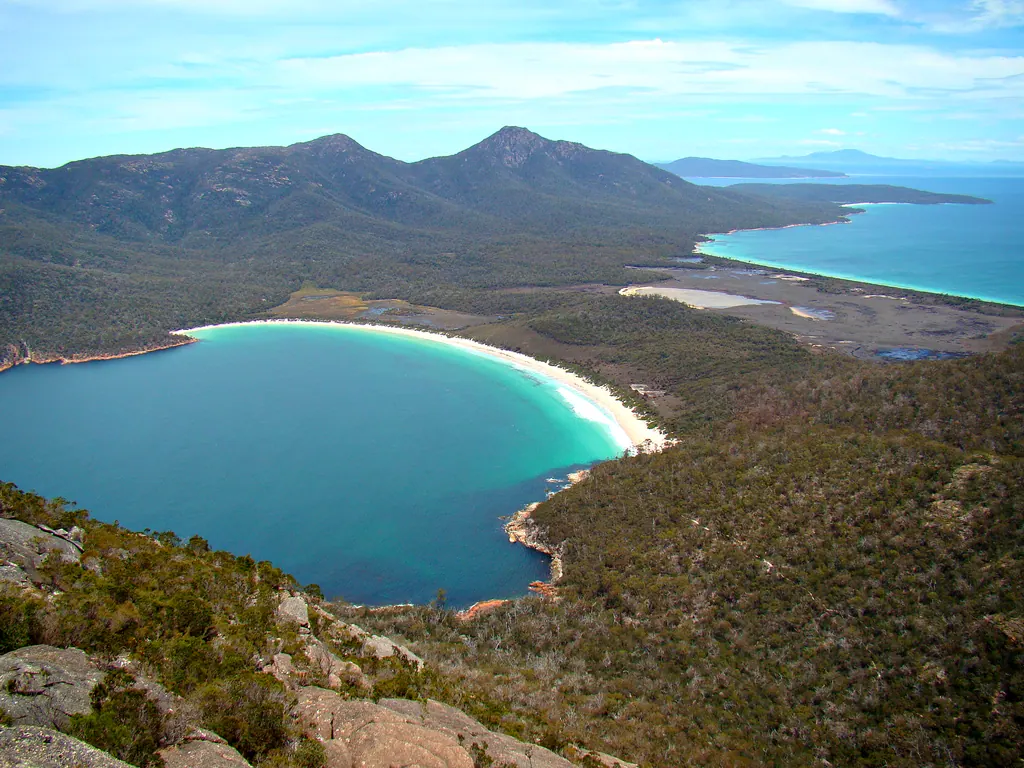
The drive north from Hobart along the east coast is the classic Tasmanian road trip. The highlight is Freycinet National Park, where pink granite peaks drop into the sea. The walk to the Wineglass Bay Lookout takes about 1 to 1.5 hours return, according to Tasmania's Parks and Wildlife Service, and ends with the view you have probably seen on postcards: a perfect curve of white sand between the mountains. Fit walkers can continue down to the beach itself.
Further north, the Bay of Fires is a string of beaches and coves where the granite boulders are covered in bright orange lichen. Water temperatures are cool all year, so think of these as beaches for walking, kayaking and photographs more than long swims.
Cradle Mountain: Tasmania's Wild Heart
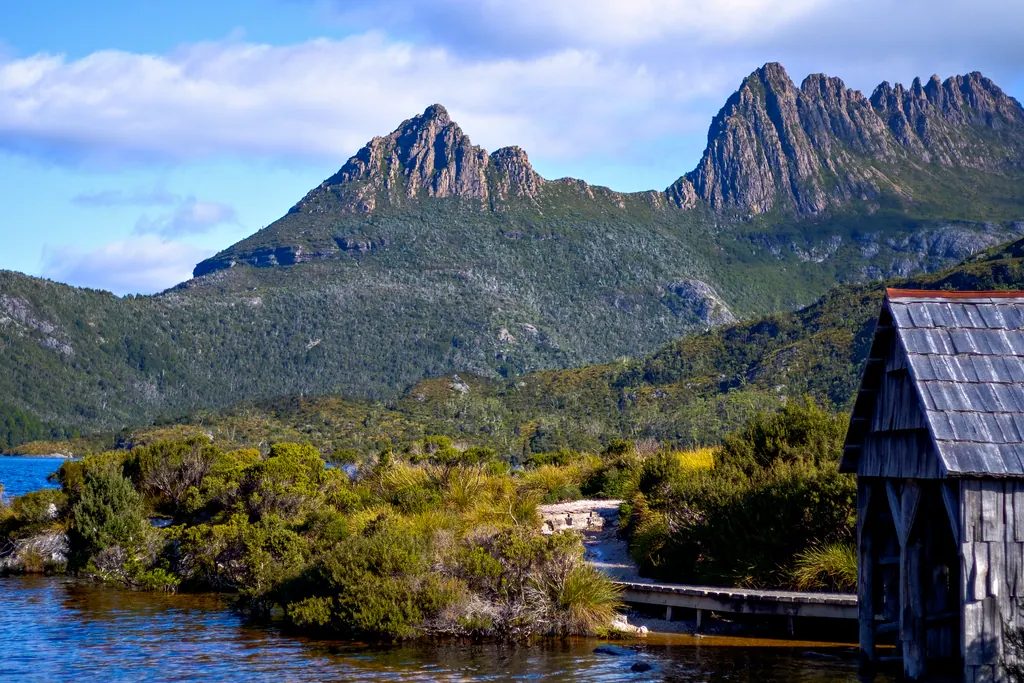
Inland, the Tasmanian Wilderness World Heritage Area covers almost a fifth of the island. Its best known corner is Cradle Mountain, where the jagged peak rises above Dove Lake. The circuit around the lake is about 3.7 miles (6 km) and is the walk most visitors do. A shuttle bus runs from the visitor center into the park, and private cars are restricted on the lake road while it operates.
For serious hikers, the Overland Track runs 40 miles (65 km) from Cradle Mountain to Lake St Clair, usually over six days. Between October 1 and May 31 you must book ahead, and the fee for the 2026-2027 season is 312 Australian dollars (about $213 in 2026) per adult, according to the Parks and Wildlife Service. A maximum of 34 independent walkers can start each day, so book early.
Port Arthur and the Convict Past
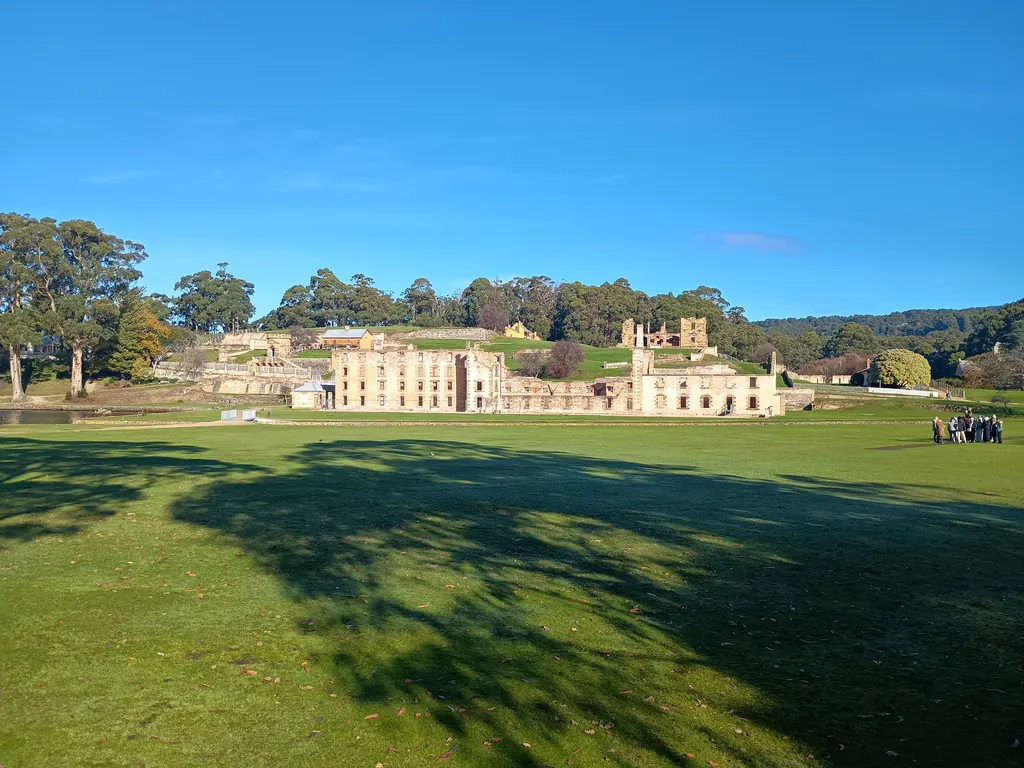
About 90 minutes southeast of Hobart, Port Arthur Historic Site preserves the ruins of a 19th century penal settlement, including the shell of the large penitentiary building on the water's edge. It is one of the 11 places that make up the Australian Convict Sites on the UNESCO World Heritage List, inscribed in 2010.
A ticket includes a guided walk and a short harbor cruise, and the site gives a sober, well told picture of how Britain used Tasmania, then called Van Diemen's Land, as a prison colony. Allow most of a day, and combine it with the sea cliffs of the Tasman Peninsula on the way.
Wildlife You Can Actually See
Tasmania is one of the best places in Australia to see wildlife in the wild. Wombats graze in the open at Cradle Mountain and on Maria Island, and wallabies and pademelons are common at dusk almost everywhere. The animal everyone wants to see is the Tasmanian devil, which is endangered in the wild. Your best chance is at a wildlife sanctuary that takes part in conservation work. Drive slowly at dawn and dusk, when animals are on the roads.
Food and Drink Worth a Detour
Cool, clean water and fertile soil make Tasmania one of Australia's best food regions. Look for oysters and salmon from the east coast, cheese and oysters on Bruny Island (reached by a short car ferry south of Hobart), cool climate wines from the Tamar Valley near Launceston and whisky from a growing number of small distilleries. Farm gates and roadside stalls are part of the experience.
How to Plan a Trip to Tasmania
Getting there: Fly to Hobart or Launceston, usually via Melbourne or Sydney. The Spirit of Tasmania car ferry also sails overnight across the Bass Strait between Geelong, near Melbourne, and Devonport.
Entry: U.S. citizens need an Electronic Travel Authority (ETA) for Australia, applied for through the official AustralianETA app. The service fee is 20 Australian dollars (about $14 in 2026).
Getting around: You need a car. Distances look short on the map, but roads are winding, so a week is the minimum for Hobart, the east coast and Cradle Mountain, and ten days to two weeks is better.
Park fees: A Holiday Pass covers all Tasmanian national parks for up to two months and costs 98.35 Australian dollars (about $67 in 2026) per vehicle with up to eight people, according to the Parks and Wildlife Service.
When to go: The seasons are reversed. December to February is summer, with long days and the most visitors. March and April bring autumn color and calmer roads. Winter (June to August) is cold, with snow in the mountains, but it is quiet and good for cozy pubs and the winter festivals of Hobart. The weather can change fast at any time of year, so pack layers.
Tasmania pairs well with New Zealand on a longer trip. See our guide to New Zealand's South Island and more ideas under Oceania.
Frequently asked questions
How many days do you need in Tasmania?
A week covers Hobart, the east coast and Cradle Mountain at a steady pace. Ten days to two weeks lets you add Port Arthur, Bruny Island and the north without long driving days.
Do Americans need a visa for Tasmania?
Tasmania is part of Australia, so U.S. citizens need an Australian Electronic Travel Authority (ETA), applied for in the official AustralianETA app for a service fee of 20 Australian dollars.
What is the best time to visit Tasmania?
December to February is summer with the longest days and most visitors. March and April are often the best balance of mild weather and quieter roads.
How do you get to Tasmania from mainland Australia?
Most visitors fly to Hobart or Launceston from Melbourne or Sydney. The Spirit of Tasmania car ferry sails overnight between Geelong and Devonport.