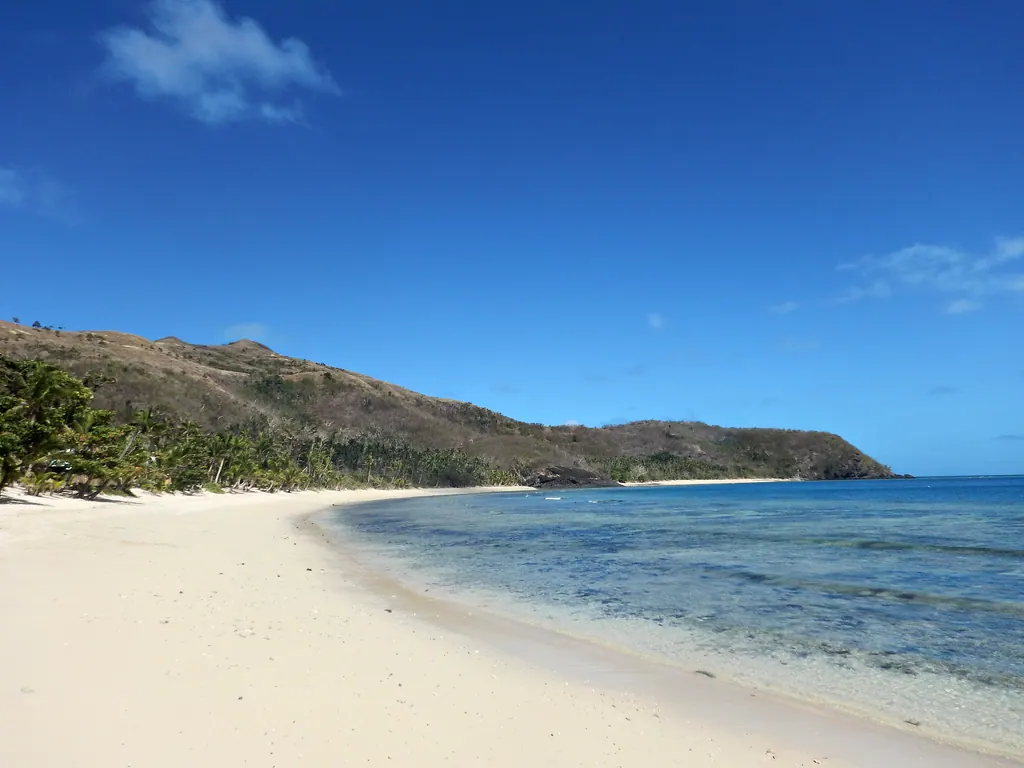
The 180th meridian runs straight through the Fijian island of Taveuni, which makes Fiji one of the first countries to see each new day. From the U.S. West Coast, you lose a calendar day on the way there and get it back on the way home. The weather is less dramatic than the date line: Fiji is tropical and warm in every month of the year.
That makes the timing question a bit different from most destinations. You are not choosing between hot and cold. You are choosing between a drier, slightly cooler half of the year and a wetter, hotter half that comes with a real but manageable risk. Which one fits depends on what you want from the trip.
How Do Fiji's Seasons Work?
Fiji has two seasons, and the switch between them is gradual rather than sudden.
| Dry season | Wet season | |
|---|---|---|
| Months | May to October | November to April |
| Average temperature | about 73 to 77°F (23 to 25°C) | about 79 to 81°F (26 to 27°C) |
| Typical monthly rain | about 3 to 6 inches (80 to 150 mm) | about 10 to 16 inches (250 to 400 mm) |
| Humidity | Lower, with steady trade winds | Higher and stickier |
| Cyclone risk | Very low | Official cyclone season |
The averages hide the daily range. Coastal afternoons can reach around 90°F (32°C) in the hot months, while dry season nights can dip to around 64°F (18°C), especially in the hills.
Where you stay matters as much as when you go. The main island, Viti Levu, has mountains in the middle that catch the trade winds, so the southeast around the capital, Suva, is much wetter than the west around Nadi. The resort areas most visitors use, including Nadi, Denarau, the Coral Coast, the Mamanuca Islands and the Yasawa Islands, sit on the drier side.
May to October: Why the Dry Season Is the Classic Choice
For most travelers, this is the easy answer. Days are sunny and less humid, evenings are comfortable, and the sea is calm enough for long boat transfers out to the islands. Water visibility for snorkeling and diving tends to be good.
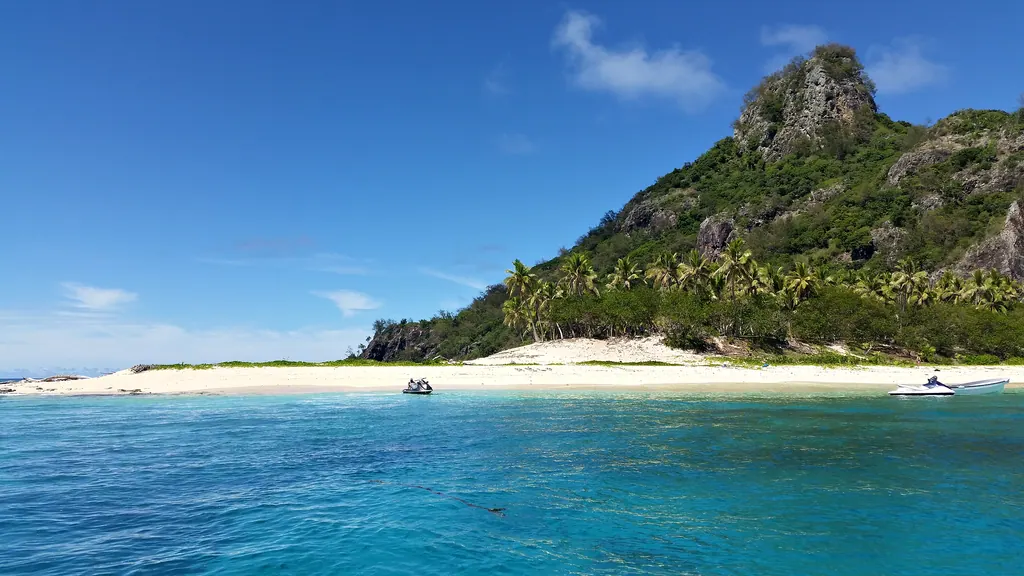
The dry season also brings two of the more distinctive reasons to go. In the Yasawa Islands, manta rays gather in channels between the islands from about May to October, with June to September usually the most reliable months, according to Tourism Fiji. And the festival calendar is busiest in this half of the year. The Bula Festival in Nadi ran from July 18 to 25 in 2026, and Suva's Hibiscus Festival, which celebrated its 70th edition in 2026, ran from August 29 to September 5. Fiji Day on October 10 marks independence from Britain in 1970 and is a national holiday.
The trade-off is demand. June to October overlaps with school holidays in Australia and New Zealand, the two biggest sources of visitors to Fiji, so family resorts fill up and rates go up. If you have a specific resort in mind for July, book early.
November to April: Is the Wet Season Worth the Risk?
The wet season is hotter, greener and more humid. Rain often falls in heavy bursts rather than all day, especially on the western side, and there are plenty of sunny hours between showers. Outside the Christmas and New Year period, resorts tend to be quieter, and some offer lower rates.
The real issue is cyclones. Fiji's official tropical cyclone season runs from November to April, with the peak usually in January and February, according to the Fiji Meteorological Service. On average, around two cyclones affect Fiji each season, though many years see fewer direct hits and some see more. For the 2026 to 2027 season, the Fiji Meteorological Service expects two to three cyclones in Fiji's waters, one or two of them severe, in a season shaped by a strong El Niño.
A cyclone does not make a whole season unsafe, but it can cancel flights and boat transfers and close outer island resorts for several days. If you travel in this window:
- Book flexible rates where you can, especially for island resorts reached by boat or seaplane.
- Buy travel insurance early, before any storm is named, since policies typically do not cover events that were already known when you bought them.
- Leave a buffer day before your flight home rather than flying out the day you return from an outer island.
Which Months Suit Which Trip?
- Snorkeling and diving: May to October for calmer seas and clearer water. Manta rays in the Yasawas are most likely June to September.
- Families on a school break: June to August works well for weather, but book early because Australian and New Zealand families have the same idea.
- Lower prices: Late January to March often has the best deals, in exchange for more rain and the peak of cyclone season.
- A balance of weather and crowds: May and late September to October usually offer dry season conditions without the July rush.
- Culture and festivals: July for the Bula Festival, late August to early September for the Hibiscus Festival, October 10 for Fiji Day. Diwali is a public holiday in Fiji too, with lights and celebrations in towns with large Indo-Fijian communities.
Is Fiji Expensive?
It can be, but it does not have to be. The famous overwater villas and private island resorts sit at the top of the market (we cover those in Overwater Bungalows). At the other end, the Yasawa Islands have simple island lodges and backpacker resorts, often with meals included, and the Coral Coast has a range of mid-priced hotels. Fiji uses the Fijian dollar, and the season you pick affects your bill more than almost anything else: the same room can cost noticeably more in July than in February.
Before You Book
Fiji Airways flies nonstop to Nadi from Los Angeles and San Francisco, a flight of roughly 11 hours. Its Dallas route was suspended from September 7, 2026, so travelers from the East Coast and the South now connect on the West Coast or elsewhere.
U.S. citizens do not need a visa for tourist stays of less than four months. You get a visitor permit on arrival and need a passport valid for at least six months beyond your stay, a return or onward ticket, and enough money for the trip. As of November 4, 2026, the State Department rates Fiji at Level 1, its lowest advisory level.
If you are weighing Fiji against the Caribbean, the seasons are close to mirror images: Fiji's dry season falls during the Caribbean's hurricane season, and Fiji's wet months line up with the Caribbean's dry winter. Our guide to the best time to visit the Caribbean covers the other side of that comparison, and more South Pacific ideas are collected under Oceania.
Frequently asked questions
What is the best month to visit Fiji?
For most travelers, the dry season months of May to October are best, with lower humidity, calmer seas and minimal cyclone risk. May and late September to October are good if you want dry weather without the July school holiday crowds.
When is cyclone season in Fiji?
The official tropical cyclone season runs from November to April, with the highest risk usually in January and February. On average about two cyclones affect Fiji each season.
What is the rainy season in Fiji?
The wet season runs from November to April. Monthly rainfall is roughly 10 to 16 inches (250 to 400 mm), compared with about 3 to 6 inches (80 to 150 mm) in the dry season. The western side of Viti Levu, around Nadi, is drier than the east around Suva.
Do Americans need a visa for Fiji?
No. U.S. citizens get a visitor permit on arrival for tourist stays of less than four months. You need a passport valid for at least six months beyond your stay, a return or onward ticket and enough money for your trip.