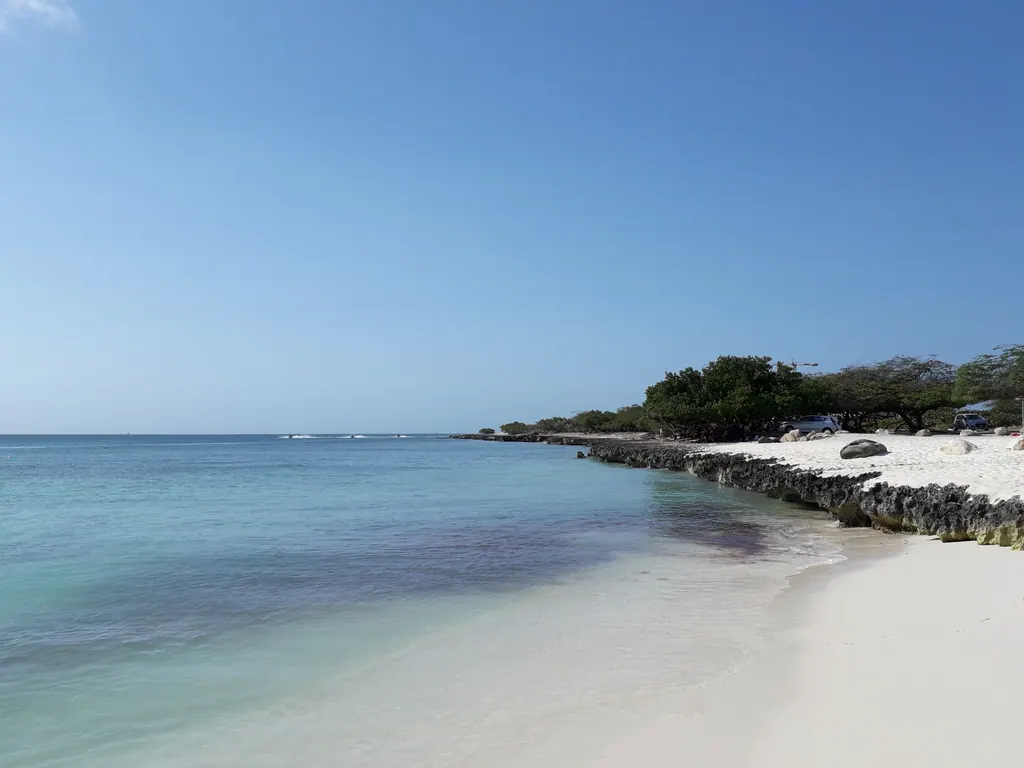
Look at a temperature chart for almost any Caribbean island and it barely moves. Daytime highs sit in the mid-80s Fahrenheit (about 29-31°C) in January and in August, and the sea rarely drops below the high 70s. If the weather is that steady, why do hotel prices on the same beach swing so much between February and September?
The answer is a mix of rain, wind, storms, seaweed, school holidays and the North American winter. Each island has its own version of the calendar, and the differences matter more than most booking sites let on. Below we go through the seasons month by month, explain how hurricane season actually works, and point out where the timing is different from the regional rule.
Why does the Caribbean have "seasons" at all?
The Caribbean has two seasons that count for travelers: a drier stretch from roughly December to April, and a wetter, hotter, more humid stretch from about May or June to November. The wet season overlaps almost exactly with the Atlantic hurricane season, which is the main reason it is called low season.
Rain in the wet season usually comes as short, heavy afternoon showers rather than days of gray drizzle. On the Punta Cana coast of the Dominican Republic, for example, climate records from the Caribbean Institute for Meteorology and Hydrology show October as the wettest month on average and February to April as the driest. Mountainous islands such as Dominica, Martinique, Guadeloupe and Puerto Rico (around El Yunque) get far more rain than flat ones like Antigua, Anguilla or the Turks and Caicos.
The other half of the equation is demand. December to April is when North America and Europe are cold, so that is when flights fill up and rates climb, regardless of how good the weather is in May.
The Caribbean month by month
| Month | Weather | Crowds and prices | Worth knowing |
|---|---|---|---|
| January | Dry, breezy, slightly cooler evenings | High, very busy after New Year | Junkanoo in Nassau on January 1; Carnival season builds in Trinidad, Martinique and Guadeloupe |
| February | Dry, sunny | Peak | Reggae Month in Jamaica; Trinidad Carnival on February 8-9, 2027 |
| March | Driest month on many islands | Peak, spring break crowds | Sargassum seaweed can start to arrive on Atlantic coasts |
| April | Dry, getting warmer | High until Easter, then falling | Good value after Easter week |
| May | Warm, first showers in the north | Shoulder, prices drop | One of the best value-for-weather months |
| June | Hot, humid, more showers | Shoulder | Hurricane season starts June 1, early storms are usually weak |
| July | Hot, showers, trade winds | Moderate, summer holidays bring families | Reggae Sumfest in Jamaica; Crop Over gets going in Barbados |
| August | Hot, humid, wetter | Low to moderate | Crop Over finale on the first Monday of August; storm risk rising |
| September | Hottest and stormiest | Lowest of the year | Peak of hurricane season (September 10); some hotels close |
| October | Wet, risk of storms | Low | Wettest month in many places; ABC islands still mostly dry |
| November | Rain easing | Shoulder, good deals | Hurricane season ends November 30 |
| December | Drying out, breezy | Rising, very high over Christmas | Junkanoo on December 26 |
When is high season, and is it worth paying for?
High season runs from mid-December to mid-April. This is when the trade winds keep the humidity down, rain is rare on most islands, and hurricane season is a distant memory. It is the safest choice if you have one fixed week and want near-certain sunshine.
The price is real, though. The two weeks around Christmas and New Year are the most expensive of the year, followed by Presidents' Day week in February and the March spring break weeks, when US college students fill places like Punta Cana, Nassau and the Mexican Caribbean. Popular villas and small hotels on islands such as Saint Barts, Anguilla and the British Virgin Islands can be booked up a year ahead for the holidays.
If you want high-season weather without the peak prices, look at the weeks just after New Year (roughly January 6-31) or the period after Easter. The weather is the same, and the difference in rates can be large.
The shoulder months: May, June and November
For many travelers, these are the best months of all. In May, most islands are still dry, the sea is warm, and rates have dropped from their winter peak. June is hotter and a little wetter, but hurricane activity in June is usually limited to weak storms. November sits at the other end: the rain is easing, hurricane season is winding down, and hotels are trying to fill rooms before the winter rush.
There are trade-offs. Some restaurants and tour operators on smaller islands close for a few weeks in the fall for maintenance and staff holidays, and you can expect more humidity than in February. For a beach holiday, that is rarely a dealbreaker. Our guide to which Caribbean island suits you can help you match an island to the time you have.
How does hurricane season really work?
The Atlantic hurricane season officially runs from June 1 to November 30. According to the US National Hurricane Center (NHC), the statistical peak is September 10, and most activity happens between mid-August and mid-October. Storms are possible in June and November, but they are far less common and usually weaker.
A few things are worth knowing before you either panic or shrug:
- Most weeks of hurricane season are storm-free for any given island. The season is long and the Caribbean is huge. The chance that a hurricane hits the exact island you are on during your week is small, even in September.
- Storms are forecast days in advance. The NHC tracks systems as they form off Africa, and island governments, airlines and hotels act on those warnings. A trip is far more likely to be disrupted by canceled flights than by a direct hit.
- The bad years are very bad. In September 2017, Irma and Maria devastated Barbuda, Saint Martin, the British and US Virgin Islands, Dominica and Puerto Rico. Dorian sat over the northern Bahamas in 2019. Hurricane Beryl hit Carriacou in Grenada as a Category 4 storm on July 1, 2024, unusually early. And Hurricane Melissa struck western Jamaica as a Category 5 hurricane on October 28, 2025, the strongest storm on record to make landfall there.
- Recovery takes time. After a major storm, hotels, roads and attractions can be closed for months. Check the current situation for your island before booking, and read our guide to whether the Caribbean is safe for the wider picture.
The northern and eastern islands sit most directly in the typical storm tracks: the Bahamas, the Turks and Caicos, Puerto Rico, the US and British Virgin Islands, Saint Martin, Anguilla, Antigua and Barbuda, and the Leeward Islands. Jamaica, Cuba and the Cayman Islands are exposed to storms that track west across the Caribbean Sea. Barbados lies east of the main chain and is hit less often than its neighbors, though it is not immune.
Which islands are rarely hit by hurricanes?
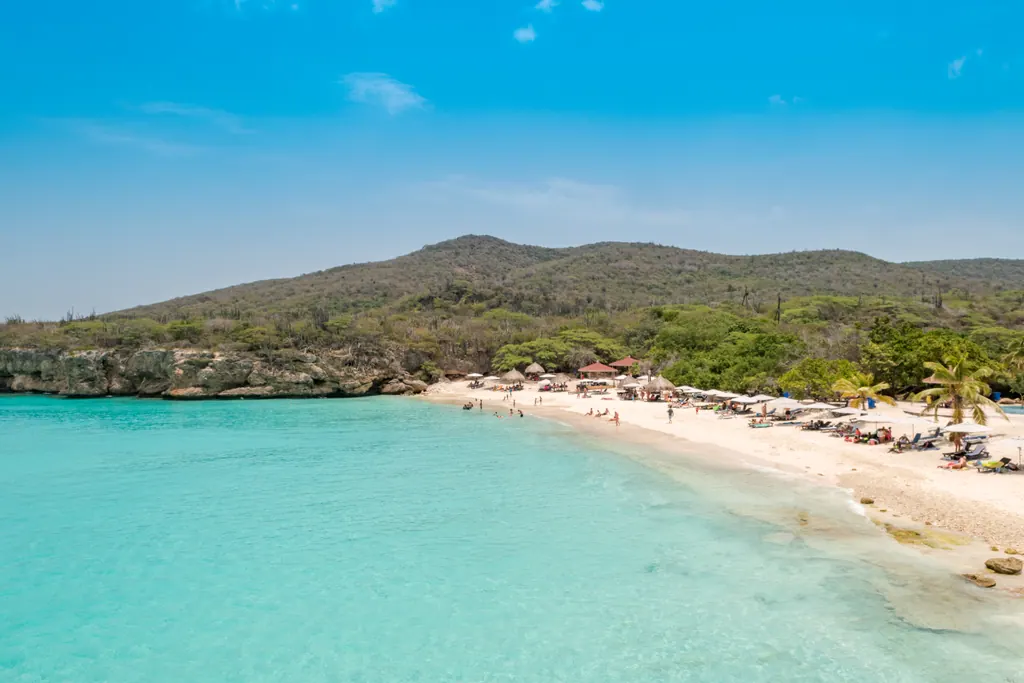
The islands at the very southern edge of the Caribbean, close to the coast of South America, sit below the main hurricane belt. Aruba, Bonaire and Curaçao, known as the ABC islands, are the best known. Aruba's tourism board describes the island as outside the hurricane belt and says that is why it stays open for visitors right through June to November. Trinidad and Tobago also sits far enough south that direct hits are rare.
That does not mean zero weather. A storm passing to the north can bring heavy rain and rough seas, and the ABC islands have their own short rainy season. Aruba's official tourism site puts it from October to December, with only about 18 inches of rain in a whole year. Curaçao's meteorological service counts October to January as the rainy season. Showers on these dry, cactus-covered islands tend to be brief, often at night, and the trade winds blow hard most of the year.
If you have to travel in September or October and want the lowest storm risk, the ABC islands are the obvious choice. Grenada, further south than most of the Windward Islands, used to be considered nearly as safe, but Ivan in 2004 and Beryl in 2024 showed that "rarely" is not "never".
What about rainy seasons and sargassum?
Rain and seaweed are the two things that spoil more Caribbean beach days than hurricanes do.
Rainy seasons follow the broad pattern described above, with local twists:
- Dominican Republic: The wetter half of the year runs roughly from May to November, with the heaviest rain in the fall. On the Punta Cana coast, showers are often short, and the CIMH records show February to April as the driest months.
- Martinique and Guadeloupe: Locals talk about the carême, the dry season, centered on about February to April, and the hivernage, the hot, wet season from about July to November. The rainforest-covered interiors of both islands are green and wet even in the dry months.
- Puerto Rico and the Virgin Islands: Drier from about December to April, wetter in the second half of the year, with El Yunque rainforest getting rain almost every day.
- The ABC islands: The exception, with a short rainy season in late fall and dry conditions the rest of the year.
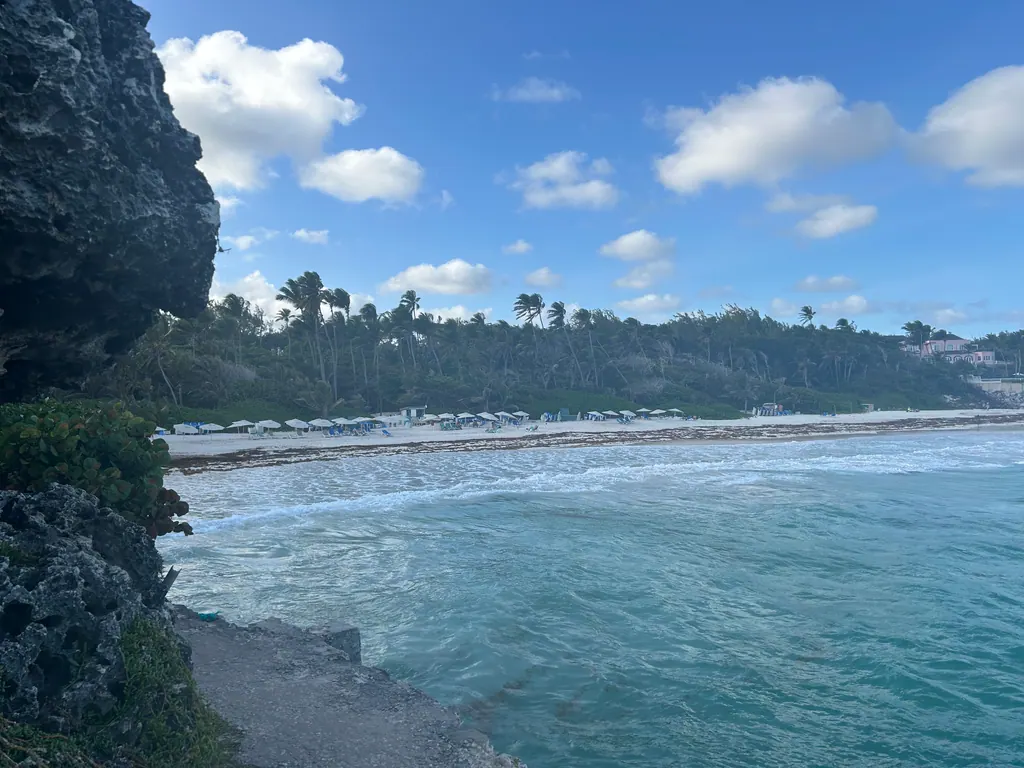
Sargassum is a brown seaweed that drifts in from the open Atlantic and piles up on east-facing beaches. It is harmless in the water, but as it rots on the sand it smells of sulfur and makes swimming unpleasant. The beaching season usually runs from about spring to early fall, often peaking from May to August. The University of South Florida's Optical Oceanography Lab, which publishes monthly outlooks, recorded the largest amounts on record in 2025 and expected 2026 to be another major year, with the western Caribbean and the Windward Islands among the hardest hit.
Coasts that face the Atlantic, such as Punta Cana, the east coasts of Barbados, Martinique and Guadeloupe, and parts of Puerto Rico, are most exposed. Beaches that face west or south, the ones on the calm Caribbean Sea side, usually see much less. Many big resorts clear their beaches every morning, but if seaweed would ruin your trip, a west-coast hotel or the ABC islands are the safer bets in summer. The USF outlooks are a useful check before you book, though they cannot predict conditions at any single beach.
When is the Caribbean cheapest?
The cheapest stretch is from late August to early November, with September usually the lowest point of the year for hotel rates and package prices. That is no coincidence: it is the heart of hurricane season, schools are back in session in North America, and the weather is at its most humid.
Some practical patterns:
- September and October bring the deepest discounts, including free nights, resort credits and upgrades. Some small hotels, restaurants and dive shops close in September, especially in the Virgin Islands, Saint Barts and the Grenadines, so check that the places you want are open.
- Late April to early June is the best compromise between price and weather. The dry season is not quite over and the crowds have gone.
- Summer (late June to mid-August) is cheaper than winter but not as cheap as fall, because North American families travel then. July in Jamaica, for example, is lively and well priced, though not a bargain.
- Puerto Rico, the Dominican Republic and the Bahamas are often the cheapest to reach from the US year-round because of the number of direct flights, and the all-inclusive resorts around Punta Cana compete hard on price in the low season.
Flights matter as much as hotels. Midweek departures and flights into bigger hubs like San Juan, Punta Cana and Nassau tend to be cheaper; see our guide to getting around the Caribbean for how to connect onward to smaller islands.
Which festivals are worth planning a trip around?
Festivals can be the best reason to go, or the reason you cannot find a room. These are the big ones:
- Trinidad Carnival: The Caribbean's largest, on the Monday and Tuesday before Ash Wednesday. In 2027 the main parade days are February 8-9, according to Visit Trinidad. Hotels in Port of Spain fill months ahead.
- Carnival elsewhere: Martinique, Guadeloupe, Aruba and Curaçao also celebrate in the weeks before Lent. Several other islands hold their Carnival in summer instead: Antigua's ends on the first Monday and Tuesday of August, and Saint Lucia's is in July.
- Crop Over in Barbados: A summer festival with roots in the end of the sugar cane harvest. It builds through July and ends with Grand Kadooment, the big costumed parade on the first Monday of August (August 2 in 2027).
- Reggae Month in Jamaica: February, built around Bob Marley's birthday on February 6, with concerts and events, many of them in Kingston. Reggae Sumfest in Montego Bay is the big summer festival, held in July.
- Junkanoo in the Bahamas: Costumed groups parade through downtown Nassau in the early hours of December 26 and January 1, with drums, cowbells and horns.
- San Sebastián Street Festival in Puerto Rico: Several days of music in the streets of Old San Juan in mid to late January.
Dates move from year to year, so check the official tourism site for your island before booking. Prices around these events often match or exceed high season, even in summer.
Travel insurance and cancellations in hurricane season
If you travel between June and November, buy travel insurance when you book, not when a storm appears on the news. Insurers treat a named storm as a foreseeable event, and most policies only cover hurricane-related cancellations if you bought the policy before the storm was named, usually at least 24 hours before. Some policies use the date a storm was forecast instead. Read the wording on cancellation, trip interruption and "unforeseen events" before you pay.
A few more things help:
- Check the hotel's own policy. Some resort chains offer a hurricane guarantee that refunds or rebooks your stay if a storm hits. Ask exactly what triggers it.
- Book flexible fares. When a storm threatens, airlines usually issue travel waivers that let you change flights without a fee, but only for the dates and airports they list.
- Pay by credit card, which can give you extra protection if a company fails to deliver.
- Cruise passengers should know that ships are usually rerouted rather than canceled, so you may end up on different islands from the ones you booked.
- If a storm is coming while you are there, follow the hotel's and the local authorities' instructions, keep your phone charged, and register with your embassy's traveler program.
Our travel insurance page collects more on what policies cover.
So when should you go?
For guaranteed sunshine and the widest choice, book mid-January to mid-April and accept the prices. For the best balance of weather, prices and space on the beach, go in May, early June or late November. For the biggest savings, September and October are hard to beat, ideally on Aruba, Bonaire or Curaçao, with good insurance and a flexible plan. And if you want the islands at their loudest, build your trip around Carnival, Crop Over or Junkanoo and book early. More ideas for planning are on our Caribbean destination page.
Frequently asked questions
What is the worst month to visit the Caribbean?
For weather, September and October carry the highest hurricane risk and the most rain on many islands. They are also the cheapest months, so the worst month for weather can be the best for your budget, especially on Aruba, Bonaire or Curaçao.
Is it safe to go to the Caribbean in hurricane season?
Most weeks pass without a storm on any given island, and hurricanes are tracked days in advance. The real risk is disruption, so buy travel insurance when you book, choose flexible fares and keep an eye on the National Hurricane Center forecasts.
When does sargassum season end in the Caribbean?
Seaweed usually arrives in spring, peaks in early summer and tapers off in the fall, but the amounts vary a lot from year to year. East-facing Atlantic beaches are hit hardest, and the ABC islands and west coasts usually see far less.
Is December a good time to visit the Caribbean?
Early December is one of the smartest times to go: the rain has eased, hurricane season is over and prices are still below peak. From about December 20 to early January, rates jump to the highest level of the year.
Which Caribbean island has the best weather all year?
Aruba is the usual answer. It is dry, breezy and sits south of the main hurricane belt, with only about 18 inches of rain a year according to its tourism board. Bonaire and Curaçao have a very similar climate.