Ask parents what they want from a Caribbean beach week and the list is surprisingly consistent: calm, shallow water, a short flight, no long transfers, a place that feels safe after dark and something to do on the day everyone is sunburned. Glossy resort photos do not tell you which islands deliver all of that.
We compared the islands that come up most often for families traveling from the U.S., looking at water conditions, travel time, paperwork for kids, safety advisories and what there is to do beyond the pool. The differences are bigger than you might think.
What Makes a Caribbean Island Good for Kids?
Before you look at individual islands, it helps to know what matters most with children:
- Calm, shallow water. Beaches on the sheltered side of an island, or inside a reef, are far better for small swimmers than open Atlantic coasts.
- Short travel days. A nonstop flight of three to four hours and a 20-minute transfer feel very different from a connection plus a ferry.
- Passports. Every child needs a U.S. passport for flights to foreign islands. Passports for children under 16 are valid for five years and usually require both parents' consent, according to the State Department.
- Hurricane season. The Atlantic season runs from June 1 to November 30, with the highest risk from August to October.
- Safety. Check the State Department advisory for each island. The levels change, and we give the ones that applied as of November 13, 2026.
If you are still choosing between very different islands, our broader guide Which Caribbean Island Is Right for You? is a good starting point.
Turks and Caicos: The Calmest Long Beach
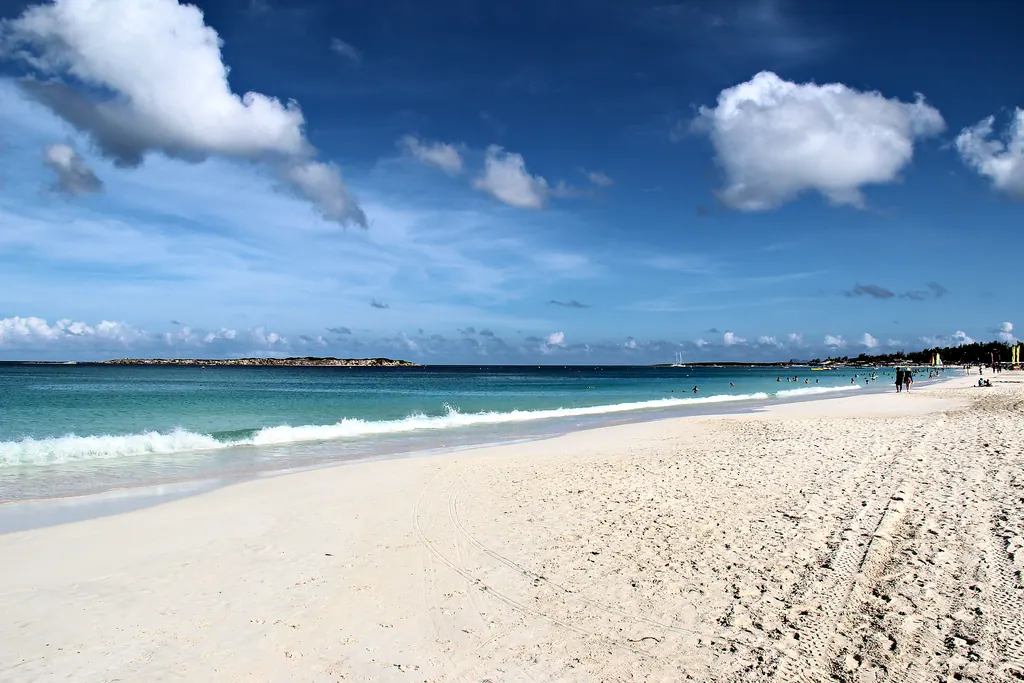
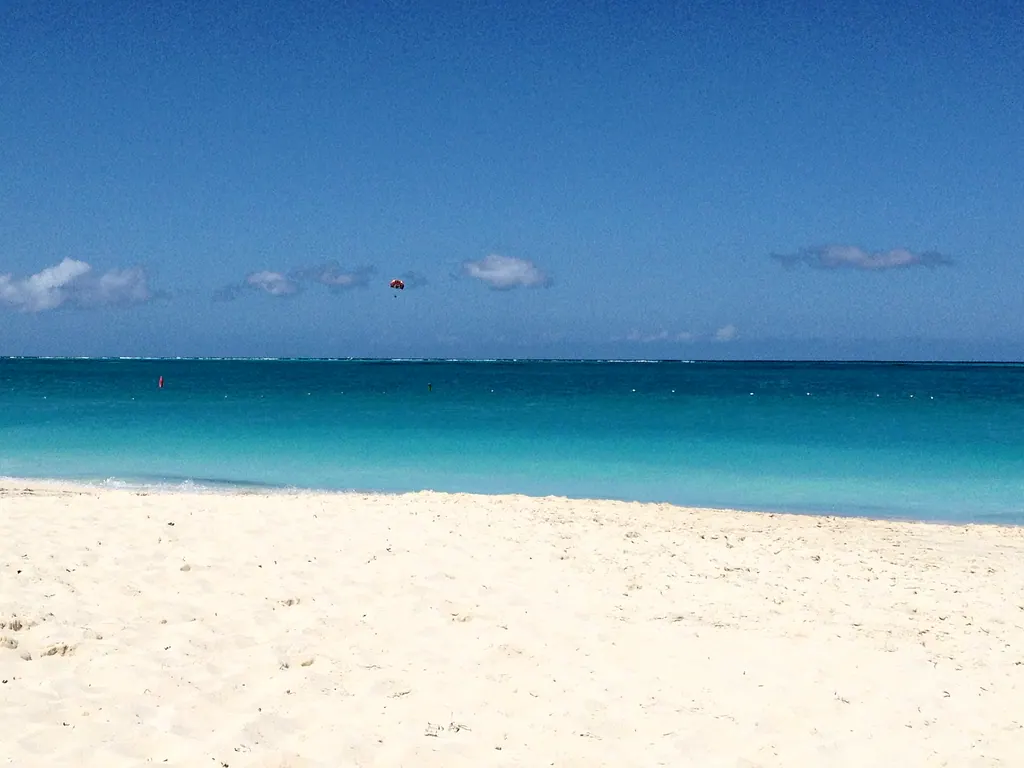
Grace Bay on Providenciales is the reason many families choose Turks and Caicos. The beach runs for miles, the sand is soft and pale, and a barrier reef offshore keeps the water unusually calm and clear for most of the year. At Bight Reef, also called Coral Gardens, children who can swim confidently can snorkel straight from the beach.
Flights from the East Coast take around three hours, and the airport is a short drive from most hotels on Grace Bay. The downsides: Turks and Caicos is expensive, with few budget options, and there is not much culture or history to explore. As of November 13, 2026, the State Department rates Turks and Caicos at Level 2 (Exercise Increased Caution), mainly because of crime.
Aruba: Dry, Breezy and Outside the Hurricane Belt
Aruba suits families who want predictable weather. The island lies outside the hurricane belt, according to the Aruba Tourism Authority, and it is dry and sunny most of the year. Palm Beach and Eagle Beach on the west coast have calm water and long stretches of sand, and Baby Beach in the south is a shallow, sheltered lagoon that lives up to its name.
There is also more to do on land than on many islands: Arikok National Park, with caves and rugged coastline, makes a good half-day trip with older kids. Aruba is rated Level 1 (Exercise Normal Precautions), the lowest level.
Plan one extra step: every visitor must fill out Aruba's online ED card before arrival, and the island charges a sustainability fee of $20 per visitor, paid through the ED card system, with some exemptions for young children. Check the current rules on the official Aruba site before you fly.
Grand Cayman: Easy Snorkeling and Low Stress
Grand Cayman combines a long, calm west coast beach (Seven Mile Beach) with some of the easiest wildlife encounters in the Caribbean. At Stingray City, a sandbar in the North Sound, boats stop in water that is often only three to four feet deep, and you stand while southern stingrays glide around your legs. At Starfish Point, shallow water is home to red cushion sea stars (look, but do not lift them out of the water).
The Cayman Islands are rated Level 1. Prices are high, much like Turks and Caicos, but the island is compact, roads are good and driving is on the left, which takes a day to get used to.
Puerto Rico: No Passport, Lots to Do
For families with a passport problem, or a tight budget, Puerto Rico is hard to beat. It is a U.S. territory, so U.S. citizens do not need a passport, the currency is the U.S. dollar and phones work as at home. Nonstop flights to San Juan leave from many U.S. cities.
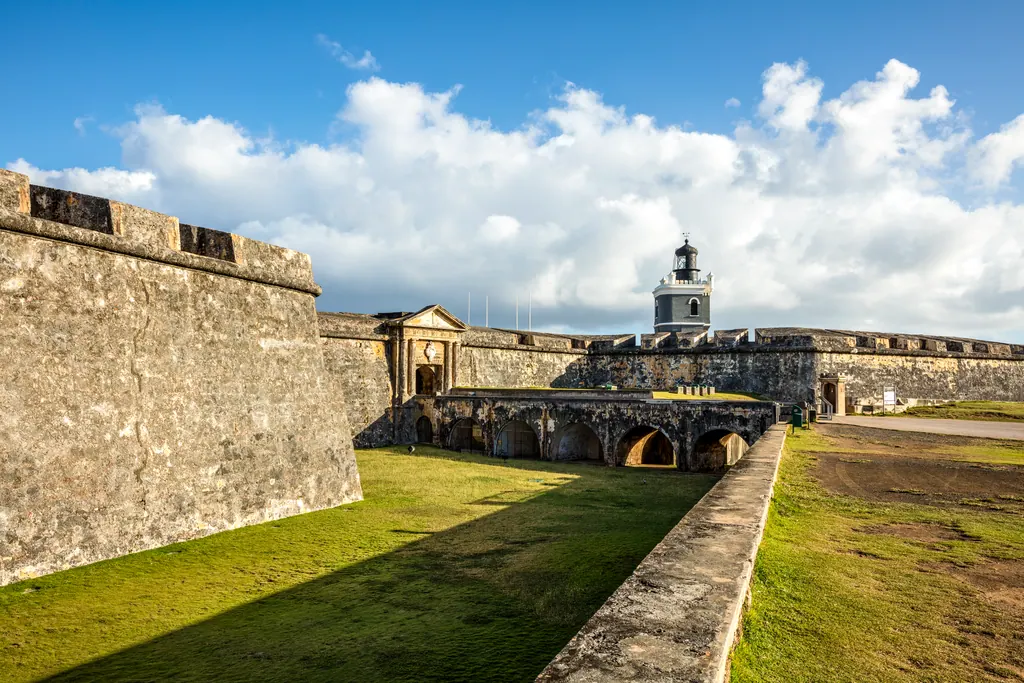
Puerto Rico also has the most variety on this list. In Old San Juan, the forts of San Juan National Historic Site are run by the National Park Service. El Yunque National Forest, east of San Juan, is the only tropical rainforest in the U.S. National Forest System, with short trails to waterfalls. As of November 2026, the Forest Service says entry through the main PR-191 corridor is free with no reservation needed. At night, a boat or kayak trip on one of the island's bioluminescent bays is a highlight for older children.
The trade-off is the beaches: many on the north coast face the open Atlantic and can have strong currents. Choose sheltered beaches and follow the flags. For specific suggestions, see our guide to the best beaches in Puerto Rico.
St. John, U.S. Virgin Islands: A National Park Island
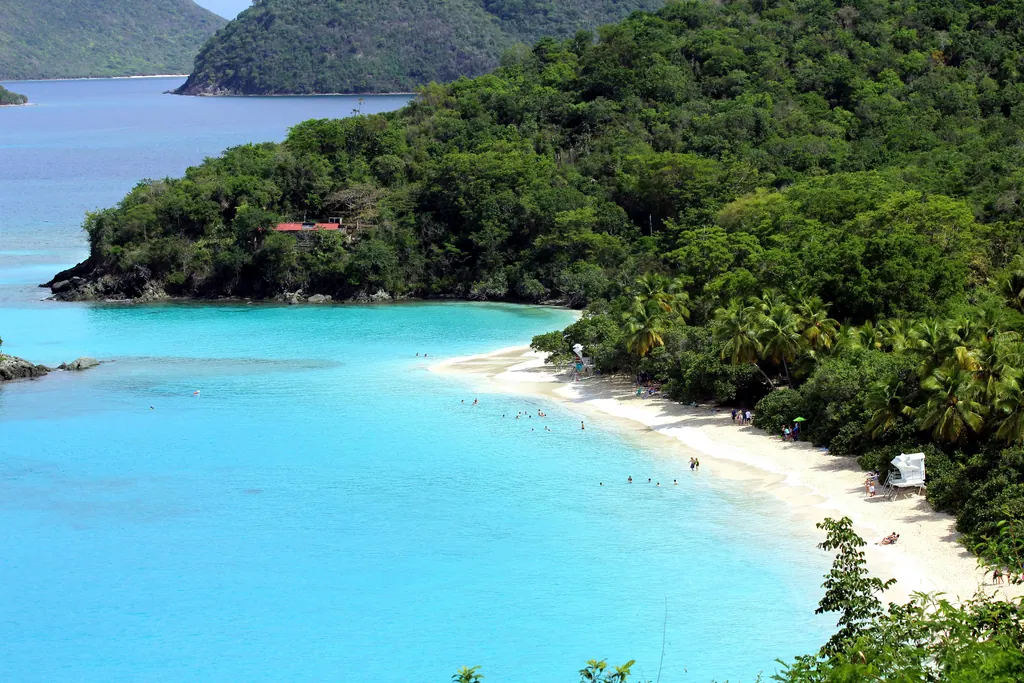
St. John is the quieter alternative for nature-loving families. More than half of the island is Virgin Islands National Park, so there are hiking trails, protected bays and very little development. Trunk Bay has an underwater snorkel trail of about 400 feet with signs on the sea floor, according to the National Park Service, and Maho Bay is known for sea turtles grazing in shallow water.
Like Puerto Rico, the U.S. Virgin Islands need no passport for U.S. citizens, although you should carry proof of citizenship, such as a passport card or birth certificate plus photo ID, for the trip home. Getting there takes longer: you fly to St. Thomas and then take a ferry of about 20 minutes from Red Hook to Cruz Bay. Driving is on the left, and the roads are steep and winding.
How the Islands Compare
| Island | Best for | Passport needed | State Dept. level (Nov 13, 2026) | Budget |
|---|---|---|---|---|
| Turks and Caicos | Calm water, beach time | Yes | Level 2 | High |
| Aruba | Reliable weather | Yes | Level 1 | Medium to high |
| Grand Cayman | Easy wildlife encounters | Yes | Level 1 | High |
| Puerto Rico | Variety, value | No | U.S. territory | Low to medium |
| St. John (USVI) | Nature, snorkeling | No | U.S. territory | Medium to high |
Choosing the Right One for Your Family
With toddlers and preschoolers, keep it simple: Turks and Caicos or Aruba give you calm water a few steps from your room and short transfers. With school-age kids who swim well, Grand Cayman and St. John add snorkeling and wildlife that children remember for years. With teenagers, or if you want history, food and rainforest as well as beaches, Puerto Rico has the most to fill a week.
Whichever island you choose, book flights early for school vacations, avoid the peak hurricane months if your dates are flexible, and read our guide to the best time to visit the Caribbean before you commit. More family ideas are collected under Family Travel.
Frequently asked questions
Which Caribbean island is best for families with toddlers?
Turks and Caicos and Aruba are the easiest with small children, thanks to calm, shallow beaches close to the hotels and short airport transfers.
Which Caribbean islands do not require a passport for U.S. citizens?
Puerto Rico and the U.S. Virgin Islands are U.S. territories, so U.S. citizens do not need a passport. Carry proof of citizenship for the trip home from the Virgin Islands.
Is Aruba outside the hurricane belt?
Yes. According to the Aruba Tourism Authority, the island lies outside the hurricane belt, which makes it a popular choice during the Atlantic hurricane season.
Do kids need a passport to go to the Caribbean?
Yes, for flights to any foreign island every child needs a U.S. passport. For children under 16, both parents usually have to consent to the application.