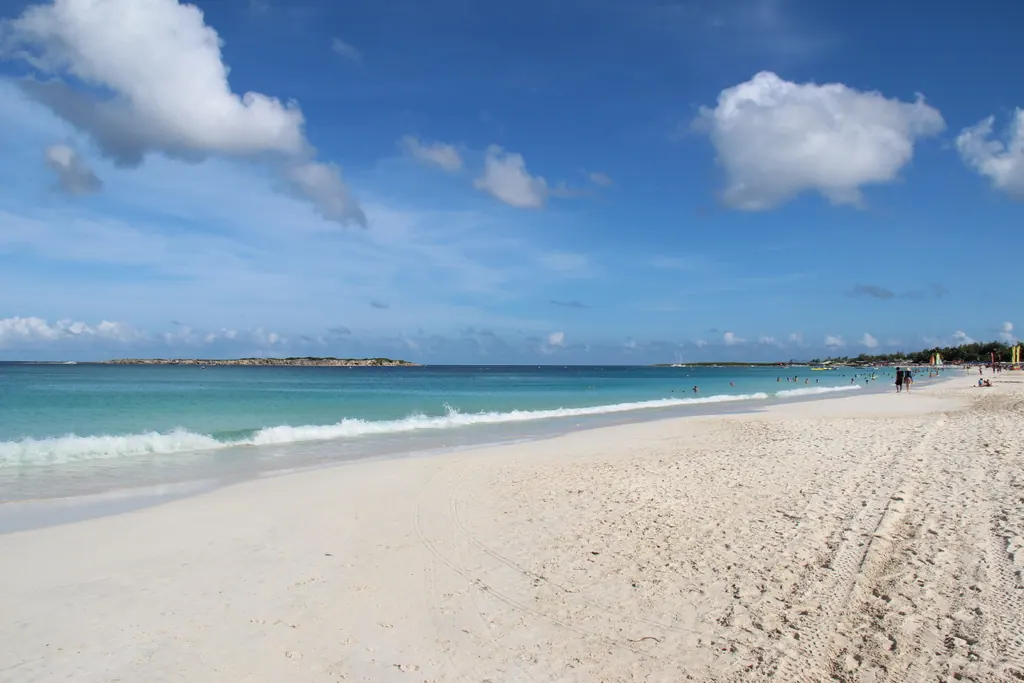
On the island of Saint Martin you can drive from France to the Netherlands without slowing down. A small monument by the roadside marks the line, and the prices on the menus switch from euros to guilders. Nobody asks for your passport. A 15-minute flight to the southeast, on Saint Barts, the flag is French, the town has a Swedish name, and the island is no longer part of the European Union, even though everyone pays in euros.
The Caribbean is full of puzzles like that. Some islands are fully independent countries, others are as much a part of France or the United States as Normandy or Ohio, and a few sit in a political middle ground that even their own residents argue about. For a traveler, those flags are not trivia. They decide which passport you need, which language you will hear at the market, what comes out of the ATM, and which side of the road you will be driving on. Here is how the map really works.
Why is the Caribbean such a political patchwork?
For more than three centuries, Spain, Britain, France, the Netherlands and, briefly, Denmark and Sweden fought over these islands, traded them in peace treaties and sometimes split them in half. When the big wave of independence came in the 1960s, 1970s and 1980s, most of the larger British colonies took it. Many of the smaller islands chose to stay with their old European country, usually because it brought passports, budgets and a safety net that a population of 15,000 people would struggle to provide alone.
The result is a region where an island's owner tells you a lot more than its size or location. Neighbors can be completely different countries: Saint Martin is split between France and the Netherlands, the US Virgin Islands and the British Virgin Islands are separated by channels you can cross in a short ferry ride, and Dominica, a former British colony, sits right between French Guadeloupe and French Martinique.
Which Caribbean islands are independent countries?
Thirteen island nations in and around the Caribbean are fully sovereign: Cuba, Jamaica, Haiti, the Dominican Republic, the Bahamas, Barbados, Trinidad and Tobago, Antigua and Barbuda, Saint Kitts and Nevis, Dominica, Saint Lucia, Saint Vincent and the Grenadines, and Grenada. Strictly speaking, the Bahamas lie in the Atlantic, but they are almost always counted as Caribbean.
Independence does not always mean a clean break. Jamaica, the Bahamas, Antigua and Barbuda, Saint Kitts and Nevis, Saint Lucia, Saint Vincent and the Grenadines, and Grenada still have King Charles III as their head of state, represented by a governor general. Barbados went the other way and became a republic on November 30, 2021, while staying in the Commonwealth. English is the official language of Barbados, but on the street you will hear Bajan, a lively English-based creole, and like most former British islands, Barbados drives on the left.
Two names cause endless confusion. Dominica (stress on the "ee": Dom-in-EE-ka) is a small, mountainous, English-speaking island in the Eastern Caribbean. The Dominican Republic is the large Spanish-speaking country that shares Hispaniola with Haiti. They are around 600 miles apart and have nothing in common except a saint in their names.
What does France own in the Caribbean?
France has four Caribbean territories, and they come in two different types.
Martinique and Guadeloupe are overseas departments and regions. That is the legal way of saying they are as much France as Paris is. They send members to the French parliament, use the euro, follow French law and are part of the European Union, which calls them "outermost regions". Guadeloupe is not one island but an archipelago: the butterfly-shaped main pair of Basse-Terre and Grande-Terre, plus Marie-Galante, La Désirade and the small Îles des Saintes. Martinique lies about 100 miles to the south, with Dominica in between.
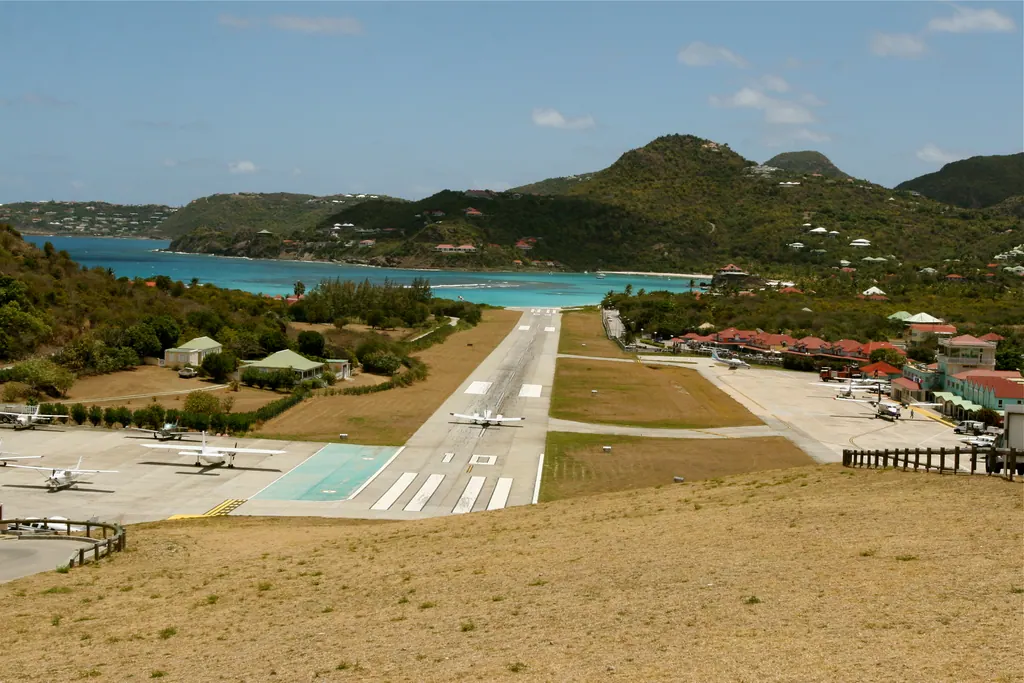
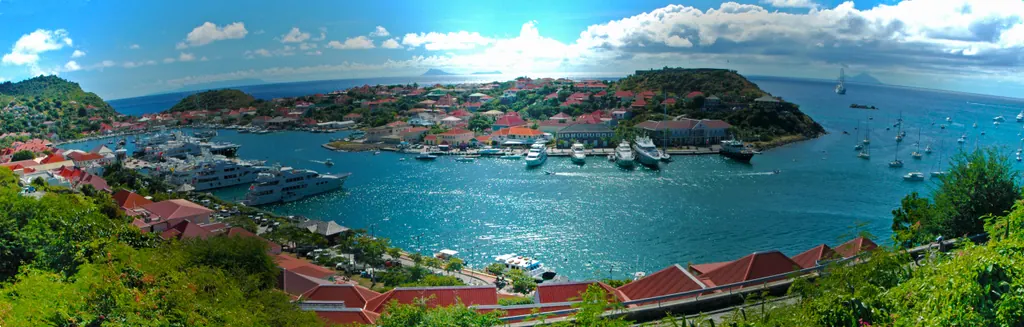
Saint-Martin and Saint-Barthélemy were part of Guadeloupe until 2007, when they became separate overseas collectivities with more local control. Their EU status then split. The French side of Saint Martin is still inside the EU, while Saint Barts asked to leave and has been an "overseas country and territory" of the EU since January 1, 2012. France arranged for the island to keep the euro anyway, so for visitors nothing changed at the cash register. The island's capital, Gustavia, is named after a Swedish king: France sold Saint Barts to Sweden in 1784 and bought it back in 1878.
French is the official language on all four. Creole is the everyday language for many people in Martinique and Guadeloupe, and you should not count on English outside hotels and tourist businesses there. Saint Martin and Saint Barts are different: they live from American visitors, and English is widely spoken. All four drive on the right.
Which islands belong to the Netherlands?
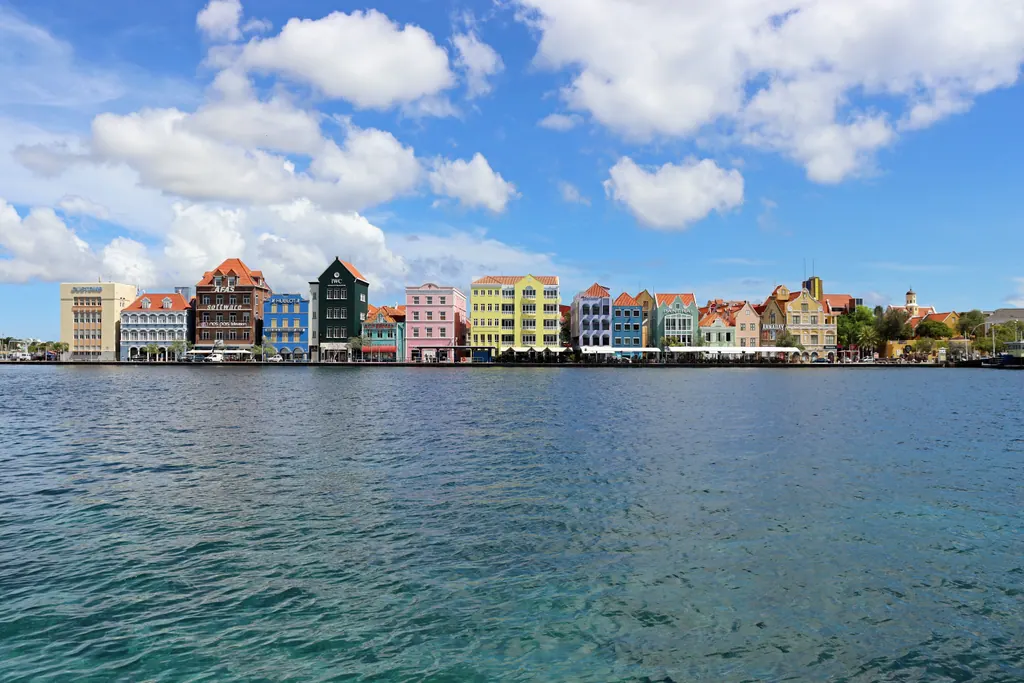
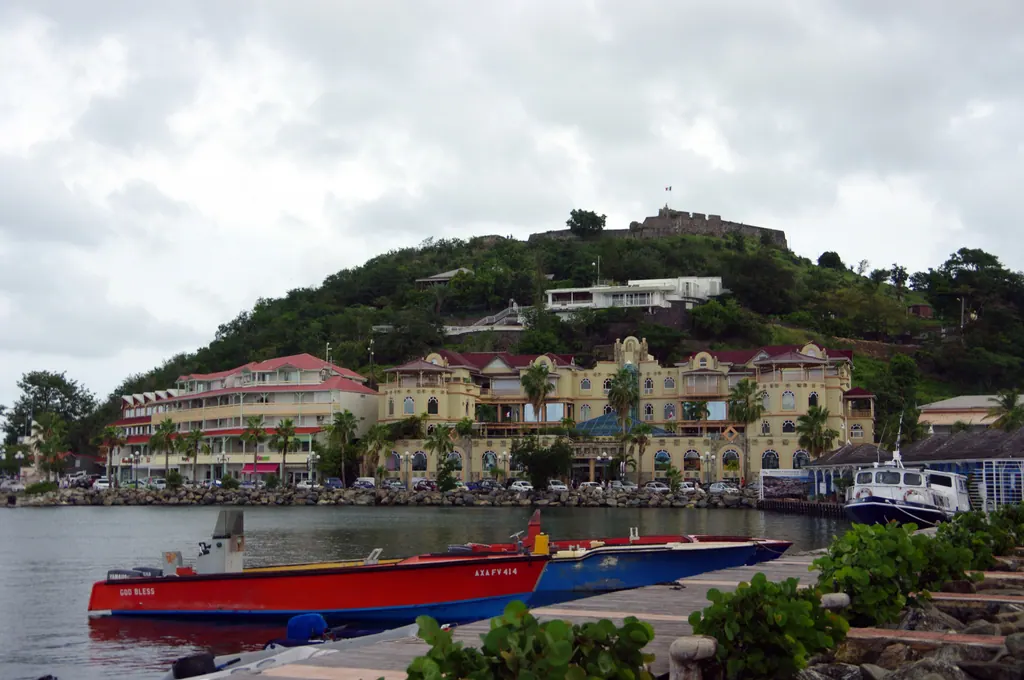
The Kingdom of the Netherlands is made up of four countries, and three of them are in the Caribbean. According to the Dutch government, the kingdom consists of the Netherlands, Aruba, Curaçao and Sint Maarten. Aruba became a separate country within the kingdom in 1986. Curaçao and Sint Maarten followed on October 10, 2010, when the old Netherlands Antilles were dissolved. Each has its own parliament, prime minister and laws, while the kingdom handles defense and foreign affairs. Their residents are Dutch citizens with Dutch passports.
On the same day in 2010, Bonaire, Sint Eustatius and Saba went the opposite direction. They became special municipalities of the Netherlands itself, known together as the Caribbean Netherlands. In practice, Bonaire is governed much like a Dutch town, but it uses the US dollar, which replaced the Antillean guilder there on January 1, 2011.
None of the Dutch islands are part of the European Union proper. Like Saint Barts, they are overseas countries and territories with a special link to the EU. They all drive on the right.
Language is where the Dutch islands get interesting. Aruba, Curaçao and Bonaire share Papiamento (spelled Papiamentu on Curaçao and Bonaire), a creole that mixes Portuguese, Spanish, Dutch, English and West African languages. Papiamento and Dutch are official on Aruba, and Curaçao adds English as a third official language. On Bonaire, Dutch and Papiamentu are both official. Most people on the ABC islands switch easily between Papiamento, Dutch, English and Spanish, so English-speaking visitors rarely have trouble. On Sint Maarten, Saba and Sint Eustatius, the everyday language is English, and Dutch is mostly used in government.
Are the ABC islands part of Venezuela?
No. Aruba, Bonaire and Curaçao are Dutch, and have been since the Dutch West India Company took them from Spain in the 1630s. The confusion is understandable, because they sit right off the South American coast. Aruba lies only about 18 miles (29 km) north of Venezuela's Paraguaná Peninsula, close enough that the mainland can be visible on very clear days. Curaçao and Bonaire are farther out, around 40-55 miles from the coast.
That closeness shows. Spanish is widely understood, there are long family and trading ties with Venezuela, and the islands sit south of the usual hurricane track, which is one reason they are popular year-round.
Venezuela does have Caribbean islands of its own. Isla Margarita and the Los Roques archipelago are Venezuelan, use the bolívar and follow Venezuelan entry rules. If you are looking at a map and see an island close to Venezuela, check the label before assuming who runs it.
What about the British and American islands?
British Overseas Territories
Five Caribbean islands or island groups are British Overseas Territories: Anguilla, the British Virgin Islands, the Cayman Islands, Montserrat and the Turks and Caicos Islands. They are not part of the United Kingdom, and they are not in the EU. Each has its own elected government, while a governor appointed by London is responsible for defense, foreign affairs and some security matters. The King is head of state.
Anguilla, a narrow coral island just 5 miles north of Saint Martin, chose this status on purpose. In 1967 it was lumped together with Saint Kitts and Nevis as it moved toward independence, the Anguillians rebelled, and the island was eventually separated and returned to direct British rule in 1980.
Each territory sets its own entry rules and runs its own border control. The currencies differ: the Cayman Islands have their own dollar, Anguilla and Montserrat use the Eastern Caribbean dollar, and the British Virgin Islands and Turks and Caicos use the US dollar. English is the language on all of them, and they all drive on the left.
US territories
Puerto Rico has been a US territory since 1898, and its people have been US citizens since 1917. It is a commonwealth, not a state: Puerto Ricans cannot vote for president while living on the island and have a nonvoting representative in Congress. The islands of Vieques and Culebra, off the east coast, are municipalities of Puerto Rico, not separate territories. Spanish and English are both official, but Spanish is what you will hear, especially outside San Juan. Puerto Rico drives on the right.
The US Virgin Islands (Saint Thomas, Saint John and Saint Croix) were Danish until the United States bought them in 1917. They use the dollar and English, and they hold one of the Caribbean's best road surprises: traffic drives on the left, even though most cars have the steering wheel on the left, like on the mainland.
The quick guide: island by island
| Island | Political status | Main languages | Currency | Drives on |
|---|---|---|---|---|
| Barbados | Independent republic | English, Bajan | Barbados dollar | Left |
| Jamaica, Bahamas, Antigua, St. Lucia | Independent | English | Own or Eastern Caribbean dollar | Left |
| Martinique, Guadeloupe | France, overseas departments, in the EU | French, Creole | Euro | Right |
| Saint-Martin (French side) | France, overseas collectivity, in the EU | French, English | Euro | Right |
| Saint Barts | France, overseas collectivity, outside the EU | French, English | Euro | Right |
| Aruba | Country in the Kingdom of the Netherlands | Papiamento, Dutch | Aruban florin | Right |
| Curaçao | Country in the Kingdom of the Netherlands | Papiamentu, Dutch, English | Caribbean guilder | Right |
| Sint Maarten (Dutch side) | Country in the Kingdom of the Netherlands | English, Dutch | Caribbean guilder | Right |
| Bonaire, Saba, Sint Eustatius | Special municipalities of the Netherlands | Papiamentu or English, Dutch | US dollar | Right |
| Anguilla, Montserrat | British Overseas Territories | English | Eastern Caribbean dollar | Left |
| Cayman Islands | British Overseas Territory | English | Cayman dollar | Left |
| British Virgin Islands, Turks and Caicos | British Overseas Territories | English | US dollar | Left |
| Puerto Rico (with Vieques and Culebra) | US commonwealth | Spanish, English | US dollar | Right |
| US Virgin Islands | US territory | English | US dollar | Left |
US dollars are accepted far beyond the islands that use them officially, but not everywhere, and rarely in Martinique and Guadeloupe. Our guide to money in the Caribbean explains exchange rates, cards and the new Caribbean guilder island by island.
Do you need a passport?
For US citizens, the line is simple: Puerto Rico and the US Virgin Islands are domestic travel. You do not need a passport, just the same ID you would use for any domestic flight. Leaving the US Virgin Islands, you pass through US Customs and Border Protection, and officers may ask for proof of citizenship, so many travelers simply bring a passport anyway. Everywhere else in the Caribbean, including the British territories and the Dutch and French islands, you need a passport. Americans do not need a visa for ordinary tourist stays on any of the islands in this guide.
The French islands have a twist that catches European visitors out. Martinique, Guadeloupe, Saint-Martin and Saint Barts are part of France but not part of the Schengen Area. A Schengen visa issued in Paris is not valid there, and the islands have their own visa rules, which France publishes on its official France-Visas website. EU citizens can travel with a national ID card to Martinique and Guadeloupe, just like within France. For Americans, Canadians and British visitors, the French islands are visa-free for short tourist stays, usually up to 90 days.
The Dutch islands are also outside Schengen and set their own rules. Two of them ask for an online form before you fly: Aruba requires its ED card for all visitors staying more than 24 hours, including children, and visitors arriving by air also pay a sustainability fee of $20 through the same system. Curaçao requires a Digital Immigration Card, filled in within seven days before departure. Check the official site of each island shortly before you travel, because these forms and fees have changed several times in recent years.
British passport holders can visit the British Overseas Territories without a visa, but they still go through immigration like everyone else. You will find more on documents and border rules on our visas and entry page.
Practical advice before you book
- Check the flag, not the map. Distance says little. Two islands 20 minutes apart can have different passports, currencies and phone networks. Phone roaming plans can treat the French and Dutch sides of Saint Martin as different countries.
- Bring your passport even when you think you will not need it. A day trip from the US Virgin Islands to the British Virgin Islands, or from Saint Martin to Anguilla or Saint Barts, crosses an international border.
- Learn which side of the road to drive on before you pick up the rental car. It is left in most former British islands and in the US Virgin Islands, right in the French, Dutch and Spanish-speaking ones.
- Do not assume English in Martinique and Guadeloupe. A few phrases of French go a long way, especially in rural areas and markets.
- Choose by the experience you want. The French islands feel European, the Dutch ABC islands are dry and breezy, and the former British islands each have their own personality. If you are still deciding, our guide to which Caribbean island is right for you compares the main options.
Once you know who owns an island, a lot of small surprises on arrival suddenly make sense, from the baguettes in Guadeloupe to the left-hand traffic on Saint Thomas.
Frequently asked questions
Is Aruba part of Venezuela?
No. Aruba is a self-governing country within the Kingdom of the Netherlands. It lies about 18 miles (29 km) off the Venezuelan coast, which is why it is often mistaken for Venezuelan territory.
Is Puerto Rico a country?
No. Puerto Rico is a US commonwealth, and Puerto Ricans are US citizens. US citizens can travel there without a passport, using the same ID as for a domestic flight.
Do I need a passport for Saint Martin?
US citizens need a passport to fly to either side of Saint Martin. Once on the island, there are no border checks between the French and Dutch sides.
Is Martinique part of the EU?
Yes. Martinique and Guadeloupe are French overseas departments and part of the European Union, and they use the euro. They are not part of the Schengen Area, so a Schengen visa is not valid there.
Which Caribbean islands drive on the left?
Most former and current British islands, including Barbados, Jamaica, the Bahamas, the Cayman Islands, Anguilla, the British Virgin Islands and Turks and Caicos, plus the US Virgin Islands. The French, Dutch and Spanish-speaking islands and Puerto Rico drive on the right.
- Government of the Netherlands: What are the different parts of the Kingdom of the Netherlands?
- EUR-Lex: European Council Decision 2010/718/EU on the status of Saint-Barthélemy
- French Ministry of the Interior: Visas for overseas France
- Aruba Tourism Authority: ED card process
- GOV.UK: Cayman Islands entry requirements
- Cayman Islands Customs and Border Control: Entry requirements