Puerto Rico has something few Caribbean islands can offer Americans: beaches on four very different coasts, no passport, U.S. dollars and nonstop flights from dozens of mainland cities. The hard part is not getting there. It is choosing, because a beach that is perfect in June can be a wall of white water in January.
The island's Atlantic north coast takes the big winter swells. The east has the ferries to Culebra and Vieques. The west is surf country, and the dry southwest has red cliffs, salt flats and calm bays. Below we go coast by coast, with the beaches we think are worth the drive, and what you should know about each one before you lay down a towel.
Before You Pick a Beach: How Puerto Rico's Coasts Behave
Two things decide your beach day more than anything else: the season and the direction the beach faces.
From roughly November to March, swells from storms in the North Atlantic hit the north and northwest coasts. The National Weather Service office in San Juan regularly issues high rip current statements for north-facing beaches, including Culebra, during these swells. In the second week of November 2026, for example, it warned of breaking waves of 5 to 8 feet and life-threatening rip currents along the exposed north coast. The south and much of the east stay calmer.
Summer turns the picture around. The north coast often goes flat and clear, which is the best time for snorkeling at Crash Boat or Mar Chiquita, while the Atlantic hurricane season runs from June 1 to November 30. Seaweed (sargassum) can also wash up on east and south-facing beaches, mostly from spring into summer.
A few rules apply everywhere:
- All beaches in Puerto Rico are public up to the high tide line, including those in front of resorts. Resort chairs and restrooms are for guests, though.
- Balnearios are public beaches managed by the government or a town. They have paid parking (usually a few dollars), restrooms, showers and, on duty days, lifeguards. They are the only beaches with lifeguards. Hours are shorter in the low season, and several close on Mondays and Tuesdays outside summer.
- Watch the flags at balnearios: green for swimming, yellow for caution, red for dangerous water or no lifeguard.
- Check the beach forecast on the NWS San Juan site (weather.gov/sju/beach) before you go. It rates rip current risk as low, moderate or high for each coast.
The East: Luquillo and the Island Beaches
Luquillo Beach (Balneario La Monserrate)
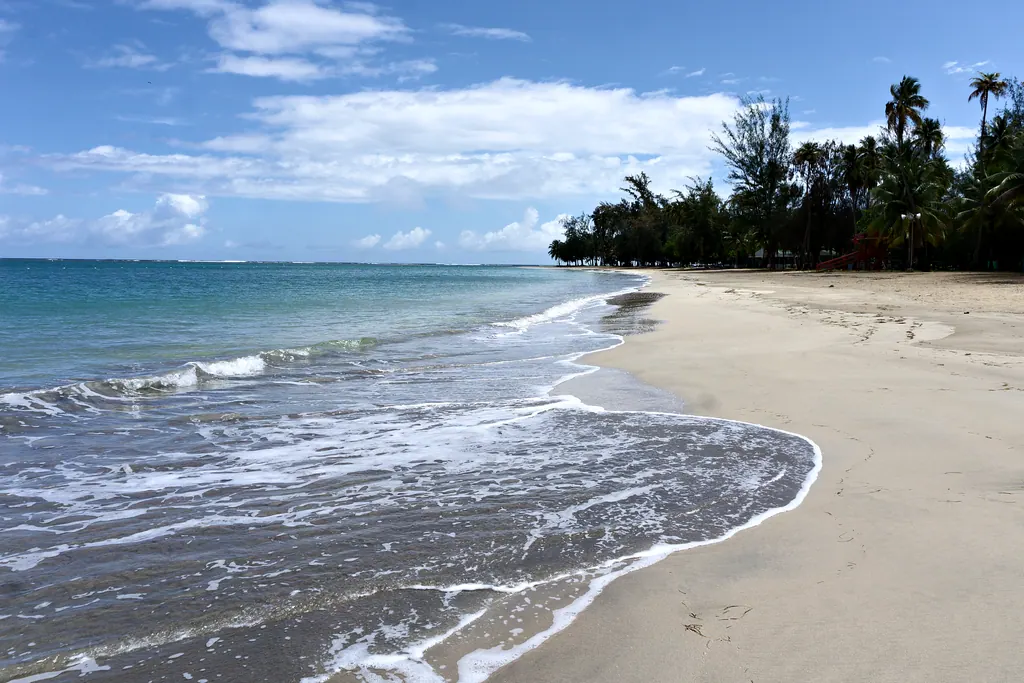
About 45 minutes east of San Juan, Luquillo is the classic family beach: a long curve of sand backed by palms, with a reef offshore that keeps the water calmer than on most of the north coast. Lifeguards, showers and picnic areas make it easy with kids. Add a morning in El Yunque National Forest, which rises right behind the town, and finish at the Kioskos de Luquillo, the row of food stands along Highway 3 known for alcapurrias, bacalaítos and cold drinks.
Flamenco Beach, Culebra
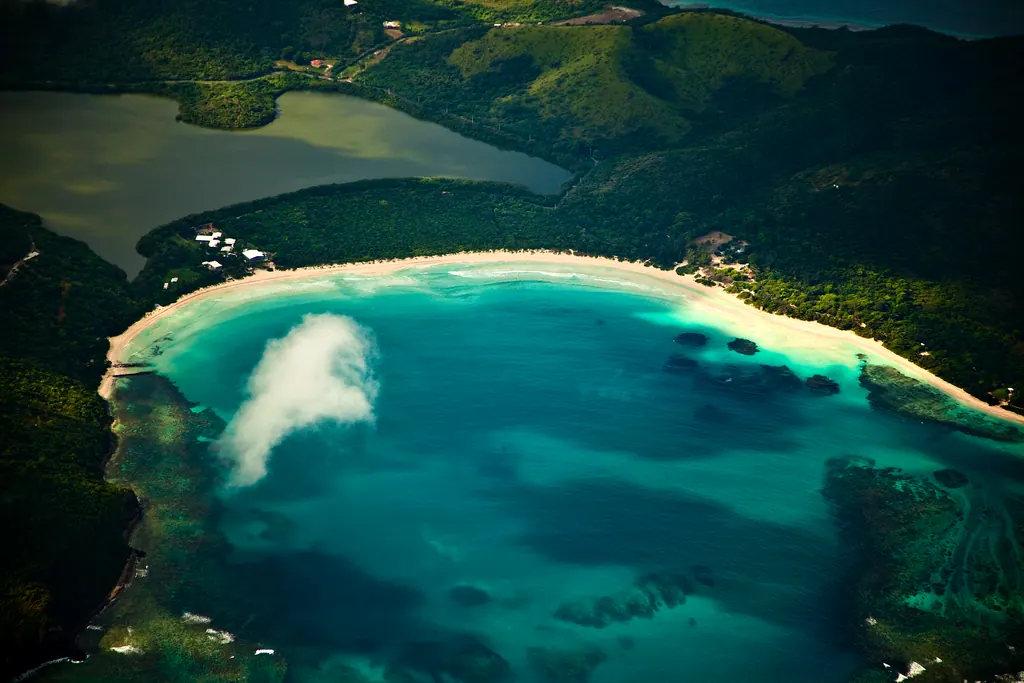
If you see one photo of a Puerto Rican beach, it is probably Flamenco: a horseshoe of white sand around a bay so clear that the bottom looks close enough to touch. It is a balneario with facilities and a campground, and at the north end two old tanks, painted with graffiti, recall the decades when the U.S. Navy used Culebra for training (it left in 1975).
Getting there takes planning. You can fly from San Juan in small planes, or take the public ferry from Ceiba on the east coast, about 90 minutes. Ferries sell out on weekends and holidays, and in 2026 the authorities approved a much higher fare for non-residents (around $11 each way, compared with about $2 before) whose start date has moved several times, so check the current price at puertoricoferry.com. Rental cars from the main island are not allowed on the ferry.
Flamenco faces north. On a calm day it is as gentle as a pool. During a strong winter swell, the NWS rip current warnings include Culebra, so check before you book a day trip.
Vieques: Sun Bay and the Refuge Beaches
Vieques is bigger and quieter than Culebra. Sun Bay (Sombé) is a long balneario on the south coast with shallow water and plenty of room. The best beaches, though, are inside the Vieques National Wildlife Refuge, on land the Navy left in 2003. Caracas (often called Red Beach) and La Chiva (Blue Beach) have calm water, little shade and no services, so bring everything you need. Many visitors also book an evening tour of Mosquito Bay, one of Puerto Rico's bioluminescent bays. Tours go by kayak or electric boat, and swimming is not allowed.
San Juan: City Beaches You Can Reach by Taxi
Not every beach day needs a drive. Isla Verde, next to the airport, has a wide beach lined with hotels and a balneario (Balneario de Carolina) with lifeguards. Condado is good for a walk and a sunset, but the surf is often rough and currents are strong, so it is better for looking than for swimming. For a calm swim close to Old San Juan, head to El Escambrón, where a reef shelters the water and you can snorkel near the shore on quiet days.
The West Coast: Crash Boat and Rincón
Crash Boat, Aguadilla
Crash Boat takes its name from the rescue boats once based here by the nearby Ramey Air Force Base. Today it is known for the pier that locals jump from, colorful fishing boats on the sand and, in summer, clear water with good snorkeling. In winter the same beach can have large waves. It is about two hours from San Juan, but close to Aguadilla's airport, which has nonstop flights from several U.S. cities.
Rincón
Rincón hosted the World Surfing Championships in 1968 and is still the island's surf town, with famous winter breaks such as Domes and Tres Palmas. Non-surfers come for the sunsets over the Mona Passage and, from about January to March, for the humpback whales that can sometimes be seen from the lighthouse park at Punta Higüero. Swimmers are better off on the calmer beaches south of town, such as Playa Córcega, on days when the swell is down.
The Southwest: Playa Sucia and Cabo Rojo
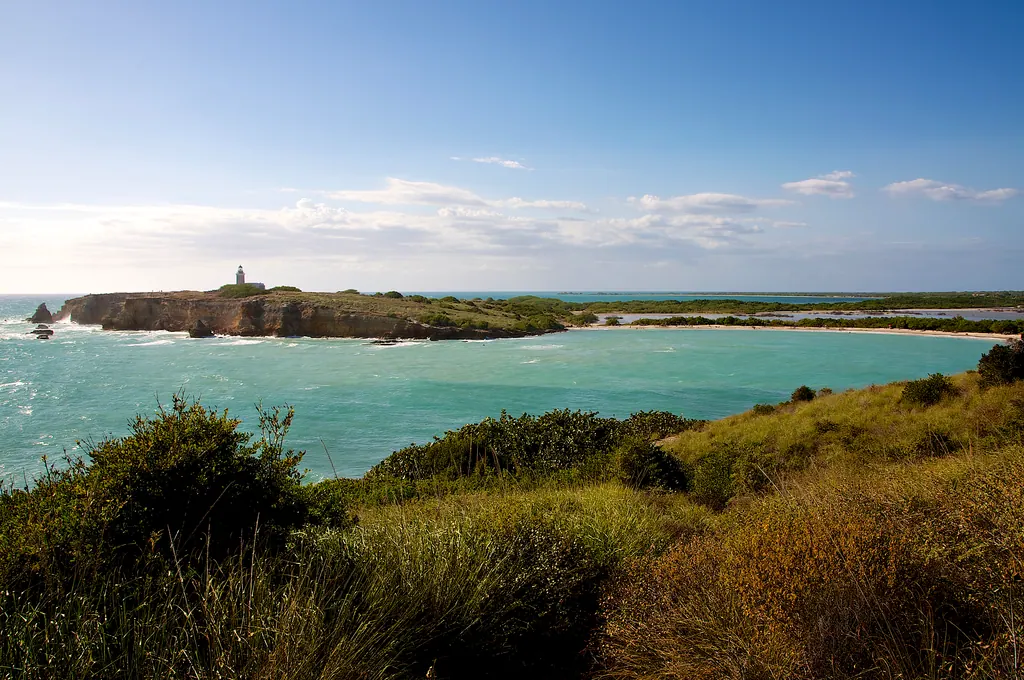
The southwest corner feels like a different island: dry, sunny and wide open. Playa Sucia, also called La Playuela, is a curved bay below limestone cliffs and the Los Morrillos lighthouse, built in 1882. The name means "dirty beach" and comes from the seaweed that sometimes washes in, not from the water, which is often a clear turquoise. There are no lifeguards and no facilities, and the last stretch is a bumpy dirt road, so arrive early with water and snacks.
Nearby, Boquerón has a calm balneario popular with Puerto Rican families, and the town's waterfront stands sell fresh oysters and fish. Playa Buyé is small, shallow and good for children. Farther east, the beaches around La Parguera and Guánica, including the mangrove island of Cayo Aurora (often called Gilligan's Island), are reached by short boat rides.
Which Beach Fits Your Trip?
| If you want | Go to | Best season |
|---|---|---|
| An easy day with kids and lifeguards | Luquillo, Isla Verde, Boquerón | Year round |
| The postcard beach | Flamenco, Culebra | Calm days, more reliable in summer |
| Quiet, wild beaches | Vieques refuge beaches, Playa Sucia | Year round, no services |
| Snorkeling from the shore | Escambrón, Crash Boat | Summer, calm days |
| Surf, or watching surfers | Rincón | Winter |
| A swim without leaving San Juan | Escambrón | Calm days |
Our Advice for a Winter Trip
If you travel between December and March, plan your days around the swell forecast rather than a fixed itinerary. Book a base on the east or south side if swimming matters most, keep Culebra and Crash Boat as "calm day" options, and save the north coast for walks, sunsets and food. For more beach islands to compare, see which Caribbean island is right for you, and read the best time to visit the Caribbean for the full picture on hurricane season. More ideas are on our Beach Holidays page.
Frequently asked questions
What is the most beautiful beach in Puerto Rico?
Flamenco Beach on the island of Culebra is the most famous, with white sand around a clear, sheltered bay. Playa Sucia in Cabo Rojo and the refuge beaches on Vieques are close rivals.
Do I need a passport to go to the beach in Puerto Rico?
No. U.S. citizens do not need a passport to travel between the mainland and Puerto Rico, but you need an accepted ID such as a REAL ID for the flight.
Which Puerto Rico beaches are calm for swimming?
Luquillo, El Escambrón in San Juan, Boquerón and Sun Bay on Vieques are usually calm. North-facing beaches can have dangerous rip currents in winter, so check the NWS beach forecast.
Are beaches in Puerto Rico public?
Yes. By law all beaches are public up to the high tide line, including those in front of resorts, though resort facilities are for guests.