There is a particular kind of quiet in an overwater bungalow. You wake to light bouncing off the water onto the ceiling. A ladder from the deck goes straight down into the lagoon. Through a glass panel in the floor, small fish drift past the stilts. It is one of the few travel images that looks almost exactly the same in real life as it does in the brochure.
It also has a surprisingly short history, a clear geography and a few practical choices that make a big difference to your stay. Here is where the idea came from, where you can find it today, and how to choose between the Indian Ocean, the South Pacific and the Caribbean.
Three Rooms on Stilts
The overwater bungalow is not an ancient tradition repackaged for tourists. It was invented in 1967 by three Americans in French Polynesia.
Hugh Kelley, Jay Carlisle and Donald "Muk" McCallum had left California for Tahiti in 1959 and ended up running small hotels under the name Bali Hai. One of them, on the island of Raiatea, had a reef but no beach. According to Carlisle, who told the story to Condé Nast Traveler in 2017, Kelley's solution was to build three rooms on stilts over the water, so guests could snorkel straight from their door.
The bungalows had a plexiglass panel in the floor with lights below it to attract marine life. McCallum called it "Tahitian television." A night cost $30 per couple, all meals included. The idea was an instant hit. The trio soon built six bungalows at their hotel on Moorea, much closer to Papeete, and that was when other hoteliers began copying the design. By 1970, the Hotel Bora Bora had added overwater suites for $10 a night on top of its $55 rooms on land. The original hotel on Raiatea has since closed, but the first bungalows still stand.
Bora Bora and French Polynesia
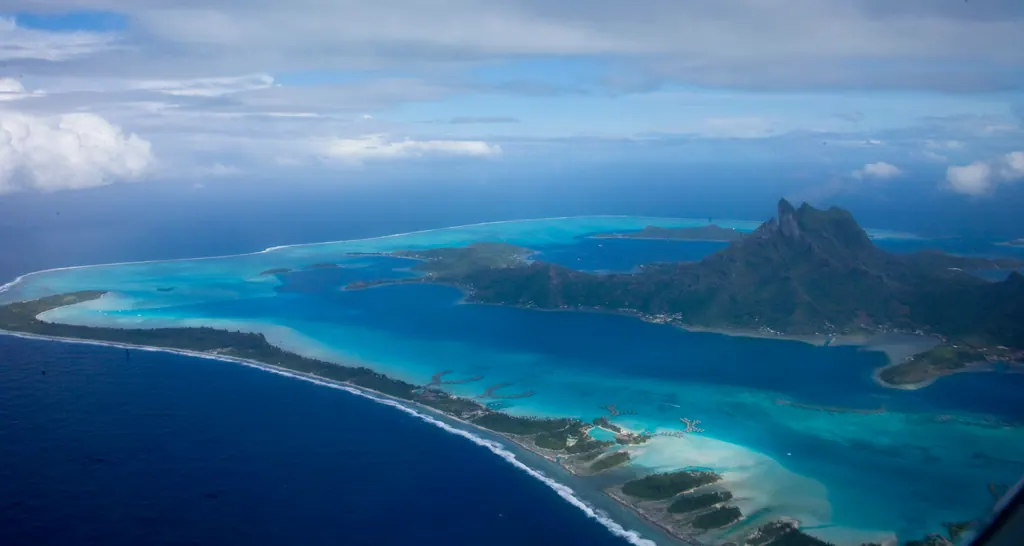
French Polynesia is still the most cinematic place to stay over the water. Bora Bora is the postcard: a lagoon in every shade of blue, ringed by a reef and small islets called motus, with the dark peak of Mount Otemanu rising in the middle. Most resorts sit on the motus, facing the main island across the lagoon.
Moorea, a short ferry ride from Tahiti, is greener and a little less formal, and Raiatea, where the story began, and neighboring Tahaa are quieter still.
For travelers from the U.S., the big advantage is distance. Nonstop flights from Los Angeles and San Francisco to Papeete on Tahiti take about eight hours, followed by a short domestic flight to the outer islands. The dry season, roughly May to October, is the most popular time to go.
The Maldives: Built for It
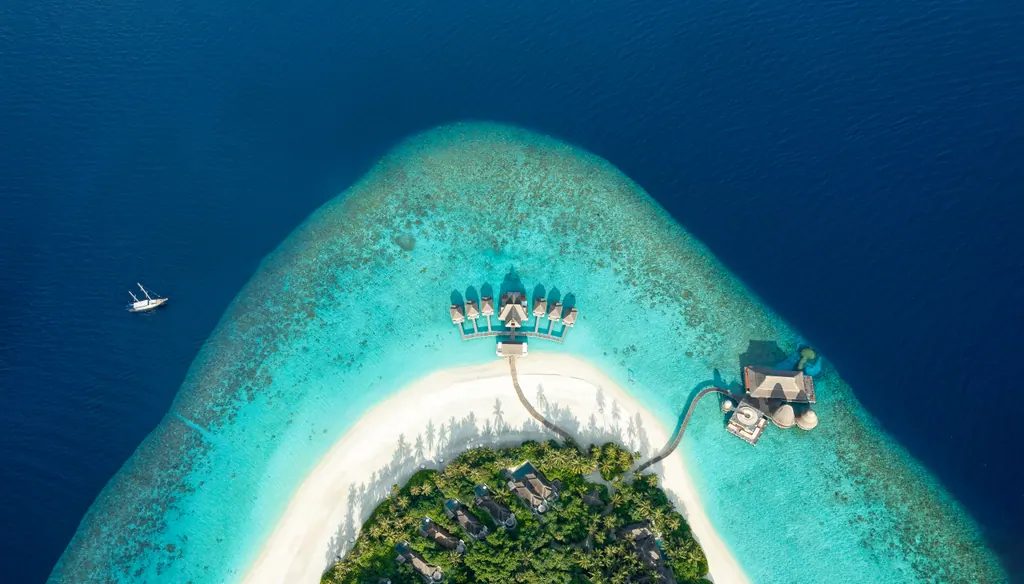
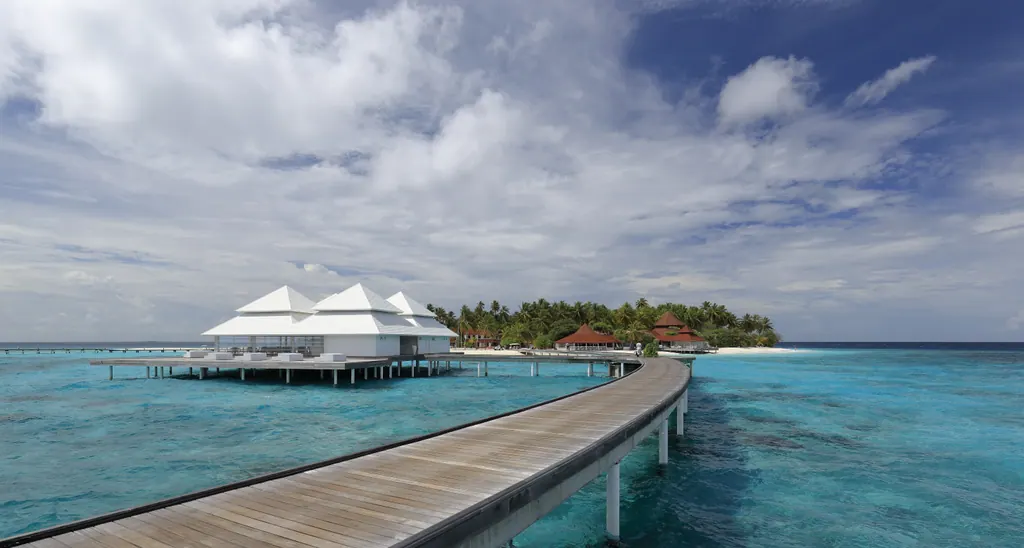
If French Polynesia invented the overwater bungalow, the Maldives turned it into a way of life. The country is made up of 26 atolls and about 1,200 small coral islands in the Indian Ocean, and the shallow, sheltered lagoons around them are close to perfect for building on stilts. In 2017, Roger Wade of the website Overwaterbungalows.net estimated that about two thirds of the world's overwater resorts were in the Maldives.
Most Maldivian resorts follow the "one island, one resort" model: the resort is the entire island. That gives you a lot of privacy and a very simple day. You swim, snorkel the house reef, eat and sleep, and that is about it. Transfers from the airport in Malé are by speedboat or seaplane, and the seaplane flight over the atolls is often a highlight of the trip.
The downside for Americans is the journey. There are no nonstop flights from the U.S., so expect a connection in the Middle East, Europe or Asia and well over 20 hours of travel each way. The driest and most popular months are roughly December to April.
The Caribbean Finally Joins In
For decades, the Caribbean had no overwater rooms at all. The region lacks the big atolls and sheltered lagoons of the Pacific and Indian Oceans, and hurricanes, tides and rules about who owns the seabed made building difficult.
That changed on December 1, 2016, when the Caribbean's first overwater villas opened at the Sandals Royal Caribbean near Montego Bay in Jamaica, out over the water behind a protective reef. More followed in Saint Lucia in 2017, and today you can also find overwater bungalows in Antigua and on Mexico's Riviera Maya.
The Caribbean versions are generally all-inclusive and only a few hours' flight from much of the U.S. You trade the sense of remoteness for a much shorter trip, which makes them realistic even for a long weekend. If you are still deciding on an island, our guide to which Caribbean island to choose can help, and it is worth noting that hurricane season runs from June through November.
Fiji and Further Afield
Fiji has a smaller selection of overwater bures, as the local word for a bungalow goes, and Fiji Airways flies nonstop from Los Angeles and San Francisco to Nadi. It can be a good choice if you want overwater rooms combined with a stronger sense of local village life and culture.
Elsewhere, overwater rooms have spread to places like Malaysia, the Philippines and Cambodia, often at lower prices than in the Maldives or Bora Bora.
How to Choose Your Villa
Not all overwater rooms are equal, and a few details make a big difference:
- Sunrise or sunset side. On many islands, one row faces the sunset and costs more. If you are early risers, the sunrise side can be just as good.
- Distance from shore. The villas at the end of a long jetty are the most private, but they can be a ten-minute walk from breakfast. Some resorts offer golf carts or bicycles.
- Water depth. Ask whether you can swim straight from the ladder at all tides. At some resorts the water under the villas gets very shallow at low tide.
- Families. Decks without railings and deep water are not a relaxing mix with young children. Many resorts have rules on minimum ages for overwater rooms.
- Split your stay. A few nights over the water and the rest in a beach villa is a common way to keep the cost reasonable.
The Lagoon Is Not a Swimming Pool
The water below your deck is a living reef. Use reef-safe sunscreen, do not stand on coral, and never feed the fish. Many resorts run guided snorkeling trips, which are the best way to see rays, turtles and reef sharks without disturbing them. For more ideas in this style of travel, see our pages on luxury travel and the Maldives.
Frequently asked questions
Where were the first overwater bungalows built?
On Raiatea in French Polynesia in 1967, by three American hoteliers who ran the Bali Hai hotels. The site had a reef but no beach, so they built three rooms on stilts over the water.
Which country has the most overwater bungalows?
The Maldives. In 2017, about two thirds of the world's roughly 170 overwater resorts were there, according to Overwaterbungalows.net.
Are there overwater bungalows in the Caribbean?
Yes. The first opened at Sandals Royal Caribbean in Jamaica on December 1, 2016, and you can now also find them in Saint Lucia, Antigua and on Mexico's Riviera Maya.
What is the closest place to the U.S. with overwater bungalows?
The Caribbean and Mexico, a few hours' flight from much of the U.S. Bora Bora is about eight hours nonstop from the West Coast to Tahiti plus a short domestic flight.
Are overwater bungalows good for kids?
Often not for young children, since decks may lack railings and the water can be deep. Many resorts set minimum ages for overwater rooms, so check before booking.