Imagine checking in at a medieval castle on a cliff above a river gorge, eating dinner in a vaulted hall that once fed monks or knights, and waking up with the old town at your window. In most countries that would be a once-in-a-lifetime splurge. In Spain it is a hotel chain, and it is owned by the government.
Spain's paradores are among the most distinctive places to stay in Europe, yet many American travelers have never heard of them, or are unsure what they are getting. Below we explain what a parador is, how the network started, which ones are worth planning a trip around, what to expect from the rooms and restaurants, and how to book without paying more than you need to.
What Is a Parador?
A parador is a hotel run by Paradores de Turismo de España, a company owned by the Spanish state. Most are set in historic buildings such as castles, palaces, convents, monasteries and fortresses that would otherwise be hard to maintain. Others are modern buildings placed in national parks, on the coast or with views over a historic city.
The idea was twofold from the start: give travelers good places to stay in parts of Spain where there were few hotels, and give old monuments a use that pays for their upkeep. As of 2026 the network has 99 paradores in Spain and one in Portugal, with about 6,000 rooms in total, and there is a parador in every Spanish province except Biscay. Every one has its own restaurant serving the food of its region.
The paradores are grouped into three types, which helps when you browse:
| Type | What it means | Examples |
|---|---|---|
| Esentia | Monumental and historic buildings | Granada, Santiago de Compostela, Cardona, Alarcón |
| Civia | City hotels, often in modern buildings | Cádiz, Alcalá de Henares, Gijón |
| Naturia | Near the coast or in nature | Gredos, Fuente Dé, Las Cañadas del Teide |
How It Started: A Royal Hunting Lodge in 1928
The first parador opened on October 9, 1928, in the Sierra de Gredos, about two hours west of Madrid. King Alfonso XIII chose the site himself, and the building was used as a lodge for royal hunting parties. Two years later, in 1930, the first parador in a historic building opened in the medieval castle of Oropesa in the province of Toledo.
The network grew fastest in the 1960s, during Spain's tourism boom, when it went from 40 to 83 hotels. Portugal liked the idea enough to copy it: its own chain of historic inns, the Pousadas de Portugal, was founded in 1941 on the Spanish model.
The network is still changing. The newest parador opened in the castle of Dalt Vila in Ibiza in March 2026, and new ones are being built in Morella and in the Monastery of Veruela. Meanwhile the original Parador de Gredos is closed for renovation from October 1, 2026, until June 30, 2028, according to Paradores.
Paradores Worth Planning a Trip Around
With 100 to choose from, the best parador is the one on your route. These are the ones that tend to make people change their route.
Granada: Inside the Alhambra
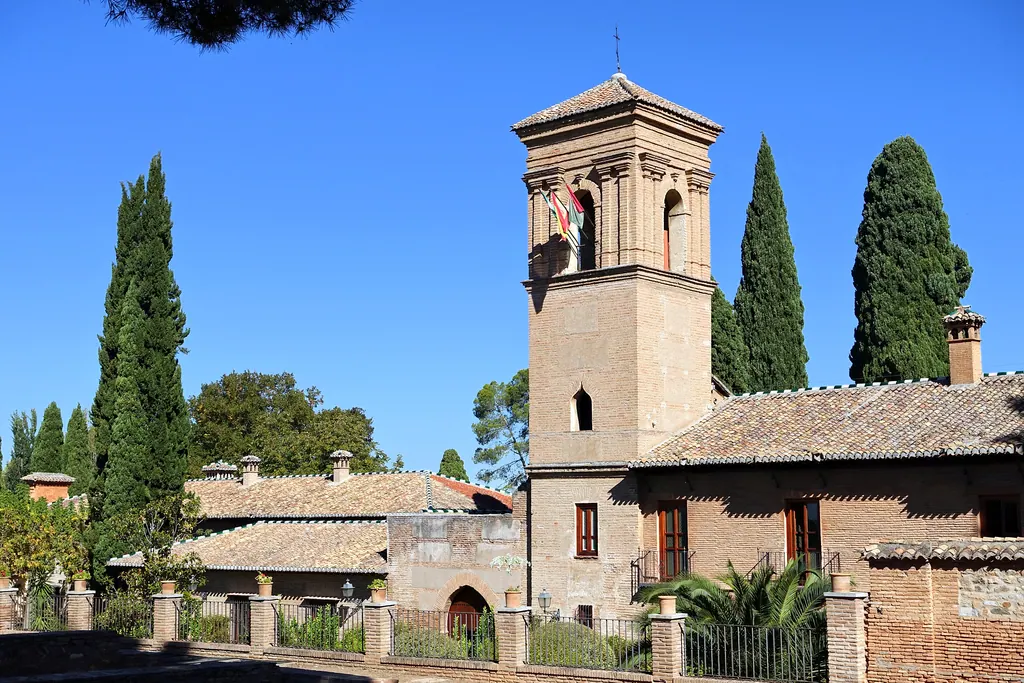
The Parador de Granada sits within the walls of the Alhambra, in the former Convent of San Francisco, which was founded by the Catholic Monarchs after they took the city in 1492. Staying here means walking through the gardens of the Alhambra in the evening, after most day visitors have left. It is one of the most sought-after hotels in Spain and often sells out months ahead, so book early if your dates are fixed.
Santiago de Compostela: A Pilgrims' Hospital From 1499
The Hostal dos Reis Católicos stands on the Praza do Obradoiro, right next to the cathedral where the Camino de Santiago ends. It was founded in 1499 by the Catholic Monarchs as a hostel and hospital for pilgrims, and it is often described as one of the oldest hotels in the world. With 137 rooms, it is also the largest parador.
Alarcón: A Castle Above a River Gorge
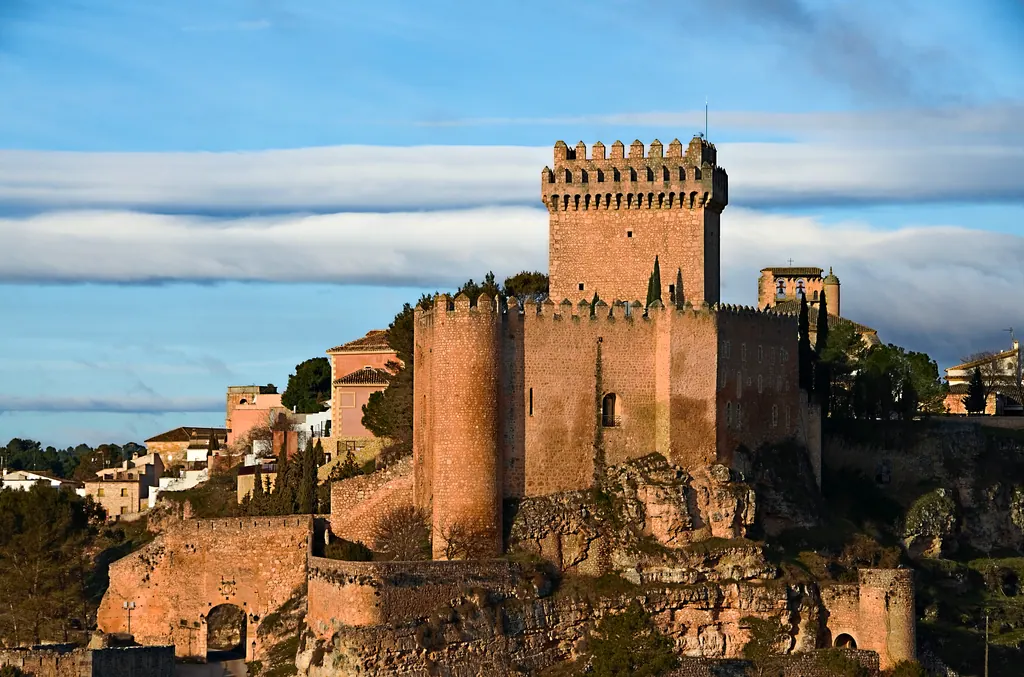
Alarcón, in the province of Cuenca, is a small fortified village on a rocky spur almost surrounded by a loop of the Júcar River. The parador occupies the medieval castle at its tip. It is one of the smallest and most atmospheric in the network and an easy detour on a drive between Madrid and Valencia.
Cardona: A Hilltop Fortress in Catalonia
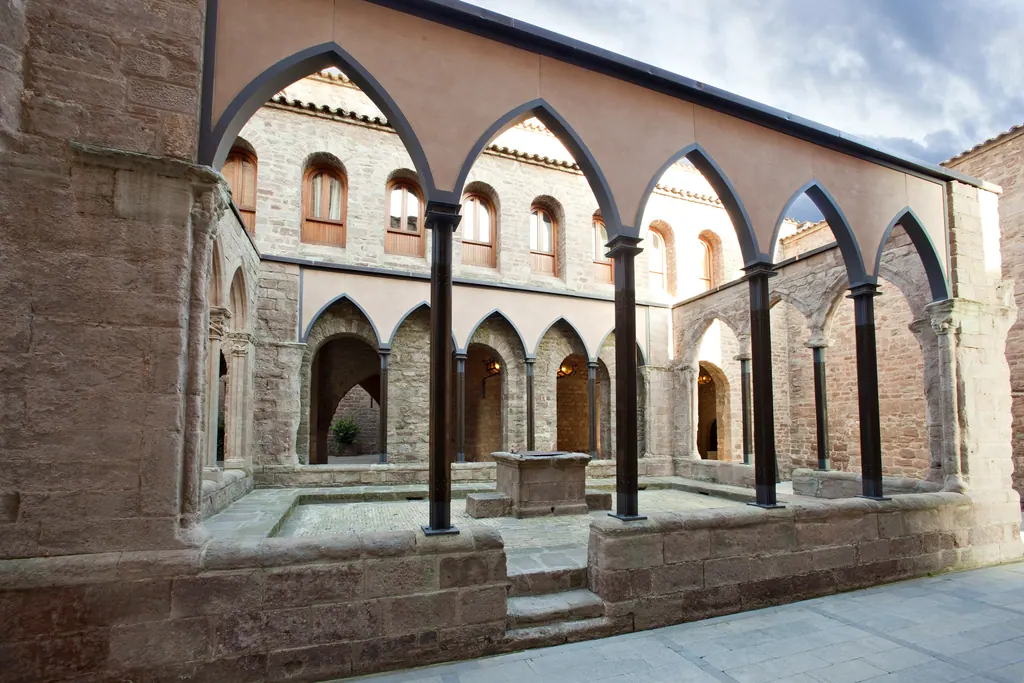
The Parador de Cardona is set in a castle on a hill above the town of Cardona, about an hour and a half from Barcelona by car. The castle complex includes an 11th century Romanesque church, and the views over the countryside and the nearby salt mountain are a reason to go on their own.
Ronda: On the Edge of the Gorge
In Ronda the parador is set in the former town hall, right beside the Puente Nuevo bridge and the deep El Tajo gorge. The building itself is less historic than many paradores, but the location on the cliff edge is hard to beat.
Hondarribia: A Castle on the French Border
In the Basque Country, the Parador de Hondarribia occupies the Castle of Charles V on the main square of the walled old town, a few minutes from the French border and a short drive from San Sebastián.
Las Cañadas del Teide: Above the Clouds in Tenerife
At 7,041 feet (2,146 meters), the parador inside Teide National Park on Tenerife is the highest in the network. When the day visitors drive back down to the coast, you are left with volcanic landscapes and some of the clearest night skies in Spain.
What to Expect From a Stay
A parador is a full-service hotel, not a museum you sleep in. Rooms are generally comfortable and spacious, with modern bathrooms, but the style varies a lot. In a castle you may get thick stone walls, small windows and heavy wooden furniture; in a modern Naturia parador, big windows and a terrace. Rooms in the historic part of a building are often more atmospheric than those in later wings, so read the room descriptions before you book.
The restaurants are a highlight. Each parador focuses on dishes from its region, so a dinner in Santiago leans toward Galician seafood and a dinner in Cuenca toward hearty Castilian cooking. Restaurants and cafés are usually open to non-guests too, which is a good way to see a famous parador without staying the night. Many travelers stop for lunch or a coffee on the terrace on a road trip.
A few practical points: many paradores are in small towns or on hilltops, so a rental car makes life easier, and parking is often limited in historic centers. Breakfast is usually a large buffet and may or may not be included in the rate.
Are Paradores Expensive?
Prices vary widely with the parador, the room type, the region and the season. A weeknight in a lesser-known parador in the countryside can cost about the same as a good mid-range hotel, while famous ones such as Granada or Santiago are priced like luxury hotels in high season. As a rule, the more famous the building, the earlier you need to book.
There are a few ways to pay less:
- Join Amigos de Paradores. The free loyalty program gives members points toward future stays and member offers.
- Look at the special rates. Paradores regularly runs discounts for travelers over a certain age, young travelers and stays of several nights. The terms change, so check the current offers on the official site before you book.
- Travel midweek and outside peak season. Rural paradores in particular are often much cheaper from Sunday to Thursday.
- Book directly. The official website (paradores.es) lists all hotels and offers, which makes it easy to compare.
How to Fit Paradores Into a Trip to Spain
The most rewarding way to use paradores is as stopovers on a road trip rather than as a base in big cities. Spend a night in Alarcón or Cuenca between Madrid and Valencia, in Cardona between Barcelona and the Pyrenees, or in Ronda on a tour of Andalusia. In cities like Granada and Santiago, a parador can be the highlight of the whole trip, but book those first and plan the rest around them.
If staying in unusual places is your thing, you may also like our guides to ice hotels, Japanese ryokans and overwater bungalows. For more about the country, see our Spain page.
Frequently asked questions
What is a parador in Spain?
A parador is a hotel run by the state-owned company Paradores de Turismo de España, usually in a historic building such as a castle, convent or palace, or in a scenic natural setting.
How many paradores are there?
As of 2026 there are 99 paradores in Spain and one in Portugal.
Can you visit a parador without staying there?
Usually yes. Parador restaurants and cafés are generally open to non-guests, which is a good way to see a famous one on a day trip.
What was the first parador?
The Parador de Gredos in the Sierra de Gredos, opened on October 9, 1928. It is closed for renovation until June 30, 2028.