A young woman with a clipboard steps into your path near the Eiffel Tower and asks, with a hopeful smile, whether you would sign a petition for deaf children. It takes ten seconds. You lean over the board, and while you write your name, a hand you never see works its way into the bag hanging at your hip.
Most trips to Europe go by without anything like this, and violent crime against tourists is rare. But the continent's big sights draw small, well-practiced teams whose whole business is distraction. The tricks have been around for years, they repeat from city to city, and once you know the script, they become surprisingly easy to spot. Here is how the most common ones work, where you are most likely to meet them, and what to do if one of them works on you anyway.
Why Do the Same Tricks Show Up Everywhere?
Pickpocketing in Europe is mostly a team sport. One person creates a reason for you to stop, look down or use both hands, and another person does the actual stealing. The UK Foreign Office describes exactly this pattern. In its advice for Spain it warns that thieves "use distraction techniques and often work in teams," and its pages for France and Italy say much the same.
That is useful to know, because it means the warning sign is rarely the thief. It is the distraction. Anything that suddenly demands your full attention in a crowded place (a stranger's question, a spill on your jacket, a crush at the train door) is the moment to put a hand on your bag.
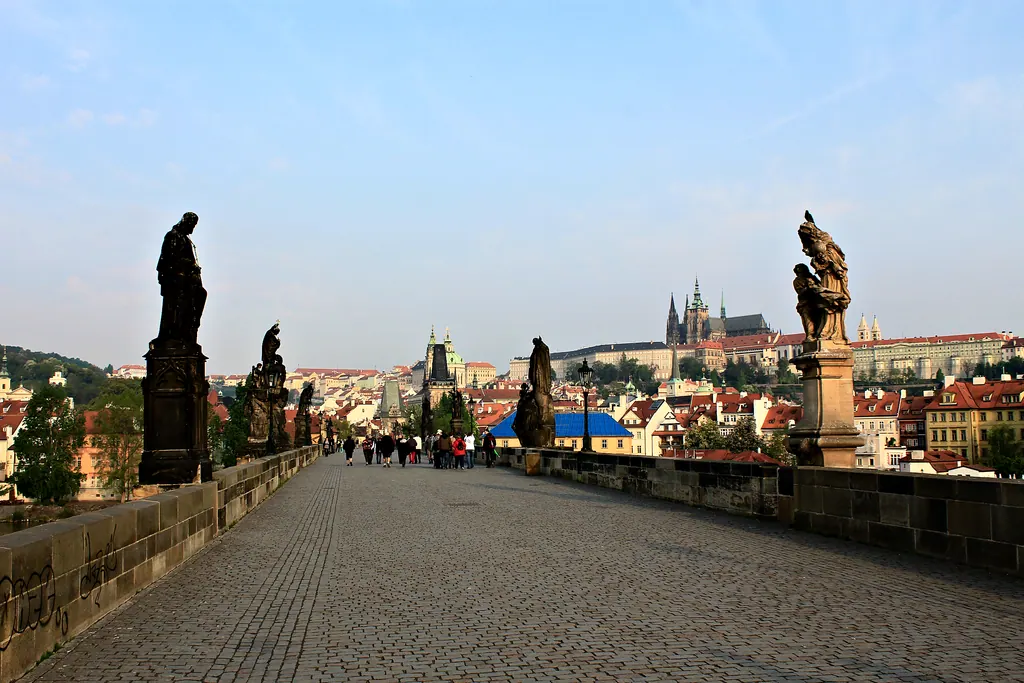
The places are predictable too. According to the UK Foreign Office, thieves work the Paris Métro, the RER trains and the main stations in Paris, the busy routes from Prague's airport into the city and the trams up to Prague Castle, and the train and metro stations, airports and tourist sites in Italy's big cities.
The Clipboard, the Bracelet and the Ring
These three are the classic "friendly stranger" routines. None of them looks like a crime when it starts.
The petition. Someone with a clipboard asks you to sign for a charity, often claiming to be deaf or mute so the conversation stays one-sided. Either a partner lifts your wallet while you write, or you are pressured into a "donation" afterward. Real charities do not stop tourists at monuments with clipboards. Keep walking.
The friendship bracelet. A man greets you warmly, asks you to hold out a finger "for a quick demonstration" and ties a string bracelet around it before you can react. Then he asks for money, sometimes loudly, while friends close in. The routine is best known at the foot of Sacré-Cœur in Montmartre. Keep your hands in your pockets and do not stop.
The found ring. Someone "finds" a gold ring on the ground right next to you, asks if it is yours, then offers to let you keep it for a small reward. The ring is brass. It is a common trick along the Seine in Paris, but it travels.

The sprig of rosemary. In Seville and Granada in particular, women offer a sprig of rosemary "for good luck" and then insist on reading your palm and demanding payment. A polite "no, gracias" without slowing down works best.
When the Distraction Is a Spill or a Crowd
The second family of tricks relies on physical confusion rather than conversation.
- The stain. Something wet lands on your shoulder (ketchup, mustard, a smear that looks like bird droppings). A helpful passerby offers a tissue and starts dabbing, while someone else empties your pockets. Decline the help, keep your bag in front of you and clean up later somewhere quiet.
- The doorway squeeze. On a metro platform, a group crowds the door, someone stops dead in front of you as you board, and you get jostled from behind. When the doors close, one of them has stepped back out with your phone. Board with your bag in front of you and your phone out of your back pocket.
- The ticket machine helper. At busy stations, people offer to help you buy a ticket and then try to take your card or your change. Use staffed counters or the machine on your own.
- The street game. The shell game, where a pea is hidden under one of three cups, is fixed from start to finish. The "winners" you see in the crowd are part of the team, and the people watching are perfect targets for pickpockets.
Fake Police and Fake Officials
This one is less common, but it is the most unsettling. Two men in plain clothes flash a badge, say they are checking for counterfeit money or drugs, and ask to see your wallet and passport. They hand it all back, minus some of the cash.
The UK Foreign Office warns about this in Prague in so many words: criminals pretend to be plainclothes police officers and ask to see foreign currency and passports, and Czech police officers do not have the right to do this. Its advice applies anywhere in Europe. Do not show your money, offer to walk with them to the nearest police station, or call 112 (the emergency number across the EU) to check their identity.
On the road there is a variation. In Spain, the Foreign Office describes "highway pirates" who flag down rental cars and claim there is something wrong with your vehicle, and people posing as plainclothes police in unmarked cars. Genuine unmarked police cars in Spain show a lit "Policía" or "Guardia Civil" sign in the rear window, and real officers will ask for your vehicle documents, not your bag or wallet. If you do stop, do it at a well-lit service station.
Money Tricks That Are Technically Legal
Not every rip-off is a crime. Some are just bad deals presented in a hurry.
The "would you like to pay in dollars?" question. When a card machine or ATM offers to charge you in U.S. dollars instead of euros, it is offering dynamic currency conversion, almost always at a worse rate than your own bank's. Choose the local currency every time. We explain why in Should You Pay in Local Currency or Dollars Abroad?.
Exchange booths with fine print. In Prague, street changers and some exchange offices have long been a problem, and Prague city police advise visitors never to change money on the street, since that cash is often counterfeit. The Czech Republic also gives you a rare safety valve: under Czech law, according to the Czech National Bank, you can cancel a currency exchange within three hours at the same exchange office (during its opening hours) for amounts up to 1,000 euros. Keep the receipt.
Nightclub bills and "consumption cards." Prague police also warn that some nightclubs charge very high consumption fees and that losing a consumption card before paying can carry a steep penalty. Ask about prices before you order.
Taxis without a meter. In most big European cities, the safest option is an official taxi rank or a ride-hailing app with the price shown in advance. Avoid drivers who approach you inside arrivals halls.
How to Make Yourself a Harder Target
You do not need a money belt and a suspicious frown. A few habits do most of the work.
- Carry your bag across your body, zipped and in front of you in crowds, as the UK Foreign Office suggests for Paris.
- Split your valuables: one card and a little cash in your pocket, a backup card somewhere else, the passport in the hotel safe unless you need it. (Note that some countries, such as the Czech Republic, require you to carry ID; a photocopy or scan is often accepted, but check the rules for the country you are in.)
- Keep your phone in a front pocket or a zipped bag, not on the café table.
- Be extra alert in the "transition moments": boarding trains, using ATMs, checking in at the airport and picking up a rental car.
- Say no without explaining. A short "no, thank you" while you keep walking ends almost every one of these routines.
If It Happens Anyway
Act quickly, in this order:
- Freeze your cards in your banking apps, then call your bank. The faster you do this, the less a thief can spend.
- Report the theft to the local police and ask for a written report. Your travel insurer will almost certainly want it. (See Do You Need Travel Insurance for Europe? for what a policy typically covers.)
- If your passport is gone, contact the nearest U.S. embassy or consulate. They can issue an emergency or replacement passport so you can travel home. Report the passport as lost or stolen as well, so nobody else can use it.
- Change your passwords if your phone was taken, and use "find my device" to lock or wipe it.
Most of all, do not let one bad moment define the trip. The tricks above are aimed at people who look distracted, and simply knowing they exist already makes you look a lot less distracted. For a broader look at how the U.S. government rates risk abroad, see our guide to State Department travel advisory levels, and for more practical safety advice, browse our safety section.
Frequently asked questions
Where are pickpockets most common in Europe?
In crowded tourist areas and on public transport in big cities. The UK Foreign Office singles out the Paris Métro and RER trains, the routes from Prague airport and the trams to Prague Castle, and stations and major sights in Italy.
What is the friendship bracelet scam?
A stranger ties a string bracelet around your finger or wrist before you can say no, then demands money for it. It is best known at Sacré-Cœur in Paris. Keep your hands in your pockets and keep walking.
Can police in Europe ask to see my money?
Be very wary if plainclothes officers ask to see your cash. In Czechia, the UK Foreign Office notes that police have no right to do this. Offer to go to the nearest police station, or call 112 to check.
What should I do if my passport is stolen in Europe?
Report the theft to the local police, then contact the nearest U.S. embassy or consulate, which can issue an emergency or replacement passport. Report the passport as lost or stolen so it cannot be used by someone else.