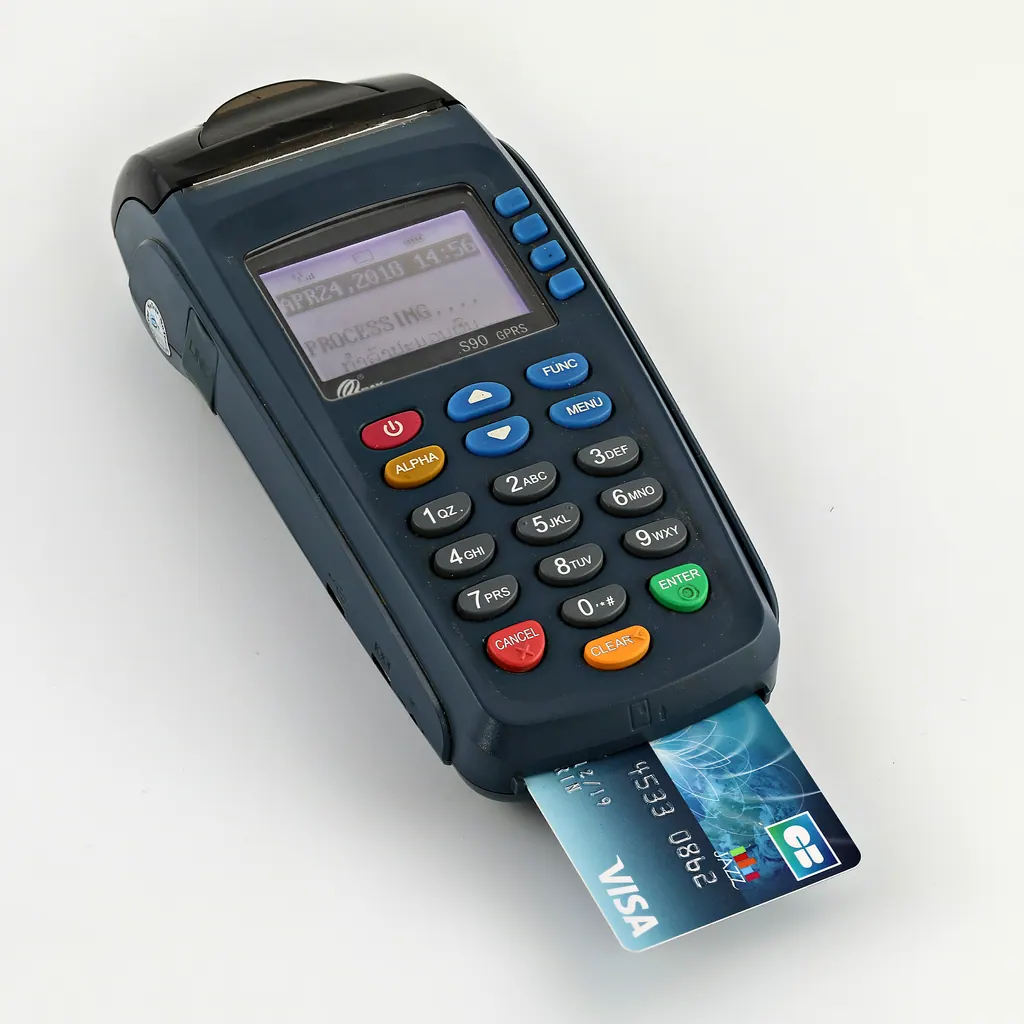
You hand over your card at a restaurant in Rome. The waiter brings the terminal back and the screen shows two numbers: €84.00 or $97.40. A friendly line underneath says something like "Pay in your home currency and know exactly what you pay." It sounds helpful. In most cases it is the more expensive option.
The short answer: when a card terminal or ATM abroad asks whether you want to pay in the local currency or in U.S. dollars, choose the local currency. Below we explain why, how much the other choice usually costs, and the few situations where it is worth a second look. Everything here is as checked on November 3, 2026.
What Is Dynamic Currency Conversion?
The dollar option has a name: dynamic currency conversion, usually shortened to DCC. When you pick dollars, the conversion from euros (or pesos, pounds or baht) to dollars is done on the spot by the merchant's payment provider, at an exchange rate that provider sets. The merchant often gets a share of the margin.
When you pick the local currency, your card is charged in that currency, and the conversion to dollars happens later at the exchange rate set by the card network (Visa or Mastercard), plus any foreign transaction fee your own bank charges.
So the question on the screen is really: who converts the money, your card network or the shop's payment company? The network rate is close to the wholesale market rate. The DCC rate usually has a markup built in.
How Much Paying in Dollars Usually Costs
The markup varies from terminal to terminal, and that is the problem. The European consumer organization BEUC has reported that DCC payments cost from about 2.6% to as much as 12% more than paying in the local currency.
Here is a simple example. On November 2, 2026, the European Central Bank's reference rate was 1 euro = 1.1216 U.S. dollars. A €100 dinner bill is then worth about $112.
- You choose euros with a card that has no foreign transaction fee: you pay close to $112.
- You choose euros with a card that charges a 3% foreign transaction fee: you pay about $115.50.
- You choose dollars at a terminal with a 7% DCC markup: you pay about $120, and possibly the 3% fee on top, so up to about $123.50.
That is $8 to $11 extra on one dinner. Over a week of meals, hotels and taxis it adds up fast.
Why Choosing Dollars Does Not Save the Foreign Fee
Many people pick dollars because they think it avoids the foreign transaction fee on their card. It usually does not. Citi points out that DCC can come with a less favorable exchange rate and generally does not get you out of your card's foreign transaction fee, because the purchase is still processed by a merchant abroad. Card issuers typically charge that fee, usually 1% to 3%, on any transaction processed outside the U.S., whatever currency it shows on the receipt.
In other words, with DCC you can end up paying twice: once in the merchant's markup and once in your bank's fee.
The fix for the fee is a different card, not a different button. Many travel credit cards and some debit cards have no foreign transaction fee at all. Check your card's terms before you go.
The Rules That Protect You
You are allowed to say no, and the merchant is supposed to make that clear.
- Visa rules say DCC must be optional. The merchant may not choose it for you, and before you pay, you should be shown the amount in both currencies, the exchange rate and any markup.
- In the European Union, a regulation in force since April 19, 2020 (EU 2019/518) requires DCC providers at shops and ATMs to show the total in your currency and the markup as a percentage over the latest euro reference rate from the European Central Bank before you pay.
In practice, staff sometimes press the dollar button for you, or hand you the terminal with dollars already highlighted. If the receipt shows a dollar amount and you did not ask for it, you can ask the merchant to cancel and redo the payment in local currency. If they refuse, keep the receipt and contact your card issuer.
How to Spot the Question (and Answer It)
The wording changes from country to country, but the pattern is the same. Look out for:
- Two amounts on the screen, one in the local currency and one in USD.
- Buttons like "Pay in USD", "Pay in your home currency" or "Guaranteed rate".
- Small print with an exchange rate and a percentage, such as "includes 5.5% margin".
- A waiter or cashier asking, "Euros or dollars?"
Your answer is always the local currency: euros in Spain or Greece, pesos in Mexico, pounds in the UK, yen in Japan. If the screen only shows a dollar amount, ask the staff to change it before you tap or insert your card.
ATMs: Same Trick, Bigger Amounts
DCC is especially common at ATMs, and the amounts are often larger than a dinner bill. Independent ATM operators in tourist areas may show a screen that offers a "conversion rate" or asks if you want to "accept" conversion.
- Choose "Decline conversion", "Without conversion" or "Continue without conversion".
- Withdraw in the local currency only.
- Prefer ATMs inside or attached to real banks. They are less likely to push DCC and often charge lower operator fees.
The ATM may still charge a fixed withdrawal fee, and your own bank may add its fee. Declining DCC removes one cost layer, not all of them. For more country-specific advice, see our guides to money and tipping in Europe, money in Mexico and Central America and money in the Caribbean.
Hotels, Car Rentals and Online Bookings
DCC is not limited to the moment you tap your card.
- Hotels may set your card to bill in dollars at check-in. Say at the front desk that you want to be charged in the local currency, and check the final bill at checkout.
- Car rentals sometimes pre-select dollars in the rental agreement. Look for a currency line or a box about "currency conversion" before you sign.
- Foreign websites, including airline and hotel sites, may show prices in dollars when they detect a U.S. card. If there is a currency menu, choose the local currency of the company, and let your card do the conversion.
One exception: some U.S.-based booking sites charge you in dollars from the start, with no conversion at all. That is not DCC. The question only matters when a foreign merchant offers to convert for you.
When Paying in Dollars Can Make Sense
Honestly, rarely. The only case worth a quick calculation is when your card charges a high foreign transaction fee and the DCC screen clearly shows a small markup. If the markup is lower than your bank's fee and you would pay both either way, the difference shrinks. Most of the time, though, you will not get a clear markup figure, and the safest rule is still local currency.
The better long-term move is to carry at least one card with no foreign transaction fee, plus a backup card on a different network. Then the answer at every terminal is easy.
For more money questions before your trip, browse our money and tipping guides.
Frequently asked questions
Should I pay in euros or dollars in Europe?
Pay in euros. If you choose dollars, the shop's payment provider converts the amount at its own rate, which usually includes a markup of a few percent or more.
Does paying in dollars avoid my foreign transaction fee?
Usually not. Card issuers typically charge their foreign transaction fee on purchases processed abroad, whatever currency is shown, so you can end up paying both the DCC markup and the fee.
What should I press at a foreign ATM that offers conversion?
Choose the option to decline conversion or continue without conversion, and withdraw in the local currency.
Can a merchant choose dollars for me?
Under Visa rules, dynamic currency conversion must be your choice and must not be preselected. If it happened without your consent, ask the merchant to redo the payment or contact your card issuer.