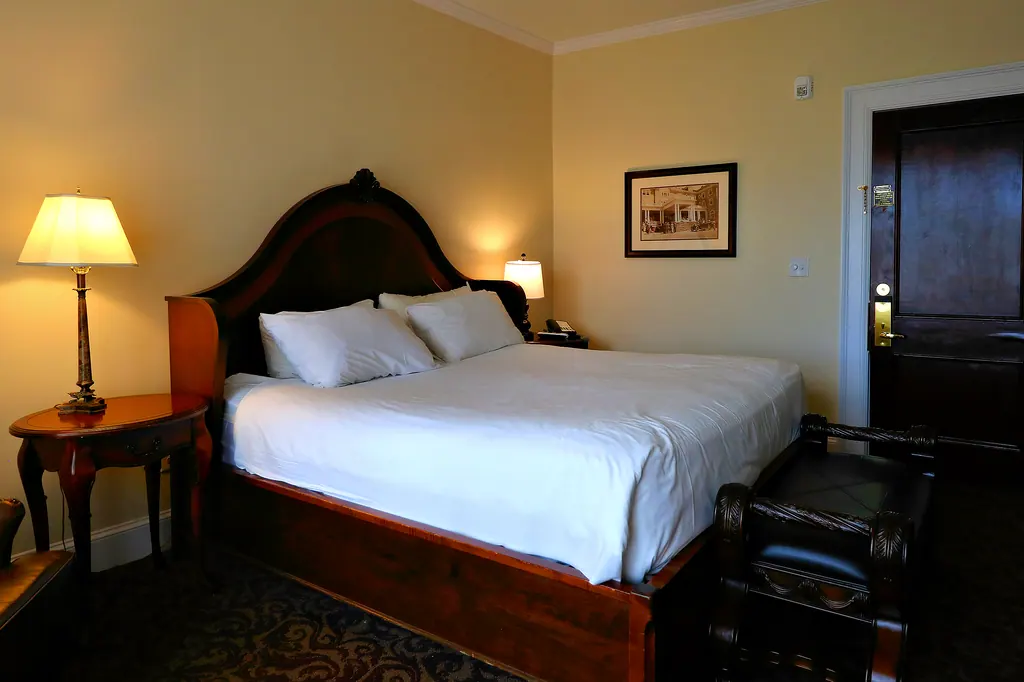
The door clicks shut, the bag hits the luggage rack, and for most of us the next move is to look for the Wi-Fi password. That first quiet minute in a new room is also the best moment to do a few things that almost nobody does, and that make a real difference if the night goes wrong.
Hotels are, on the whole, safe places to sleep. The risks that do exist are mostly small and predictable: a door that does not latch, a phone call that is not from the front desk, a room key left on the table by the pool, a fire exit you never looked for. Here is how we think about the room you will call home for a few nights, in the U.S. or abroad.
What Should You Do at Check-In?
Safety starts at the desk, before you ever see the room.
- Keep your room number quiet. Many hotels write the number on the key sleeve instead of saying it aloud. If a clerk announces it in a busy lobby, it is perfectly fine to ask for a different room.
- Take a business card or photo of the hotel's details. Having the address and phone number in writing (and in the local language, if you are abroad) helps if you get lost, need a taxi or lose your phone.
- Ask about the room's location. Ground-floor rooms with sliding doors or windows that open onto a street, garden or parking lot are the easiest to reach from outside. If you are not comfortable with that, ask for a room on a higher floor that opens onto an interior corridor.
- Notice who is around. If someone seems to be paying close attention while you check in, or follows you to the elevator, step back into the lobby and let the staff know.
Is Your Door Really Locked?
The door is the single most important piece of hardware in the room, so give it 30 seconds when you arrive.
Check that it closes and latches on its own, without a push. Use the deadbolt and the security latch (the swing bar or chain) every time you are inside, including during the day. Look through the peephole and make sure it is not blocked or loose. If anything is broken, call the front desk and ask for a repair or a different room before you unpack.
Connecting doors deserve the same check. A door to the next room should be locked from your side, with any deadbolt engaged. Sliding balcony doors often have a weak latch; many have a secondary lock or a bar in the track, and if yours does not, it is worth asking about.
Some travelers also pack a rubber door wedge or a small battery-powered door alarm. They cost little, weigh almost nothing and are especially popular with solo travelers in budget hotels and vacation rentals.
Who Is Knocking, and Who Is Calling?
A knock on the door is almost always housekeeping or room service. Still, you do not need to open the door to find out.
- Ask who it is, and verify. If someone says they are from maintenance or the front desk and you did not request anything, call the front desk on the room phone (using the number on the phone itself, not one they give you) and ask.
- Be wary of late-night calls about your card. The Better Business Bureau has warned about a scam in which a caller claims to be from the front desk, often in the middle of the night, and says there is a problem with your credit card. Hotels rarely handle card issues by phone. Hang up, then call the front desk yourself or go down to the lobby.
- Watch for fake food flyers. Another known trick is a menu slipped under the door for a "local" delivery service that only exists to collect card numbers. Order through the hotel or a delivery app you already use.
Where Should You Keep Valuables?
The safest valuables are the ones you leave at home. For everything else, a few habits help.
The in-room safe is good for passports, spare cards, cash and small electronics while you are out. Keep in mind that hotel management can open it, so it deters casual theft rather than stopping a determined thief. Many hotels also offer a larger safe or safe-deposit box at the front desk for expensive items.
Do not leave laptops, cameras or jewelry lying in plain sight, even with the "Do Not Disturb" sign on the door. Hanging that sign when you are out can also suggest the room is occupied, which is a small extra layer of protection.
Keep a photo of your passport and an extra credit card stored separately from the originals. If you lose your wallet, you will not lose everything at once. We cover how banks charge for cards abroad in our guide to foreign transaction fees.
Do You Know the Way Out?
Fire is rare in hotels, but it is the risk where a little preparation matters most. The U.S. Fire Administration estimates around 3,900 hotel and motel fires a year in the U.S., causing about 15 deaths and 100 injuries, with cooking as the leading cause. Its advice is simple and takes about two minutes:
- Read the evacuation map, usually on the back of the door.
- Find the two exits closest to your room.
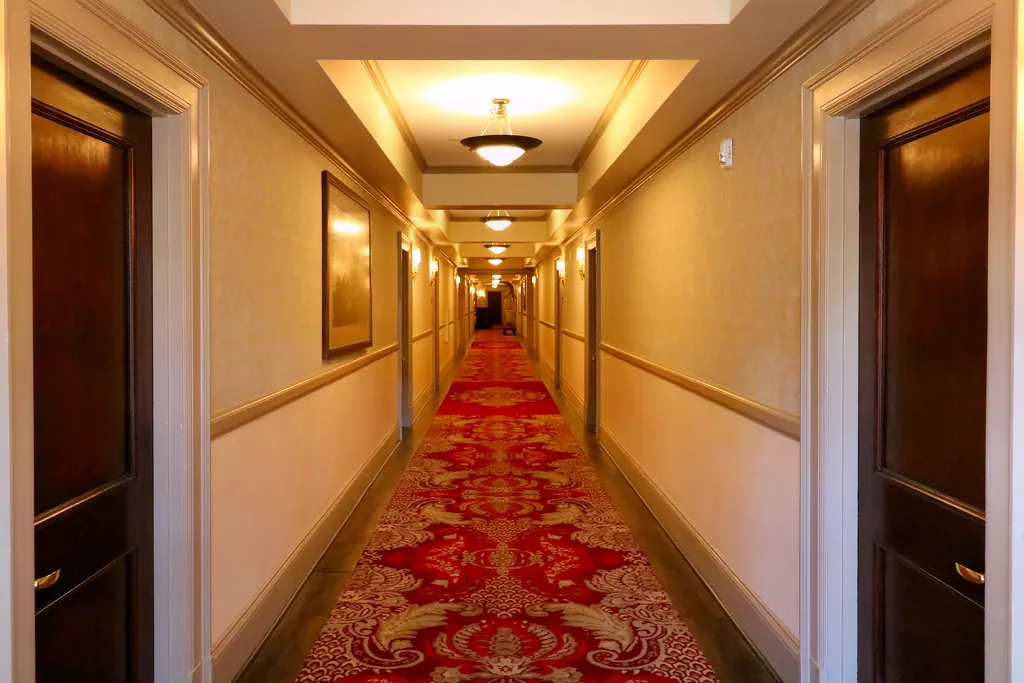
- Count the doors between your room and each exit. If the hallway fills with smoke or the lights go out, you can feel your way along the wall.
- Find the fire alarm on your floor.
- Keep your room key and phone near the bed, so you can grab them quickly.
The agency also recommends staying in hotels with smoke alarms and automatic sprinklers in every guest room. In the U.S., you can check the Hotel-Motel National Master List, which lists properties that meet those standards. Abroad, standards vary more, and older buildings in some countries may lack sprinklers altogether, so the two-exit habit matters even more.
Never use the elevator during a fire alarm. If there is smoke in the corridor, stay low, where the air is cleaner.
What About Vacation Rentals?
Apartments and houses rented through booking platforms are not regulated the way hotels are. The U.S. Fire Administration suggests that when you arrive you make sure everyone knows the address, that there are working smoke alarms in every sleeping room and carbon monoxide alarms on every level, that all doors and windows to the outside can be opened, and that you know where the fire extinguisher is. Agree on a meeting place outside, especially if you are traveling with children. Our tips for family travel go further on traveling with kids.
Phones, Chargers and Wi-Fi
The Federal Communications Commission has warned travelers about "juice jacking," where public USB charging ports can be used to install malware or copy data. The simplest fix is to use your own charger plugged into a wall outlet, or a portable battery.
Hotel Wi-Fi is usually shared with hundreds of guests. Avoid logging into your bank on an open network, or use your phone's cellular data or a VPN for anything sensitive.
Before You Travel Abroad
A few extra steps make sense when your hotel is in another country:
- Enroll in STEP. The State Department's free Smart Traveler Enrollment Program sends you alerts and helps the embassy reach you in an emergency.
- Save the embassy's number. Store the nearest U.S. embassy or consulate in your phone along with the local emergency number, which is not 911 in most countries.
- Check the advisory. Our guide to travel advisory levels explains what the State Department's four levels mean for where you stay and how you move around.
- Know the local scams. In Europe, for example, distraction thefts in lobbies and breakfast rooms are more common than break-ins. Our article on tourist scams in Europe covers the usual tricks.
The Two-Minute Routine
If you remember nothing else, make this your habit every time you open a new hotel door: check that the door and windows lock, find the two nearest exits and count the doors, put the key and phone by the bed, and lock away your passport. It takes less time than unpacking your toothbrush, and you will sleep better for it.
Frequently asked questions
Is it safer to stay on a higher floor in a hotel?
Ground-floor rooms with doors or windows to the outside are the easiest to reach, so many travelers prefer a room on a higher floor that opens onto an interior corridor. Wherever you are, find the two nearest fire exits when you arrive.
Are hotel room safes safe?
They deter casual theft, but hotel management can open them. For expensive items, ask whether the front desk has a safe-deposit box.
What should I do if someone calls my room about my credit card?
Do not give any card details over the phone. Hang up and call the front desk yourself using the number on the room phone, or go to the lobby.
Should I use the Do Not Disturb sign when I leave?
Hanging it while you are out can suggest the room is occupied. Keep valuables locked away or out of sight either way.