Ask ten people whether Mexico is safe and you will get ten answers, most of them shaped by a headline. Meanwhile, tens of millions of foreign visitors fly in every year, spend a week between a hotel pool and a taco stand, and go home with nothing worse than a sunburn. Both pictures are true, and the trick is knowing which one applies to the place you are actually going.
Mexico has 31 states plus Mexico City, and the gap between them is enormous. The U.S. State Department does not give Mexico one rating; it rates each state, and its map runs all the way from "exercise normal precautions" to "do not travel." Below we go through what the official warnings say as of October 29, 2026, what they mean for the resort towns and cities most travelers book, which everyday risks deserve your attention, and how it all looks across the border in Belize and on Honduras's island of Roatán.
How do the official warnings work?
The U.S. State Department uses four levels: Level 1, exercise normal precautions; Level 2, exercise increased caution; Level 3, reconsider travel; Level 4, do not travel. The current advisory for Mexico was issued on May 29, 2026. It puts the country as a whole at Level 2, then breaks it down state by state.
The UK Foreign, Commonwealth and Development Office (FCDO) works differently. It does not grade every state; it simply lists the areas where it advises against all but essential travel, and leaves everything else at its general advice. Its Mexico page was last updated on October 20, 2026. Read side by side, they usually agree on where the real problems are, and the UK list is often more precise about exceptions.
Here is how the U.S. levels looked on October 29, 2026, for the states travelers ask about most:
| State | U.S. level | Places travelers know |
|---|---|---|
| Yucatán, Campeche | Level 1 | Mérida, Campeche city, Valladolid |
| Quintana Roo | Level 2 | Cancún, Tulum, Playa del Carmen, Isla Mujeres, Cozumel |
| Baja California Sur | Level 2 | Cabo San Lucas, San José del Cabo, La Paz, Todos Santos |
| Nayarit | Level 2 | Riviera Nayarit, Sayulita, Punta de Mita |
| Oaxaca | Level 2 | Oaxaca city, Puerto Escondido, Huatulco |
| Mexico City | Level 2 | The capital |
| Jalisco | Level 3 | Guadalajara, Puerto Vallarta, Lake Chapala |
| Baja California | Level 3 | Tijuana, Ensenada, Valle de Guadalupe |
| Sonora | Level 3 | Puerto Peñasco (Rocky Point), San Carlos |
| Chihuahua | Level 3 | Copper Canyon, Chihuahua city |
| Sinaloa | Level 4 | Mazatlán, Los Mochis |
| Guerrero | Level 4 | Acapulco, Ixtapa, Zihuatanejo, Taxco |
| Tamaulipas | Level 4 | Border cities, Tampico |
Levels change, so check again shortly before you travel, and read the details inside each state. That is where the useful information is.
What does that mean for Cancún, Tulum and Cabo?
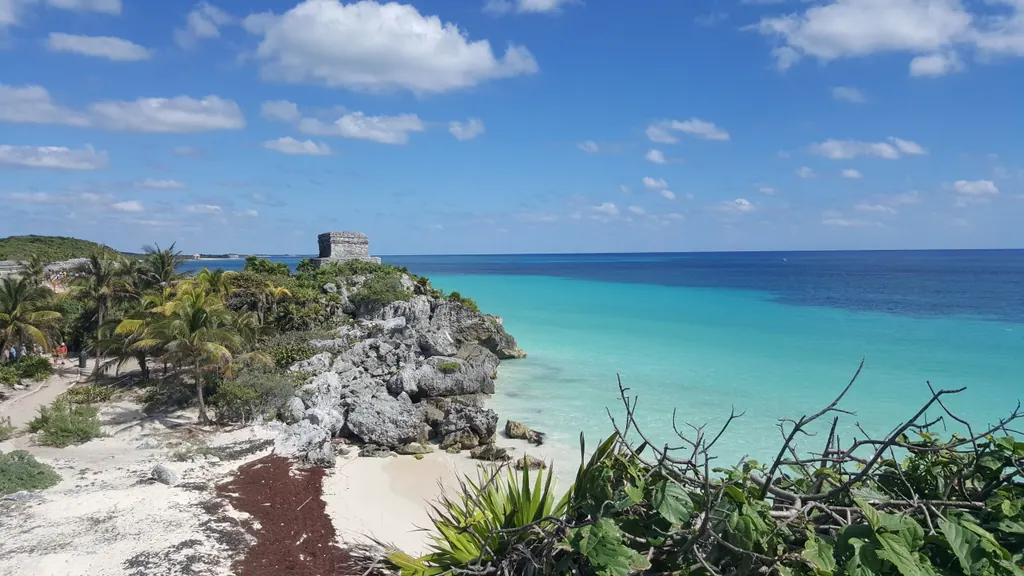
Cancún, Tulum and the Riviera Maya sit in Quintana Roo, at Level 2. The U.S. advisory notes that shootings between rival gangs have hurt bystanders and that Americans have been victims of crime in both tourist and non-tourist areas. Its advice is modest: pay attention after dark and stay in well-lit pedestrian streets and tourist zones. The UK lists no part of Quintana Roo among its no-go areas. Much of the violence involves people inside the drug trade, and buying drugs is the surest way for a visitor to get close to it.
Cabo San Lucas and San José del Cabo are in Baja California Sur, also Level 2, and the U.S. advisory places no specific travel restrictions on its own staff anywhere in the state. The UK mentions drug-related crime in Los Cabos but gives no advice against travel. Cabo's bigger daily risk is the ocean, which we come back to below.
If you are still choosing between these coasts, our comparison of Mexico's beach towns looks at what each one is actually like to stay in.
Puerto Vallarta, Guadalajara, Mazatlán and Oaxaca
Puerto Vallarta and Guadalajara are both in Jalisco, which is at Level 3. The advisory is frank about Guadalajara: fighting between criminal groups has taken place in tourist areas, and bystanders have been hurt. Yet the same advisory says there are no restrictions on U.S. government staff traveling in the Guadalajara metropolitan area, Puerto Vallarta, Chapala or Ajijic. The restrictions apply to rural southern Jalisco and some highways. The UK draws a similar line: it advises against travel south and southwest of Lake Chapala toward Colima and in several northern municipalities, but not in Guadalajara or Puerto Vallarta. Riviera Nayarit, just north of Puerto Vallarta, is in Nayarit at Level 2.
Mazatlán is the clearest example of a town that differs from its state. Sinaloa is at Level 4, the same as Guerrero. But the U.S. advisory allows its staff to visit Mazatlán if they arrive by air or sea and stay within the historic center and along the Malecón seafront, using direct routes to and from the airport or cruise terminal. The UK names Mazatlán as an exception to its Sinaloa warning.
Oaxaca is at Level 2, and neither the U.S. nor the UK singles out Oaxaca city, Puerto Escondido or Huatulco. The more common disruption in Oaxaca is political: protests and road blockades happen, especially around the city center and on highways, and they can hold up buses for hours.
Acapulco remains the cautionary tale. Guerrero is at Level 4, and the UK advises against all but essential travel to the whole state, with an exception only for Ixtapa and Zihuatanejo when you arrive by air.
The everyday risks: theft, taxis and scams
For most visitors, the realistic problems are smaller and far more common than cartel violence.
- Pickpocketing. The UK calls it common, including on public transport and in hotel lobbies. Carry one card and a day's cash, and leave the rest in the room safe.
- Taxis. Both governments warn about unlicensed taxis whose drivers have robbed passengers. The U.S. advisory tells its staff to use taxis from regulated stands, called sitios, or app-based services such as Uber or Cabify, and not to hail cabs on the street. At airports, buy a ride from the official counters inside the terminal. Our guide to getting around Mexico and Central America covers buses, ferries and transfers in more detail.
- Express kidnapping. This is the crime that sounds worst, and it is rare for tourists, but it is real. Someone is held for a short time and taken from ATM to ATM to empty their account. The UK's advice is simple: use ATMs inside shops, banks or malls, in daylight, and notice who is around you.
- Fake police and fines. The UK warns that people posing as police sometimes target travelers, particularly in rental cars, and that some real officers ask for cash for minor offenses. Ask for identification and a written fine, and do not hand over your passport.
- Virtual kidnapping calls. A caller claims a relative has been kidnapped or arrested and demands money. Hang up and contact that person directly.
- Drink spiking and bad alcohol. Do not leave drinks unattended in bars. The UK also warns that methanol-contaminated alcohol has killed people in Mexico, and that it cannot be detected by taste or smell. Sealed bottles from reputable bars and shops are the safer choice.
The U.S. advisory adds one rule that is worth copying: its staff may not travel between cities after dark. Highway driving at night is where robberies, roadblocks and accidents with unlit vehicles come together.
Can you drink the water, and what about dengue?
No, not from the tap. The UK advises drinking only boiled or bottled water. Hotels and restaurants in tourist areas use purified water for ice and cooking. For street food, choose busy stalls where food is cooked fresh in front of you.
Mosquitoes are a more serious matter than most visitors expect. Dengue, Zika and chikungunya all occur in Mexico, Belize and Honduras, and the Pan American Health Organization recorded a record number of dengue cases in the Americas in 2024. There is no simple travel vaccine for it, so prevention is about bites: repellent with DEET or picaridin, especially at dawn and dusk, long sleeves in the evening, and rooms with screens or air conditioning.
Hurricanes, rip currents and the flags on the beach
For many beach vacations, the sea is a bigger risk than crime.
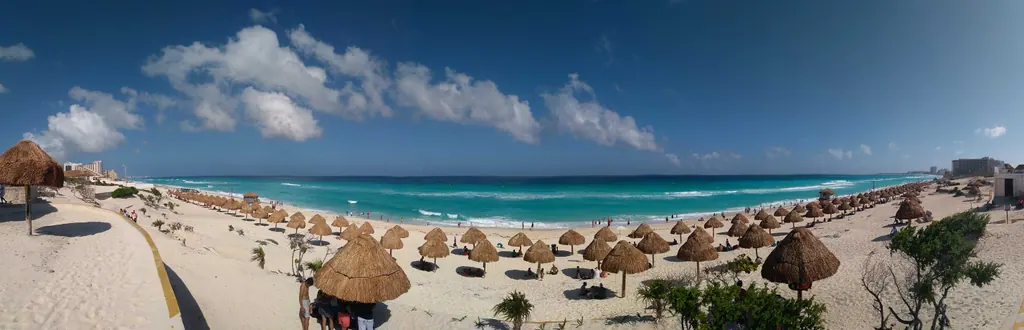
In Cancún, the long east-facing beaches of the Hotel Zone, such as Playa Delfines, often have big surf and rip currents, while the beaches facing the bay to the north are calmer. In Cabo, the Pacific side, including Playa del Divorcio, is not a swimming beach at all, and calmer spots like Medano Beach are on the Sea of Cortez side. Mazatlán, the Oaxaca coast and Puerto Escondido's Zicatela, a famous surf break, are open Pacific. Banderas Bay around Puerto Vallarta is generally gentler.
Most patrolled beaches in Mexico use a flag system that is easy to read:
| Flag | Meaning |
|---|---|
| Green | Calm conditions, swimming allowed |
| Yellow | Caution, stay close to shore |
| Red | Dangerous conditions, do not swim |
| Black | Beach closed to swimming |
Some beaches add another flag, often white, to warn of jellyfish, and the UK points out that some beaches are not patrolled at all. If you are caught in a rip current, swim parallel to the shore until you are out of the pull, then head back in.
Hurricane season runs from June 1 to November 30 on the Atlantic and Caribbean side, and from May 15 on the eastern Pacific, according to the U.S. National Hurricane Center. Hurricane Otis devastated Acapulco in October 2023, and Hurricane Beryl came ashore near Tulum in July 2024. Traveling in season is fine, and cheaper, but get insurance that covers weather disruption and follow local instructions if a storm approaches.
Belize: Belize City and the cayes
Belize is at Level 2 in the U.S. advisory issued on March 12, 2026, with one exception: Southside Belize City, south of Haulover Creek, is at Level 3, reconsider travel. The advisory says most of the gang violence is concentrated there, while noting that violent crime can happen in tourist areas too, and that police and emergency services are limited. The UK, whose Belize page was last updated on June 12, 2026, says tourists are not normally targeted by the gangs.
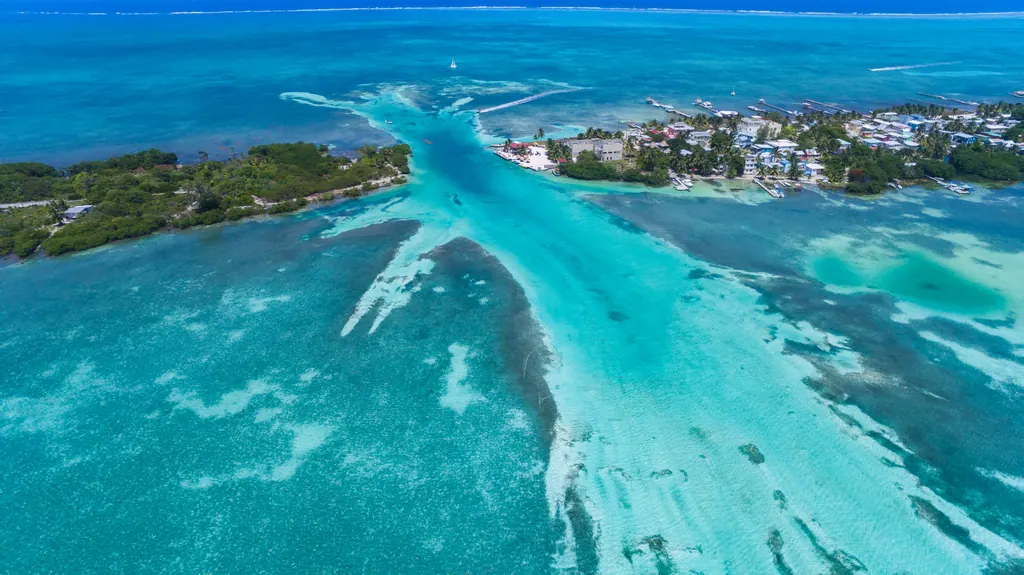
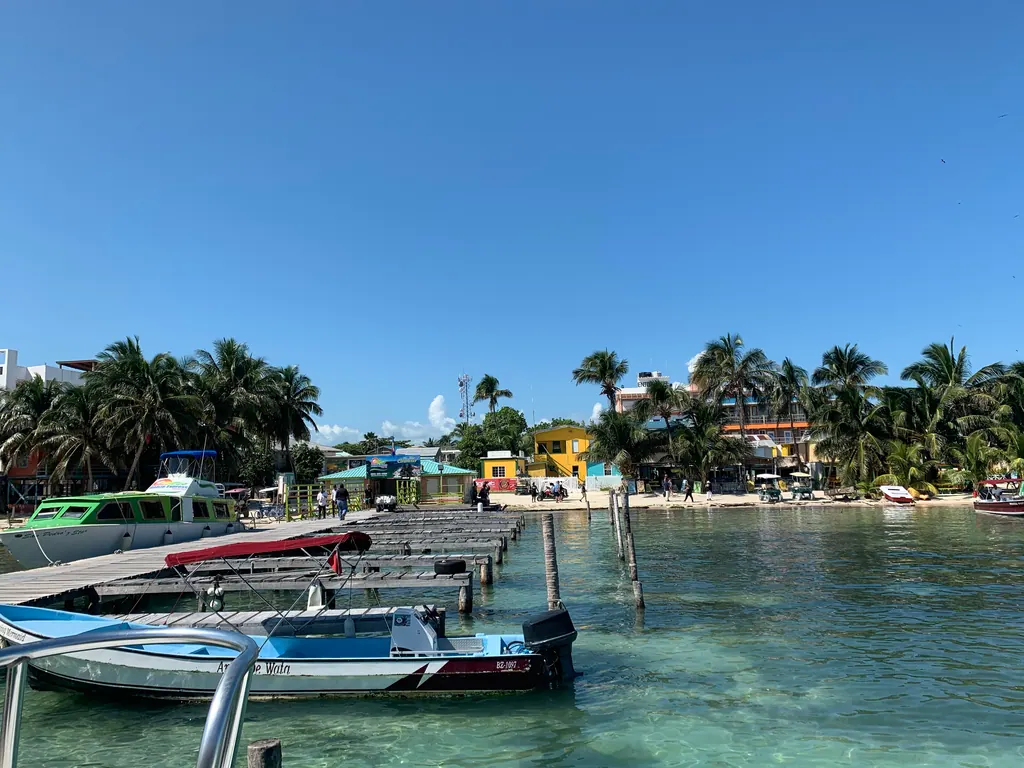
Most visitors only pass through Belize City on the way to the water taxi or a domestic flight. Ambergris Caye, with the town of San Pedro, and Caye Caulker are where people actually spend their time. Here the risk is mostly theft, of phones, cash and cards left on a beach or in an unlocked room, according to the UK. The UK also notes injuries and deaths from snorkeling and diving, mainly due to poor safety practices and bad weather, so choose a licensed operator, even if it costs more.
The other thing visitors complain about on the cayes is bugs. Sandflies, tiny biting insects that are hard to see, are most active at dawn, dusk and on still days, and mosquitoes are a bigger issue inland and in the rainy season. Repellent, a breeze and long clothing in the evening do most of the work.
Roatán and mainland Honduras
In Honduras, the split between island and mainland matters more than anywhere else in this article. The U.S. advisory issued on August 25, 2026, puts Honduras at Level 3, reconsider travel, because of crime, with the remote Gracias a Dios department at Level 4. U.S. government staff may not travel between cities after dark. The UK, whose page was updated on July 29, 2026, says Honduras has one of the highest rates of violent crime in Latin America, though most of it does not affect tourists, and advises against walking around Tegucigalpa, San Pedro Sula and other mainland cities.
The Bay Islands, Roatán, Utila and Guanaja, sit 20-40 miles (about 30-65 km) off the north coast, and they feel very different. Many visitors fly straight to Roatán from the United States or arrive by cruise ship, never touching the mainland. The UK still notes that petty theft is a problem on the islands and suggests asking your hotel which ATMs to use. It also warns that emergency medical facilities on the Bay Islands are extremely limited, although Roatán has a hyperbaric chamber for divers. Good travel insurance with medical evacuation cover is not optional here.
Roatán's best-known nuisance is not crime but sand flies, especially on beaches near West End and West Bay at dawn and dusk, and on calm days. Repellent on the legs helps, and mosquitoes and dengue are present on the islands too.
Before you book
A short checklist does more than any amount of worrying:
- Read the current U.S. and UK advisories a week or two before you go, and look at the details for your town, not just the state.
- Fly into the region rather than drive through it where the advisories restrict road travel, as with Mazatlán, Ixtapa and Zihuatanejo.
- Use sitio taxis, apps or pre-booked transfers, and avoid intercity driving after dark.
- Keep your nights simple: watch your drink, buy sealed bottles and stay out of the drug trade entirely.
- Respect the beach flags, and ask the lifeguard when there is no flag.
- Pack repellent and buy travel insurance that covers hurricanes and medical evacuation.
For more on staying safe across the region, browse our safety guides or read is the Caribbean safe if your trip continues to the islands. And for everything else about the country, start at our Mexico page.
Frequently asked questions
Is Cancún safe for tourists right now?
Quintana Roo, where Cancún lies, was at Level 2 (exercise increased caution) in the U.S. advisory as of October 29, 2026, and the UK does not advise against travel there. The main precautions are using official taxis, watching your drinks and staying in well-lit tourist areas at night.
Is it safe to take an Uber in Mexico?
The U.S. State Department tells its own staff to use app-based services such as Uber or Cabify, or taxis from regulated stands, rather than hailing cabs on the street. Availability varies from city to city.
Can I drink the tap water in Mexico?
No. The UK advises drinking only boiled or bottled water. Hotels and restaurants in tourist areas generally use purified water for ice and cooking.
Is Roatán safer than mainland Honduras?
For most visitors, yes. Honduras as a whole was at Level 3 in the U.S. advisory of August 25, 2026, but the UK describes the Bay Islands mainly in terms of petty theft, and most visitors fly or cruise straight to Roatán without visiting the mainland cities.
What do the red and black flags mean on Mexican beaches?
A red flag means dangerous conditions and no swimming, and a black flag means the beach is closed to swimming. Yellow means caution and green means calm conditions.