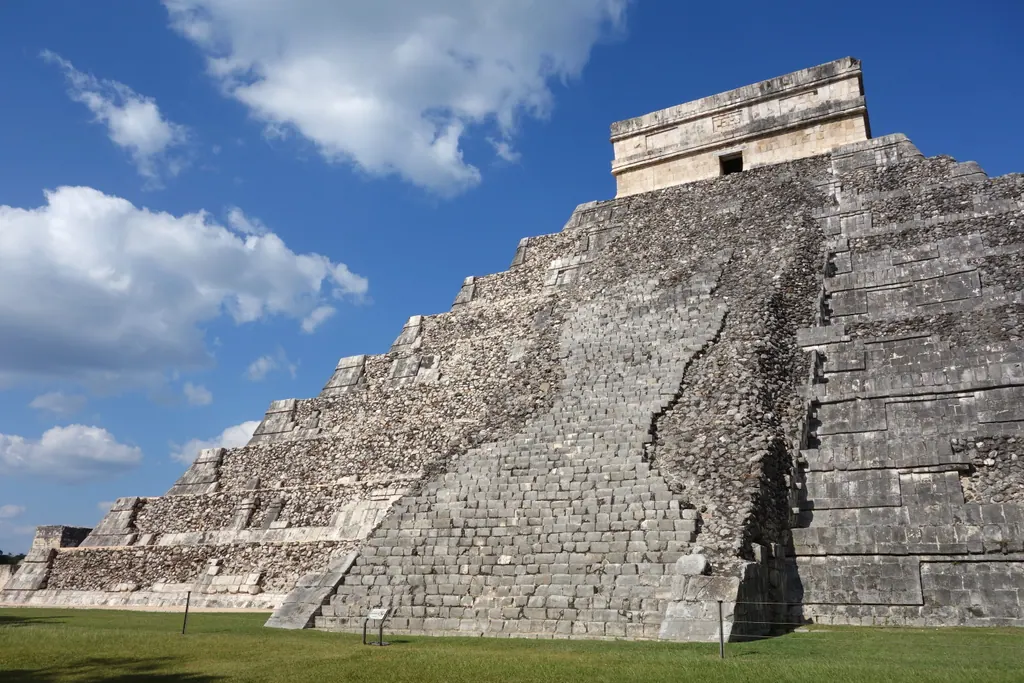
At 8 a.m. the grass around the Temple of Kukulcán at Chichén Itzá is still wet, the vendors are unpacking their jaguar whistles, and only a few dozen people are standing in front of the most photographed pyramid in Mexico. By 11, the tour buses from Cancún have arrived, and the same lawn holds thousands. That gap of three hours sums up what planning a trip to the Maya ruins is about.
The Yucatán Peninsula and neighboring Belize hold some of the most impressive ancient cities in the Americas, from clifftop temples above the Caribbean to pyramids that rise out of rainforest you need a full day to reach. They are not equal, though. Some are crowded and strictly roped off, some still let you climb to the top, and the entry fees range from a few dollars to nearly $40. Below we go through the sites that are worth your time, who each one suits, how to get there and when to go.
Which sites should be on your list?
A quick way to choose is to decide what you want from the day. For the famous icons, go to Chichén Itzá and Tulum. For a climb with a view over the jungle, go to Cobá, Ek Balam or Calakmul in Mexico, or to Xunantunich and Caracol in Belize. For fine architecture without the crowds, Uxmal is the best site in the region. And if you arrive by cruise ship, Chacchoben in Mexico and Altun Ha in Belize are the realistic options.
| Site | Where | Entry (2026, foreign visitors) | Climbing |
|---|---|---|---|
| Chichén Itzá | Yucatán, Mexico | around 700 pesos (about $38) | No |
| Tulum | Quintana Roo, Mexico | around 265 pesos (about $14) | No |
| Cobá | Quintana Roo, Mexico | around 210 pesos (about $11) | Yes, Nohoch Mul reopened in 2025 |
| Ek Balam | Yucatán, Mexico | around 690 pesos (about $37) | Yes, the Acropolis |
| Uxmal | Yucatán, Mexico | around 590 pesos (about $32) | No |
| Calakmul | Campeche, Mexico | around 210 pesos (about $11), plus road and reserve fees | Yes, Structure II |
| Chacchoben | Quintana Roo, Mexico | around 155 pesos (about $8) | No |
| Xunantunich | Cayo, Belize | BZ$25 (about $12.50) | Yes, El Castillo |
| Caracol | Cayo, Belize | BZ$25 (about $12.50) | Yes, Caana |
| Lamanai | Orange Walk, Belize | BZ$25 (about $12.50) | Yes, High Temple |
| Altun Ha | Belize District, Belize | BZ$20 (about $10) | Partly |
Fees in Mexico rose sharply in 2026, and they are set by more than one authority, so the gate price can change during the year. In Yucatán state, foreign visitors pay both the federal fee to INAH, Mexico's National Institute of Anthropology and History, and a much larger state fee. In Belize, the fees are fixed by the National Institute of Culture and History (NICH) under rules that took effect on January 1, 2025.
Is Chichén Itzá worth the crowds?
Yes, if you plan around them. Chichén Itzá is a UNESCO World Heritage Site and one of the New Seven Wonders of the World, and the scale is hard to grasp until you stand in it. The Temple of Kukulcán (El Castillo) is the centerpiece, but give equal time to the Great Ball Court, the largest in Mesoamerica, the Temple of the Warriors with its rows of carved columns, the round observatory called El Caracol, and the Sacred Cenote, where offerings were thrown into the water.
Around the spring and fall equinoxes, the afternoon sun throws a pattern of light and shadow down the north staircase of El Castillo that looks like a serpent descending. It draws very large crowds, so only go then if the shadow is the point of your trip.
Entry: In 2026, foreign visitors paid around 700 pesos (about $38). Since late March 2026, the state and federal fees are paid together as a single ticket at the visitor center, which ended the old system of two separate lines.
Climbing: Not allowed. El Castillo has been closed to climbers since 2006, and most other structures are roped off.
Getting there: Chichén Itzá is about 2.5 hours by road from Cancún, around 2 hours from Mérida and 45 minutes from Valladolid. ADO buses run from all three, and the Tren Maya has a Chichén Itzá station with a shuttle to the entrance. Valladolid makes the best base, because you can be at the gate when it opens.
Best time: Be there at opening at 8 a.m. The big day tours from the Riviera Maya arrive late morning, and from then until mid afternoon the main plaza is packed, hot and lined with stalls. Bring water, a hat and sunscreen, since there is little shade.
How do Tulum and Cobá compare?
The two sites are less than an hour apart and are often visited on the same day, but they feel completely different.
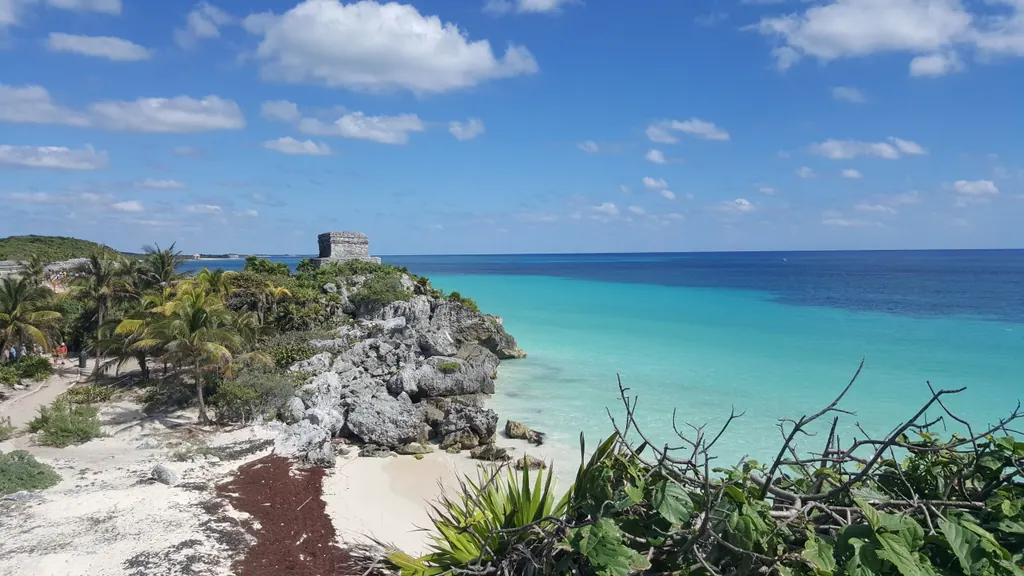
Tulum is small, walled and built on a limestone cliff above a turquoise beach. Archaeologically it is modest compared with Chichén Itzá or Cobá, but the setting is unbeatable, and you can see everything in about 90 minutes. The main building, also called El Castillo, cannot be climbed, and most structures are viewed from paths behind ropes.
Tulum's ticketing changed in July 2026. A federal decree created a unified fee for the archaeological zone and Tulum National Park, and foreign visitors paid around 265 pesos (about $14) in total, including the Parque del Jaguar fee. Since late July 2026, tickets are sold at the Grupo Mundo Maya ticket windows rather than at the old INAH booth.
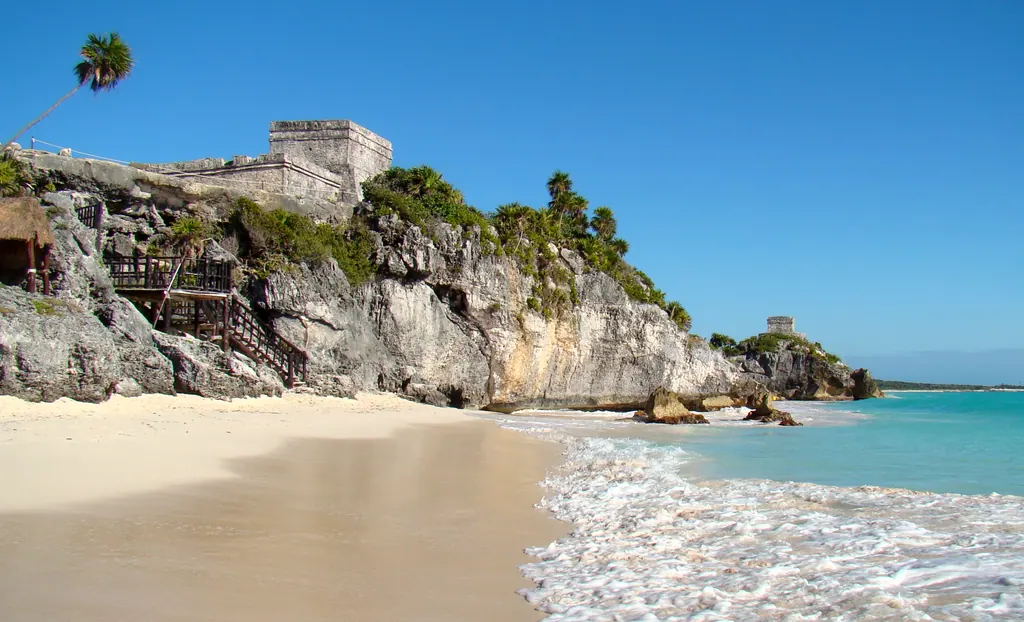
Tulum gets very hot and very busy by mid morning, and there is almost no shade on the grounds. Arrive at opening, and bring a swimsuit if the beach below the ruins is open on the day you visit.
Cobá, about 45 minutes inland, is the opposite: a large city spread out in the forest between two lagoons, connected by raised white roads called sacbeob. The distances are long, so many visitors rent a bicycle or hire a pedicab at the entrance. The highlight is Nohoch Mul, a pyramid of about 42 meters and one of the tallest on the peninsula. INAH reopened it for climbing in December 2025 after six years of closure, now with groups limited in size and a short time allowed on top. The steps are steep and worn, so wear shoes with good grip.
Cobá cost around 210 pesos (about $11) for foreign visitors in 2026. It is a good choice for families with older children, who usually enjoy the bike ride more than the ruins.
Ek Balam and Uxmal: the quieter alternatives
Ek Balam, about 30 minutes north of Valladolid, is much smaller than Chichén Itzá, but it has one of the best preserved stucco facades in the Maya world. Halfway up the Acropolis, the entrance to a tomb is framed by a huge open jaguar mouth, with winged figures carved on either side. You can still climb the Acropolis, and from the top you look out over flat forest in every direction. The fee is high for the size of the site: around 690 pesos (about $37) for foreign visitors in 2026, plus about 100 pesos (about $5) for parking. Many visitors combine it with a swim in a nearby cenote, or with Chichén Itzá on the same day from a base in Valladolid.
Uxmal, about 80 kilometers south of Mérida, is the site many archaeology lovers rank above Chichén Itzá. It is built in the Puuc style, with long, low palaces covered in geometric stone mosaics, masks of the rain god Chaac and the rounded Pyramid of the Magician. Climbing is not allowed on the main structures, but the site is calm and the buildings are best seen up close anyway. Foreign visitors paid around 590 pesos (about $32) in 2026. Uxmal is easiest with a rental car, since you can continue along the Ruta Puuc to the smaller sites of Kabah, Sayil and Labná. Our page on road trips has more ideas for planning a self-drive itinerary.
Is Calakmul worth the long drive?
For travelers who care more about atmosphere than convenience, yes. Calakmul lies deep in the Calakmul Biosphere Reserve in southern Campeche, close to the Guatemalan border. It was one of the most powerful Maya cities, the great rival of Tikal, and UNESCO lists it as a mixed site for both its archaeology and its tropical forest. Howler monkeys, toucans and ocellated turkeys are common, and you may have a whole plaza to yourself.
You can climb Structure II, one of the largest Maya pyramids, and from the top the forest canopy stretches to the horizon, with the tops of other temples breaking through.
The catch is the access. The site is at the end of a narrow road of about 60 kilometers from the highway, and the drive from the nearest town, Xpujil, takes about two hours each way. On the way in you pay separate fees to the local community and the biosphere reserve, in cash, before the INAH fee of around 210 pesos (about $11) at the site. Bring food and water, as there is very little on the road. Xpujil has a Tren Maya station, and local tour operators there run day trips. Nearby, Becán and Chicanná make an easy add-on.
What can you see from the Costa Maya cruise port?
Ships that call at Costa Maya dock near Mahahual, in southern Quintana Roo, and the most common shore excursion is Chacchoben, about an hour inland. It is a compact site with a few restored temples and pyramids among tall trees, and it suits a half day. Climbing is not allowed. Entry was around 155 pesos (about $8) in 2026, though most cruise passengers pay a tour price that includes transport. On days with several ships in port, it fills up quickly, so take an early departure if you can.
Further south, near Chetumal, Kohunlich is known for its large stucco masks on the Temple of the Masks, and Dzibanché is a spread out jungle site that sees few visitors. Both are better as a stop on a road trip than as a cruise excursion.
Which Maya ruins in Belize are best?
Belize packs a lot into a small country, and its sites are generally quieter than the Mexican ones. English is the official language, which makes independent travel easy. See our Belize destination page for more on the country.
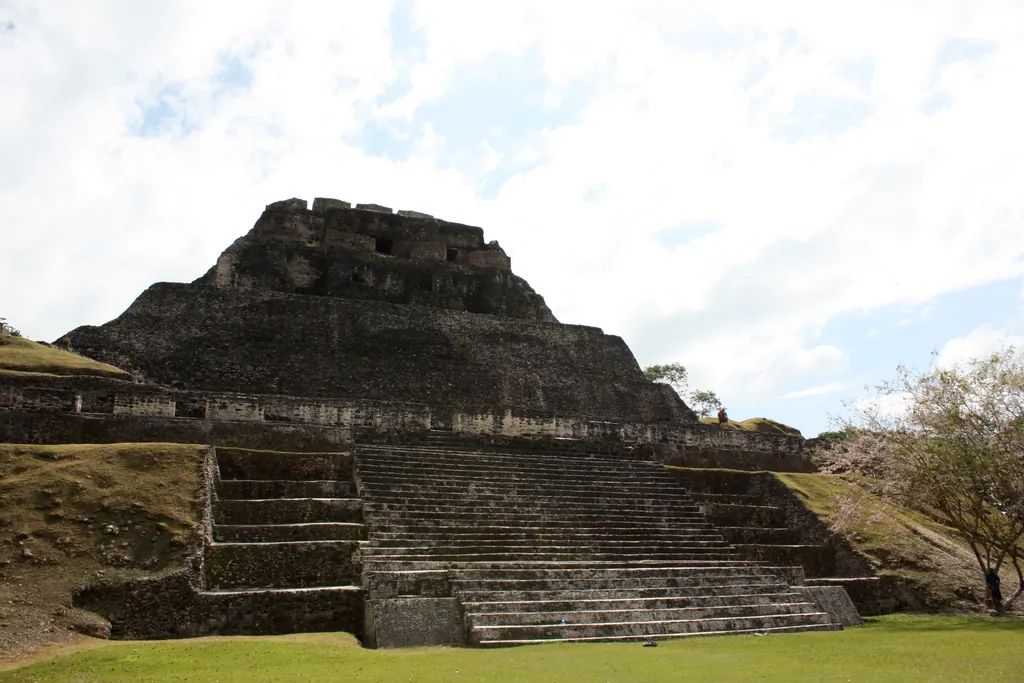
Xunantunich is the easiest to visit, about 15 minutes from San Ignacio in western Belize. You cross the Mopan River on a small hand-cranked ferry, then walk up to a plaza dominated by El Castillo, about 40 meters tall. You can climb it, and from the top you can see into Guatemala. Part of the east facade still has a carved stucco frieze. Entry for non-residents was BZ$25 (about $12.50) in 2026.
Caracol is the big one. It lies in the Chiquibul Forest, a slow drive of around two to three hours from San Ignacio, and was once larger than present-day Belize City. Its main pyramid, Caana, is still the tallest man-made structure in Belize, and you can climb it. Most visitors go on a guided tour, often combined with swimming holes in the Mountain Pine Ridge on the way back. Entry was BZ$25 (about $12.50).
Lamanai is reached by boat up the New River from Orange Walk, a trip of over an hour past crocodiles, birds and mangroves. The site sits in thick forest, and you can climb the High Temple for a view over the New River Lagoon. The boat ride makes this one of the best day trips in the country. Entry was BZ$25 (about $12.50).
Altun Ha, about an hour north of Belize City, is the most common choice for cruise passengers. It is open and easy to walk, and it is where archaeologists found a large carved jade head of the sun god. It is less dramatic than the others, but convenient. Entry was BZ$20 (about $10).
In Belize, sites open at 8 a.m., and the fees are set in Belize dollars, which are pegged at two to one with the US dollar. US dollars are widely accepted.
A note on Xcaret and Xplor
Day trips from Cancún are often sold alongside the theme parks of the Riviera Maya. Xcaret, south of Playa del Carmen, is an eco-park with underground rivers, animal exhibits and an evening show that includes a staged version of the Maya ballgame. Xplor next door is an adventure park with zip lines and cave rafting. They are fun for families, but they are entertainment rather than archaeology, and they are not a substitute for a visit to the real sites.
Practical tips for visiting the ruins
- Go early. Every site on this list is cooler, quieter and better for photos in the first hour after opening at 8 a.m.
- Bring cash. Some ticket offices take cards, but parking, community fees, bike rentals and guides are often cash only. Pesos in Mexico, Belize dollars or US dollars in Belize.
- Hire a guide at the gate. Licensed guides wait at the entrance of the larger sites, and they make the ruins far more meaningful than signs alone.
- Dress for heat and insects. Light long sleeves, a hat, sunscreen and insect repellent, especially at forest sites like Calakmul, Cobá, Lamanai and Caracol.
- Check climbing rules on the day. Rules can change with restoration work, weather and visitor numbers, so ask at the entrance.
- Plan for the season. The dry season from about December to April is the most comfortable. The rainy months bring fewer visitors, but the forest sites can be muddy and the roads to Calakmul and Caracol slower.
If you only have time for one trip, a base in Valladolid gives you Chichén Itzá at opening and Ek Balam in the afternoon. With a week and a car, add Uxmal and Calakmul. In Belize, San Ignacio is the natural base for Xunantunich and Caracol. For more on Maya history and traditions, see our culture section and our Mexico destination page.
Frequently asked questions
Can you still climb the pyramid at Chichén Itzá?
No. Climbing El Castillo has been banned since 2006 to protect the structure and visitors. If you want to climb a pyramid in the Yucatán, go to Cobá, Ek Balam or Calakmul instead.
How much does it cost to enter Chichén Itzá?
Foreign visitors paid around 700 pesos (about $38) in 2026, paid as a single ticket covering both the federal INAH fee and the Yucatán state fee. Prices are adjusted often, so check before you go.
Can you visit Chichén Itzá and Tulum in one day?
It is possible on an organized tour from Cancún or Playa del Carmen, but it means about five hours in a vehicle and both sites at their busiest. Splitting them over two days, with Chichén Itzá from a base in Valladolid, is a far better experience.
What is the best Mayan ruin to visit from Belize City?
Altun Ha is the closest, about an hour north of the city, and suits a half day or a cruise stop. With a full day, the boat trip to Lamanai is more rewarding.
Do I need a guide at the Mayan ruins?
No, you can walk all the sites on your own. A licensed guide hired at the entrance adds a lot of context, though, especially at large sites like Chichén Itzá, Uxmal and Caracol.
- UNESCO World Heritage Centre: Pre-Hispanic City of Chichen-Itza
- UNESCO World Heritage Centre: Ancient Maya City and Protected Tropical Forests of Calakmul, Campeche
- National Assembly of Belize: NICH Admission Fees and Opening Hours Rules 2025 (SI No. 13 of 2025)
- Diario de Yucatán: Single ticket introduced at Chichén Itzá (March 2026)
- Por Esto: 2026 entry fees for Chichén Itzá, Uxmal and Ek Balam
- Riviera Maya News: Archaeological site entrance fees in Quintana Roo for 2026
- Riviera Maya News: Nohoch Mul staircase reopens at Cobá
- Instituto Nacional de Antropología e Historia (INAH)