Most castles in Europe were built to keep people out. The ones travelers line up for today often had the opposite purpose: to impress, to dream, or to make a king feel like the hero of an opera. Some are medieval fortresses, some are 19th-century fantasies, and one was rebuilt from rubble barely a hundred years ago.
We picked eight castles across Europe that are worth a detour, not just a photo stop. For each, we explain what makes it special, how to fit it into a trip, and the one thing worth knowing before you go.
Neuschwanstein, Germany: The King's Daydream
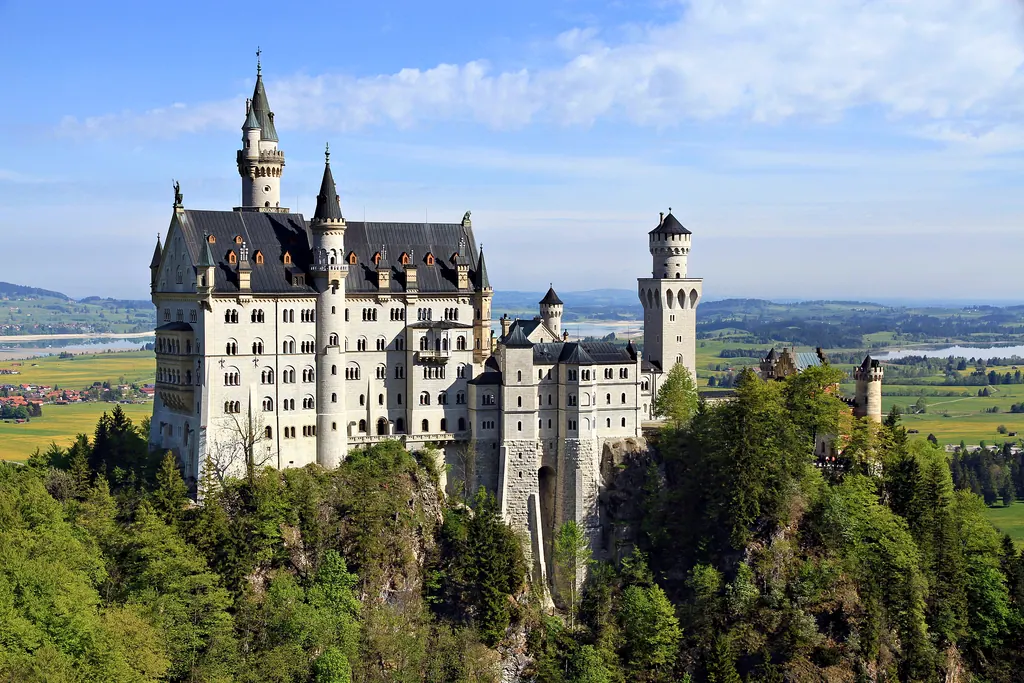
No castle looks more like a storybook than Neuschwanstein, and that was the point. King Ludwig II of Bavaria had it built from 1869 as a private retreat, inspired by medieval legends and the operas of Richard Wagner. He died in 1886 before it was finished, and it opened to the public only weeks later. In July 2025 UNESCO added it to the World Heritage List together with Ludwig's other palaces, Linderhof, Schachen and Herrenchiemsee.
Know before you go: you can only see the interior on a guided tour of about 30 minutes at a fixed time, and tickets sell out. Buy them in the official online shop of the Ticket Center Hohenschwangau, and arrive in the village 1.5 to 2 hours before your tour time. The classic view is from the Marienbrücke, a footbridge over the gorge behind the castle. Neuschwanstein sits near Füssen, about two hours from Munich by regional train.
Pena Palace, Portugal: Color on a Hilltop
High above the town of Sintra, Pena Palace looks like it was painted by someone who could not choose a favorite color. King Ferdinand II began it in the 1840s on the ruins of an old monastery, mixing Gothic, Manueline and Moorish styles in yellow and red. The palace and its park are part of the Cultural Landscape of Sintra, a UNESCO site since 1995.
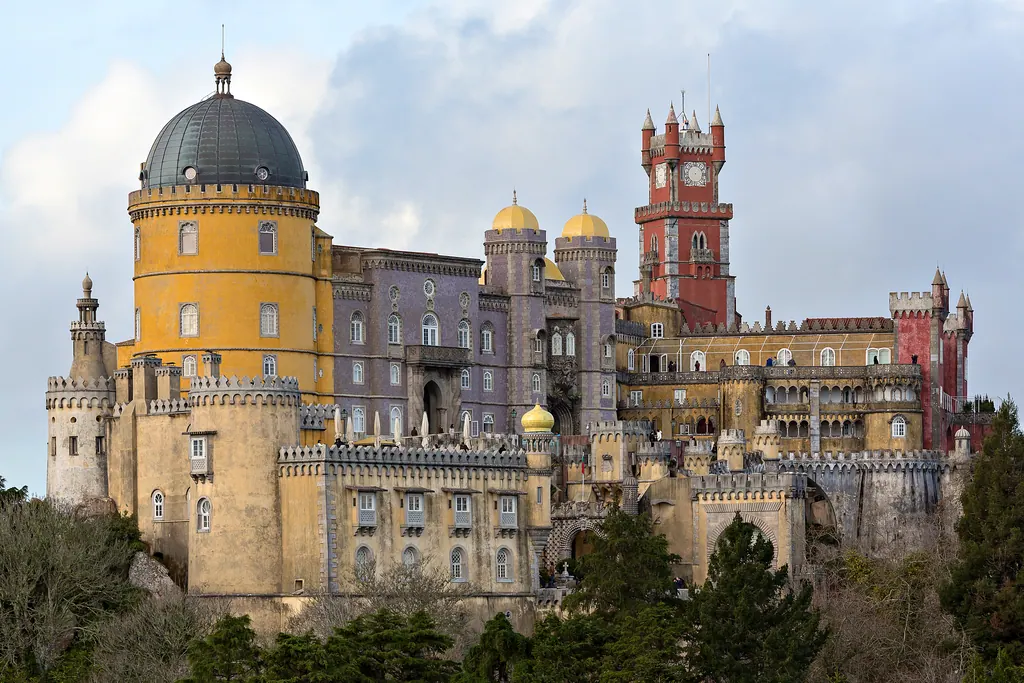
Know before you go: Sintra is an easy day trip from Lisbon, about 40 minutes by train from Rossio station. Go early on a weekday, book a timed ticket, and leave time for the park and the nearby Moorish Castle.
Alcázar of Segovia, Spain: A Ship of Stone
The Alcázar sits on a rocky spur where two rivers meet, with its prow pointing out over the valley like a ship. It has served as fortress, royal palace, prison and military academy, and much of what you see today was restored after a fire in 1862. Together with the Roman aqueduct, it is part of the UNESCO-listed Old Town of Segovia.
Know before you go: high-speed trains from Madrid reach Segovia in about 30 minutes, though the station is outside town and you need a bus or taxi to the center. Climb the Tower of Juan II for the best view of the town and the Guadarrama mountains.
Eilean Donan, Scotland: Rebuilt From Ruins
Eilean Donan stands on a small island where three sea lochs meet in the western Highlands, joined to the shore by a stone bridge. It looks timeless, but the castle you see was rebuilt between 1912 and 1932 by Lieutenant Colonel John MacRae-Gilstrap, after the original was blown up during a Jacobite rising in 1719.
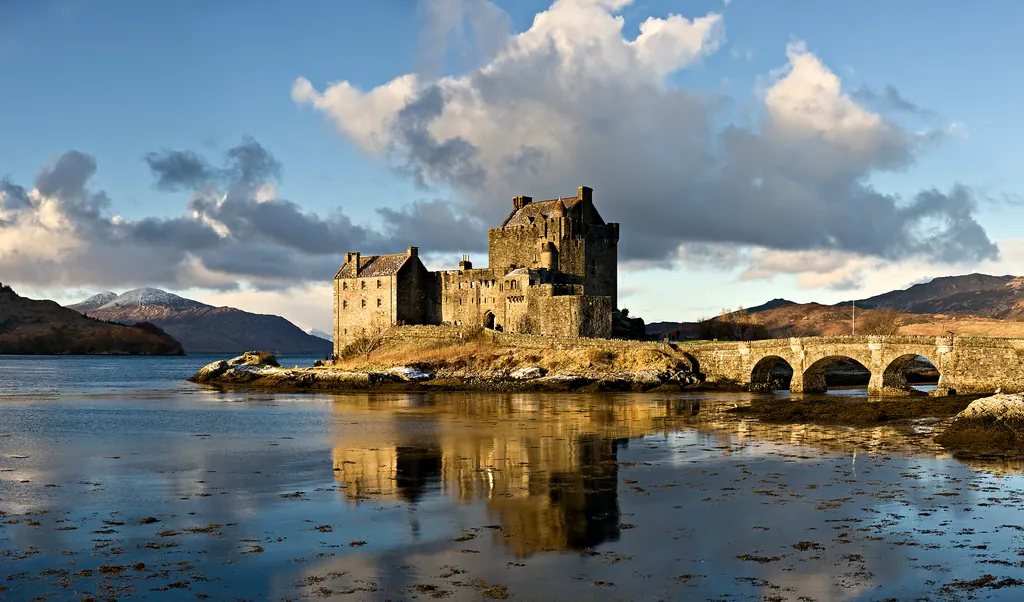
Know before you go: the castle is on the main road to the Isle of Skye, so it fits naturally into a Highlands road trip. Late afternoon light is beautiful on the water, and the interior is compact enough for an hour's visit.
Château de Chambord, France: The Renaissance Showpiece
Of all the Loire Valley châteaux, Chambord is the most ambitious. King Francis I started it in 1519 as a hunting lodge on a royal scale, and the official figures are striking: 282 fireplaces, 77 staircases and more than 400 rooms. The star is the double-helix staircase, two spiral flights that wind around each other so that people going up and down never meet. The design is often linked to Leonardo da Vinci, who lived in the Loire Valley at the end of his life.
Know before you go: the château is in a vast walled estate, so rent a bike or walk part of the grounds. The Loire Valley between Sully-sur-Loire and Chalonnes is a UNESCO site, and Chambord pairs well with Blois or Chenonceau in a two or three day trip.
Malbork Castle, Poland: Brick on a Grand Scale
The Teutonic Knights built Malbork in the 13th and 14th centuries as their headquarters, and it grew into the largest brick castle in the world, covering around 52 acres (21 hectares). It was badly damaged in World War II and carefully restored, and UNESCO listed it in 1997.
Know before you go: Malbork is an easy day trip from Gdańsk, about 30 to 45 minutes by train. The audio guide is long and detailed, so set aside at least three hours. In winter the castle is quiet and atmospheric; dress warmly, because the halls are cold.
Prague Castle, Czech Republic: A Town Within the Walls
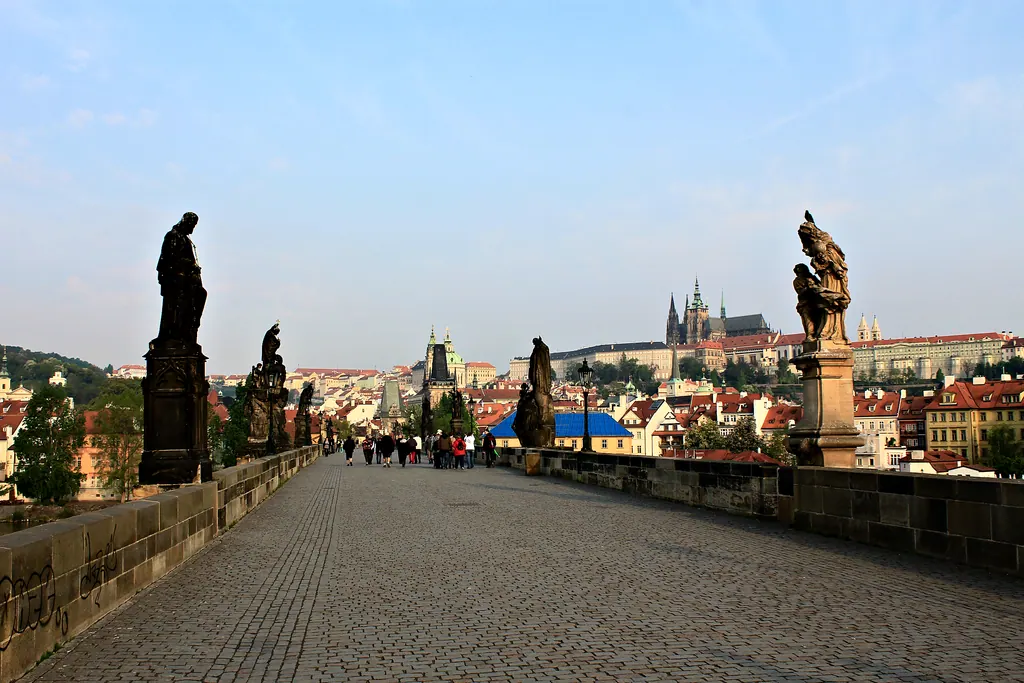
Prague Castle is less a single building than a hilltop district. Founded around the year 880, it holds palaces, churches, gardens and St. Vitus Cathedral, and Guinness World Records lists it as the largest ancient castle complex in the world, at about 70,000 square meters (17 acres). It is still the seat of the Czech president.
Know before you go: you can walk the courtyards for free, but you need a ticket for the main interiors. Arrive early or late to avoid the tour groups, and walk down through the Lesser Town to the Charles Bridge afterward.
Bran Castle, Romania: The Dracula Connection
Bran Castle guards a mountain pass near Brașov in Transylvania, and it is marketed around the world as "Dracula's Castle." The truth is more interesting. The fortress dates to the late 14th century, Bram Stoker never visited Romania, and historians find little evidence that Vlad the Impaler had much to do with it. In the 20th century it was a favorite home of Queen Marie of Romania, whose rooms you can still see.
Know before you go: Bran is about 30 minutes by car from Brașov, which makes a good base. Visit on a weekday morning, and combine it with the hilltop citadel at Râșnov or with Peleș Castle in Sinaia, another royal palace in the Carpathians.
How to Plan a Castle Trip in Europe
Pick a cluster rather than a checklist. Bavaria and Prague combine well by train, Lisbon and Madrid cover Sintra and Segovia in a few days, and Scotland and the Loire each reward a slower road trip. Book timed tickets ahead for Neuschwanstein, Pena and Prague, which are the busiest. And give each castle a few hours: the gardens, viewpoints and old towns around them are half the reason to go. For more ideas in the same spirit, browse our sights and Europe pages.
Frequently asked questions
What is the most famous castle in Europe?
Neuschwanstein in Bavaria is probably the most famous, thanks to its fairy-tale look. It became part of a UNESCO World Heritage site in 2025.
Can you go inside Neuschwanstein Castle?
Yes, but only on a guided tour of about 30 minutes at a fixed time. Buy tickets in advance from the official Ticket Center Hohenschwangau shop.
What is the largest castle in Europe?
Malbork Castle in Poland is the largest brick castle in the world, while Prague Castle is listed by Guinness World Records as the largest ancient castle complex.
Is Bran Castle really Dracula's castle?
Not really. Bran is marketed as Dracula's Castle, but Bram Stoker never visited Romania, and its link to Vlad the Impaler is thin.