If you are looking for a European trip where your money stretches further than in Paris, Rome or London, Bulgaria belongs on the list. The capital, Sofia, has Orthodox cathedrals and Roman ruins in the middle of town. Plovdiv is one of the oldest continuously inhabited cities in Europe. And the Rila Mountains, with the famous Rila Monastery, are a day trip away.
So is Bulgaria cheap? Yes, by European standards it is the cheapest country in the European Union. But 2026 brought one big change: the euro. Below we go through what that means, what things cost and how to keep your budget low. All prices are as checked on November 3, 2026, and dollar amounts are approximate, based on the European Central Bank rate of 1 euro = about $1.12 on November 2, 2026.
The Numbers: Cheapest Price Level in the EU
The EU statistics agency Eurostat compares price levels across member states every year. In its 2025 figures, published in June 2026, Bulgaria had the lowest overall price level in the EU, about 37% below the EU average. It also had the lowest prices of all member states for restaurants and hotels, and for transport services.
For a traveler, those are exactly the categories that matter most. A meal out, a hotel night or a bus ticket typically costs noticeably less than in Western Europe, and often less than in neighboring Greece or Romania.
There are exceptions. Black Sea resorts in July and August, ski resorts in peak season and international hotel chains in central Sofia can cost close to what you would pay elsewhere in Europe. The savings are biggest in towns, guesthouses and local restaurants.
Bulgaria Now Uses the Euro
Bulgaria adopted the euro on January 1, 2026, at the fixed rate of €1 = 1.95583 lev. After a short period when both currencies circulated, the euro has been the only legal tender since February 1, 2026.
What that means for you:
- Prices are in euros, so they are easy to compare with the rest of Europe. Older guidebooks and blog posts still quote prices in lev. Divide by about 1.96 to get euros.
- Leftover lev can no longer be used in shops. If you have old banknotes, the Bulgarian National Bank continues to exchange them for euros.
- Card payments are widely accepted in cities. When a terminal or ATM offers to charge you in dollars, choose euros instead. We explain why in our guide to paying in local currency or dollars.
Carry some cash for small guesthouses, mountain huts, markets and village shops.
Getting Around for Little Money
Public transport is one of the easiest places to save.
Sofia Metro and city transport. A single ticket costs €0.80 (about $0.90), a day ticket €2 (about $2.25), a 24-hour ticket €3 (about $3.35) and a 72-hour ticket €7.60 (about $8.50), according to the city transport operator as of November 2026. The metro runs to Terminal 2 at Sofia Airport, so you can get into the city center without a taxi.
Trains. The national railway BDZ connects Sofia with Plovdiv, Varna, Burgas and smaller towns. Trains are slow by Western European standards, but cheap. A one-way ticket from Sofia to Plovdiv usually costs about €5-8 (about $5.60-9), depending on the train.
Buses. Long-distance buses are often faster than the train on routes such as Sofia to Veliko Tarnovo, and fares are similarly low.
Rental car. For the mountains and monasteries, a rental car gives you the most freedom, but it is the most expensive way to travel if you are alone or two.
Free and Cheap Things to Do
Some of Bulgaria's best sights cost nothing.
- Free walking tours run in Sofia and Plovdiv. You join for free and tip the guide what you think the tour was worth.
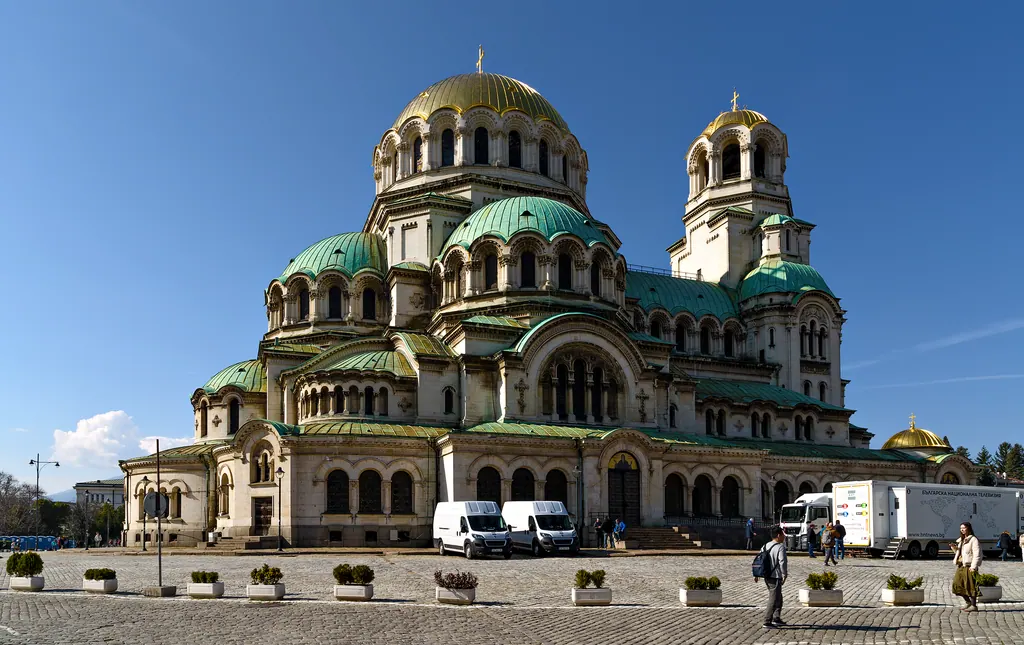
- Saint Alexander Nevsky Cathedral in Sofia is free to enter. It is one of the largest Orthodox cathedrals in the Balkans.
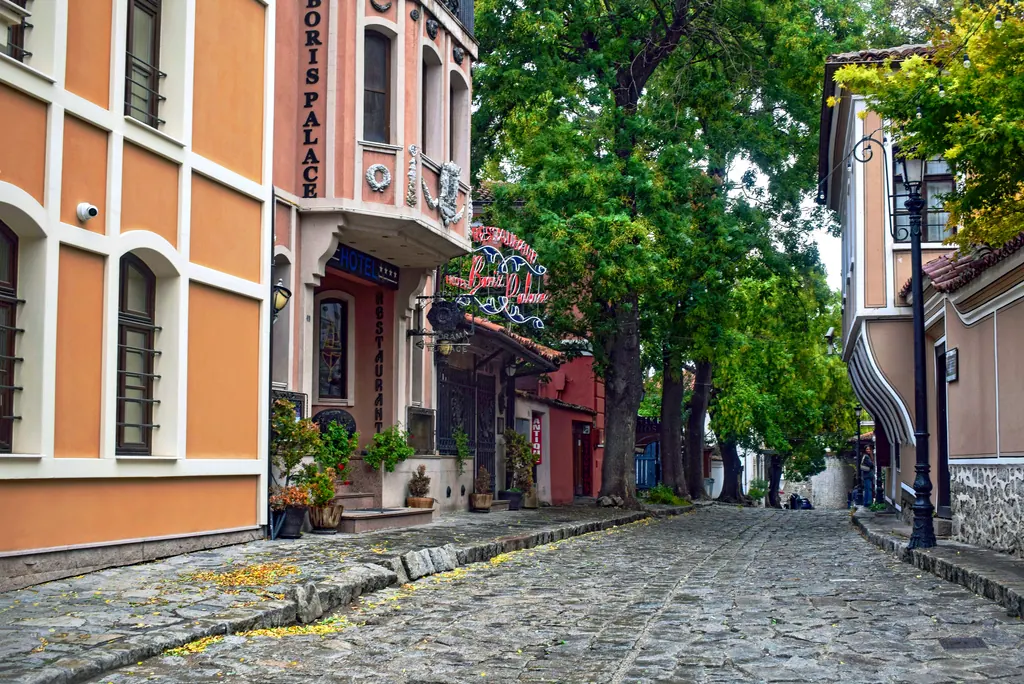
- Plovdiv Old Town is a neighborhood you can explore on foot for free. Some of the historic houses and the Roman theater charge a small entry fee.
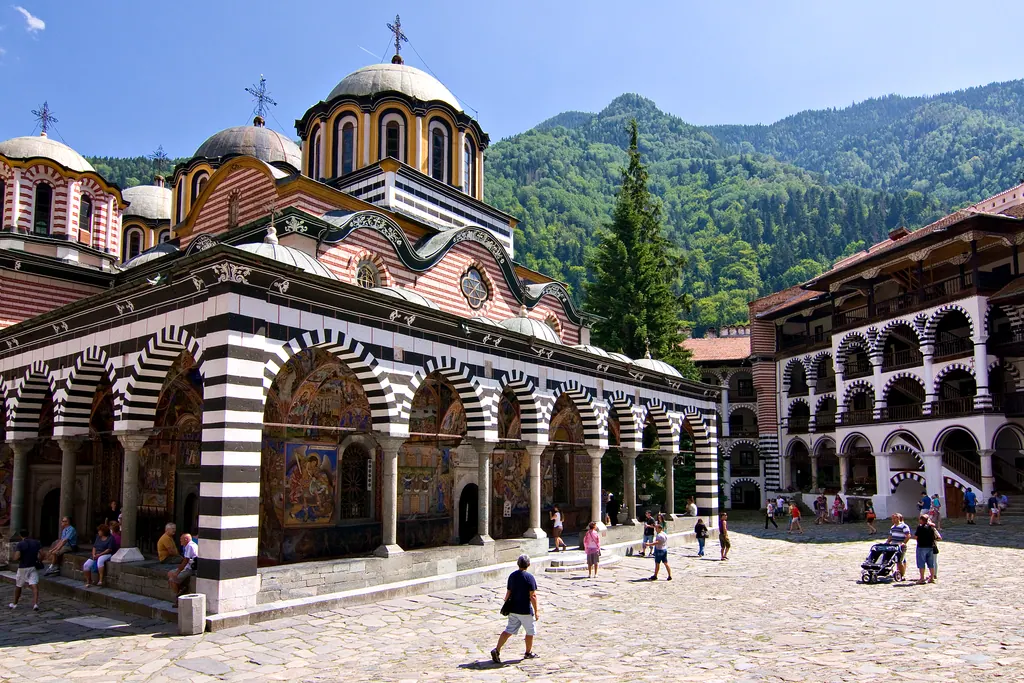
- Rila Monastery, Bulgaria's best-known sight and a UNESCO World Heritage Site, has a free courtyard and church. The museum charges a modest fee.
One catch at Rila: according to the monastery's official site, there is no regular public transport there anymore. You need a tour, a shuttle or a car. Booking a day tour from Sofia is often the cheapest option if you are traveling alone.
Where to Stay on a Budget
Bulgaria has plenty of hostels, guesthouses and small family hotels, and the Eurostat figures for hotels and restaurants show in what you pay. A few tips:
- Stay in Plovdiv or Veliko Tarnovo for a few nights instead of only in Sofia. Smaller cities are usually cheaper and easier to walk.
- Look for guesthouses (often called "kashta" or "guest house" in listings) in mountain villages near Rila and in the Rhodopes. Many include breakfast.
- Avoid the Black Sea coast in midsummer if you are on a tight budget. Prices in resorts such as Sunny Beach and Golden Sands peak in July and August, while June and September are cheaper.
Entry Rules for Americans
Bulgaria has been a full member of the Schengen Area since January 1, 2025. U.S. citizens can visit without a visa for up to 90 days in any 180-day period, and that time counts together with the rest of the Schengen countries. The EU's digital Entry/Exit System, which registers your fingerprints and photo at the border, has been fully in place since April 10, 2026. The separate ETIAS travel authorization had not started as of November 3, 2026.
A Sample Budget Approach
We will not give you a fake "per day" number, because your costs depend heavily on how you travel. As a rule of thumb, though:
- Shoestring travelers using hostels, public transport and local restaurants will spend far less than in Western Europe.
- Mid-range travelers in good hotels and with a few guided day trips can travel comfortably for what a budget trip would cost in many other European countries.
- The biggest costs are usually your flight from the U.S. and any rental car, not daily life on the ground.
For more ideas, see our budget travel guides, our other Bulgaria articles and everything we have written about Europe.
Frequently asked questions
Is Bulgaria cheap to visit?
Yes. According to Eurostat, Bulgaria had the lowest price level in the EU in 2025, about 37% below the EU average, with the lowest prices for restaurants, hotels and transport services.
What currency does Bulgaria use?
Bulgaria has used the euro since January 1, 2026. The old lev was converted at €1 = 1.95583 lev, and the euro has been the only legal tender since February 1, 2026.
How much is a metro ticket in Sofia?
As of November 2026, a single ticket costs €0.80 (about $0.90) and a 24-hour ticket costs €3 (about $3.35).
Do Americans need a visa for Bulgaria?
No. U.S. citizens can stay up to 90 days in any 180-day period in the Schengen Area, which Bulgaria fully joined on January 1, 2025.