There is a particular kind of quiet that only exists in a hot spring in cold weather. Steam rises off the water, the air on your face is freezing, and everything below the neck is warm enough that you stop thinking about anything at all. People have been chasing that feeling for thousands of years, from Roman legionaries to Japanese farmers to Victorian invalids taking the cure.
Winter is the best time to do it, which is why we put together this list now. These are ten hot springs and thermal baths around the world that are worth building a trip around, picked for the setting, the history and the experience in the water. Some are wild, some are grand, and a few involve snow monkeys or the northern lights.
Earth Lagoon Mývatn, Iceland
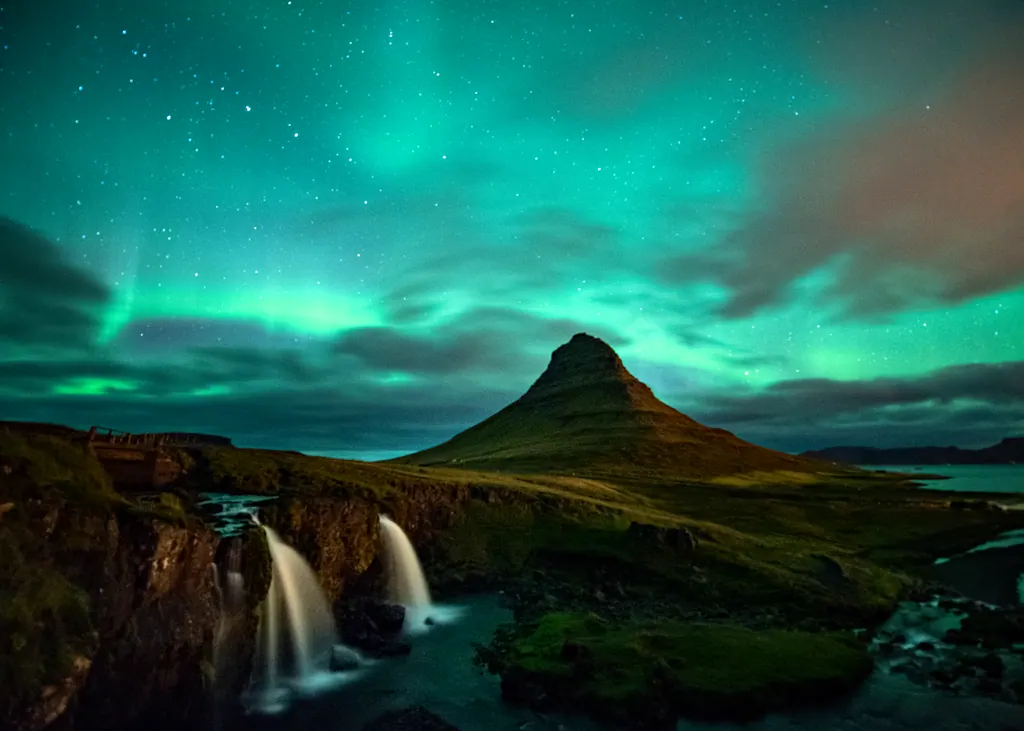
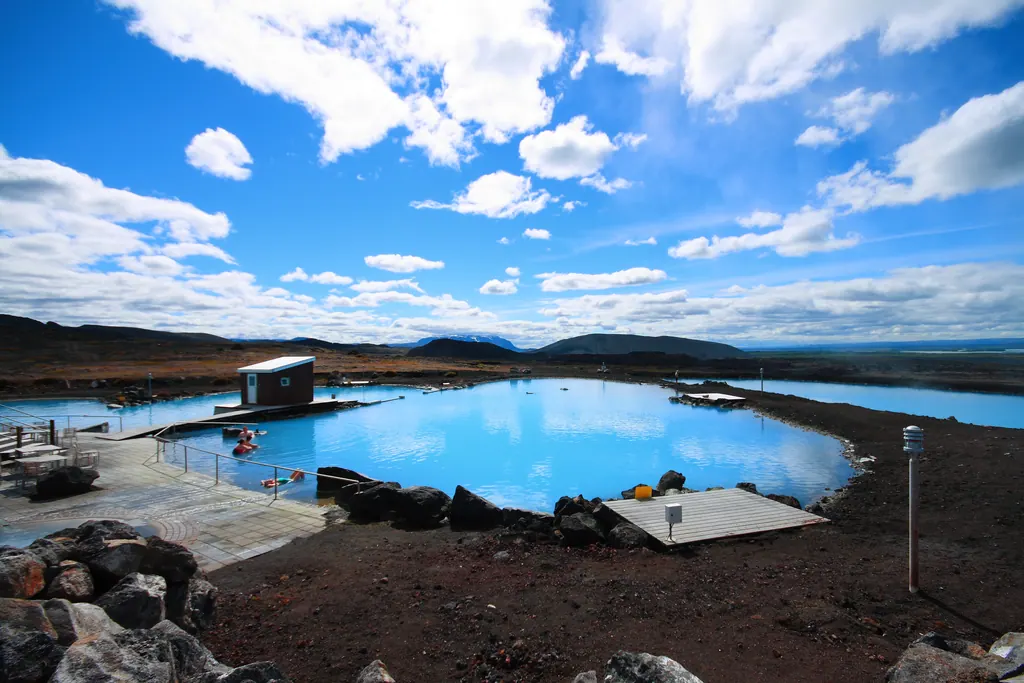
Most visitors to Iceland end up at the Blue Lagoon near Keflavík Airport, and it is a fine first soak. But many travelers who make it to north Iceland prefer the lagoon at Lake Mývatn, which opened in 2004 as the Mývatn Nature Baths and has since been renamed Earth Lagoon Mývatn. The water is the same milky blue, rich in minerals and fed by geothermal water from the area, but the setting is wilder: steaming vents, lava fields and the volcanic landscape around the lake.
In winter the days are short, which has an upside. On a clear night with aurora activity, you can float in warm water and watch the sky. Read our guide on where to see the northern lights for timing.
If you go: Combine it with the Secret Lagoon (Gamla Laugin) at Flúðir in the south, a natural pool that dates from 1891 and is often described as Iceland's oldest swimming pool.
Kusatsu Onsen, Japan
Japan has thousands of onsen towns, but Kusatsu, in the mountains of Gunma Prefecture, is the one many Japanese name first. Its springs produce more naturally flowing hot water than anywhere else in Japan, about 32,300 liters (8,500 gallons) per minute, according to the town.
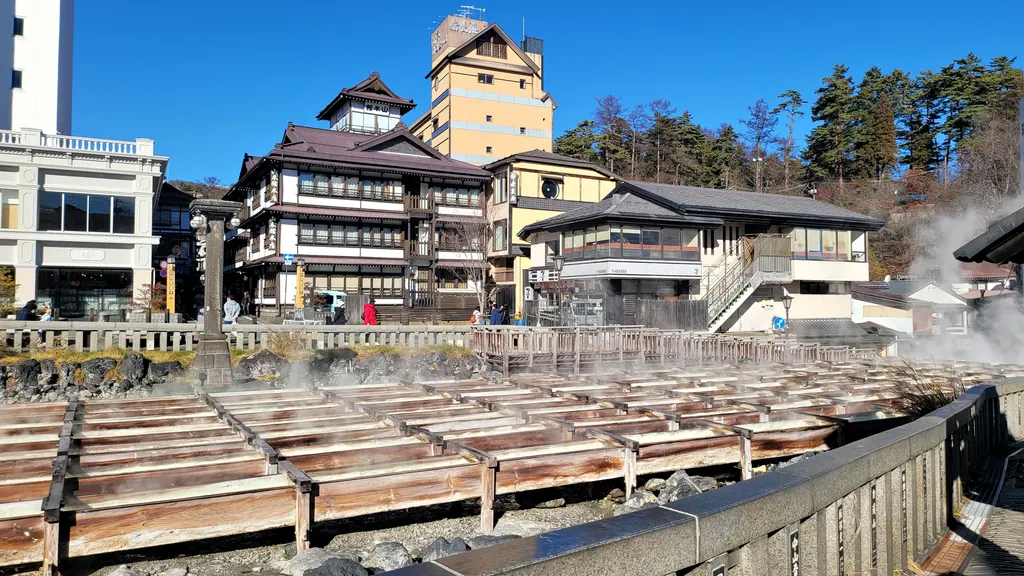
The center of town is the Yubatake, or "hot water field," where steaming spring water runs through long wooden channels to cool before it is piped to the baths. At the Netsunoyu hall next door, performers stir the scalding water with long wooden boards and sing traditional songs, a technique called yumomi. Shows run several times a day, and tickets cost about 700 yen (about $4 in 2026). In winter, with snow on the roofs and steam everywhere, the town looks like a woodblock print.
If you go: Kusatsu is about three hours from Tokyo by train and bus. If you want to see snow monkeys bathing in a hot spring, Jigokudani Monkey Park in neighboring Nagano Prefecture is the famous place, though there, only the monkeys get in the water.
Banff Upper Hot Springs, Canada
At about 5,200 feet (1,585 m), the Banff Upper Hot Springs is the highest hot spring in Canada, according to Parks Canada, which runs it. It is not a wild pool but a historic bathhouse with a big outdoor pool facing the peaks of Banff National Park. Parks Canada keeps the water between about 98°F and 104°F (37°C and 40°C).
On a snowy January evening, with the mountains disappearing into the dark and frost forming on your hair, it is one of the great simple pleasures of the Rockies. Pair it with our guide to luxury in the Canadian Rockies if you want a bigger trip.
Chena Hot Springs, Alaska
About 60 miles from Fairbanks, at the end of a road through the boreal forest, Chena Hot Springs combines two of the top reasons to visit interior Alaska in winter: geothermal water and the aurora. The resort's outdoor rock lake is the main attraction, and the viewing season for the northern lights runs from about late August to April.
Temperatures in the Fairbanks area can drop far below zero in midwinter, so this is not a soak for people who hate the cold. That is part of the experience.
Hot Springs National Park, Arkansas
It is easy to forget that the U.S. has a national park named for its hot springs. In Hot Springs, Arkansas, the water emerges at an average of about 143°F (62°C), and according to the U.S. Geological Survey, the rainwater that feeds it has been underground for roughly 4,000 years.
Bathhouse Row, a line of grand early 20th century bathhouses, is the heart of the park. Today you can soak at the Buckstaff, which has offered traditional baths for more than a century, or at the Quapaw, which has thermal pools. Many people also fill bottles at the public thermal water fountains in town.
Széchenyi Thermal Bath, Hungary
Budapest calls itself a city of spas, and its showpiece is the Széchenyi Thermal Bath in City Park. It opened in 1913 and is one of the largest bath complexes in Europe, with about 15 indoor pools and three outdoor pools inside a yellow neo-Baroque palace.
The outdoor pools are the reason to come in winter. Locals play chess on floating boards while steam drifts across the courtyard and snow sits on the statues. Our list of things to do in Budapest has more on the city's baths.
Cascate del Mulino, Saturnia, Italy
In southern Tuscany, warm sulfurous water spills over a series of natural limestone terraces below an old mill. The Cascate del Mulino in Saturnia are free and open to everyone, and the water stays at about 99.5°F (37.5°C) all year, according to the Tuscany tourism board.
There is no ticket and no changing room, just pale blue pools and the smell of sulfur. Go early in the morning or on a winter weekday for the quietest experience.
Termas Geométricas, Chile
This might be the most photogenic hot spring on Earth. In a narrow, fern-filled ravine near Coñaripe in Chile's Lake District, close to Villarrica National Park, a red wooden boardwalk zigzags past 17 slate-lined pools, each fed by hot water from the hillside.
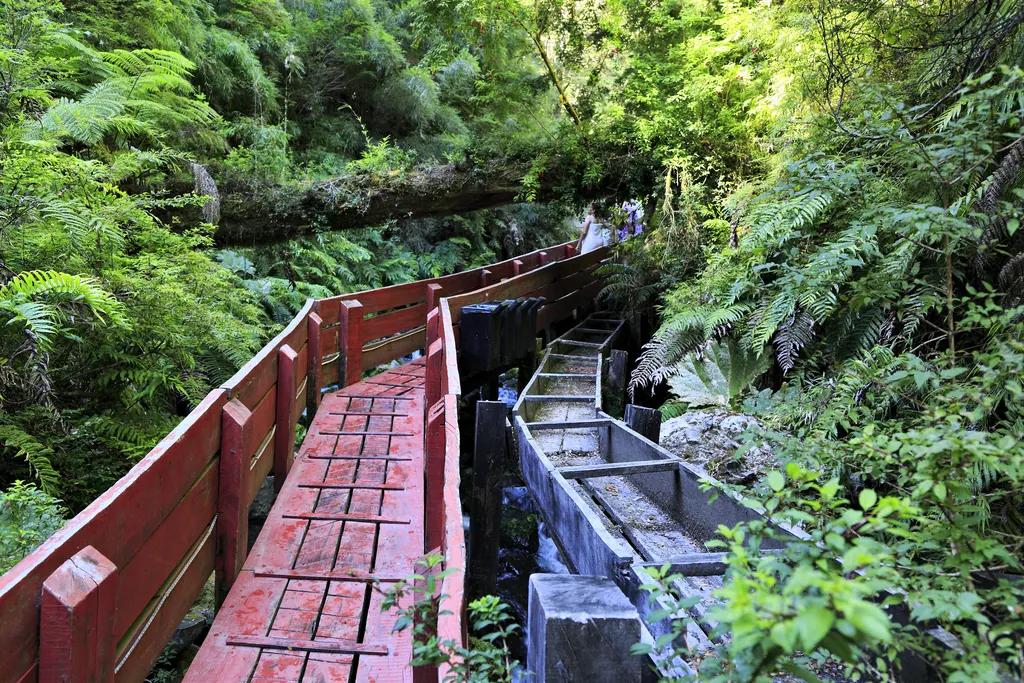
The architecture is minimal and the forest does the rest. December to February is summer in Chile, which is the easiest season to visit, but the pools stay open in the southern winter as well, when the ravine is often wet and misty.
Termas de Papallacta, Ecuador
About an hour and a half's drive from Quito, high in the Andes, the village of Papallacta sits at about 10,800 feet (3,300 m). Its thermal complex has a cluster of pools, roughly 97°F to 104°F (36°C to 40°C), surrounded by green mountains and, on clear days, views toward the snow of Antisana volcano.
If you are heading to the Galápagos or the Amazon, it makes an easy stop on the way. Do not overdo hot water on your first day at altitude, though. Our guide to altitude sickness in Cusco explains why.
Polynesian Spa, Rotorua, New Zealand
Rotorua on New Zealand's North Island smells of sulfur for good reason: the whole area is a geothermal zone, with geysers, mud pools and Māori villages that have used the hot water for generations. The Polynesian Spa sits right on the shore of Lake Rotorua.
The spa uses two springs with very different water. The Priest Spring is acidic and was famous for easing aches and pains, while the Rachel Spring is alkaline and feels smooth on the skin. The lake view pools are the best seats in the house. Find more ideas for the country on our New Zealand page.
Before you get in
Hot springs feel gentle, but they are not risk-free. A few rules apply almost everywhere:
- Stay hydrated and keep soaks short. Fifteen to twenty minutes at a time is plenty in very hot water.
- Skip alcohol in the pool. Heat and alcohol together can make you dizzy.
- Follow local etiquette. In Japan you wash thoroughly before entering, and swimsuits are not worn in traditional onsen. Some onsen still turn away guests with tattoos, so check ahead. In Iceland you are expected to shower without a swimsuit before entering the pool.
- Never enter wild springs that are not designated for bathing. In places such as Yellowstone, the water can be hot enough to cause severe burns.
- Talk to your doctor if you are pregnant or have heart problems.
More ideas for trips built around landscapes and wildlife are on our nature page.
Frequently asked questions
Which hot spring in Japan has the most water?
Kusatsu Onsen in Gunma Prefecture has the largest natural flow of hot spring water in Japan, about 32,300 liters (8,500 gallons) per minute according to the town.
Are the Saturnia hot springs free?
Yes. The Cascate del Mulino in Saturnia, Tuscany, are free and open to everyone, with water at about 99.5°F (37.5°C) all year.
Is it safe to use hot springs in winter?
Yes, as long as you keep soaks short, drink water, skip alcohol in the pool and only bathe in pools designated for bathing. Outdoor pools are often at their best in cold weather.