In December, most of Europe goes gray. On Madeira, the bougainvillea is still flowering over Funchal's walls, people eat lunch outside in shirtsleeves, and the town strings up so many Christmas lights that the whole amphitheater of hills above the harbor glows at night. The island sits in the Atlantic, closer to Morocco than to Lisbon, and its winters are famously mild.
That makes Madeira one of the few places in Europe where a December or January trip feels like a real vacation rather than a compromise. Below we look at what the weather is actually like, what to do in winter, how the walking season works after the storms of November 2026, and why New Year's Eve here is in a league of its own.
What is the weather like in Madeira in winter?
Mild, with a catch. According to Portugal's weather service IPMA, average highs in Funchal are about 70°F (21°C) in December and 68°F (20°C) in January, with nights around 58°F to 60°F (14°C to 16°C). The sea stays at roughly 66°F to 68°F (19°C to 20°C), cool but swimmable for many people.
The catch is that Madeira is a tall, steep island, and the weather changes fast with altitude and coast. The south coast around Funchal is the sunniest and driest. The north coast is greener and wetter. The high peaks, at more than 6,000 feet, can be cold, windy and wrapped in cloud while people sunbathe in Funchal. Winter is also the rainiest season. Pack layers, a rain jacket and proper shoes even if you plan to spend most days by the sea.
Christmas in Funchal
Madeirans take Christmas seriously. The official festive season runs from December 1, 2026 to January 10, 2027, according to the Madeira tourism board, and it starts with the lighting of thousands of decorations in downtown Funchal. Nativity scenes, music in the streets and food stalls fill the center through the month.
The night of December 23 is a local favorite. Known as the Noite do Mercado, it turns the Mercado dos Lavradores, Funchal's market hall, and the surrounding streets into one big party, with flowers, fruit, poncha and music late into the night.
New Year's Eve: the fireworks
Funchal's New Year's Eve fireworks are the island's most famous event. In 2006 Guinness World Records recognized the display as the largest fireworks show in the world, with fireworks launched from dozens of points around the bay at the same moment.
Cruise ships time their arrival to anchor in the harbor for the show, and hotels with a view of the bay are booked far in advance. If you want to be here for midnight on December 31, book your room and flights as early as you can.
Walking the levadas
The best way to understand Madeira is on foot. The island is crossed by levadas, narrow irrigation channels built over centuries to carry water from the wet north to the farms of the south. The maintenance paths beside them are now some of the most famous walking routes in Europe, often almost flat, running through laurel forest and along the edges of deep green valleys.
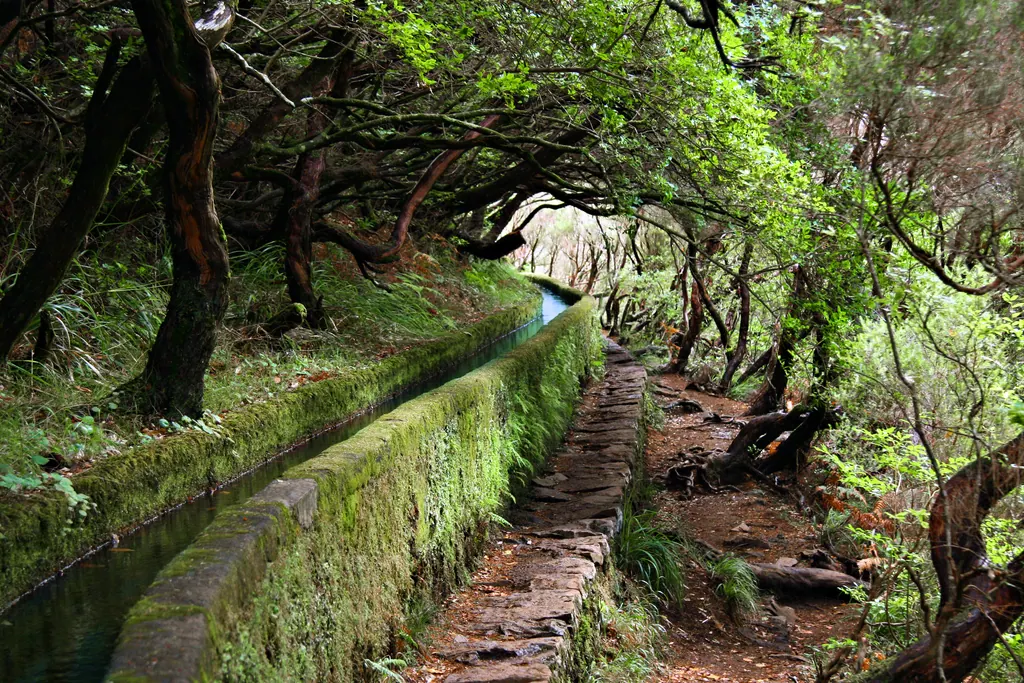
The laurel forest itself, the Laurisilva, is a UNESCO World Heritage Site and one of the largest surviving areas of a forest type that once covered much of southern Europe.
An important note for winter 2026 to 2027: Storm Charles hit Madeira on November 10 and 11, 2026, causing landslides and fallen trees. On November 12, 2026, the island's forestry and nature agency, IFCN, reported that 20 of its classified trails were open and 19 were closed. Open routes included the Levada das 25 Fontes and Levada do Risco (PR 6 and 6.1), the Levada do Caldeirão Verde (PR 9), the Vereda dos Balcões (PR 11), the Levada do Rei (PR 18), the coastal Ponta de São Lourenço (PR 8) and the Vereda do Pico Ruivo (PR 1.2). The famous ridge trail from Pico do Areeiro (PR 1) was closed. Check the IFCN website for the current status before every hike, because it can change quickly after rain.
Since 2025, non-residents aged 12 and over have paid a fee of 3 euros (about $3.30 in 2026) to walk the classified trails, booked and paid through the regional government's SIMplifica platform. Keep the proof of payment with you.
Five easy winter walks
- Vereda dos Balcões (PR 11): Only about 1 mile (1.5 km) each way, almost flat, ending at a viewpoint over the island's central valley and peaks. A good first walk.
- Levada do Rei (PR 18): A classic levada walk through laurel forest above São Jorge on the north coast.
- Levada das 25 Fontes and Levada do Risco (PR 6 and 6.1): Start at Rabaçal and walk to a waterfall and a pool fed by dozens of small springs. Popular, so go early.
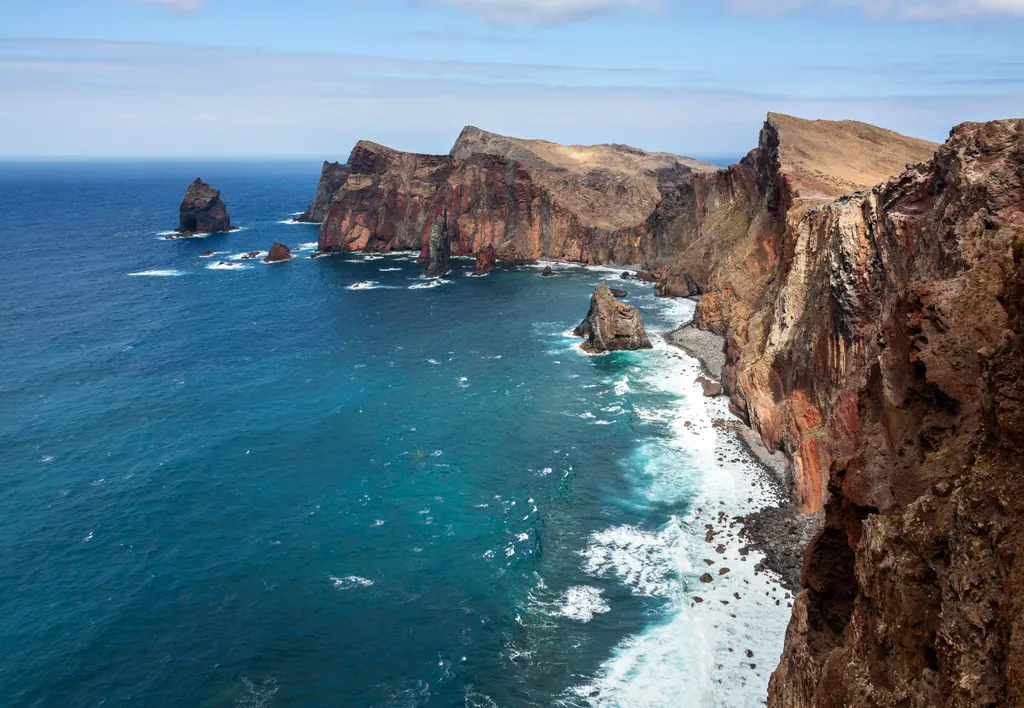
- Ponta de São Lourenço (PR 8): A completely different Madeira: a dry, wind-blown peninsula at the island's eastern tip, with red and ocher cliffs above deep blue water. There is little shade, which is a plus in winter.
- Vereda do Pico Ruivo (PR 1.2): About 1.7 miles (2.8 km) each way from Achada do Teixeira to Madeira's highest point, at about 6,109 feet (1,862 m). Go only on a clear, calm day and bring warm clothes.
Several companies in Funchal offer guided walks with transportation to the trailheads, which saves you from driving Madeira's steep mountain roads.
More things to do in Madeira in winter
- Ride the Monte toboggan. Take the cable car from Funchal up to Monte, then slide back down about 1.2 miles (2 km) in a wicker sledge steered by two men in white with straw hats. It is touristy and great fun.
- Stand above the sea at Cabo Girão. The glass skywalk on top of one of Europe's highest sea cliffs is about 1,900 feet (580 m) above the ocean. Entry was about 5 euros (about $5.50) in 2026.
- Swim in the lava pools at Porto Moniz. On a calm, sunny day, the natural pools formed by volcanic rock on the northwest coast are a unique place to swim. In rough winter seas they may be closed.
- Eat like a local. Try espetada (beef skewers grilled over laurel wood), bolo do caco (garlic flatbread), black scabbardfish with banana and a glass of poncha, made with sugarcane rum, honey and lemon.
- Taste Madeira wine. The fortified wine was a favorite in colonial America and is said to have been used to toast the Declaration of Independence. It is still made here, and several historic wine lodges in Funchal offer tastings.
How to get there and get around
Madeira is part of Portugal, so the same entry rules apply as in the rest of the country. Most travelers from the U.S. connect through Lisbon, about 1 hour 45 minutes away by air, or another European hub.
The airport outside Funchal is known for strong winds, and flights are sometimes delayed or diverted in winter storms. Leave a buffer day before an international connection, and read our guide to EU flight delay compensation in case something goes wrong.
Funchal works as a base without a car. If you want to explore the north coast and the mountains on your own, rent a small car and get comfortable with steep, narrow roads and many tunnels. For more ideas in the country, see our Portugal page.
Is Madeira worth it in winter?
If you want guaranteed beach weather, look to the Caribbean instead. If you want mild days, dramatic walks, good food and one of the best New Year's Eve parties in Europe, Madeira in winter is hard to beat. Just keep your plans flexible, check the trail status, and leave room for a day when the clouds win.
Frequently asked questions
Is Madeira warm in December?
Mild rather than hot. Average highs in Funchal are about 70°F (21°C) in December and 68°F (20°C) in January, according to Portugal's weather service IPMA, but the mountains are much colder.
Can you swim in Madeira in winter?
Many people do. The sea is about 66°F to 68°F (19°C to 20°C) in winter, and the natural pools at Porto Moniz are popular on calm, sunny days.
Are Madeira's hiking trails open after Storm Charles?
Partly. On November 12, 2026, the IFCN reported 20 classified trails open and 19 closed, including the PR 1 ridge trail from Pico do Areeiro. Check the IFCN website before every hike.
Do you have to pay to hike in Madeira?
Yes. Non-residents aged 12 and over pay 3 euros (about $3.30 in 2026) per classified trail, booked through the regional SIMplifica platform.