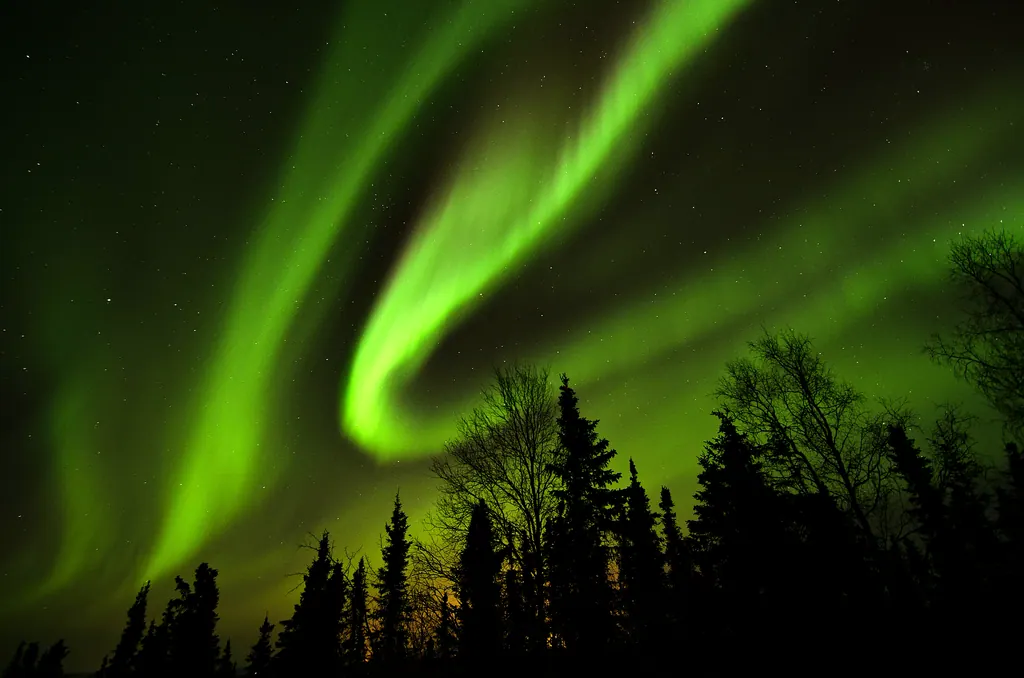
On a good night it starts as a pale arc that you might mistake for a thin cloud. Then the arc brightens, folds into curtains, and for a few minutes the whole sky moves in green, sometimes with a fringe of pink at the bottom. Nobody forgets it. But plenty of travelers fly north, spend four nights under clouds, and go home with nothing but a photo of a hotel sign.
Where you go makes most of the difference. The aurora forms in a ring around the magnetic pole called the auroral oval, and the best places sit under that ring, have long dark nights and, ideally, a decent chance of clear skies. Here are six of them, from Alaska to Arctic Norway, and what each one does best.
What You Need for a Good Aurora Night
Three things have to come together:
- Darkness. In the far north, summer nights are too bright. The viewing season in most aurora destinations runs from late August or September to early April.
- Clear skies. This is the factor that most often ruins a trip. Inland places with dry, cold winter weather tend to do better than coasts.
- Activity. The aurora is driven by the solar wind. NOAA's Space Weather Prediction Center publishes forecasts and the Kp index, a scale from 0 to 9. Under the auroral oval, even a modest Kp of 2 or 3 can give a good show.
The Sun's 11-year cycle matters too. NASA and NOAA announced in October 2024 that the Sun had reached the maximum phase of Solar Cycle 25. Activity is now slowly declining, but strong displays still happen, and in places directly under the oval the aurora is a regular sight even in quiet years. Local forecasters also note that the weeks around the September and March equinoxes often bring more geomagnetic activity.
Fairbanks, Alaska: The American Option
For U.S. travelers, Fairbanks is the easiest serious aurora destination: no passport, a domestic flight, and a location almost right under the auroral oval. Explore Fairbanks gives the aurora season as August 21 to April 21, when the nights are dark enough. Interior Alaska's winter is cold and often clear, and the University of Alaska Fairbanks Geophysical Institute publishes its own aurora forecast.
You can watch from places just outside town, such as Creamer's Field or Cleary Summit, or book a lodge farther north with heated viewing cabins. Chena Hot Springs, about an hour and a half by road, combines a soak with the sky show. Winter temperatures can drop far below 0°F (-18°C), so plan your clothing before your camera.
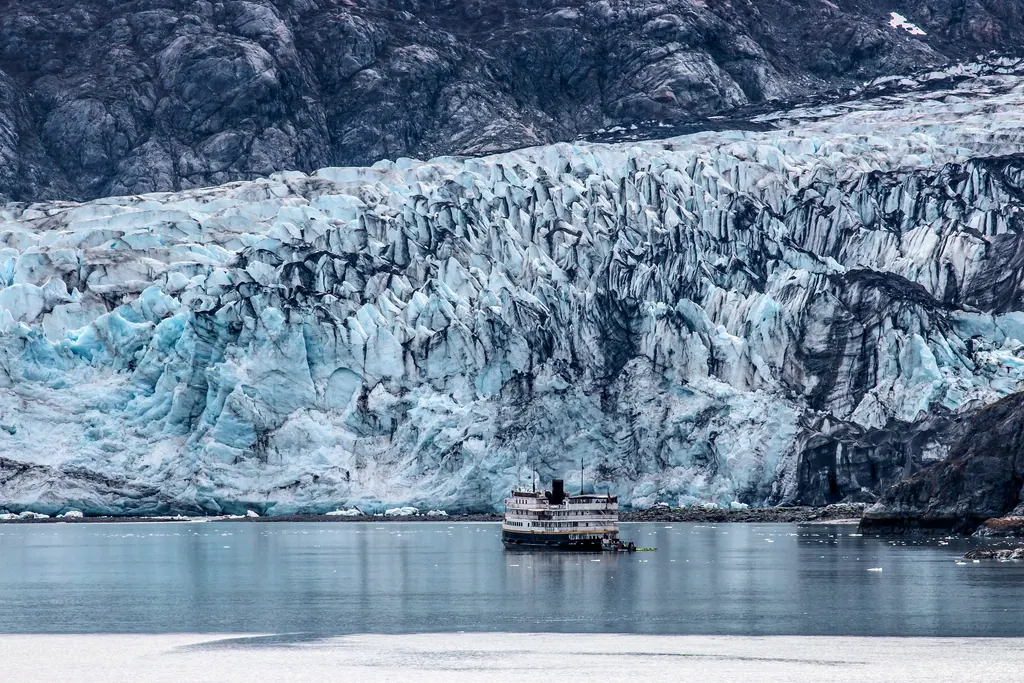
If you would rather see Alaska in summer, the aurora is not an option. Read our guide to the best time to cruise Alaska instead.
Yellowknife, Canada: The Statistics Favorite
Yellowknife, the capital of the Northwest Territories, sells itself on numbers. Its tourism board says the aurora can be seen on up to 240 nights a year, thanks to its position under the oval and a flat landscape with wide horizons. The two peak periods are mid-August to September, when the lakes are still open and reflect the lights, and mid-November to early April, the deep winter season.
Viewing camps outside the city offer heated tepees and cabins where you can wait between displays. U.S. citizens need a passport to fly to Canada but no visa or eTA.
Tromsø, Norway: Aurora With a City Attached
Tromsø sits at almost 70 degrees north, yet it is a lively university city with an airport, restaurants and the striking white Arctic Cathedral. The local tourism board gives the season as late August to early April. From about November 27 to January 15 the Sun does not rise above the horizon at all. That does not mean total darkness, since the midday hours bring a blue twilight, but it does mean long nights for watching.
The weather is the catch. Tromsø's coastal climate brings clouds, so many visitors join a "chase" tour by minibus. Guides drive inland, sometimes all the way toward the Finnish border, to find a gap in the clouds. Days can be filled with dog sledding, whale watching in some winters, or a cable car ride above the city.
Abisko, Sweden: The "Blue Hole"
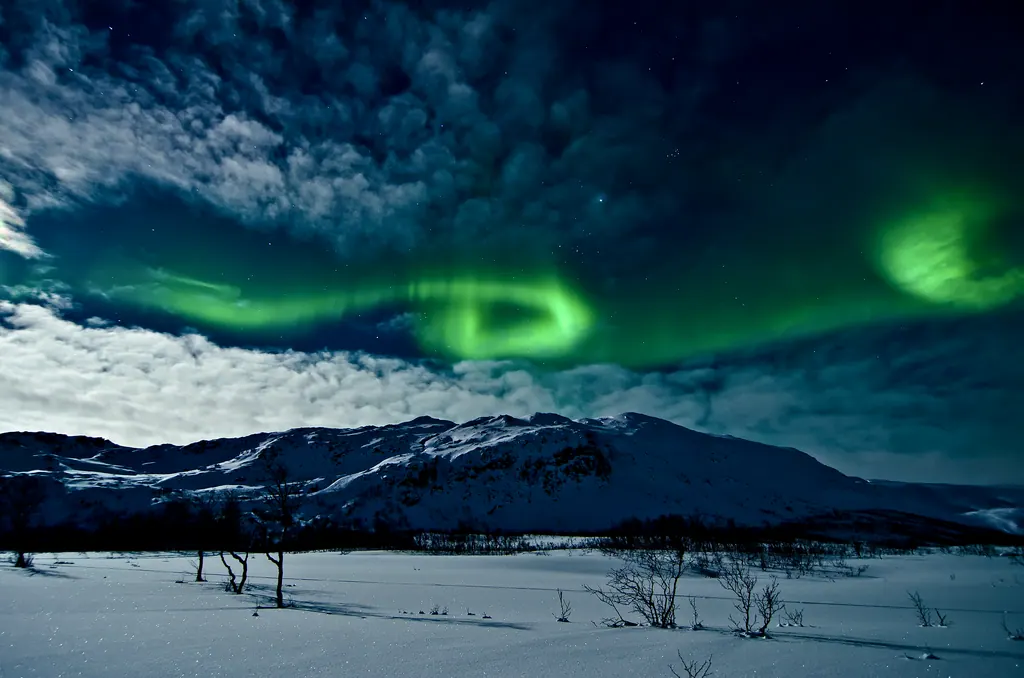
Abisko National Park, in Swedish Lapland about 120 miles (200 km) north of the Arctic Circle, has a reputation among aurora watchers for its microclimate. Mountains around the long lake Torneträsk often keep a patch of sky clear while the region around is overcast, an effect locals call the "blue hole." The Aurora Sky Station on Mount Nuolja is reached by chairlift and offers viewing high above the valley.
Abisko is small, so most visitors stay several nights. It can also be reached by train from Narvik in Norway or from Kiruna and Stockholm, a fine way to arrive.
Finnish Lapland: Glass Igloos and Long Odds
Finland's Lapland combines high aurora chances with a lot of comfort. According to the Finnish Meteorological Institute, auroras appear on about three out of four clear, dark nights in the far north of Lapland, around Kilpisjärvi and Utsjoki, and on about every other clear night in the resort area around Levi, Ylläs and Saariselkä. Saariselkä and the nearby Urho Kekkonen National Park are especially popular, and several resorts rent glass igloos or cabins with glass roofs so you can watch from bed.
Rovaniemi, the gateway city on the Arctic Circle, is easy to reach and full of activities, but it lies farther south. Go deeper into Lapland if the aurora is the main goal.
Iceland: Aurora Plus Everything Else
Iceland is not quite as far north as the others, but it sits close to the auroral oval and is only five to six hours by air from the U.S. East Coast. The season is roughly September to mid-April. The Icelandic Met Office publishes both an aurora forecast and a cloud cover map, which together are the most useful planning tool on the island.
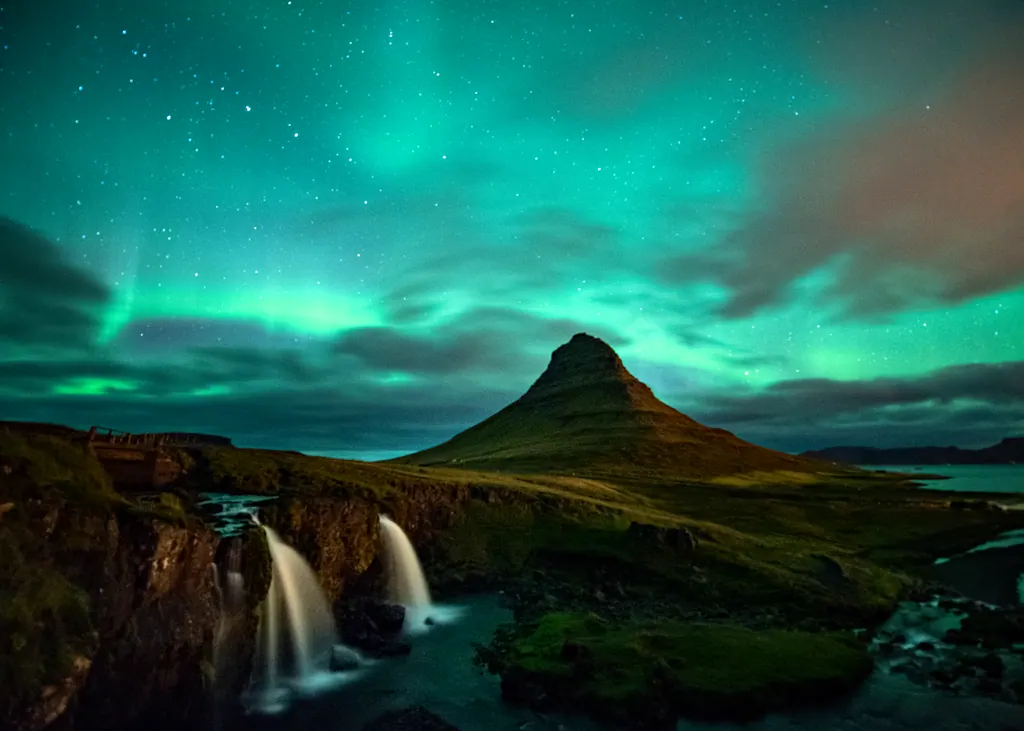
The trade-off is changeable Atlantic weather. The reward is that the backdrops are spectacular: Kirkjufell on the Snæfellsnes peninsula, the glacier lagoon at Jökulsárlón, or simply a dark field an hour from Reykjavík. Iceland also works well for a combined trip; see our guide to Iceland tours and what to book.
How to Choose
| Destination | Getting there from the U.S. | Strength | Weak point |
|---|---|---|---|
| Fairbanks | Domestic flight | Dry, often clear winter skies | Extreme cold |
| Yellowknife | Via Calgary, Edmonton or Vancouver | Up to 240 aurora nights a year | Remote, cold |
| Tromsø | Via Oslo or another European hub | City life plus chase tours | Coastal clouds |
| Abisko | Via Stockholm and Kiruna | "Blue hole" clear skies | Small village |
| Finnish Lapland | Via Helsinki | Glass igloos, high odds in the north | Can be pricey |
| Iceland | Nonstop from many U.S. cities | Short flight, dramatic scenery | Changeable weather |
Give the Sky Time
The single best piece of advice is to plan for at least three or four nights in one place. Clouds pass, activity comes in bursts, and a single night is a lottery. Stay up late, since displays are often strongest between about 9 p.m. and 2 a.m. Avoid the full moon if you can, dress in layers you can stand still in, and let your eyes adjust for 15 minutes away from lights. More ideas for nature trips are on our Nature page, and if you are curious about the other end of the planet, see our guide to animals in Antarctica.
Frequently asked questions
What is the best month to see the northern lights?
Any month from September to March can work in the far north. The weeks around the September and March equinoxes often bring more activity, while December and January give the longest nights.
Can you see the northern lights in the United States?
Yes. Fairbanks, Alaska, lies almost under the auroral oval and has a season from about August 21 to April 21. During strong storms the aurora can be seen much farther south.
How many nights do I need to see the northern lights?
Plan at least three or four nights in one place. Cloud cover and short bursts of activity make a single night a gamble.
Is 2026 a good year for the northern lights?
The Sun passed the maximum of its 11-year cycle in late 2024 and activity is slowly declining, but displays remain frequent under the auroral oval and strong storms still occur.