
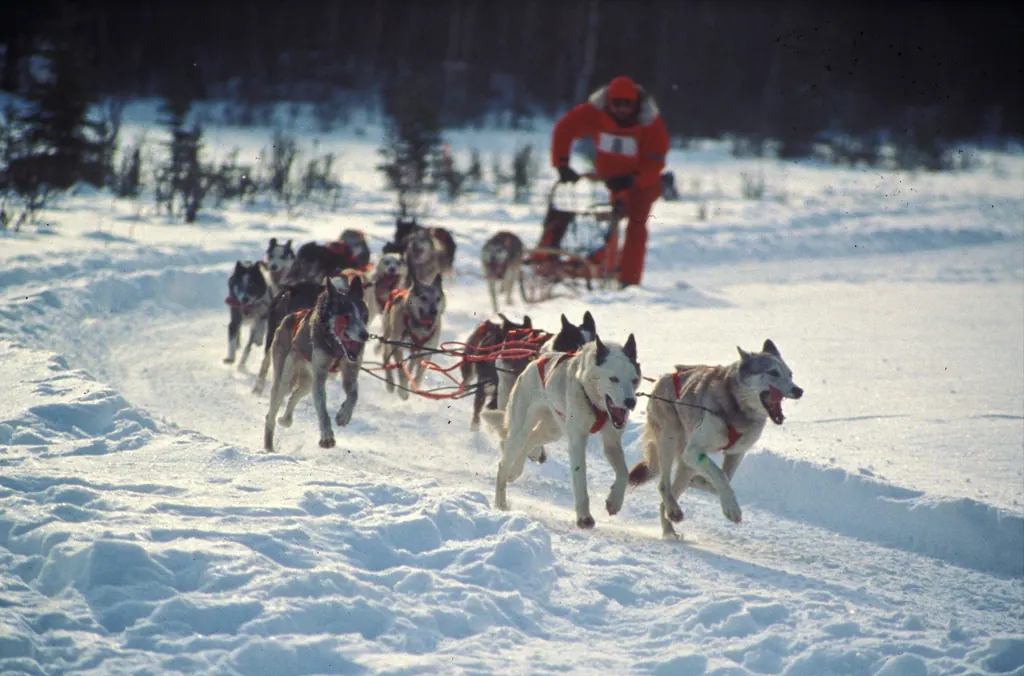
The first thing you notice is the noise. A dog yard before a run is pure chaos: dozens of huskies howling, leaping and straining at their lines, desperate to go. Then the brake comes off, the team surges forward, and suddenly everything goes quiet. All you hear is the hiss of the runners on snow and the soft, rhythmic panting of the dogs.
That moment is why dog sledding has become one of the most popular winter adventures in the north. You do not need to be an athlete or an expert. On most trips you can sit in the sled as a passenger or learn to drive your own small team in an afternoon. The hard part is choosing where to go, because the experience in Alaska is quite different from the one in Finnish Lapland or the forests of northern Minnesota.
How Does a Dog Sledding Trip Work?
Most outfitters offer three types of trip:
- Rides. You sit in the sled basket, wrapped in blankets, while an experienced musher drives. Good for families with young kids and anyone who wants the experience without the effort.
- Self-driven tours. After a short lesson, you stand on the runners and drive your own team of three to six dogs, usually following a guide. This is the classic option, and most people can manage it.
- Multi-day expeditions. You drive a team for several days, staying in wilderness cabins or camps, and help feed and care for the dogs. These require reasonable fitness and tolerance for cold.
Expect a briefing on the basic commands, how to use the brake and what to do if you fall off. You will. Almost everyone does at some point, and the snow is usually soft.
Alaska: The Home of Modern Mushing
Dog mushing is Alaska's official state sport, and nowhere in the U.S. has a deeper sled dog culture. Around Fairbanks, snow season typically runs from about November to early April, and kennels offer everything from short rides to full-day self-driven tours. Combine it with the northern lights, which are visible from the Fairbanks area on clear, dark nights in winter. See our guide on where to see the northern lights.
Near Anchorage, the big event is the Iditarod, the famous race to Nome. In 2027, the ceremonial start is on Saturday, March 6, in downtown Anchorage, and the official restart is on Sunday, March 7, in Willow. Watching the teams set off is free, and many local kennels offer rides around race time.
Outside winter, many Alaskan kennels offer summer rides on wheeled carts or even on glaciers reached by helicopter. If you are planning a summer cruise, see our guide to the best time to cruise Alaska.
Finnish Lapland: Husky Safaris in the Arctic Forest
Northern Finland is one of the easiest places in the world to try dog sledding. Husky farms around Rovaniemi, Levi, Saariselkä and other Lapland towns run trips throughout the snow season, which usually lasts from late November or December into April. Snow-heavy spruce forests, frozen lakes and the low winter light make the scenery exceptional.
Most trips are well organized for international visitors, with warm overalls and boots included. In December and January the days are very short, and above the Arctic Circle the sun barely rises at all, so March and early April, with longer days and still plenty of snow, are popular with people who want more daylight on the trail.
Norway and Sweden: Fjords, Tundra and Long Races
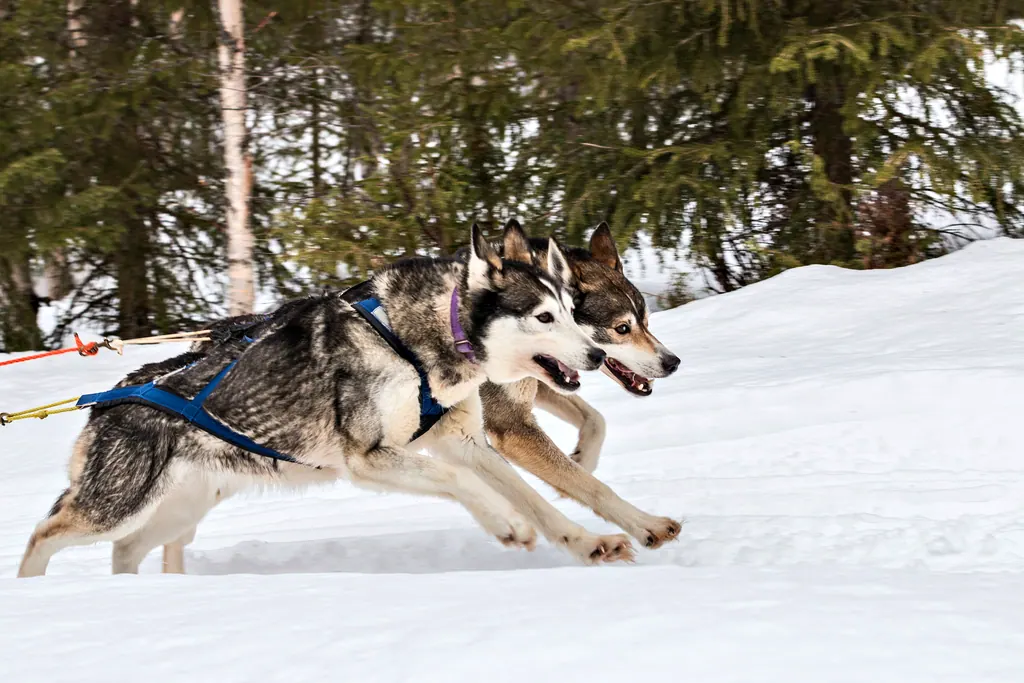
In northern Norway, Tromsø and the Finnmark region are major mushing areas. Finnmark is home to the Finnmarksløpet, Europe's longest sled dog race, with a top class of about 745 miles (1,200 km) from Alta to Kirkenes and back, held every March. In the Tromsø area, many trips run through mountain valleys within reach of the city, and some combine sledding with an evening of northern lights viewing.
In Swedish Lapland, Kiruna and the area around Abisko and Jukkasjärvi are popular bases. Multi-day trips across the open fells are among the most memorable mushing experiences in Europe.
Canada: Yukon and Beyond
Canada's Yukon has deep roots in sled dog culture, going back to the Klondike Gold Rush. Whitehorse is the usual base, with outfitters offering day trips and multi-day expeditions into a vast, quiet wilderness. February is a popular month, with long, cold, clear days, and the area is also known for the northern lights.
Closer to the U.S. border, outfitters in Quebec, Ontario and the Canadian Rockies offer shorter trips that are easy to combine with a ski vacation.
Minnesota: Mushing in the Lower 48
You do not have to fly to the Arctic to try dog sledding. Ely, Minnesota, on the edge of the Boundary Waters Canoe Area Wilderness, calls itself the sled dog capital of the world, and several outfitters there offer half-day, full-day and multi-day trips. The season usually runs from about mid-December to late March, depending on snow.
Ely is also an excellent choice for families, with lodges where you can mush by day and warm up by a fire at night. Other options in the Lower 48 include Colorado ski towns, Michigan's Upper Peninsula and parts of New England.
How to Choose a Good Outfitter
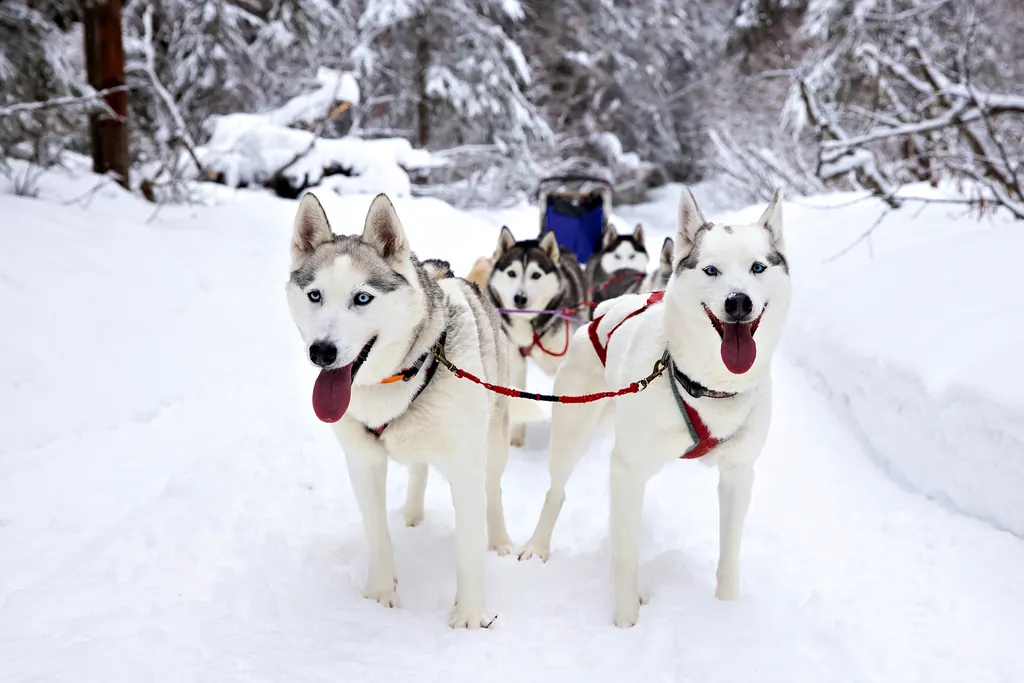
The dogs make or break the trip, so choose an operator who clearly takes good care of them. A few things to look for:
- Healthy, happy dogs. They should look lean but well fed, be eager to run, and have proper shelter.
- Small groups and clear instruction. Check how many sleds go out with each guide and how much training you get before you start.
- Proper gear. Good outfitters provide or rent warm clothing, boots and mittens suited to the conditions.
- Honest descriptions. A good operator will tell you how far you go, how long you spend on the sled versus in transit, and whether you drive or ride.
- Reviews. Look for comments on how the dogs are treated, not just how fun the trip was.
What to Pack
Most outfitters lend you insulated overalls, boots and mittens, but you will still need warm base layers (wool or synthetic, not cotton), a warm hat or balaclava, thin liner gloves, wool socks and a buff or scarf for your face. Sunglasses help with glare from the snow. Keep your phone in an inside pocket, as batteries drain fast in the cold.
Ready to Go?
If you only have a day, start with a self-driven half-day tour in Fairbanks, Lapland or Ely. If you get hooked, as many people do, a multi-day trip in Swedish Lapland or the Yukon is the next step. Find more ideas for winter adventures on our active holidays page.
Frequently asked questions
Do you need experience to go dog sledding?
No. Most outfitters teach you the basics in a short briefing, and you can either ride as a passenger or drive a small team behind a guide.
When is dog sledding season?
It depends on snow, but in most places it runs from about December to March or April. Around Fairbanks, it often starts in November.
Where can you go dog sledding in the Lower 48?
Ely, Minnesota, is one of the best known areas, with trips in the Boundary Waters region. Colorado, Michigan and New England also have outfitters.
When does the Iditarod start in 2027?
The ceremonial start is on Saturday, March 6, 2027, in Anchorage, followed by the official restart in Willow on March 7.