The plane to Lukla holds about 15 passengers, and the runway it lands on is roughly 500 meters long, tilted uphill toward a mountain wall. For many trekkers, those few seconds are the real start of a trip to Nepal. For others, it begins on a bus out of Pokhara or a jeep up a dusty river valley.
Nepal has more great trekking than one trip can hold, and choosing between the famous names is harder than it looks. The routes differ in altitude, crowds, cost, scenery and paperwork, and the rules for independent trekkers have shifted since 2023. Below, we compare the main treks, explain when to go and what permits cost, and look at what life in the teahouses is really like. Prices are from 2025 and 2026 and rounded, at about 140 Nepali rupees to the US dollar.
How do the big treks compare?
Most first time visitors pick between the Everest region in the east and the Annapurna region around Pokhara. Both have lodges every hour or two, so you do not need a tent. The table gives a quick overview.
| Trek | Usual length | Highest point | Start | Character |
|---|---|---|---|---|
| Everest Base Camp | 12-14 days from Lukla | Kala Patthar, 5,644 m | Flight to Lukla | Iconic peaks, Sherpa villages, serious altitude |
| Annapurna Base Camp | 7-11 days | 4,130 m | Near Pokhara | Mountain amphitheater, many steps |
| Annapurna Circuit | 10-16 days | Thorong La pass, 5,416 m | Besisahar or Chame | Huge variety, high pass, roads on parts |
| Poon Hill | 3-5 days | 3,210 m | Near Pokhara | Short, lower, rhododendron forests |
| Langtang Valley | 7-10 days | Kyanjin Ri, about 4,770 m | Syabrubesi | Close to Kathmandu, quieter |
| Manaslu Circuit | 13-16 days | Larkya La pass, about 5,100 m | Machha Khola area | Restricted area, remote, guide required |
| Upper Mustang | 10-14 days | About 4,000 m | Jomsom | Dry Tibetan landscape, restricted area |
Everest Base Camp
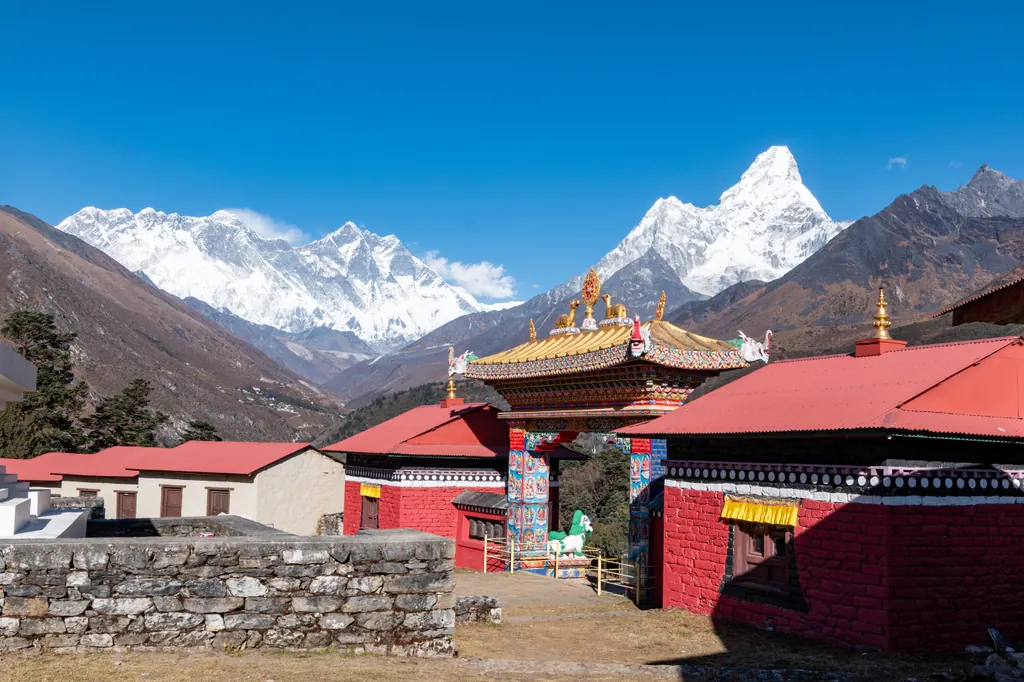
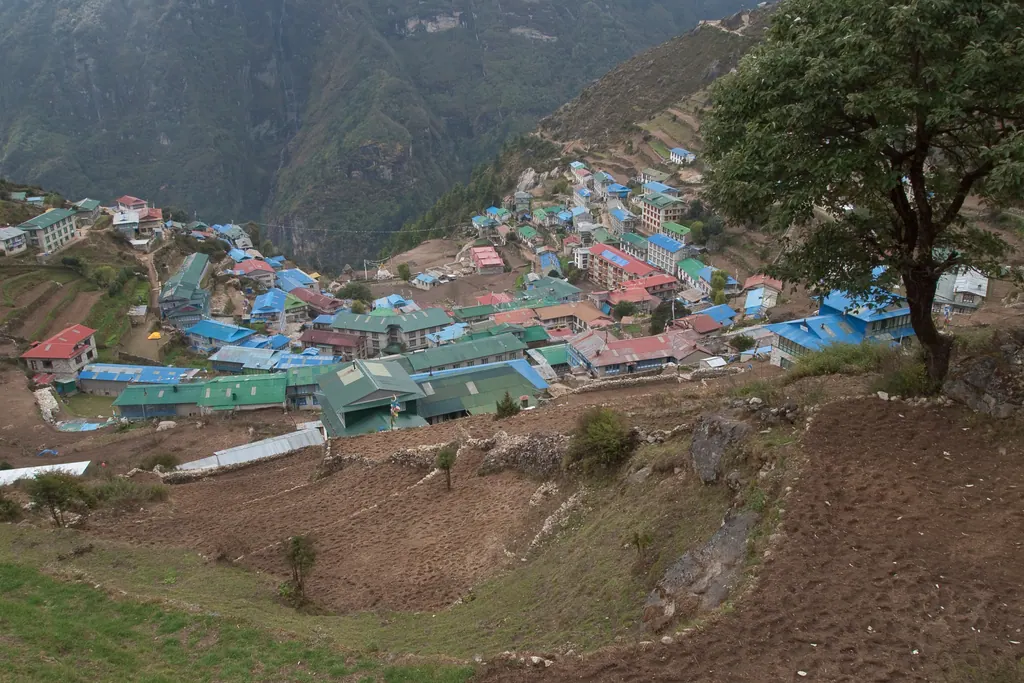
The classic route flies from Kathmandu to Lukla, then follows the Dudh Kosi valley through Phakding to Namche Bazaar, the Sherpa trading town at about 3,440 meters. Namche is where most trekkers spend their first acclimatization day, with bakeries, gear shops and the first views of Everest from the ridge above town. From there the trail climbs through Tengboche with its monastery, Dingboche and Lobuche to Gorak Shep, the last lodge stop.
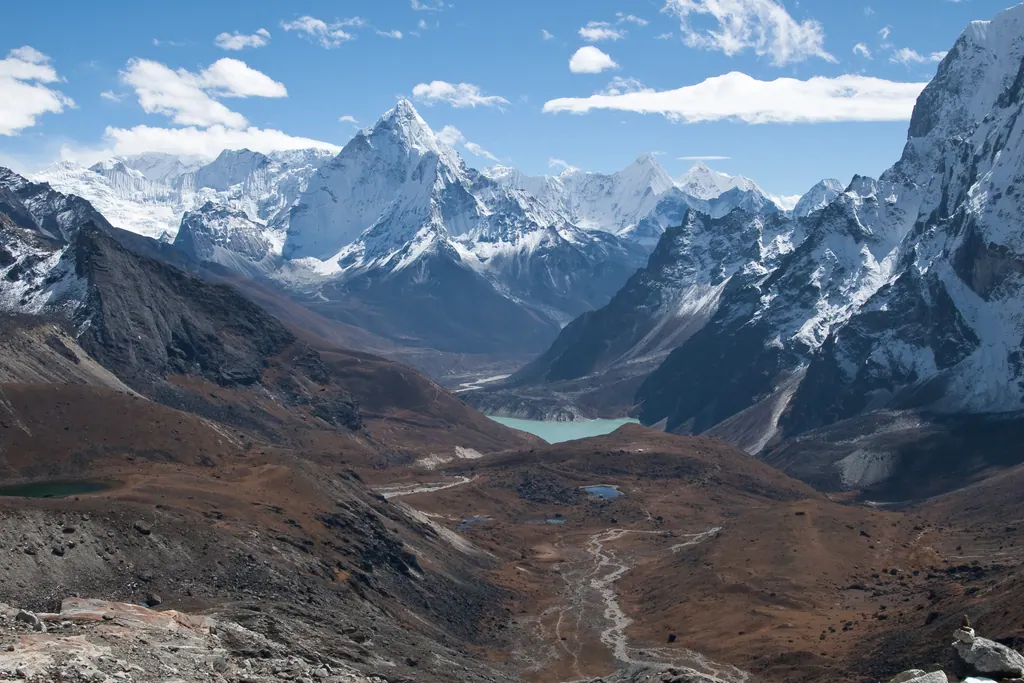
Two things surprise people. Base camp itself, at about 5,364 meters, sits on the Khumbu Glacier and has no view of Everest's summit. The view comes from Kala Patthar, a rocky hill above Gorak Shep usually climbed at dawn. And in October and April the trail is busy with trekkers, porters and yak trains. Most itineraries take 12-14 days from Lukla and back, including two rest days.
Annapurna Base Camp and Poon Hill
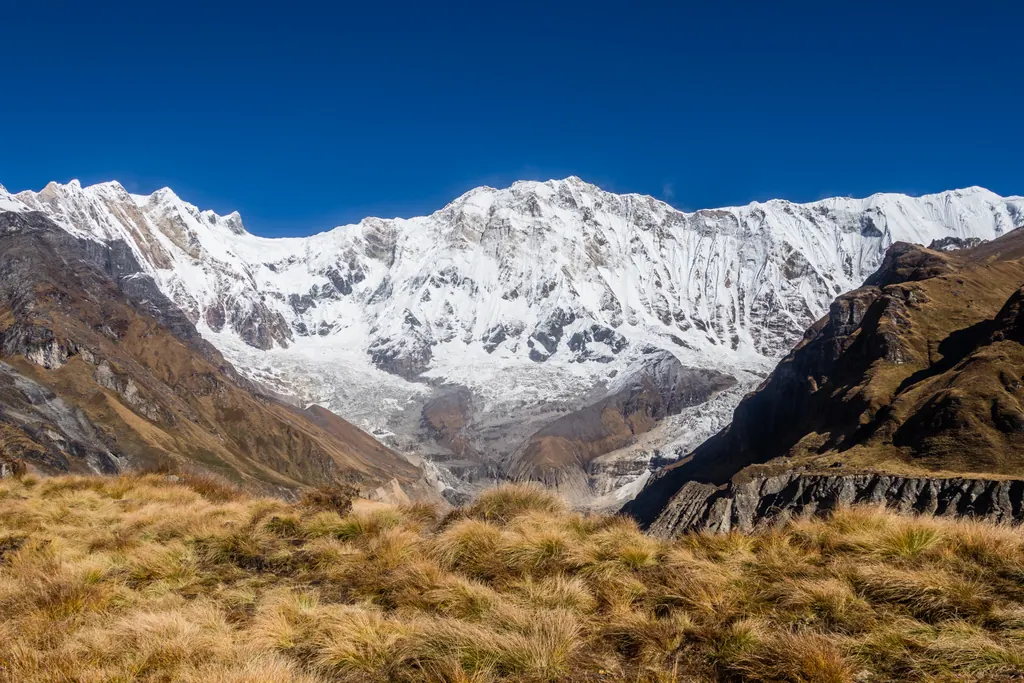
Annapurna Base Camp, often called the Annapurna Sanctuary trek, starts a short drive from Pokhara and climbs through Gurung villages such as Ghandruk and Chhomrong, then up a narrowing gorge to a basin ringed by Annapurna I, Hiunchuli and the fishtail peak of Machapuchare. At 4,130 meters it is far lower than Everest Base Camp, which makes altitude less of a worry, but the stone staircases around Chhomrong are hard on the knees.
Poon Hill is the shortest of the well-known treks. Three to five days take you up to Ghorepani and a predawn climb to a viewpoint at 3,210 meters, with Dhaulagiri and the Annapurnas lined up in front. It suits families and people short on time, and many itineraries link it with Annapurna Base Camp.
The Annapurna Circuit and Jomsom
The Annapurna Circuit loops around the whole massif, from green rice terraces in the Marsyangdi valley through Manang to the Thorong La pass at 5,416 meters, then down to the temple town of Muktinath and the wide Kali Gandaki valley. It was once a three week walk. Roads now reach far up both sides, so most trekkers start by jeep in Chame or beyond and finish in Jomsom, the windswept district center at about 2,720 meters, where small planes fly back to Pokhara in the morning before the afternoon wind picks up.
Langtang, Manaslu and Upper Mustang
Langtang is the closest serious trek to Kathmandu, a long day's drive to Syabrubesi and then up a valley of Tamang villages and yak pastures to Kyanjin Gompa at about 3,870 meters. Langtang village was buried by an avalanche triggered by the 2015 earthquake and has since been rebuilt, and the trek sees far fewer people than Everest or Annapurna.
Manaslu and Upper Mustang are restricted areas, which changes the logistics completely: you need a special permit from the Department of Immigration, issued only through a registered agency, at least two trekkers and a licensed guide. Manaslu circles the world's eighth highest mountain and crosses the Larkya La; it is remote, the teahouses are simpler and the scenery is on par with anything in the Annapurnas. Upper Mustang, north of Jomsom through the gateway village of Kagbeni, is a different world: red and ochre cliffs, cave dwellings and the walled town of Lo Manthang. It sits in the rain shadow of the Himalayas, which makes it one of the few treks that work in the monsoon.
When is the best time to go?
Autumn, from about late September to November, is the main season. The monsoon has washed the air clean, the views are sharpest and the trails are at their busiest. Spring, March to May, is the second season, with warmer days, rhododendrons in bloom below about 3,500 meters and more haze in the afternoons. April and May are also when Everest climbing expeditions fill base camp.
Winter, December to February, brings clear skies and cold nights, and high passes such as Thorong La and Larkya La can close after snowfall. Lower treks such as Poon Hill are pleasant then. The monsoon, roughly June to September, means rain, leeches, landslides and clouds over the peaks; Upper Mustang is the main exception.
What permits and fees do you need?
Fees change often, so treat these 2025-2026 figures as a guide.
| Permit | Area | Fee for foreigners (non-SAARC) |
|---|---|---|
| Sagarmatha National Park | Everest region | 3,000 rupees (about $21), plus VAT in some listings |
| Khumbu Pasang Lhamu Rural Municipality fee | Everest region | 3,000 rupees (about $21) since July 2024 |
| Annapurna Conservation Area (ACAP) | Annapurna, Poon Hill, Jomsom, Upper Mustang | 3,000 rupees (about $21); double if bought at a checkpost |
| Langtang National Park | Langtang | about 3,000 rupees (about $21) |
| TIMS card | Most trekking areas outside Khumbu | 2,000 rupees (about $14) |
| Manaslu restricted area permit | Manaslu | about $100 for the first week in autumn, less in other seasons |
| Upper Mustang restricted area permit | Upper Mustang | $500 for 10 days under the long-standing rate; in late 2025 the government approved switching to about $50 per day |
The ACAP fee comes from the National Trust for Nature Conservation, which runs the conservation area and sells permits online, in Kathmandu and in Pokhara. In the Everest region, the local municipality collects its own fee in Lukla, and the park fee is paid in Kathmandu or at the Monjo gate. SAARC nationals pay lower rates on most permits.
Do you need a guide?
In 2023, the Nepal Tourism Board announced that foreign trekkers in the national parks and conservation areas must hire a licensed guide and get their TIMS card through a registered trekking agency. The stated reasons were safety, after several solo trekkers went missing, and jobs for local guides.
In practice the picture is mixed. The Khumbu Pasang Lhamu Rural Municipality, which covers the Everest region, rejected the rule and lets independent trekkers in with its own local permit. Trekker reports from 2024 and 2025 describe patchy enforcement on the Annapurna and Langtang trails as well. Restricted areas such as Manaslu and Upper Mustang are different: a guide was required long before 2023, and that has not changed.
Our advice is to plan on a licensed guide outside the Everest region, and to check the Nepal Tourism Board's current rules when you book. A guide usually costs somewhere around $25-35 a day and a porter around $20-25 a day, normally including their food and lodging. A good guide also spots altitude symptoms early and handles lodge bookings in peak season.
How serious is altitude sickness?
It is the biggest health risk on almost every trek in this article, and it does not care how fit you are. Acute mountain sickness typically starts with headache, nausea and poor sleep. The dangerous forms, high altitude cerebral and pulmonary edema, can kill within hours, and the only reliable treatment is to descend.
The CDC's guidance is to raise your sleeping altitude by no more than about 500 meters a day once above 3,000 meters, and to plan an extra acclimatization day for every further 1,000 meters of sleeping altitude. That is why Everest itineraries pause in Namche and Dingboche, and why the Annapurna Circuit waits in Manang before the pass. Many trekkers carry acetazolamide after talking to a doctor; see our page on health and vaccinations. The Himalayan Rescue Association runs aid posts in Pheriche on the Everest route and in Manang on the Circuit, with talks on altitude in season.
Make sure your travel insurance explicitly covers trekking to the altitude you will reach and helicopter evacuation.
What does a day in the teahouses cost?
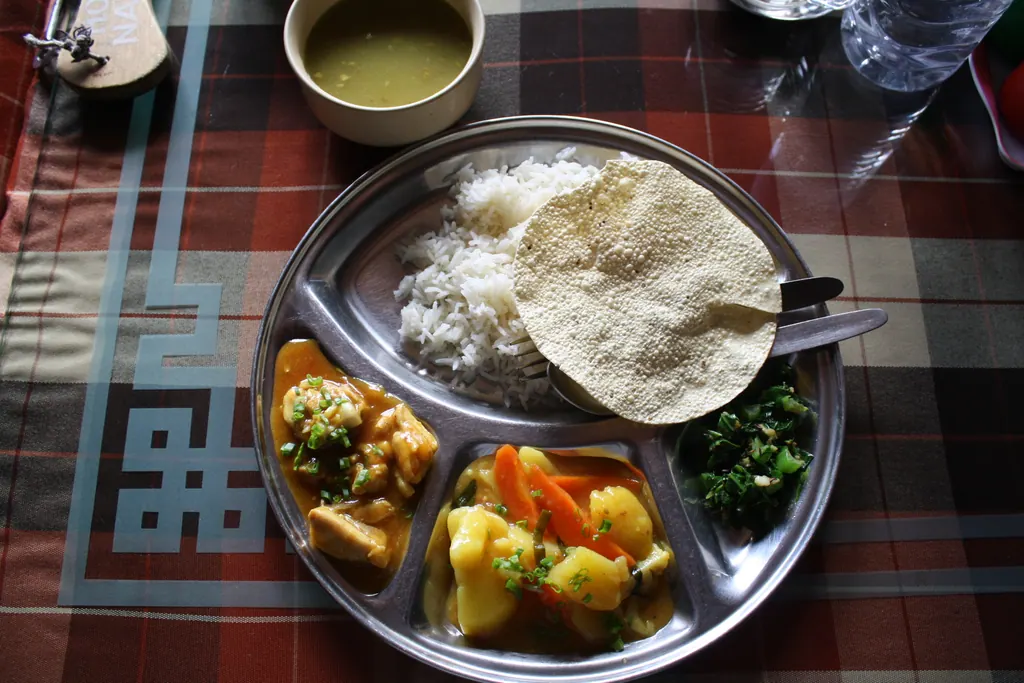
Teahouses are family-run lodges with simple twin rooms, thin walls and a warm dining room built around a stove. Rooms are cheap, often a few hundred to around 1,000 rupees (about $4-7) a night in the main seasons, and some owners expect you to eat where you sleep. Food is where the money goes. Dal bhat, the national dish of rice, lentil soup and vegetable curry, comes with free refills and is the best value on the menu. Prices rise with every day's walk from the road, because everything above Lukla travels on a porter's back or a yak, so a plate that costs a few hundred rupees in Kathmandu can cost 1,000 rupees or more near base camp.
Hot showers, charging and Wi-Fi are often charged separately higher up, and many trekkers carry a water filter instead of buying bottles. For budgeting, it is common to plan on roughly $30-50 a day per person for room, food and small extras on the Everest trail without a guide, less in the Annapurnas, plus permits, guide, porter and transport. Bring cash in rupees, as ATMs are scarce or unreliable above the first villages.
Is the Lukla flight as bad as people say?
Tenzing-Hillary Airport in Lukla sits at about 2,845 meters, and its short sloping runway leaves no room for errors, so flights only go in visual conditions. Delays and cancellations because of cloud are common, sometimes for several days. Build in at least one or two buffer days before your international flight home.
In the busy seasons, many Lukla flights now leave from Manthali Airport in Ramechhap, roughly four to five hours by road from Kathmandu, to ease congestion at Kathmandu's airport. Check with your airline or agency where your flight departs, because it often means a very early start. The alternative is to walk in from Phaplu or Jiri, adding several days but also quiet trails and gentler acclimatization.
What if you only have a few days?
Around Pokhara, short hikes to Australian Camp and Dhampus or up to the World Peace Pagoda above Phewa Lake give big views in a day or two, and the Poon Hill loop fits in a long weekend.
From Kathmandu, Nagarkot, a ridge village at about 2,175 meters around 30 kilometers east of the city, is known for sunrise over the Himalayas on clear mornings, from the Langtang range eastward. A popular walk runs from Nagarkot down to Changu Narayan, one of the temples in the Kathmandu Valley UNESCO World Heritage Site. Autumn and winter give the best odds of clear views.
Should you add Chitwan?
Chitwan National Park, in the lowland Terai south of the hills, is the classic counterweight to a trek. It was Nepal's first national park and has been a UNESCO World Heritage Site since 1984. The 2021 national count found 694 greater one-horned rhinos in Chitwan, the bulk of Nepal's 752, and the park also has Bengal tigers, sloth bears, gharial crocodiles and hundreds of bird species. Most visitors stay in Sauraha for jeep safaris, canoe trips on the Rapti River and guided jungle walks.
Entry was about 2,000 rupees (about $14) per day for foreigners in 2025, paid at the gate. Chitwan is roughly five to six hours by road from either Kathmandu or Pokhara, or a short flight to Bharatpur. October to March is the most comfortable time.
How to choose your trek
If you want the mountain everyone has heard of and can give it two weeks, go for Everest Base Camp and take the acclimatization days seriously. If you want big scenery with less altitude, Annapurna Base Camp is hard to beat, and Poon Hill is the answer if your time is short. Experienced trekkers looking for fewer people should look at Langtang or, with a bigger budget, Manaslu. Upper Mustang suits those more curious about culture and desert landscapes than snow peaks, and works in summer.
Whichever you choose, book October or April early, leave buffer days for flights and weather, and confirm permits and guide rules with a registered agency. You will find more on the country on our Nepal page, more walking trips under active holidays and practical advice in our travel tips.
Frequently asked questions
Can you trek in Nepal without a guide?
Since 2023 the Nepal Tourism Board has required licensed guides for foreign trekkers in most national parks and conservation areas, though enforcement has been uneven and the Everest region's local government still admits independent trekkers. Restricted areas such as Manaslu and Upper Mustang always require a guide.
Which Nepal trek is best for beginners?
Poon Hill near Pokhara is the usual first choice: three to five days, a high point of 3,210 meters and lodges all along the way. Annapurna Base Camp is a good next step with more time.
How fit do you need to be for Everest Base Camp?
You do not need climbing skills, but you should be comfortable walking five to seven hours a day for two weeks, often uphill. Fitness does not protect against altitude sickness, so a slow ascent matters more than strength.
Is there Wi-Fi and phone signal on the treks?
Most teahouses on the Everest and Annapurna routes offer Wi-Fi for a fee, and mobile coverage reaches many villages, but it gets slower and less reliable the higher you go.
Do you need a sleeping bag in the teahouses?
Yes, a warm sleeping bag is strongly recommended. Rooms are unheated, and above about 4,000 meters nights are well below freezing in autumn and spring.
- Annapurna Conservation Area ePermit, National Trust for Nature Conservation
- Trekking permit fees, Trekking Agencies' Association of Nepal
- Entry fee to Everest region hiked by Rs 1,000, Himal Press
- NTB to stop issuing TIMS cards to FITs from April 1, Himal Press
- Chitwan National Park, official website
- High Elevation Travel and Altitude Illness, CDC Yellow Book
- Chitwan National Park, UNESCO World Heritage Centre