Nepal climbs from about 200 feet (60 m) above sea level on the Indian border to the summit of Everest, and the whole country averages only about 120 miles from south to north. That means one country holds jungle that bakes at nearly 100°F in May, a capital with mild sunny winters, and trekking villages where the water bottle by your bed freezes overnight. Ask "when should I go?" and the honest first answer is another question: where, and to do what?
Below we go through Nepal's year as it actually plays out, with official climate figures for Kathmandu, Pokhara and the Everest region, what the monsoon really does to roads, trails and mountain flights, where the jungle and the rain shadow follow their own calendar, and how the big festivals can make a trip, or quietly wreck its logistics.
What does the weather do month by month?
The table uses the 1991-2020 climate normals from Nepal's Department of Hydrology and Meteorology for Kathmandu (Tribhuvan Airport, 4,386 feet / 1,337 m) and Pokhara (2,713 feet / 827 m), plus long-term averages from the FAO for Namche Bazaar, the Sherpa town at 11,286 feet (3,440 m) that every Everest trekker passes through. Figures are average daily highs and lows, and average monthly rainfall.
| Month | Kathmandu high/low | Kathmandu rain | Pokhara high/low | Pokhara rain | Namche Bazaar high/low |
|---|---|---|---|---|---|
| Jan | 67/37°F (19/3°C) | 0.6 in (15 mm) | 68/45°F (20/7°C) | 0.9 in (22 mm) | 44/17°F (7/-8°C) |
| Feb | 72/42°F (22/5°C) | 0.9 in (24 mm) | 73/49°F (23/10°C) | 1.4 in (35 mm) | 44/20°F (6/-6°C) |
| Mar | 79/48°F (26/9°C) | 1.5 in (38 mm) | 81/56°F (27/13°C) | 2.5 in (64 mm) | 49/27°F (10/-3°C) |
| Apr | 83/54°F (29/12°C) | 2.5 in (63 mm) | 86/61°F (30/16°C) | 5.6 in (142 mm) | 55/33°F (13/1°C) |
| May | 85/61°F (29/16°C) | 5.1 in (129 mm) | 87/66°F (30/19°C) | 14.0 in (355 mm) | 58/39°F (14/4°C) |
| Jun | 85/67°F (30/19°C) | 9.5 in (241 mm) | 87/70°F (31/21°C) | 25.5 in (648 mm) | 60/43°F (16/6°C) |
| Jul | 84/69°F (29/20°C) | 15.1 in (384 mm) | 87/72°F (30/22°C) | 37.0 in (941 mm) | 60/46°F (16/8°C) |
| Aug | 84/68°F (29/20°C) | 13.5 in (343 mm) | 87/72°F (30/22°C) | 33.0 in (839 mm) | 61/46°F (16/8°C) |
| Sep | 83/66°F (29/19°C) | 8.2 in (208 mm) | 86/70°F (30/21°C) | 25.0 in (635 mm) | 58/43°F (15/6°C) |
| Oct | 81/57°F (27/14°C) | 1.7 in (43 mm) | 82/63°F (28/17°C) | 6.3 in (159 mm) | 54/34°F (12/1°C) |
| Nov | 74/47°F (24/8°C) | 0.3 in (6 mm) | 76/54°F (24/12°C) | 0.7 in (17 mm) | 48/25°F (9/-4°C) |
| Dec | 68/40°F (20/4°C) | 0.3 in (8 mm) | 70/47°F (21/8°C) | 0.5 in (12 mm) | 46/19°F (8/-7°C) |
Two things jump out. June to September brings close to 80 percent of the year's rain in both cities, and Pokhara, right under the Annapurna range, gets well over twice as much as Kathmandu: around 152 inches (3,868 mm) a year. The other is how fast it cools with height. A common rule of thumb is about 3.5°F per 1,000 feet (6.5°C per 1,000 m), so Everest Base Camp at 17,598 feet (5,364 m) runs roughly 20°F colder than Namche, and October nights there sit well below freezing.
Why are October and November the classic months?
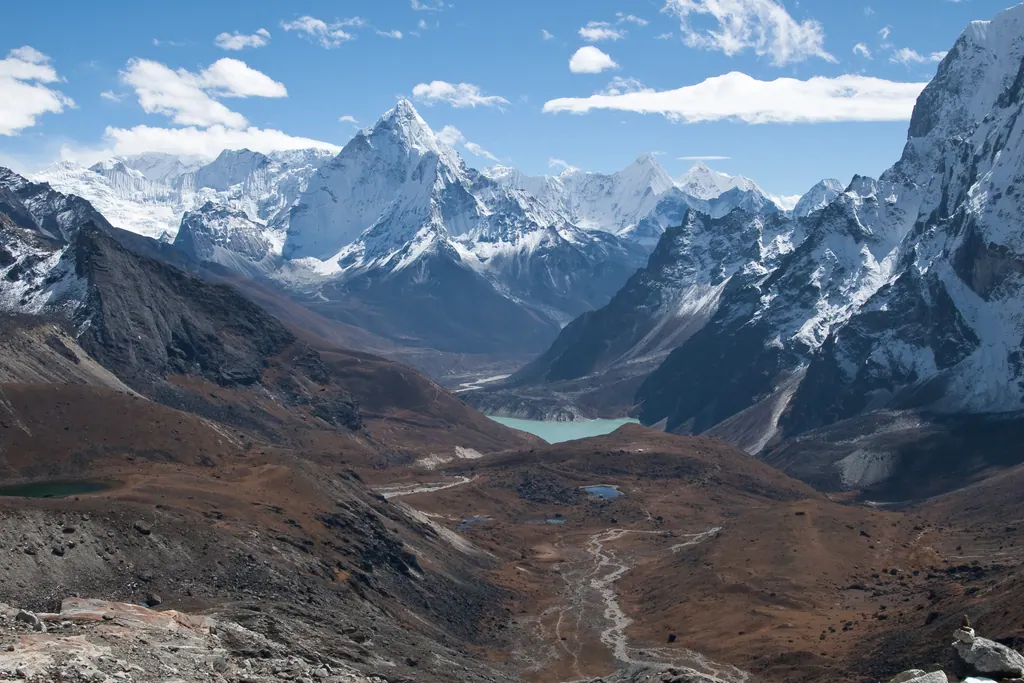
The monsoon usually withdraws from Nepal in late September or early October, and it leaves the air washed clean. Kathmandu gets just 0.3 inches of rain in November on average, with less than one rainy day. The mountains stand out sharp from early morning, the terraces are golden with ripening rice, and daytime trekking temperatures are pleasant. For the Everest, Annapurna and Langtang regions, and for the high passes like Thorong La on the Annapurna Circuit, this is the most dependable window of the year.
The price is company. Teahouses on the Everest Base Camp route and around Annapurna fill up, Lukla flights are booked solid, and popular lodges can be full by mid-afternoon. In recent peak seasons, most flights to Lukla have left from Manthali Airport in Ramechhap, around four hours' drive from Kathmandu, rather than from the capital itself, because of congestion at Tribhuvan. Check where your flight actually departs before you book a hotel.
"Dependable" is not "guaranteed". In mid-October 2014, the remains of Cyclone Hudhud dumped heavy snow on the Annapurna Circuit and killed at least 43 people, many near Thorong La. Early October can still carry the tail of the monsoon. Watch the forecast, and do not cross a high pass in fresh snow.
Is spring better than autumn?
March to May is Nepal's second trekking season, and for some routes it is the better one. Rhododendron, Nepal's national flower, turns whole hillsides red and pink in the middle hills from March into April, which makes the Ghorepani and Poon Hill area west of Pokhara especially beautiful. Days are longer and warmer at altitude than in November, and Everest Base Camp has extra life in April and May, when expedition teams set up for their summit attempts.
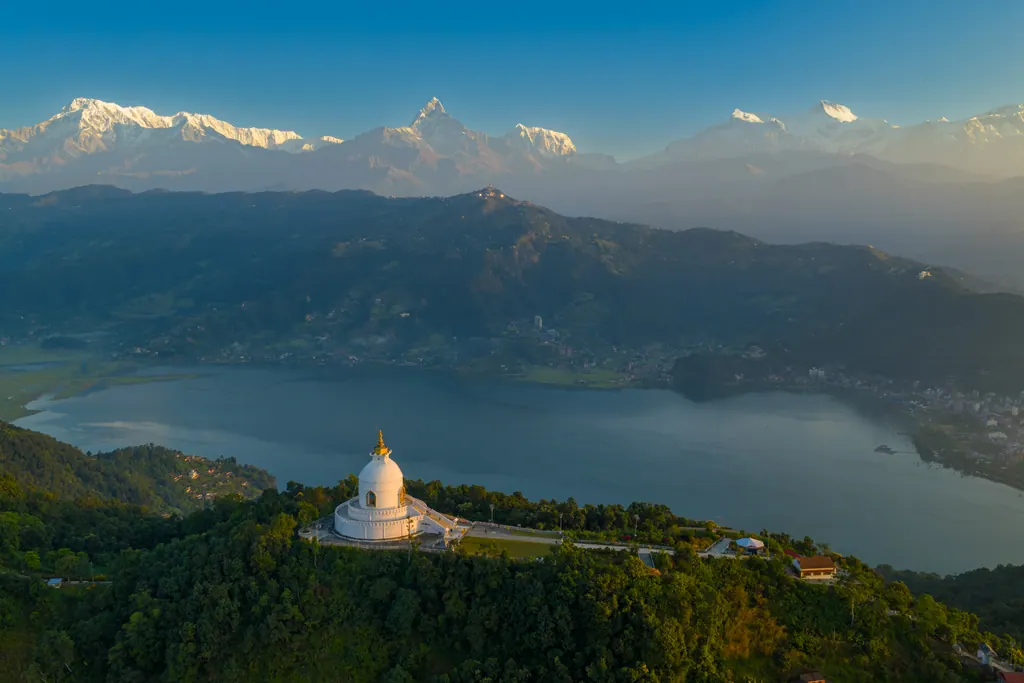
The trade-off is visibility. Spring is the season of haze: dust, smoke from forest fires and farm burning, and building heat bring a milky sky, especially from April. Mornings often start clear, then clouds and haze swallow the peaks by late morning. Kathmandu's air quality is often at its worst in these months. Pokhara's famous reflection of Machhapuchhre in Phewa Lake is far more reliable in November than in May, and May also brings the first pre-monsoon storms; Pokhara averages 14 inches of rain that month.
What is Nepal like in the monsoon?
From June to September, the southwest monsoon brings most of Nepal's rain, and the UK Foreign Office warns that travel in the monsoon "can be hazardous", with flooding and landslides making roads impassable and delaying journeys. Highways such as the road between Kathmandu and Pokhara can be cut for hours or days, and mountain flights are delayed or canceled when cloud closes in. At Lukla, average rainfall jumps from under an inch in December to around 25 inches (642 mm) in August according to the Department of Hydrology and Meteorology, and the airstrip relies on visual flying, so trekkers routinely lose days waiting. Lower trails turn muddy, and leeches come out in force in the forests of the middle hills.
It is not all bad. Rain often falls in the afternoon and at night rather than all day, the countryside is intensely green, the rice planting season fills the valleys with activity, and trails and lodges are quiet. Kathmandu and Pokhara are both perfectly workable for sightseeing if you carry an umbrella and keep your plans flexible.
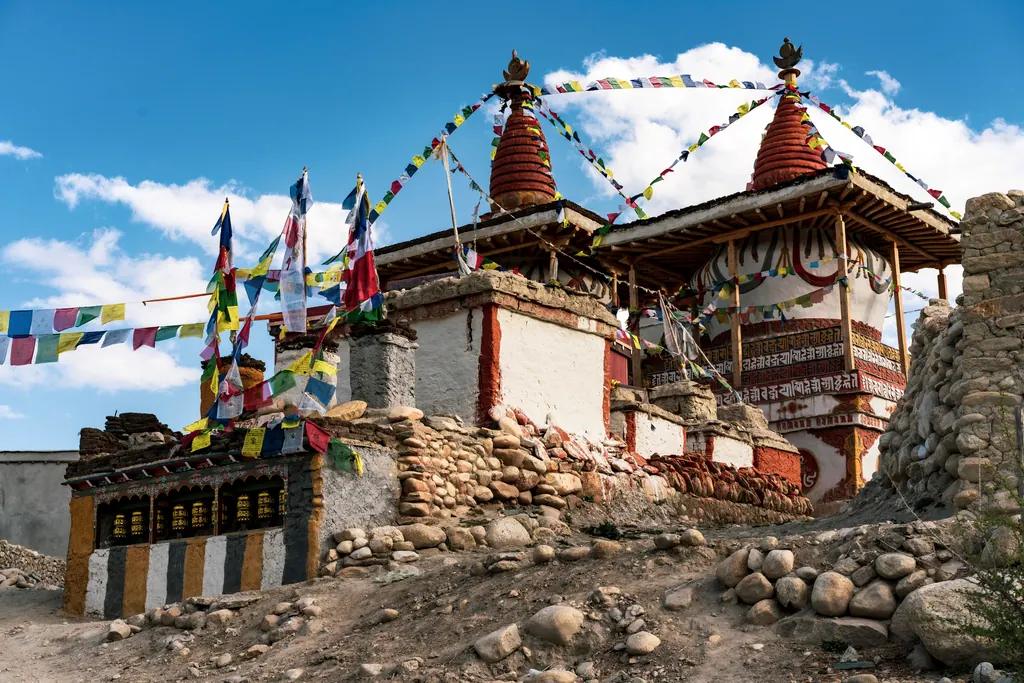
The real monsoon secret is the rain shadow north of the main Himalaya. Jomsom, in the Kali Gandaki valley behind Annapurna, gets about 11.5 inches (292 mm) of rain in a whole year, less than Pokhara averages in ten days of July. Upper Mustang, the old kingdom of Lo beyond Jomsom, is at its best in summer, as are Nar Phu and the Dolpo region. Upper Mustang requires a restricted area permit and a licensed guide, and the gateway journey through Pokhara and Jomsom can still be disrupted by weather lower down. Lo Manthang's masked Tiji festival is usually held in May.
Can you visit Nepal in winter?
December to February is cold at altitude but often beautifully clear. Kathmandu sees almost no rain, sunny afternoons around 68°F and nights near freezing, and many budget hotels have no central heating, so pack layers. It is a good time for the valley's sights, including Bhaktapur's squares and the sunrise view from Nagarkot, which sits at about 7,200 feet (2,195 m) on the valley rim and can be frosty before dawn.
Higher up, Namche averages lows around 17°F in January, and many lodges above it close for part of the season. High passes such as Thorong La may be snowbound. Lower treks, including Poon Hill and the Ghorepani loop, work well and are quiet. Down in the Terai, around Lumbini and Chitwan, dense morning fog in December and January can delay flights and make early starts gray and damp.
When should you go to Chitwan and Lumbini?
The lowlands work on a different calendar. Bharatpur, the town next to Chitwan National Park, averages highs of about 97°F (36°C) in May and over 22 inches (573 mm) of rain in July. The best balance is October to March, when days are warm and dry. After the annual cutting of the park's tall grass in winter, views open up and it gets easier to spot one-horned rhinoceros, and wildlife gathers at waterholes as the heat builds in April and May. In the monsoon, many safari activities are scaled back and some lodges close.
Lumbini, the birthplace of the Buddha, sits on the same hot plain. Winter is pleasant once the morning fog lifts. Buddha Jayanti, on the full moon in late April or May, draws pilgrims from across Asia, but expect real heat.
How do festivals affect a trip?
Nepal's festivals follow the lunar calendar, so dates move each year. Some are a highlight in themselves; others mainly affect transport and opening hours.
- Dashain (late September or October) is the biggest festival of the year. It usually falls in late September or October, and the dates move with the lunar calendar each year. Millions travel home to their villages, buses and domestic flights sell out in the days before, and many offices and shops close for several days. Book transport early, and expect a quieter Kathmandu at the peak.
- Tihar follows two to three weeks later. It usually follows two to three weeks after Dashain, in October or November. Houses are lit with oil lamps and strings of lights, crows, dogs and cows are honored on their own days, and Newar families in the Kathmandu Valley celebrate their New Year. It is a lovely time to be in Bhaktapur or Patan.
- Indra Jatra brings masked dances and the chariot procession of the Kumari, the living goddess, through Kathmandu Durbar Square, usually in September.
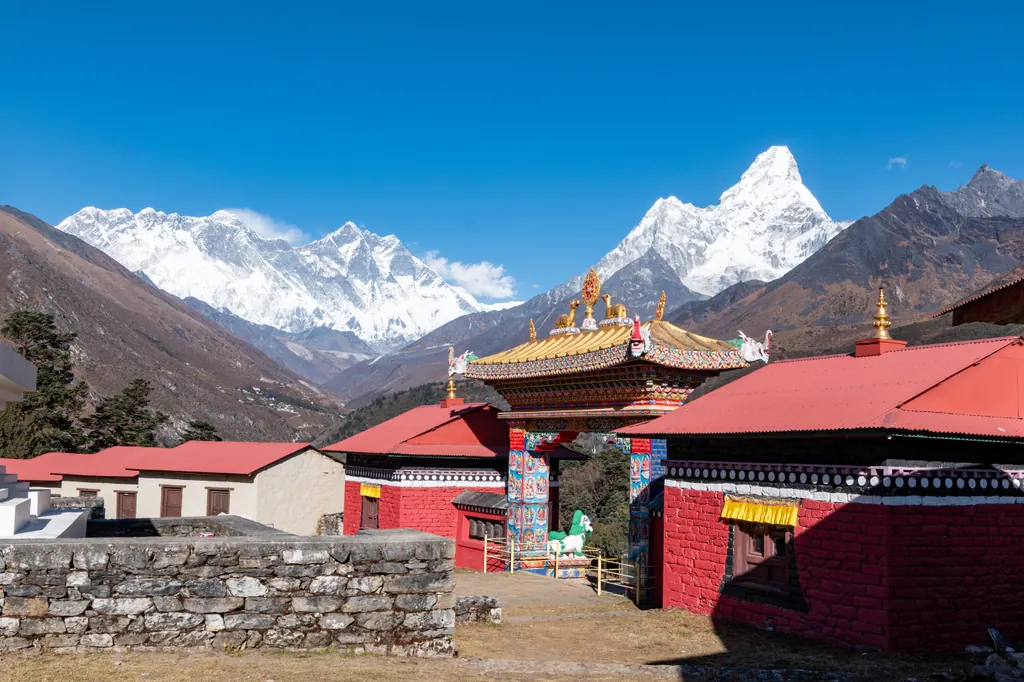
- Mani Rimdu is held at Tengboche Monastery in the Everest region around the October or November full moon, with masked dances in the monastery courtyard. Other Sherpa monasteries hold their own versions at different times.
- Holi, the festival of colors, falls in February or March. In the hills, including Kathmandu, it is celebrated a day before the Terai. Expect to get soaked and painted if you go out.
- Lhosar, the New Year, is celebrated three times by different communities: Tamu Lhosar by the Gurung around December 30, Sonam Lhosar by the Tamang in January or February, and Gyalpo Lhosar by Sherpa and Tibetan communities in February or March. Boudhanath stupa in Kathmandu is the place to see Gyalpo Lhosar.
Check the exact dates for the year you travel; the government's public holiday list is published each year.
Which month should you choose?
For a first trek to Everest Base Camp or the Annapurna Circuit, aim for mid-October to mid-November and book flights and lodges early. If you want rhododendrons, longer days and a livelier base camp, choose late March to April and accept some haze. Combine Kathmandu, Chitwan and Lumbini from November to February, when the lowlands are comfortable. And if you can only travel in summer, do not write Nepal off: point yourself at Upper Mustang, budget extra days for weather, and enjoy the quiet.
Our guide to trekking in Nepal covers routes, permits and teahouses in more detail, and you can find more on the country on our Nepal destination page or browse ideas for active holidays.
Frequently asked questions
Can you trek to Everest Base Camp in December?
Yes. December is usually dry and clear, but nights near Base Camp are far below freezing and some higher lodges close. Bring a warm sleeping bag and expect far fewer trekkers than in October and November.
What is the cheapest time to visit Nepal?
The monsoon months from June to August and the coldest weeks of January usually bring the lowest hotel prices and the fewest crowds. Avoid the days just before Dashain, when domestic transport is busy and fares rise.
Is March too early for trekking in Nepal?
Not on most routes. March is good for lower and mid-altitude treks, with rhododendrons starting to bloom, but high passes such as Thorong La can still hold snow early in the month.
How many days should you allow for Lukla flight delays?
Many trekkers build in at least one or two spare days at the end of an Everest trek. Cloud can ground flights for several days in a row, especially at the edges of the seasons and in the monsoon.