Most first trips to Thailand follow the same line on the map: Bangkok, then south to the islands. Fly an hour north instead and the country changes. The air is cooler, the hills are covered in forest and tea, the temples are older and more Lanna than Siamese, and the evenings call for a sweater.
Northern Thailand is where the country's mountains begin, rising toward the borders with Myanmar and Laos. It is also at its best right now, in the cool, dry months from November to February. Here are seven places that show why so many travelers who planned a few days in Chiang Mai end up staying for two weeks.
1. Chiang Mai's Old City
Chiang Mai was founded in 1296 by King Mangrai as the capital of the Lanna kingdom, and its old heart is still a near-perfect square surrounded by a moat and fragments of brick wall. Inside are more than 30 temples within walking distance of each other.
Start at Wat Chedi Luang, where the ruined brick stupa was partly toppled by an earthquake centuries ago and is still enormous. Wat Phra Singh, with its elegant Lanna-style chapel, is one of the most revered temples in the north. On Sunday evenings, Ratchadamnoen Road turns into the Sunday Walking Street, a long market of crafts, street food and music that runs right through the Old City.
Chiang Mai is the natural base for the north. It has an international airport with flights of about an hour from Bangkok, and many hotels, cooking schools and tour operators.
2. Doi Suthep
The temple that watches over Chiang Mai sits on a forested mountain just west of the city. Wat Phra That Doi Suthep dates to the 14th century, and according to legend its site was chosen by a white elephant carrying a relic of the Buddha. You reach it by a staircase of more than 300 steps, flanked by serpent-shaped naga balustrades, or by a small funicular.
At the top, a golden chedi glows in the sun, and on clear days the terrace looks out over the whole city. The mountain is part of Doi Suthep-Pui National Park, and the drive up takes around 30 minutes.
3. Doi Inthanon, the Roof of Thailand
At 8,415 feet (2,565 meters), Doi Inthanon is the highest mountain in Thailand, and a day trip there is the easiest way to see how different the north can feel. A road climbs all the way to the summit, about two hours from Chiang Mai, passing waterfalls, rice terraces and villages of the Hmong and Karen peoples.
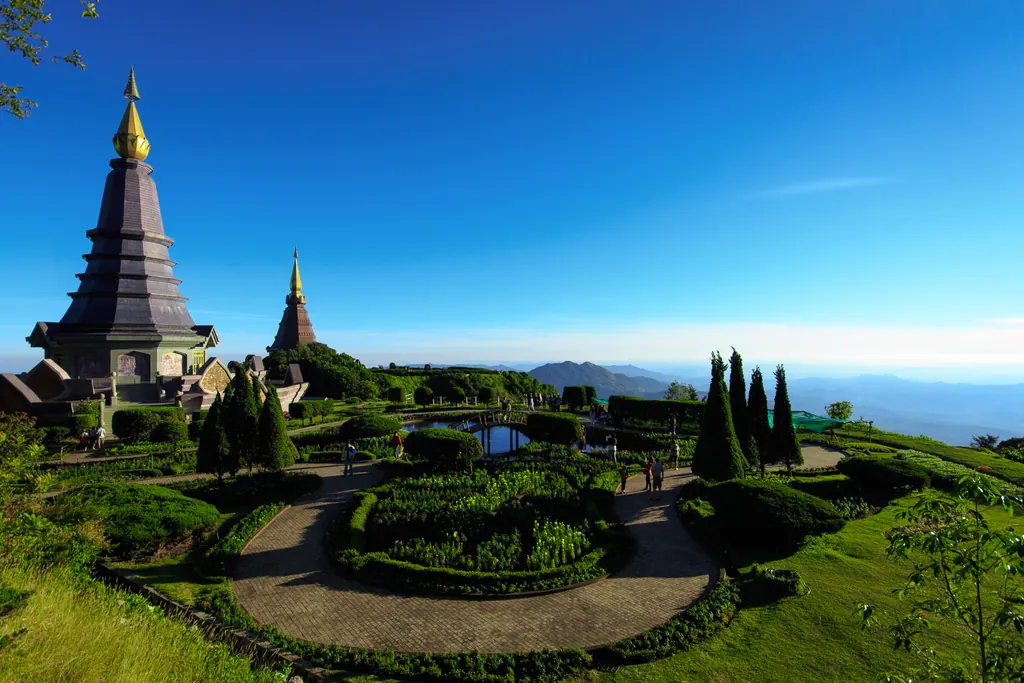
Near the top stand two royal chedis built to honor King Bhumibol and Queen Sirikit on their 60th birthdays, surrounded by flower gardens. The short Kew Mae Pan nature trail runs along a ridge with wide views over the mountains; it is usually open only in the dry season, roughly November to May. Mornings at the summit can be close to freezing in December and January, so bring a jacket. The park fee for foreign adults is 300 baht (about $9 in 2026).
4. Chiang Rai and the White Temple
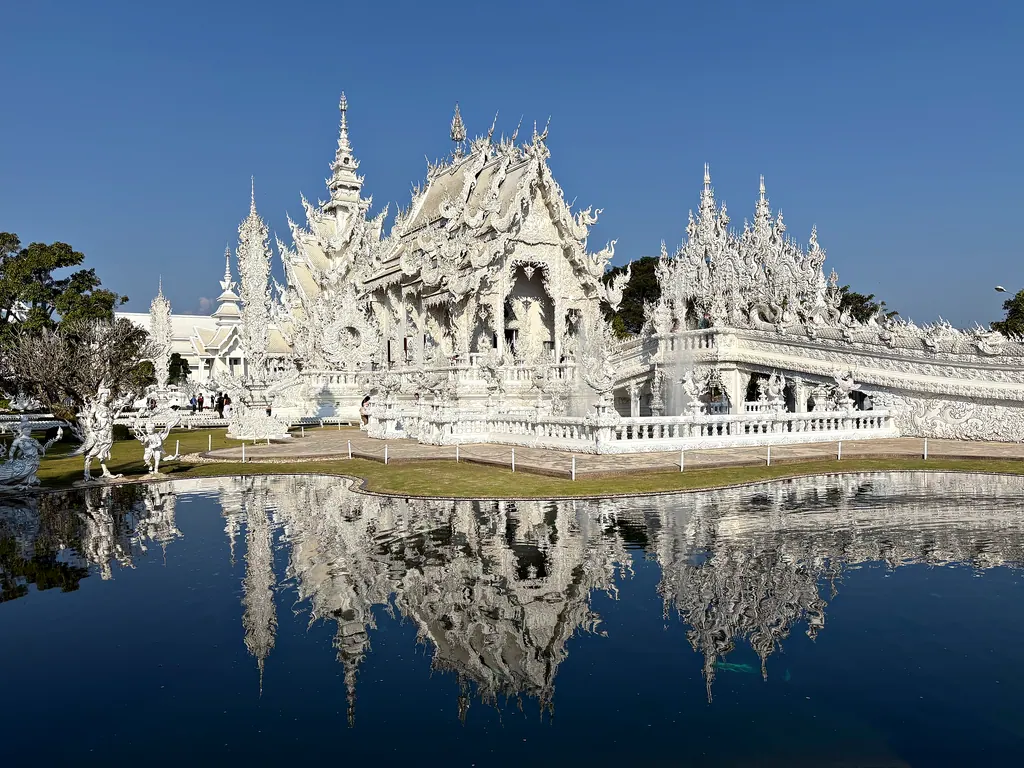
Chiang Rai is about three hours' drive northeast of Chiang Mai, and most people come for one building. Wat Rong Khun, better known as the White Temple, is the life's work of the Thai artist Chalermchai Kositpipat, who began rebuilding it in 1997. It is gleaming white, covered in mirrored glass, and full of strange details: a bridge over a pit of reaching hands, and murals inside that mix Buddhist imagery with modern pop culture.
Admission for foreign visitors was raised to 200 baht (about $6 in 2026). Arrive at opening time to see it before the tour buses. Chiang Rai has two more works worth seeing: the deep blue Wat Rong Suea Ten, and Baan Dam, the "Black House" museum of the artist Thawan Duchanee, a dark, eccentric counterpoint to the White Temple.
5. The Golden Triangle
An hour north of Chiang Rai, at Sop Ruak, the Ruak River meets the Mekong, and Thailand, Laos and Myanmar meet with them. This was the heart of the "Golden Triangle," once one of the world's main opium-producing regions. Today the viewpoints are touristy, but the setting is impressive, and the Hall of Opium museum tells the region's history well.
A boat ride on the Mekong gives you a view of all three countries in under an hour. Nearby, the old town of Chiang Saen has quiet temple ruins far older than most of what you will see in Chiang Rai.
6. Pai and the Mae Hong Son Loop
Pai is a small town in a wide valley about three hours northwest of Chiang Mai, reached by a road famous for its hundreds of hairpin curves. Once a backpacker secret, it is now firmly on the map, but it still has a slow pace, hot springs, waterfalls and Pai Canyon, a maze of narrow sandstone ridges that is best at sunset.
Pai is also a stop on the Mae Hong Son Loop, a mountain circuit of roughly 370 miles (600 km) that continues to the town of Mae Hong Son, near the Myanmar border, and back through Mae Sariang. Most travelers spend five to seven days on it, by rented car or, for experienced riders only, motorbike.
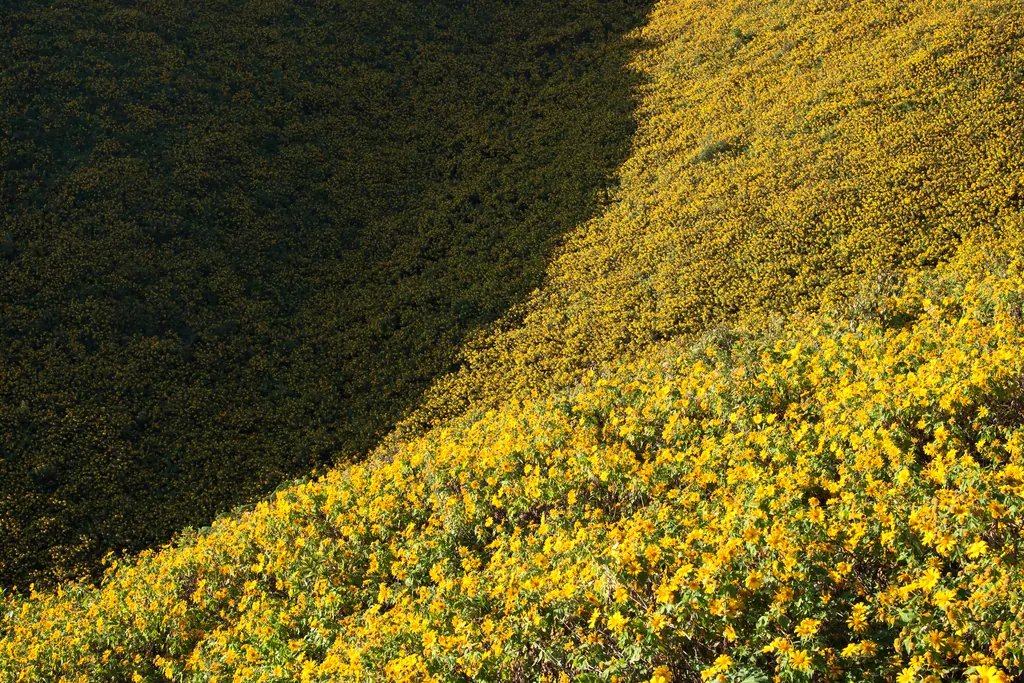
In November and early December, the hills near Khun Yuam on the loop turn bright yellow when the wild Mexican sunflowers known locally as bua tong come into bloom.
7. Sukhothai
Sukhothai lies farther south, between Chiang Mai and Bangkok, and fits well on the way back down. It was the capital of the first Thai kingdom in the 13th century, and its ruins are now a UNESCO World Heritage Site, together with nearby Si Satchanalai and Kamphaeng Phet. Lotus ponds, seated Buddha statues and temple columns spread across a large park that is easiest to explore by rented bicycle.
Sukhothai is also known as one of the places where the Loy Krathong festival is said to have begun, and the historical park holds one of the country's best-known celebrations each November.
Planning Your Trip
When to go. The cool season from November to February brings dry weather and pleasant days; in December, Chiang Mai typically sees highs in the mid 80s °F (around 29°C) and nights around 60°F (about 15°C). Avoid February to April if you can, when agricultural burning often causes heavy smoke and poor air quality across the north. The rainy season from roughly June to October is green and quiet, but some trails and roads are harder going.
Getting there. There are no nonstop flights from the U.S. to northern Thailand. Most travelers connect through Bangkok, and some Asian hubs also have direct flights to Chiang Mai.
Entry rules. Since September 15, 2026, U.S. citizens can enter Thailand visa-free for tourism for up to 30 days (the earlier 60-day rule was revoked). You must also complete the Thailand Digital Arrival Card online within three days before arrival. Check the Royal Thai Embassy's site before you go.
Safety. As of November 28, 2026, the State Department rates Thailand at Level 1, "Exercise Normal Precautions," with increased caution only near the Cambodian border and in the far southern provinces, far from the north. See our guide to travel advisory levels for what that means.
Money. The currency is the Thai baht, at around 34 baht to the dollar in late 2026. Cards work in hotels and malls, but markets, small restaurants and songthaews (shared pickup taxis) are cash only. Read our tips on foreign transaction fees before you go.
Elephants. Many camps around Chiang Mai offer elephant encounters. Choose a sanctuary that does not offer rides or shows, and read reviews carefully.
For more ideas in the region, browse our destination guides for Asia, or compare the north with the coast in our guide to beaches and nature in Vietnam.
Frequently asked questions
What is the best time to visit northern Thailand?
The cool, dry season from November to February is the most pleasant. February to April often brings heavy smoke from agricultural burning.
Do Americans need a visa for Thailand?
Since September 15, 2026, U.S. citizens can enter visa-free for tourism for up to 30 days, and must complete the Thailand Digital Arrival Card online within three days before arrival.
How many days do you need in northern Thailand?
A week covers Chiang Mai, Doi Inthanon and Chiang Rai. Add five to seven days for the Mae Hong Son Loop via Pai.
Is northern Thailand safe?
As of November 28, 2026, the State Department rates Thailand at Level 1, with increased caution only near the Cambodian border and in the far south.
- U.S. Department of State: Thailand Travel Advisory
- Royal Thai Embassy, Washington, D.C.: Visa Information
- Thailand Government Public Relations Department: Revision of Visa Exemption Schemes
- UNESCO: Historic Town of Sukhothai and Associated Historic Towns
- Khaosod English: White Temple Raises Admission Fee for Foreign Tourists