Sri Lanka is about the size of West Virginia, yet it holds eight UNESCO World Heritage Sites, wild leopards and elephants, blue whales offshore, tea estates in the clouds and a colonial fort town on the Indian Ocean. Distances are short on a map, though roads are slow, and that combination is exactly what makes the island so rewarding: a different landscape every two or three hours.
Getting there from the United States is the hard part. There are no nonstop flights, and most trips connect through the Middle East or Asia, so the journey typically takes the better part of a day. We picked seven places that justify the long trip, in an order that works as a route, from the ancient cities in the north to the beaches in the south.
Sigiriya: The Fortress on the Rock
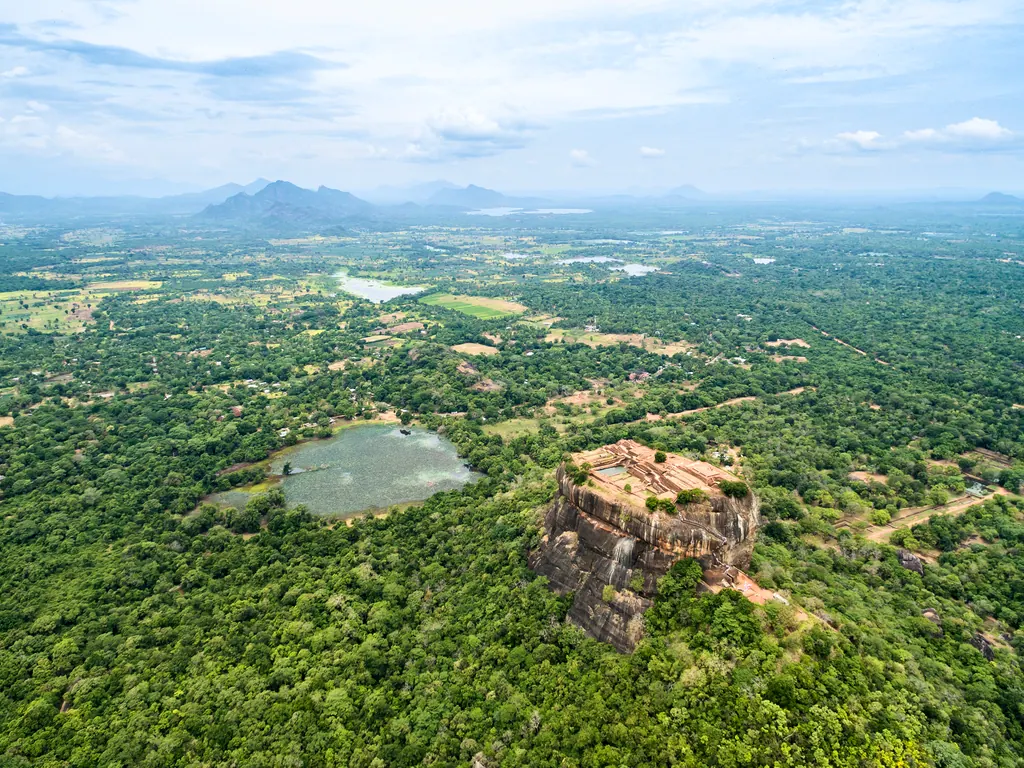
Rising about 590 feet (180 meters) out of the forest in the center of the island, Sigiriya is the image most people have of Sri Lanka. In the 5th century, King Kashyapa built a palace on its flat summit, with gardens, pools and a gateway shaped like a giant lion, of which only the huge stone paws remain. Halfway up, sheltered in the rock face, are frescoes of women that have survived for around 1,500 years.
The climb is about 1,200 steps, some of them on metal stairways bolted to the rock. Go when the gates open in the morning to avoid the heat and the crowds. Entry for foreign adults was $35 in 2026, paid in rupees. For the classic view of Sigiriya itself, climb neighboring Pidurangala Rock at sunrise.
Dambulla: Five Caves Full of Buddhas
A half-hour drive from Sigiriya, the Dambulla cave temple has been a place of pilgrimage for more than 2,000 years. Inside five caves under an overhanging rock are more than 150 Buddha statues and painted ceilings that cover about 22,000 square feet (2,100 square meters). It is a working temple, so cover shoulders and knees, take off your shoes and hat at the entrance, and never pose with your back to a Buddha statue for a photo.
Kandy: The Temple of the Tooth
Kandy, the last capital of Sri Lanka's kings, sits around a lake in the hills. Its heart is the Temple of the Sacred Tooth Relic, which houses what Buddhists revere as a tooth of the Buddha, and it is the most important shrine in the country. Visit during one of the daily ceremonies, when drums sound and the doors to the relic chamber are opened. Each summer, usually in July or August, the Esala Perahera brings nights of processions with dancers, drummers and decorated elephants through the streets.
Ella and the Hill Country
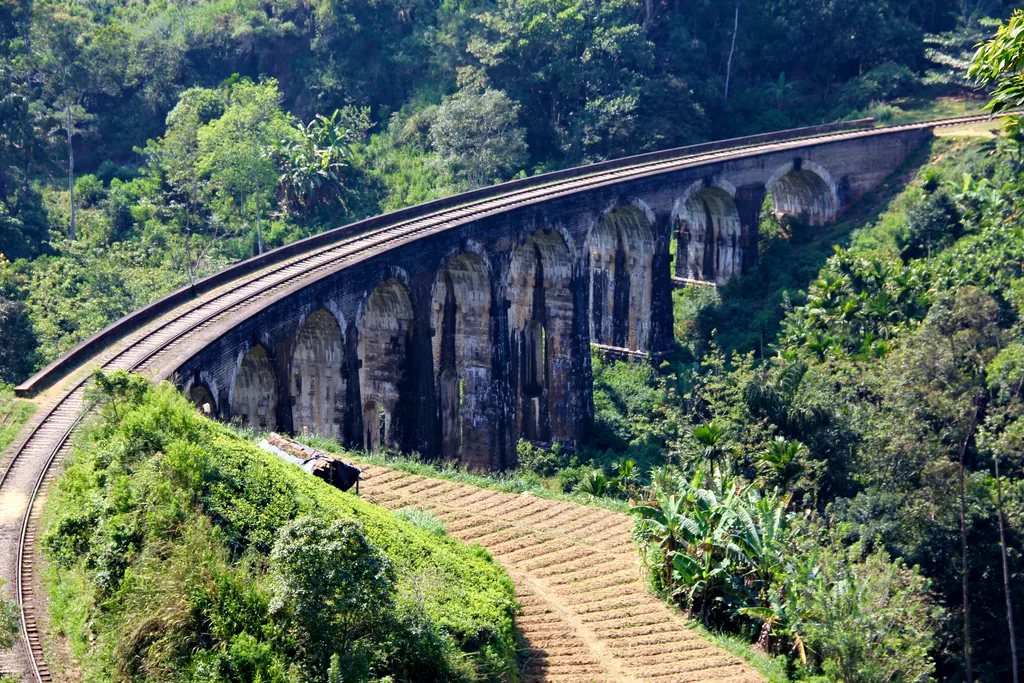
Above Kandy the land climbs into tea country, with plantations covering the hills around Nuwara Eliya and Ella. Ella is the backpacker favorite, a small town with easy hikes to Little Adam's Peak and Ella Rock and the Nine Arch Bridge, a stone railway viaduct about 300 feet (91 meters) long, set in the jungle just outside town.
The train ride through the hill country is one of the most famous in Asia, but check the status before you go. Cyclone Ditwah damaged the railway in late 2025. The section from Nanu Oya through Ella to Badulla, including the Nine Arch Bridge, reopened in June 2026, while the line between Kandy and Nanu Oya was still closed in November 2026, with the government aiming to reopen it in early 2027. Until then, travelers drive or take a bus from Kandy to Nanu Oya and board the train there. If you love scenic rail journeys, browse more ideas under train travel.
Yala National Park: Leopard Country
Yala, in the dry southeast, has one of the highest densities of leopards in the world, and on a morning jeep safari you have a real chance of seeing one. Elephants, sloth bears, crocodiles and water buffalo are also common, along with hundreds of bird species. Book an early departure, since animals are most active at dawn, and expect plenty of other jeeps around a leopard sighting. Parts of the park usually close for a few weeks around September and October. In 2026, the main blocks were closed from September 14 to October 15 because of drought.
Galle: A Fort Town on the Ocean
Galle Fort, on the southwest coast, was built by the Portuguese in the 16th century and expanded by the Dutch in the 17th. Today the walled old town is a UNESCO World Heritage Site and the most atmospheric place in Sri Lanka to spend a few unhurried days. Walk the ramparts at sunset, when locals come out to play cricket and watch the ocean, and wander streets of colonial houses, churches, mosques and small museums. The white lighthouse on the southeast corner of the walls dates from 1939.
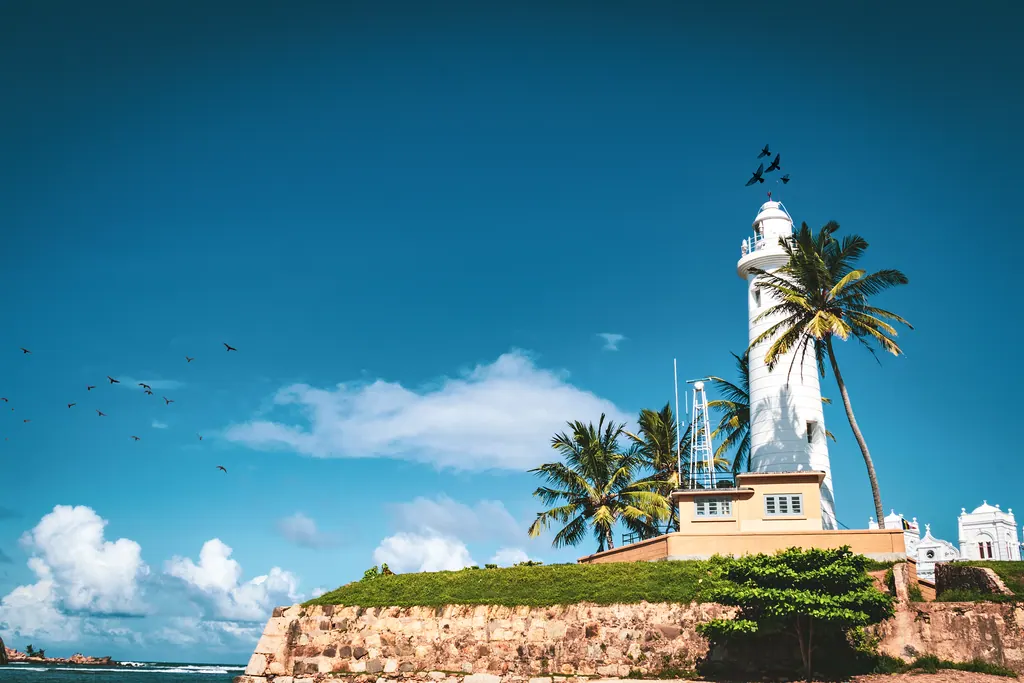
Mirissa: Blue Whales Off the South Coast
East of Galle, the beach town of Mirissa is the main base for whale watching in Sri Lanka. According to Sri Lanka Tourism, the season runs from November to April, when blue whales, the largest animals on Earth, feed in the deep water close to shore. Boats usually leave early in the morning and spend about three to four hours at sea. Choose an operator that keeps its distance from the whales, and bring motion sickness tablets, since the swell can be strong. Afterward, the beaches between Mirissa and Tangalle are the place to do nothing for a few days.
Before You Go
- Entry: U.S. citizens need an Electronic Travel Authorization (ETA) before arrival. Since May 25, 2026, the tourist ETA has been free for U.S. citizens and 39 other nationalities for stays of up to 30 days, according to Sri Lanka's Department of Immigration and Emigration. Apply only through the official site, eta.gov.lk.
- Safety: As of November 23, 2026, the U.S. State Department rates Sri Lanka Level 2, "Exercise Increased Caution", citing civil unrest, terrorism and landmines (the latter in parts of the north and east, away from the route above). Read the full advisory at travel.state.gov before booking.
- Weather: Sri Lanka has two monsoons. The southwest monsoon brings rain to the west and south coasts and the hill country from about May to September, while the northeast monsoon affects the north and east from about November to February. For the route above, December to March is the best time.
- Money: The currency is the Sri Lankan rupee. Cards are accepted at many hotels and larger restaurants, but you need cash for tuk-tuks, temples and small shops.
A Two-Week Route
With 14 days on the ground, a comfortable route starts in the north and ends on the beach: two nights near Sigiriya (with Dambulla as a half-day trip), two nights in Kandy, a drive to Nanu Oya and the train to Ella, two or three nights in Ella, a night near Yala for a dawn safari, and then the south coast, with time in Mirissa and Galle before the drive to the airport outside Colombo. Many travelers hire a car with a driver for the whole trip, which is common in Sri Lanka and often the most relaxed way to travel. It means the long flight ends with two weeks where the only thing you need to plan is the next view. More ideas for the region are collected under Asia.
Frequently asked questions
Do U.S. citizens need a visa for Sri Lanka?
You need an Electronic Travel Authorization (ETA) before you fly. Since May 25, 2026, the 30-day tourist ETA has been free for U.S. citizens.
Is Sri Lanka safe for American tourists?
As of November 23, 2026, the State Department rates Sri Lanka Level 2, Exercise Increased Caution. Most visitors travel without problems, but read the full advisory before booking.
What is the best time to visit Sri Lanka?
For the west and south coasts and the hill country, December to March is usually best. The east coast is at its best from about April to September.
Is the Kandy to Ella train running?
Only partly. The Nanu Oya to Ella and Badulla section reopened in June 2026, while Kandy to Nanu Oya was still closed in November 2026.