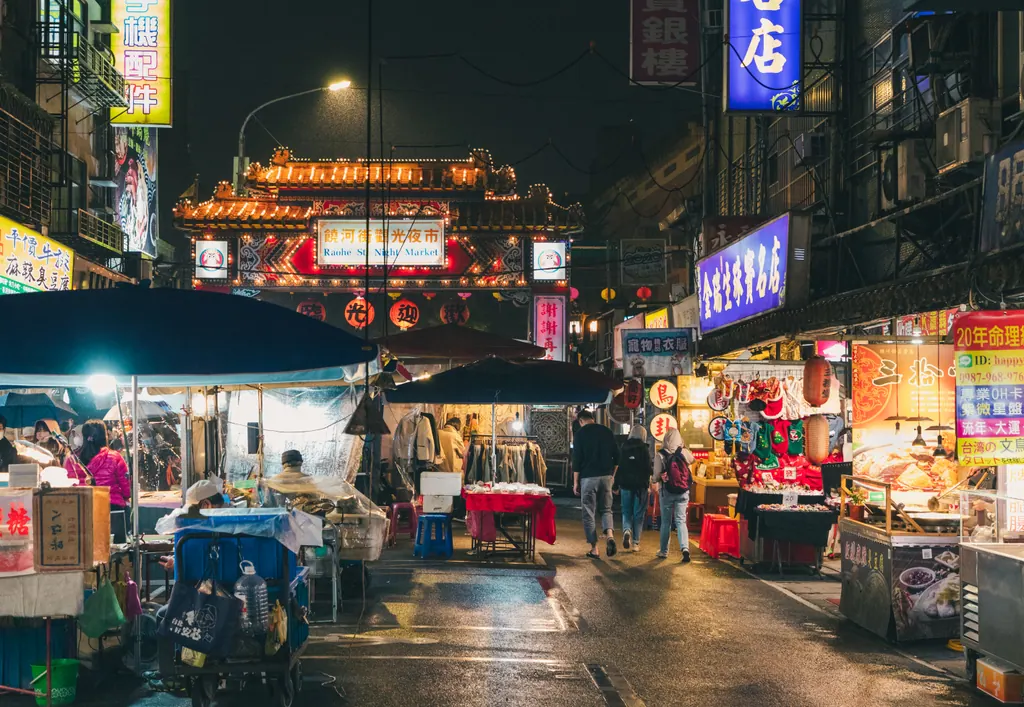
Around six in the evening, a side street in Taipei that looked like nothing at lunchtime fills with carts, gas burners and folding stools. Someone is flipping oyster omelets on a griddle the size of a table, someone else is pulling buns out of a clay oven, and the queue for a stall with no English sign is already twenty people long. That queue is usually the best restaurant review you will get in Taiwan.
Taiwan packs an unusual amount of eating into a small island. Hokkien and Hakka traditions, cooks who arrived from every corner of mainland China after 1949, fifty years of Japanese rule and Indigenous food from the mountains and the east coast all sit side by side, often on the same block. This guide covers the dishes worth planning a trip around, how night markets actually work, what each region does best and what you can expect to pay. Prices are from 2026 and rounded, at roughly 32 New Taiwan dollars to the US dollar.
Which dishes should be on your list?
You could eat for a month without repeating yourself, but a handful of dishes define Taiwanese food for most visitors.
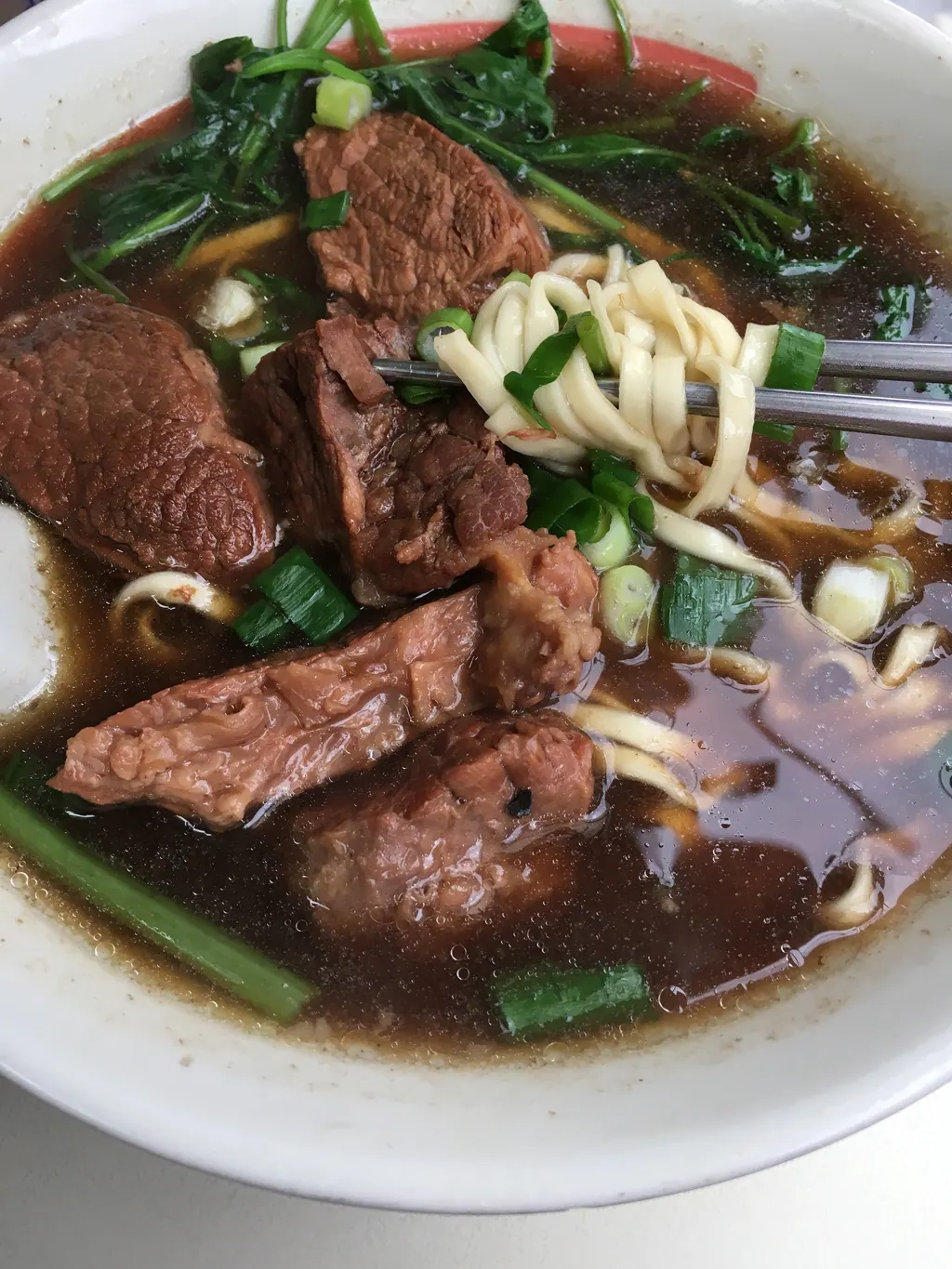
Beef noodle soup (niu rou mian). The unofficial national dish: thick wheat noodles, chunks of slow braised beef shank and a broth that is either dark and spiced with soy, star anise and chili bean paste ("red braised") or clear and light. Its modern form is often traced to cooks and veterans who came from the mainland after 1949. Taipei has the densest concentration of beef noodle shops, and a bowl at a well-known one costs around NT$180-350 (about $6-11).
Xiaolongbao. Soup dumplings with thin pleated skins that hold a mouthful of hot broth. The Din Tai Fung chain, which began in Taipei, made them famous worldwide, and a basket of ten there cost around NT$290 (about $9) after a price rise in mid 2026. Smaller dumpling shops charge less. Bite a small hole, let the soup cool for a moment, then eat the rest.
Gua bao. A folded steamed bun stuffed with braised pork belly, pickled mustard greens, crushed peanuts and cilantro. It is sometimes called the Taiwanese hamburger and usually costs NT$60-90 (about $2-3).
Oyster omelet (o-a-tsian). Small oysters, eggs and leafy greens fried in a sweet potato starch batter that turns chewy, then covered with a sweet red sauce. It is a night market fixture, typically NT$70-100 (about $2-3).
Braised pork rice (lu rou fan). Minced fatty pork simmered in soy and spices, spooned over white rice. It is the everyday comfort food of Taiwan and one of the cheapest good meals anywhere: a small bowl often costs NT$30-60 (about $1-2).
Stinky tofu. Fermented tofu that smells far stronger than it tastes. The deep fried version, served with pickled cabbage and chili, is the gentle introduction. Steamed or in a spicy broth, the flavor gets much more intense. You will smell a stall long before you see it.
Shaved ice. Taiwan takes ice seriously. Traditional bowls come piled with toppings such as red beans, taro balls and grass jelly, while the summer favorite is mango shaved ice with fresh fruit and condensed milk, best in the mango season from late spring to early fall. Expect to pay NT$150-250 (about $5-8) for a mango bowl to share.
Bubble tea. Milk tea with chewy tapioca pearls was born in Taiwan in the 1980s, and two teahouses still argue over who invented it: Chun Shui Tang in Taichung and Hanlin Tea Room in Tainan. Most cups cost NT$50-80 (about $1.50-2.50), and you choose both the sugar level and the amount of ice when you order.
How do night markets work?
Night markets are the heart of casual eating in Taiwan, and they run on a few simple rules. Most open in the late afternoon or around dusk and stay busy until midnight or later. Some are permanent and open every night; others, especially in the south, rotate and only set up on certain days of the week.
You walk, look and point. Most stalls sell one or two things, so the idea is to graze: a skewer here, a bowl of soup there, a drink to carry along. Some stalls have a few stools or a small dining area behind the cart, and you simply sit down and order. Prices for single snacks usually land between NT$40 and NT$100 (about $1.25-3), so a filling dinner of five or six bites rarely tops NT$400 (about $12).
A few markets every first time visitor hears about:
- Shilin Night Market, Taipei. The biggest and most famous in the capital, with a large food area in a basement hall and streets of stalls around it. It is also the most touristy, and weekends get very crowded.
- Raohe Street Night Market, Taipei. One long, straight lane that starts at the ornate Ciyou Temple gate. Pepper buns baked in clay ovens near the entrance draw some of the longest lines in the city.
- Ningxia Night Market, Taipei. Compact and food focused, about a ten minute walk from Taipei Main Station. Known for oyster omelets and fried taro balls with egg yolk.
- Fengjia Night Market, Taichung. Spread through the streets around Feng Chia University and one of the largest in the country, popular with students and full of new snack trends.
- Garden Night Market, Tainan. A huge open lot that only operates a few nights a week, traditionally Thursday, Saturday and Sunday.
Weekends are the busiest everywhere. If you want room to move, go on a weekday or arrive early in the evening.
What makes Tainan the food capital?
Ask people in Taiwan where to eat best and many will say Tainan. The old capital in the southwest has the island's oldest neighborhoods and a cooking style that leans a little sweeter than the north. It is a city of small, specialized shops, many run by the same family for generations, and of snacks rather than big meals.
Start with danzai noodles, small bowls of noodles in shrimp broth topped with minced pork and a single shrimp. The dish dates to 1895, when a fisherman sold noodles from baskets on a shoulder pole during the off season. Coffin bread, a thick slice of toast that is fried, hollowed out and filled with a creamy seafood or chicken stew, comes from the Kangle Market area and dates to the 1940s. Tainan is also known for milkfish, in congee or pan fried, for shrimp rolls, and for beef soup, where raw slices of local beef are cooked by pouring boiling broth over them, often eaten early in the morning.
Tainan's night markets rotate. According to the Tainan city tourism site, in 2026 the Garden Night Market opened Thursday, Saturday and Sunday, Dadong Night Market Monday, Tuesday and Friday, and Wusheng Night Market Wednesday and Saturday. Check before you go, since the schedule shifts and the open air markets close in heavy rain.
Many visitors join a walking food tour in Tainan, which helps with the many small shops that have no English menu and only open in the morning or for a few hours a day.
What do other regions do best?
Taipei is the place for variety: beef noodles, dumpling houses, the big night markets and the widest choice of international and vegetarian restaurants. A short trip to Shenkeng Old Street in New Taipei is a classic outing for stinky tofu fans.
Taichung is the home of the sun cake, a flaky pastry with a malt sugar filling that makes a popular gift, and it claims the birthplace of bubble tea. Fengjia Night Market is the main evening draw.
Kaohsiung, the big port city in the south, is built for seafood. Liuhe Night Market is the one tourists know, a straight street of grilled squid, crab and seafood congee. Ruifeng Night Market is bigger and more popular with locals, but it does not open every night. Cijin Island, a short ferry ride from the city, is known for seafood restaurants where you choose your fish from tanks and ice beds.
Hualien and Taitung on the east coast bring Indigenous flavors to the table. Dongdamen Night Market in Hualien, the largest in eastern Taiwan, has a section devoted to Indigenous dishes such as grilled wild boar sausage and millet wine. Hualien is also known for its mochi and for wontons, called bianshi locally. Farther south, Chishang in Taitung County grows some of Taiwan's most prized rice, and the Chishang rice lunch box, first sold to train passengers at Chishang Station, is still a good reason to stop.
Penghu, the island group in the Taiwan Strait, is all about the sea: squid, oysters, sea urchin and fish, best in the warm months when the islands are busiest. Look for brown sugar cake, a steamed sponge that originated here, and cactus ice, shaved ice or ice cream colored bright pink by the fruit of the cactus that grows wild on the islands.
Where does Taiwan's tea come from?
Tea is Taiwan's other great export, and two mountain areas are worth a detour if you drink it.
The slopes around Alishan produce high mountain oolong, grown at altitudes where cool, misty days slow the leaves down and give a fragrant, floral cup. Many farms along the roads up the mountain sell tea and let you taste before buying. On the way up, Fenqihu, a stop on the Alishan Forest Railway, is famous for its railway lunch boxes, a tradition from the days when trains paused there around noon.
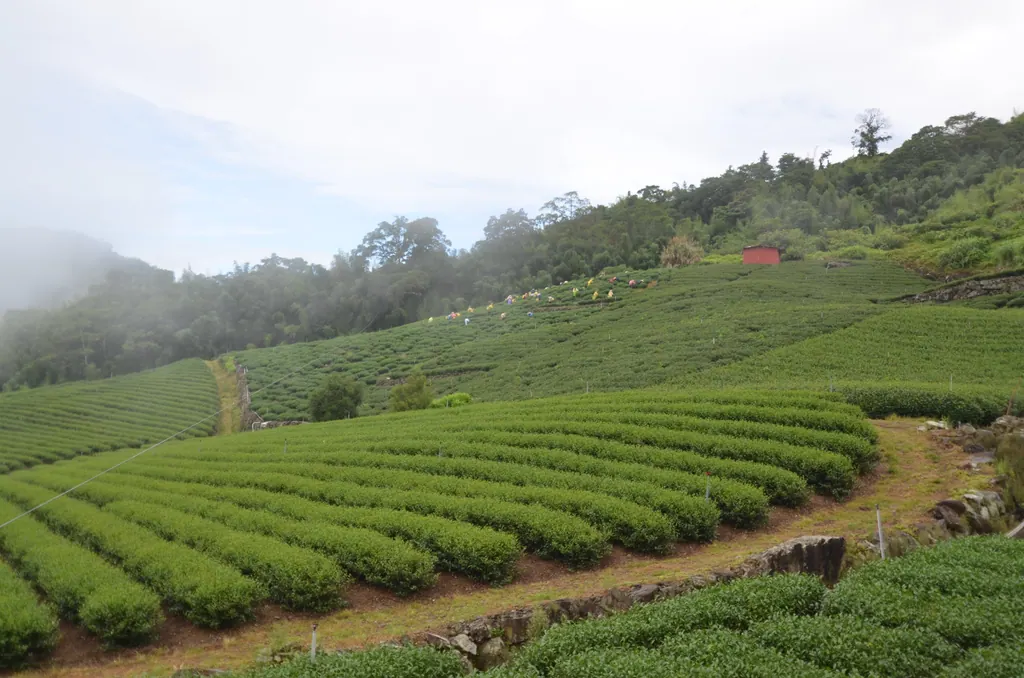
Sun Moon Lake in Nantou County is Taiwan's black tea country. The best known variety is Ruby or Red Jade (TTES No. 18), a cultivar developed in Taiwan with notes many drinkers describe as cinnamon and mint. Shops around the lake and in nearby Yuchi sell it, but quality varies a lot, so buy small amounts or taste first. The lake is also known for freshwater fish, including the so called president fish, and for food from the Thao people around Ita Thao village.
How much does eating in Taiwan cost?
Taiwan is one of the best value food destinations in Asia. These are typical 2026 prices at ordinary shops and stalls, not tourist restaurants.
| Item | Typical price |
|---|---|
| Small bowl of braised pork rice | NT$30-60 (about $1-2) |
| Night market snack | NT$40-100 (about $1.25-3) |
| Bubble tea | NT$50-80 (about $1.50-2.50) |
| Gua bao | NT$60-90 (about $2-3) |
| Bowl of beef noodle soup | NT$180-350 (about $6-11) |
| Mango shaved ice to share | NT$150-250 (about $5-8) |
| Ten xiaolongbao at Din Tai Fung | around NT$290 (about $9) |
A traveler eating mostly at night markets and small shops can eat very well for NT$600-900 (about $19-28) a day. For more ways to stretch a budget, see our budget travel section.
What should you know before you eat?
- Bring cash. Night market stalls and small noodle shops usually take cash only. Some accept the EasyCard transit card or mobile payment, but small bills and coins make life easier. Convenience store ATMs work with most foreign cards.
- No tipping. Tipping is not part of the culture. Sit down restaurants at the higher end often add a 10% service charge to the bill instead.
- Order by pointing. Many small places have a paper menu where you tick the dishes and quantities yourself, then hand it over. A photo on your phone of what you want works fine too.
- Mind the chopsticks. Do not stand them upright in a bowl of rice, which is associated with funerals. Lay them across the bowl or on the rest.
- Carry your trash. Public bins are scarce. Vendors often take back their own cups and boxes, and convenience stores have bins.
- Vegetarians do well here. Taiwan has a large Buddhist vegetarian tradition, and vegetarian restaurants and self service buffets, where you pay by weight, are common. Look for the character 素 (su) on signs. Packaged food uses official categories, including fully plant based and a strict Buddhist version without garlic, onion and other pungent vegetables. Night markets are harder, since many snacks use pork lard or broth, so ask or stick to clearly vegetarian stalls.
Our advice for a first trip
Do not try to cover everything. Spend your first evenings at one Taipei night market and a beef noodle shop, then give Tainan at least two full days, because its best food is spread across breakfast, lunch and late night snacks rather than one big dinner. If you head to Alishan or Sun Moon Lake for the scenery, plan a tea tasting into the day. Eat where the locals queue, carry small change, and leave room for a second dessert.
More inspiration for the island is on our Taiwan destination page, and other food stories are collected under food and drink.
Frequently asked questions
What is the national dish of Taiwan?
There is no official one, but beef noodle soup is the dish most often given that title. Braised pork rice is the everyday favorite and a close rival.
What time do night markets open in Taiwan?
Most start setting up in the late afternoon and are in full swing from around 6 p.m. until midnight or later. Some, especially in Tainan and Kaohsiung, only open on certain days of the week.
Is street food in Taiwan safe to eat?
Street food in Taiwan is generally considered safe, and millions of locals eat at stalls every day. Choosing busy stalls with fast turnover and food cooked to order is a sensible rule anywhere.
When is mango season in Taiwan?
Fresh mangoes are at their best from roughly May to September, which is when mango shaved ice tastes best. Outside the season, many shops use frozen fruit.
Is Taiwan good for vegan travelers?
Yes, better than most of Asia. Look for the character 素 on signs and ask for fully vegan (quan su) dishes, since some vegetarian food includes egg or milk.