Taiwan is about the size of Maryland and Delaware combined, and a single mountain range runs down its spine. That shape explains almost everything about how you travel here. The flat, crowded west coast has a bullet train that links Taipei and Kaohsiung in under two hours. The east coast, squeezed between cliffs and the Pacific, has a slower railway that is one of the prettiest rides in Asia. Up in the middle, a narrow gauge logging line climbs through cedar forest to Alishan, and off the west coast, the Penghu islands are a short flight or a ferry ride away.
Almost all of it runs on the same tap card, with English signage and trains that leave on time. Below, the pieces come in the order most visitors meet them, from the airport to the outer islands, with 2026 fares in New Taiwan dollars at roughly 32 to the US dollar.
How do you get from Taoyuan Airport into Taipei?
Most international flights land at Taoyuan International Airport, about 25 miles west of central Taipei. The easiest way into the city is the Taoyuan Airport MRT, which stops under both terminals. Take the purple express train, not the blue commuter train that stops everywhere. The express reaches Taipei Main Station in roughly 35-40 minutes and costs NT$160 (about $5).
The same line also continues to Taoyuan HSR Station, so if you are heading straight to Taichung, Tainan or Kaohsiung, you can catch the high-speed rail there without going into Taipei at all. The airport MRT takes tap cards, so buy one before you leave the terminal.
Airport buses are a little cheaper but slower, and a taxi usually runs well over NT$1,000 (about $31). Some regional flights use Songshan Airport instead, which sits inside Taipei on the brown MRT line.
Which card should you buy: EasyCard or iPASS?
Taiwan runs on stored value cards, and you only need one. The two big brands are EasyCard, which started in Taipei, and iPASS, which started in Kaohsiung. Both now work on the Taipei, Taoyuan, Taichung and Kaohsiung metro systems, on city and intercity buses, on Taiwan Railway trains, on YouBike rental bikes and at convenience stores such as 7-Eleven and FamilyMart.
An EasyCard costs NT$100 (about $3) and is sold at MRT stations, the airport and convenience stores. You top it up with cash at station machines or at any convenience store counter. Tap in and tap out on every ride: the fare is calculated by distance, and forgetting to tap out leaves you paying a penalty fare.
Getting around Taipei by MRT, bus and bike
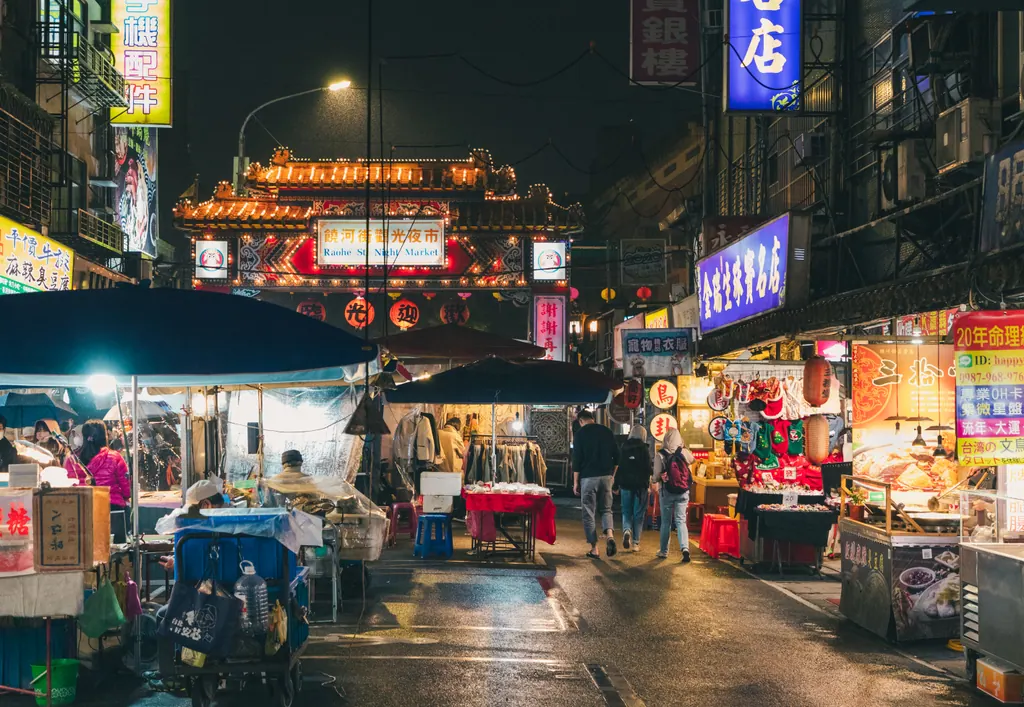
The Taipei Metro is clean, fast and easy to read, with English signs and announcements and numbered stations. Most of what visitors want to see, from Ximending and Longshan Temple to Taipei 101 and the Shilin Night Market, is a short walk from a station. Single fares ran from NT$20 to NT$65 (about $0.60-2) in 2026.
There is one rule people really do get fined for: no eating, drinking or chewing gum inside the paid area, which includes a sip of water on the platform. Save the bubble tea for later, or read our guide to food in Taiwan and plan your snacks around the stations instead.
Unlimited passes exist, such as a one-day MRT pass for around NT$150 (about $5), but single rides are so cheap that the card usually works out better. The Maokong Gondola, which floats up to the tea hills above the zoo, also accepts EasyCard.
City buses fill the gaps; you tap on boarding, and sometimes again when you get off, and Google Maps handles the routes well.
Is the high-speed rail worth it?
For anything on the west coast, yes. Taiwan High Speed Rail (THSR) runs Japanese built trains on a single line of 12 stations, from Nangang in eastern Taipei through Taipei Main Station, Banqiao, Taoyuan, Hsinchu, Miaoli, Taichung, Changhua, Yunlin, Chiayi and Tainan to Zuoying in Kaohsiung. The fastest services cover Taipei to Kaohsiung in about an hour and a half, and even stopping trains rarely take much over two hours.
| Route | Standard reserved fare (2026) | Typical time |
|---|---|---|
| Taipei to Taichung | around NT$700 (about $22) | 50-60 minutes |
| Taipei to Zuoying (Kaohsiung) | around NT$1,490 (about $47) | 1 hour 35 minutes to 2 hours |
| Nangang to Zuoying, business class | around NT$2,500 (about $78) | same as above |
Each train has reserved cars, a few non-reserved cars where you take any free seat for a slightly lower fare, and one business class car. On weekends and before holidays, non-reserved cars fill up and people stand, so book a reserved seat if your dates are fixed. Tickets are sold online, in the THSR app, at stations and at convenience stores, with limited early bird discounts when booking opens a few weeks ahead.
Foreign visitors on a short stay can also buy THSR passes. In 2026 the official pass site listed a 3-day pass at NT$2,200 (about $69) and a flexible 2-day pass, valid on any two days within a seven-day period, at NT$2,500 (about $78). You pick the pass up at a station with your passport. It only pays off if you make several long trips in a few days.
One thing to know: several HSR stations sit outside the city centers they serve. Taichung, Chiayi and Tainan HSR stations are linked to downtown by shuttle trains, buses or the metro, so add 20-40 minutes to the end of each trip.
Taiwan Railway: the slower, prettier way around the island
The conventional network, run by Taiwan Railway, goes everywhere the bullet train does not, including the whole east coast. Trains come in a few classes. The fastest are the limited express services, with names like Puyuma, Taroko and Tze-Chiang, which need a reserved seat. Local trains are slower, cheaper and unreserved, and you simply tap your EasyCard at the gate.
Fares went up in June 2025, the first general increase in about 30 years. A limited express from Taipei to Hualien now costs around NT$583 (about $18) and takes roughly two to two and a half hours. Taipei to Taitung is around NT$936 (about $29), and the fastest trains take about four hours.
The east coast line
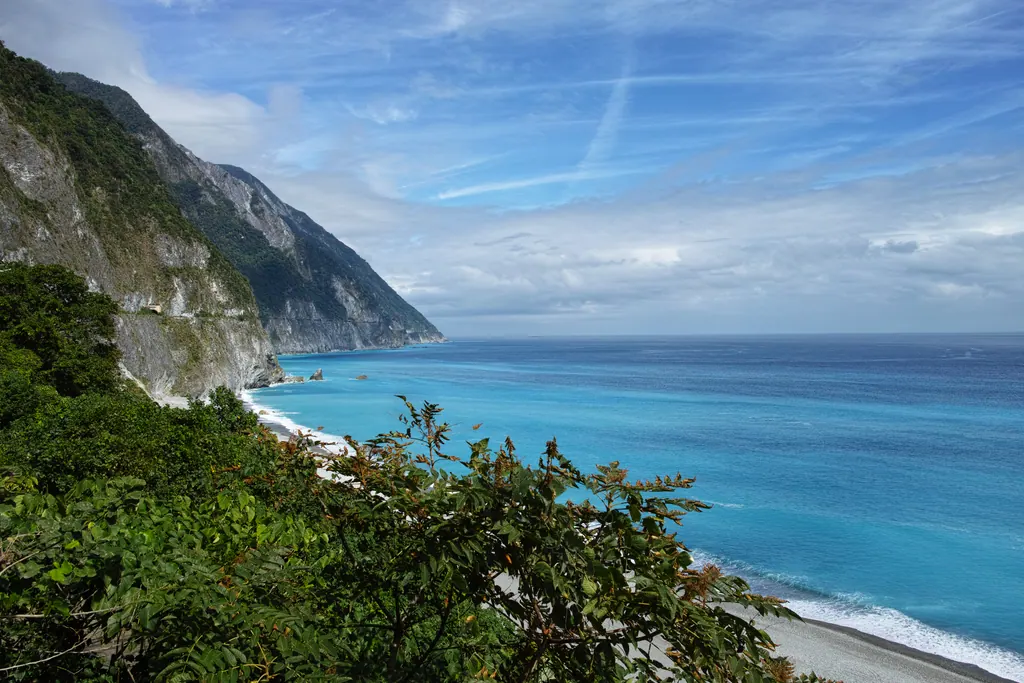
The ride south from Taipei is the reason many visitors take the train at all. After Yilan, the line runs along the cliffs above the Pacific, with tunnels opening onto views of surf and green headlands. Yilan is worth a stop for the Jiaoxi hot springs, and buses from Taipei reach it in about an hour through the Hsuehshan Tunnel.
Hualien is the base for Taroko National Park and the Qingshui Cliffs. Be aware that the park was badly damaged by the April 2024 earthquake. As of late summer 2026, several of its best known trails, including the Shakadang Trail and Swallow Grotto, were still closed, and the gorge bus was suspended. Check the park's notices before you plan your days around it.
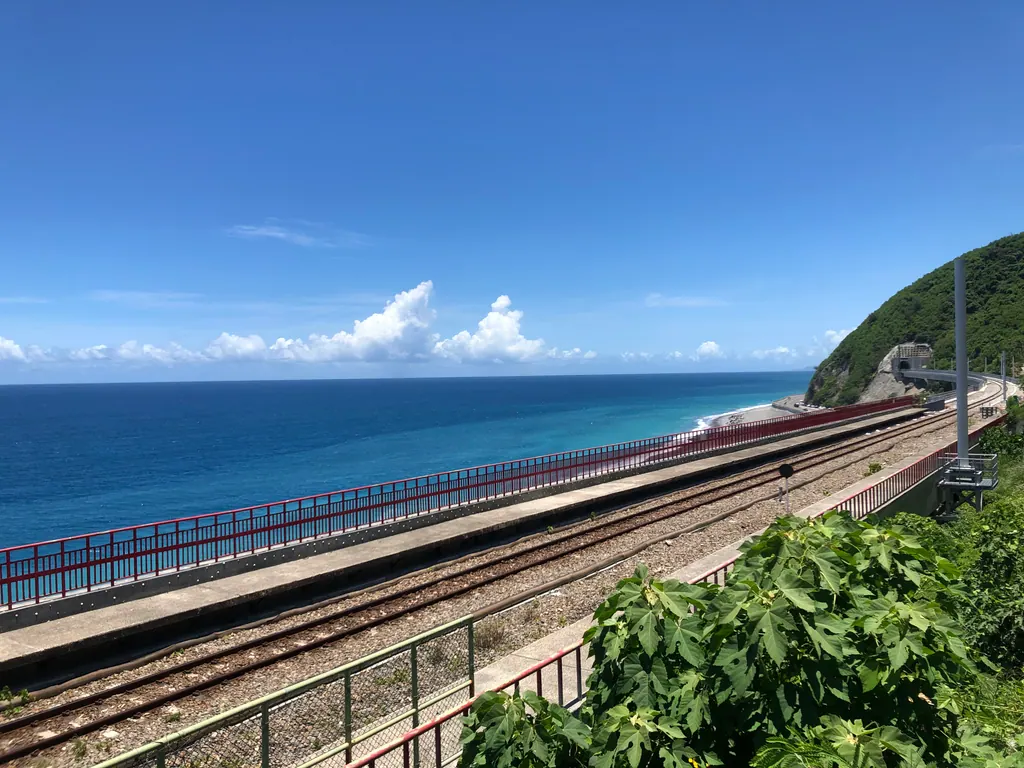
South of Hualien, the line runs through the rift valley between two mountain ranges to Taitung, past rice fields around Chishang and Guanshan. From Taitung, the South Link line swings around the southern tip of the island toward Kaohsiung. The disused Duoliang station on this stretch, perched above the sea, is a popular viewpoint, though you reach it by road since trains no longer stop there.
Limited express seats on the east coast sell out quickly on Fridays, Sundays and holidays. Book as soon as sales open on the Taiwan Railway website or app, and if you miss out, a slower train or a standing ticket is usually still possible.
How do you ride the Alishan Forest Railway?
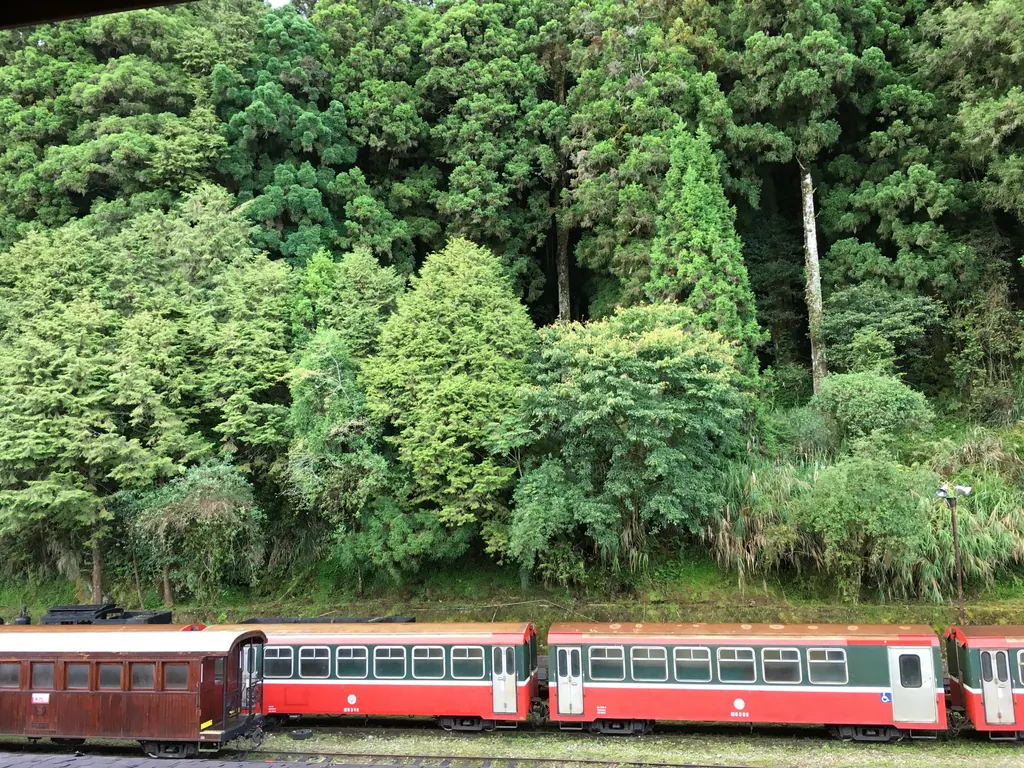
The Alishan Forest Railway was built under Japanese rule to bring timber down from the mountains, and it still climbs using switchbacks and a spiral. The main line runs 71 kilometers from Chiayi, near sea level, to Alishan at about 2,200 meters, through more than 50 tunnels and across dozens of bridges. After typhoons in 2009 and 2015 cut the line, full service to Alishan only returned in July 2024.
The full trip is slow by design. In 2026, trains left Chiayi in the morning and took around five hours to reach Alishan, including a long stop at Fenqihu, an old railway village known for its lunch boxes. The adult fare was about NT$600 (about $19). Seats are limited and sell out fast, so book on the official railway site the moment sales open, two weeks ahead (a small quota has been released earlier).
Up at Alishan, short branch lines run to Shenmu and Zhaoping, and early morning trains climb to Zhushan for sunrise over the Yushan range. If you cannot get a train seat, buses from Chiayi train station and Chiayi HSR station reach Alishan in around two to two and a half hours, and you can still ride the scenic stretches on the mountain itself.
Sun Moon Lake and the Taiwan Tourist Shuttle
Sun Moon Lake has no train station, so buses do the work. The simplest route is to take the high-speed rail to Taichung and walk to the bus counter at the station, where Nantou Bus runs regular departures to the lake. The ride takes about an hour and a half and costs around NT$190-200 (about $6). At the lake, a loop bus, boats between the piers, a lakeside bike path and a ropeway handle the rest.
That bus is part of the Taiwan Tourist Shuttle, a network of routes run for visitors from major train and HSR stations to scenic areas such as Sun Moon Lake, Alishan, Kenting and the East Rift Valley. They are cheap, take tap cards on many routes and are often the only public transport into the mountains; routes and timetables are listed in English on the official site.
Taichung and Kaohsiung: smaller cities, simple systems
Taichung opened its first metro line, the Green Line, in 2021. It connects Taichung HSR station with the city's northern districts, and fares run from NT$20 to NT$50 (about $0.60-1.50). For the city center and the old downtown around Taichung train station, buses do most of the work, and the city's buses are cheap with a tap card.
Kaohsiung has two MRT lines, Red and Orange, which cross at Formosa Boulevard station. The Red Line connects to Zuoying HSR station and Kaohsiung International Airport, which makes arriving in the south easy. A circular light rail loop, completed in early 2024, runs along the harbor, past the Pier-2 Art Center and around the city.
Flights and ferries to Penghu
The Penghu archipelago sits in the Taiwan Strait, about 30 miles off the west coast. Domestic flights to Magong, the main town, take under an hour from Taipei Songshan and less from Kaohsiung, Taichung, Chiayi and Tainan. Flights are the year round option.
Ferries are the other way in. The short crossing from Budai port in Chiayi County takes around 90 minutes, and a longer ferry from Kaohsiung takes several hours. The strait is often rough from autumn to early spring, so crossings are reduced in winter and can be canceled at short notice. Summer is peak season, when both ferries and flights are busy.
On the islands, there is a limited bus network and a seasonal tourist shuttle, but most visitors use scooters, rental cars, taxis or island hopping boat tours from Magong.
Should you rent a scooter or a car?
Scooters are how much of Taiwan gets around, and rentals cluster near train stations in Hualien, Taitung, Kenting and the islands. The catch is the license. Taiwan allows visitors from countries with reciprocity, including the US, to drive for the first 30 days after arrival with an international driving permit and their home license. Staying longer requires registering the permit with a Motor Vehicles Office. For a scooter, your permit must cover motorcycles, and some rental shops, especially in Taipei and Taichung, will only rent to people with a Taiwanese license. Riding without the right license can void your travel insurance after an accident.
A car makes most sense on the east coast and in the mountains, where buses are sparse. Traffic drives on the right and main roads are signposted in English, but in Taipei a car is more trouble than it is worth.
YouBike: Taiwan's rental bikes
YouBike stations are everywhere in Taipei and New Taipei and in many other cities, including Taichung, Kaohsiung, Taoyuan and Hsinchu. You register in the YouBike app with a phone number and link your EasyCard or iPASS, then tap the card on the dock to unlock a bike. Rates are very low: a few NT dollars for the first half hour in several cities in 2026, then about NT$10 (about $0.30) per half hour for the next few hours. Visitors without a local phone number can make a single rental with a credit card at some stations, with a deposit held.
Taipei's riverside paths along the Tamsui and Keelung rivers are flat and pleasant, while city streets are full of scooters.
Putting it together
A practical first trip is a loop: a few days on the Taipei MRT, the high-speed rail south to Tainan and Kaohsiung, then the South Link and east coast line north through Taitung and Hualien back to Taipei. Add Alishan from Chiayi or Sun Moon Lake from Taichung if you want mountains. It needs no car, only a few bookings.
Book three things early: Alishan train seats, east coast express tickets on weekends, and anything around Lunar New Year, when much of Taiwan travels at once. For the rest, a charged EasyCard and a phone with Google Maps go a long way. For more ideas, browse our Taiwan destination page or more rail journeys, and see our travel tips before you fly.
Frequently asked questions
Can you get by in Taiwan without speaking Chinese?
On public transport, yes. Trains, metro systems and most intercity buses have English signs and announcements, and ticket machines have an English mode. In rural areas and small shops, a translation app helps.
Does Google Maps work for public transport in Taiwan?
Yes. Google Maps shows routes and times for the MRT systems, Taiwan Railway, the high-speed rail and most city buses, which makes it the most useful single app for visitors.
Can you travel all the way around Taiwan by train?
Yes. Taiwan Railway runs a complete loop around the island, using the west coast line, the South Link line and the east coast line. The fastest trains could do it in a long day, but most travelers spread the loop over one to two weeks.
Is a taxi expensive in Taiwan?
Short city rides are reasonably priced, and taxis are a good backup late at night. Longer trips add up quickly, for example a taxi from Taoyuan Airport to central Taipei usually costs well over NT$1,000 (about $31).
When are Taiwan's trains most crowded?
Friday evenings, Sunday afternoons and the days around national holidays, above all Lunar New Year, are the busiest. Book reserved seats as early as possible for those dates.
- THSR Pass for foreign visitors, Taiwan High Speed Rail
- THSR sets passenger record over Mid-Autumn Festival weekend, Focus Taiwan
- Taiwan Railway fares to rise 26.8 percent, Taipei Times
- Alishan Forest Railway resumes full service, Taiwan News
- Alishan Forest Railway, Wikipedia
- Taiwan Tourist Shuttle brochure, Taiwan Tourism Administration