Step off a plane in most of the world's capitals and the air feels like the air at home. In a handful of them, it does not. You climb a flight of hotel stairs and stop halfway. Your coffee boils at a lower temperature. The sun burns faster, the nights get colder than the latitude suggests, and the first beer goes straight to your head.
The question of which capital sits highest has a catch, because a few countries have more than one capital, and the answer depends on which one you count. We ranked the ten highest using elevations from city sources and geographic references, which can differ by a few dozen feet depending on where the measurement is taken. Then we looked at each one the way a traveler would: what is worth seeing, how the altitude feels, and whether it is a realistic trip from the U.S. right now.
The countdown: 10 capitals up where the air is thin
10. Nairobi, Kenya: 5,889 feet (1,795 m)
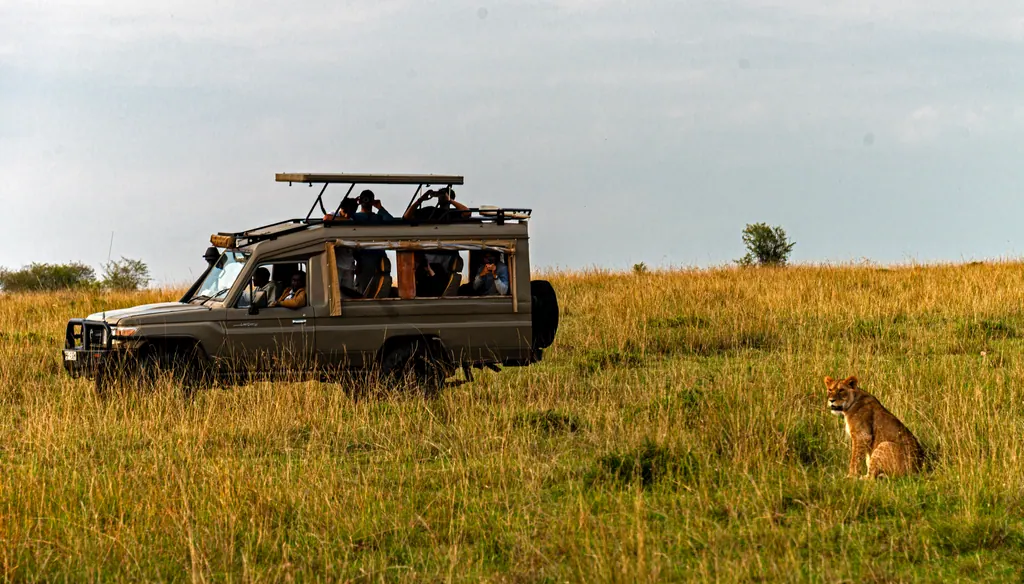
Nairobi is the lowest on this list, and yet it sits higher than Denver. The altitude is the reason the Kenyan capital has a mild climate almost on the equator, with cool mornings most of the year. Its most famous sight is just as unusual: Nairobi National Park lies within the city limits, so you can watch giraffes and rhinos with office towers on the horizon. Kabul in Afghanistan, at about 5,873 feet (1,790 m), misses this list by only a few feet.
9. Mexico City, Mexico: 7,350 feet (2,240 m)
The largest city on the list was built where the Aztec capital of Tenochtitlan once stood on an island in a highland lake. At more than 7,000 feet, Mexico City is high enough that many visitors feel short of breath on their first day, especially climbing the pyramids at Teotihuacan just outside the city. The altitude also explains the cool evenings, even in spring. With direct flights from dozens of U.S. airports, it is the easiest high-altitude capital for Americans to reach.
8. Sanaa, Yemen: 7,382 feet (2,250 m)
The Old City of Sanaa, with its tower houses decorated in white geometric patterns, has been a UNESCO World Heritage Site since 1986 and is one of the most remarkable cityscapes in the Arab world. It is also on UNESCO's list of World Heritage in Danger, and Yemen has a Level 4, "Do Not Travel", advisory from the U.S. State Department. Sanaa is on this list for its altitude, not as a travel suggestion.
7. Asmara, Eritrea: 7,628 feet (2,325 m)
Few visitors know that one of Africa's most striking collections of early 20th-century modernist architecture stands on a plateau in the Horn of Africa. Asmara was built up during the Italian colonial period, and its cinemas, cafes, service stations and villas were added to the UNESCO World Heritage list in 2017. The best-known building is the Fiat Tagliero service station, designed to look like an airplane. Eritrea is not an easy destination: a visa must be arranged in advance, and the State Department advises increased caution, including over the risk of wrongful detention.
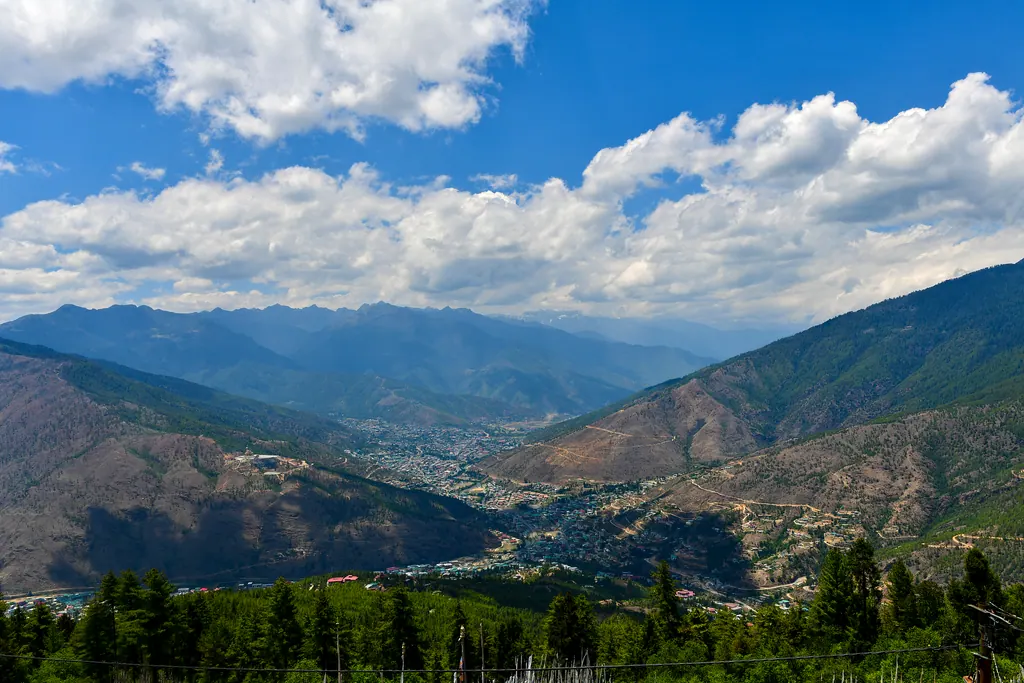
6. Thimphu, Bhutan: 7,657 feet (2,334 m)
Thimphu is often described as the only capital in the world without traffic lights. Instead, police officers direct traffic at the main intersection with white-gloved hand signals. The city lies in a forested valley of the eastern Himalayas, under the giant Buddha Dordenma statue on the hillside. Bhutan limits tourism through a Sustainable Development Fee, which is $100 per person per night for most visitors, a reduced rate the government has extended through 2029. Bhutan has a Level 1 advisory, the lowest.
5. Addis Ababa, Ethiopia: 7,726 feet (2,355 m)
Ethiopia's capital is the seat of the African Union and one of the continent's major air hubs. Many travelers see it only as a connection on Ethiopian Airlines, but the city is worth a day or two. The National Museum of Ethiopia tells the story of Lucy, the 3.2-million-year-old hominin skeleton found in the Afar region (the museum displays a cast, while the original fossils are kept in storage). The altitude keeps Addis cool, and nights can be chilly. The State Department's advisory for Ethiopia is Level 3, "Reconsider Travel", with several regions marked Do Not Travel.
4. Bogotá, Colombia: 8,612 feet (2,625 m)
Bogotá is a big, cool, cloudy city on a high Andean plateau, where you will want a jacket year-round. The Gold Museum holds one of the world's largest collections of pre-Hispanic gold work, and the colonial neighborhood of La Candelaria is the place to wander. For the view, take the cable car or funicular up Monserrate, the mountain above the city, which reaches about 10,341 feet (3,152 m). Colombia's advisory is Level 3, "Reconsider Travel", although the capital itself is a common entry point for visitors.
3. Sucre, Bolivia: 9,150 feet (2,790 m)
Here is where the capital question gets tricky. Sucre is Bolivia's constitutional capital and seat of the judiciary, while the government sits in La Paz. Sucre is the smaller and calmer of the two, a white colonial city on the UNESCO list since 1991. The Casa de la Libertad, where Bolivia's declaration of independence was signed in 1825, is the key sight. If you count only one capital per country, Sucre drops off this list and every city below it moves up a place.
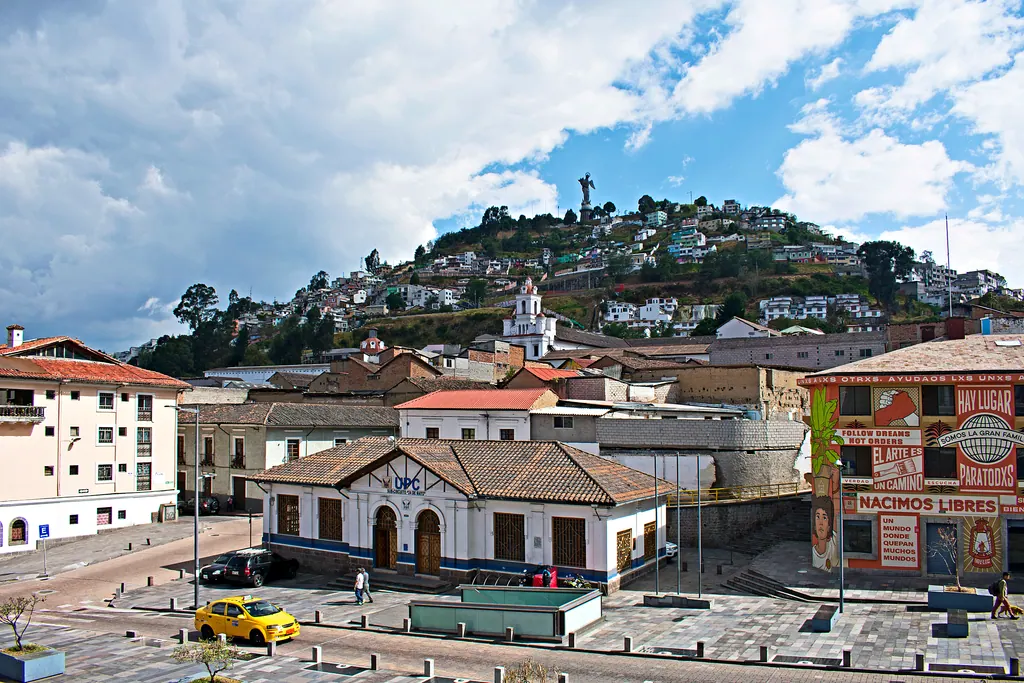
2. Quito, Ecuador: 9,350 feet (2,850 m)
If you count only constitutional capitals, Quito is the highest in the world. Its historic center was one of the first two places, together with Kraków, to be named UNESCO World Heritage Sites, in 1978, and its churches and plazas are among the best-preserved in Latin America. The TelefériQo cable car climbs the slopes of the Pichincha volcano to nearly 13,000 feet, so start slowly before you ride it. Quito is also the gateway for many trips to the Galápagos and the Amazon. Ecuador has a Level 2 advisory.
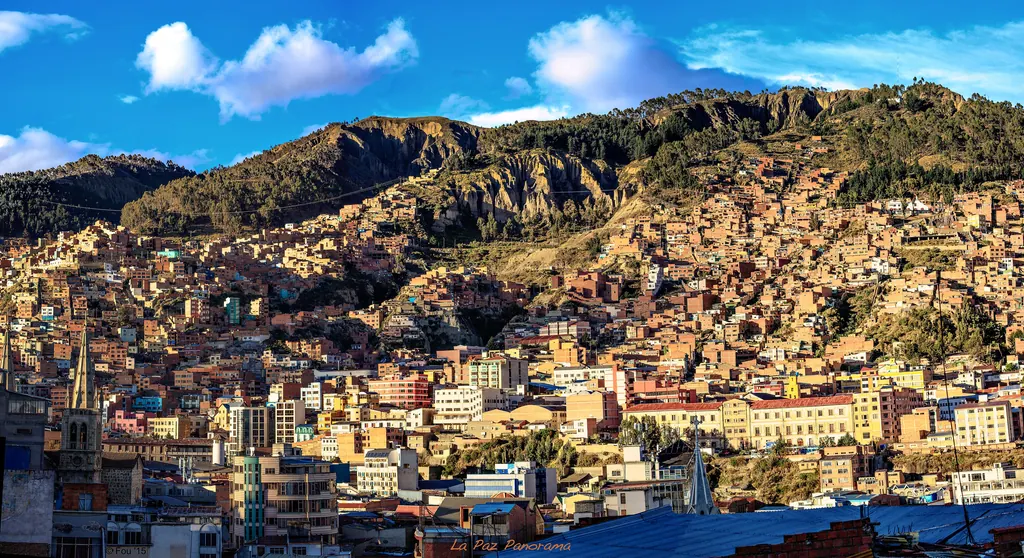
1. La Paz, Bolivia: 11,942 feet (3,640 m)
La Paz is the seat of Bolivia's government and the highest seat of government of any country. The city fills a deep canyon, with the snowcapped peak of Illimani on the horizon and the even higher city of El Alto on the rim above. Its airport, El Alto International, sits at about 13,325 feet (4,061 m), the highest international airport in the world.
The best way to understand the setting is from above. Mi Teleférico, the world's longest urban cable car network, links La Paz and El Alto on ten color-coded lines, and a single ride costs only a few bolivianos. Down in the city, the Witches' Market sells herbs, amulets and dried llama fetuses for traditional offerings. Bolivia has a Level 2 advisory.
How does the altitude actually feel?
Most healthy travelers notice something above about 8,000 feet (2,400 m): shortness of breath on stairs, a headache, poor sleep, less appetite. In Nairobi or Mexico City, it is usually mild. In Quito, and especially in La Paz, where you land at more than 13,000 feet, it can be properly unpleasant for the first day or two.
A few things help. Take it easy on the first day, drink plenty of water, go light on alcohol, and if your route allows it, sleep lower and work your way up. Talk to your doctor before the trip if you have heart or lung problems, or if you are considering medication such as acetazolamide. Our guide to altitude sickness in Cusco goes into more detail, and most of it applies to La Paz and Quito too.
At a glance: elevation and travel advisories
| Rank | Capital | Elevation | U.S. advisory (as of November 25, 2026) |
|---|---|---|---|
| 1 | La Paz, Bolivia | 11,942 ft (3,640 m) | Level 2 |
| 2 | Quito, Ecuador | 9,350 ft (2,850 m) | Level 2 |
| 3 | Sucre, Bolivia | 9,150 ft (2,790 m) | Level 2 |
| 4 | Bogotá, Colombia | 8,612 ft (2,625 m) | Level 3 |
| 5 | Addis Ababa, Ethiopia | 7,726 ft (2,355 m) | Level 3 |
| 6 | Thimphu, Bhutan | 7,657 ft (2,334 m) | Level 1 |
| 7 | Asmara, Eritrea | 7,628 ft (2,325 m) | Level 2 |
| 8 | Sanaa, Yemen | 7,382 ft (2,250 m) | Level 4 |
| 9 | Mexico City, Mexico | 7,350 ft (2,240 m) | Level 2 |
| 10 | Nairobi, Kenya | 5,889 ft (1,795 m) | Level 3 |
Advisories change, so always check the current one at travel.state.gov before you book. The levels apply to the whole country, and conditions in the capital can be better or worse than the national level suggests.
Where to start
If you want to feel real altitude without a complicated trip, start with Quito: it has a historic center that rewards days of walking, nonstop flights from several U.S. cities, and the Galápagos as an easy add-on. Mexico City is the closest and gentlest introduction. And if you are drawn to the highest of them all, combine La Paz with Lake Titicaca and the salt flats of Uyuni, and give yourself two slow days in the city before you go anywhere higher.
For more lists like this, see the oldest cities in the world and the smallest countries in Europe, or browse all our top lists.
Frequently asked questions
What is the highest capital city in the world?
La Paz, Bolivia's seat of government, at about 11,942 feet (3,640 m). If you count only constitutional capitals, Quito in Ecuador, at about 9,350 feet (2,850 m), is the highest.
Is Sucre or La Paz the capital of Bolivia?
Both, in a way. Sucre is the constitutional capital and seat of the judiciary, while the government and parliament sit in La Paz.
What is the highest capital city in Africa?
Addis Ababa in Ethiopia, at about 7,726 feet (2,355 m), just ahead of Asmara in Eritrea.
Will I get altitude sickness in La Paz?
Many visitors feel mild symptoms such as headache and breathlessness on arrival, since the airport sits above 13,000 feet. Take the first days slowly and talk to your doctor before the trip.