Few train rides in America have a song written about them. The City of New Orleans does, and the route still runs every day: one train south from Chicago in the evening, one train north from New Orleans in the afternoon, 934 miles of Illinois prairie, Tennessee river towns and Mississippi Delta in between.
Amtrak markets the route as a ride through the country's musical heritage, from Chicago blues to Memphis and Beale Street to New Orleans jazz. That is fair, but it is also a practical overnight train, and how much you enjoy it depends on picking the right direction, the right seat and maybe a stop along the way. Here is how to plan the Amtrak trip from Chicago to New Orleans, with schedules as published for the timetable that started October 8, 2026.
The Route at a Glance
The City of New Orleans follows the old Illinois Central main line almost due south. Southbound it is Train 59; northbound it is Train 58. Along the way, it calls at these stations:
- Illinois: Chicago Union Station, Homewood, Kankakee, Champaign-Urbana, Mattoon, Effingham, Centralia, Carbondale
- Kentucky: Fulton
- Tennessee: Newbern-Dyersburg, Memphis Central Station
- Mississippi: Marks, Greenwood, Yazoo City, Jackson, Hazlehurst, Brookhaven, McComb
- Louisiana: Hammond, New Orleans Union Passenger Terminal
From Carbondale, an Amtrak Thruway bus connects to St. Louis, which helps if you are coming from Missouri.
Schedule: Which Direction Is Better?
Here are key times for the timetable valid from October 8, 2026. Times are local; the whole route is in the Central time zone. Amtrak changes schedules from time to time, so always check the current timetable before you book.
| Station | Train 59 (southbound) | Train 58 (northbound) |
|---|---|---|
| Chicago | Departs 8:05 p.m. | Arrives 9:15 a.m. |
| Carbondale | 1:54 a.m. | 3:18 a.m. |
| Memphis | Arrives 6:42 a.m., departs 6:55 a.m. | Departs 10:45 p.m. |
| Jackson | 11:49 a.m. | 5:40 p.m. |
| New Orleans | Arrives 3:47 p.m. | Departs 1:45 p.m. |
The full trip takes about 19 and a half hours in either direction.
For sightseeing, southbound is the better choice. You sleep through central and southern Illinois, wake up near Memphis, and then spend the whole day rolling through the Mississippi Delta and the pine country south of Jackson in daylight. The final stretch into New Orleans crosses the swamps and open water between Lake Maurepas and Lake Pontchartrain, which is one of the most memorable views on any Amtrak route.
Northbound, you get the Louisiana swamps and southern Mississippi in the afternoon light, but the Delta north of Jackson goes by in the evening, and in winter much of it is dark. The upside is a morning arrival in Chicago, which is useful if you have a connection or a meeting.
Coach or Roomette?
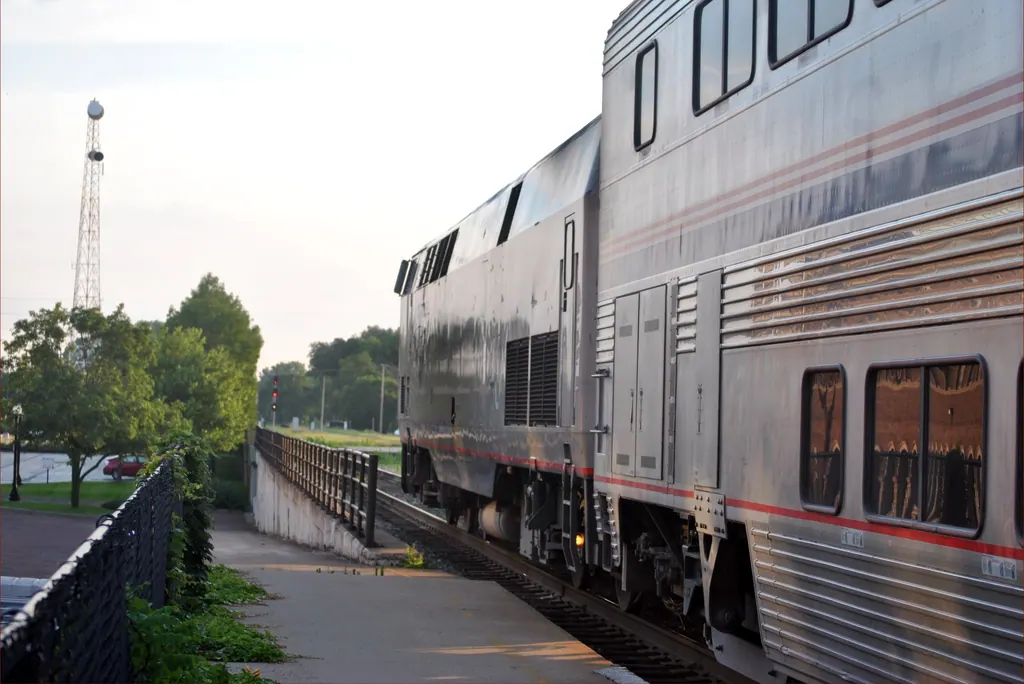
The train uses Superliner equipment: tall double-decker cars where most seating is on the upper level, which gives you a higher view out of the large windows.
Coach seats are wide by airline standards, recline deeply and have a leg rest. For a single overnight ride, many travelers find coach perfectly comfortable, especially if they bring a travel pillow, a light blanket and earplugs. Coach is reserved, so you will have an assigned seat or car.
Sleeping car options are a Roomette, with two facing seats that convert into upper and lower berths, and a larger Bedroom with its own toilet and shower. On Amtrak long-distance trains, sleeping car fares include meals, and you get access to the station lounges where available.
Fares change with demand, like airline fares. Booking several weeks ahead, avoiding holiday weekends and traveling midweek usually gives you the best prices. Senior, child and military discounts apply on many fares; check the conditions when you book.
Breaking the Trip in Memphis or Jackson
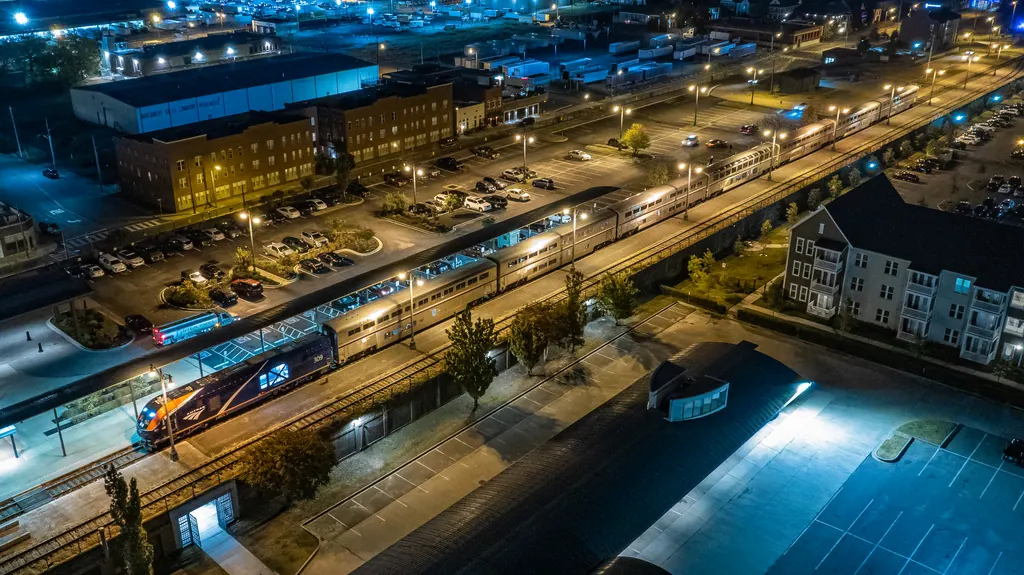
Because the train runs once a day in each direction, a stopover means staying a full day, or two, before catching the next train. That rhythm suits this route well.
Memphis is the classic stop. Southbound, you arrive at Memphis Central Station before 7 a.m., which gives you a full day for Beale Street, the National Civil Rights Museum at the Lorraine Motel, and either Graceland or Sun Studio. The next morning, the same train comes through again on its way south.
Jackson, Mississippi, works well for travelers interested in civil rights history and the blues. The Mississippi Civil Rights Museum and the Museum of Mississippi History share a building downtown. If you have a car, the Mississippi Blues Trail markers spread out from here across the Delta.
Greenwood is a smaller stop in the heart of the Delta, and a good base for blues history in the surrounding towns, but you will need a rental car or a pre-arranged ride, as local transport is limited.
To build a stopover, book separate tickets for each leg, or use Amtrak's multi-city booking tool.
Food, Bags and Practical Details
Amtrak's food service varies by route and season, and it has changed several times in recent years. Check what is offered on your departure date, and bring snacks and a refillable water bottle in any case. Sleeping car passengers have meals included.
Checked baggage is available at major stations on the route, including Chicago, Memphis, Jackson and New Orleans, but not at every small stop. In Chicago, sleeping car passengers can use the Metropolitan Lounge at Union Station before departure.
The station in New Orleans, Union Passenger Terminal, sits at the edge of downtown, and it is also the stop for Amtrak's Crescent and Sunset Limited trains and for Greyhound buses. The Loyola Avenue streetcar line stops right outside, which makes it easy to reach the French Quarter.
If you tip on board, the usual approach is a few dollars per meal for dining staff and a tip for your sleeping car attendant at the end of the trip. Our guide to tipping in the USA and Canada has more detail.
Connecting the City of New Orleans to a Bigger Trip
The City of New Orleans makes a good spine for a longer rail trip. In Chicago, it connects with Amtrak's network of long-distance routes heading west and east. In New Orleans, you can continue east to Atlanta and New York on the Crescent, or west to San Antonio and Los Angeles on the Sunset Limited.
Many travelers also combine one leg by train with a flight or a road trip the other way. Driving north from New Orleans along the Mississippi gives you the river views that the train only glimpses. For more ideas, browse our train travel guides and the rest of our coverage of the USA.
Is It Worth It?
If your goal is to get from Chicago to New Orleans as fast as possible, a two-hour flight wins. If you want to see how the country changes over a day, from cornfields to cotton country to cypress swamp, and arrive in New Orleans in the afternoon light with a story to tell, the City of New Orleans is one of the most rewarding ways to make the trip.
Frequently asked questions
How long is the Amtrak ride from Chicago to New Orleans?
About 19 and a half hours. Under the timetable valid from October 8, 2026, Train 59 leaves Chicago at 8:05 p.m. and reaches New Orleans at 3:47 p.m. the next day.
Does the City of New Orleans run every day?
Yes. There is one train daily in each direction, so a stopover along the route means waiting a full day for the next train.
Which direction has the best views?
Southbound. You sleep through Illinois and spend daylight hours in the Mississippi Delta and the swamps between Lake Maurepas and Lake Pontchartrain.
Are meals included on the City of New Orleans?
Meals are included for sleeping car passengers. Coach passengers pay for food on board, and the offer varies, so it is wise to bring snacks.