
Vietnam is long and thin, roughly 1,650 kilometers from the Chinese border to the Mekong Delta, and most first trips follow that spine in one direction or the other. Hanoi and Ha Long Bay in the north, Hue, Hoi An and Da Nang in the middle, Ho Chi Minh City and the islands in the south. The distances look manageable on a map. They are not, at least not on the ground in a single go.
That is what makes planning transport here interesting. You can cover the whole country in two hours by plane, in about 33 hours by train, or in a string of overnight sleeper buses that cost less than a hotel room. Each choice changes the trip.
What you need to sort out before you land
Most visitors need a visa, and the simplest route is Vietnam's e-visa. Since August 2023 it has been open to citizens of every country, valid for up to 90 days, with single and multiple entry versions. Fees in 2026 were around $25 for a single entry and $50 for a multiple entry, and processing usually takes about three working days. Apply only on the official Vietnam Immigration Department portal (evisa.xuatnhapcanh.gov.vn, the link the UK government uses), since lookalike agency sites charge several times the fee. When you apply, you choose your entry airport or border crossing, so pick the right one.
Some nationalities skip the visa for shorter trips. British citizens, for example, could stay up to 45 days without a visa in 2026, according to the UK Foreign Office. US citizens need a visa. Check the current rules for your passport before booking, and read our visas and entry advice for the general principles.
Arriving at Noi Bai and Tan Son Nhat
Hanoi's Noi Bai airport sits about 30 kilometers north of the city. A Grab car or an airport taxi to the Old Quarter usually costs around 250,000-350,000 dong (about $10-13) and takes 40-60 minutes depending on traffic. The cheaper option is public bus 86, the orange airport express, which runs to Hanoi Railway Station with stops around Hoan Kiem Lake and the Old Quarter for well under $2.
Ho Chi Minh City's Tan Son Nhat airport is almost inside the city, which makes arrival easy. A Grab to the center (the old District 1, around Ben Thanh Market) is typically around 110,000-250,000 dong (about $4-10), and bus 109 runs to the backpacker area around Pham Ngu Lao for around 20,000 dong (under $1). Domestic flights now largely use the newer Terminal 3, which opened in 2025, so check your terminal before you head back.
At both airports, ignore drivers who approach you inside the arrivals hall. Use the official taxi rank, a ride-hailing app or the bus.
Is it better to fly or take the train?
For long jumps, flying wins. Hanoi to Ho Chi Minh City is about two hours in the air, compared with well over a day by train.
The main domestic airlines are Vietnam Airlines, the full-service national carrier, and VietJet, the large low-cost airline with cheap base fares and paid extras for bags and seats. Vietravel Airlines and the newer Sun PhuQuoc Airways, which started flying in late 2025, add capacity on some routes. Bamboo Airways, once a big player, shrank sharply and largely stopped selling scheduled domestic tickets in August 2026, so check carefully before you book with them.
The airports that matter for most travelers:
| Destination | Airport | Distance to town |
|---|---|---|
| Da Nang and Hoi An | Da Nang International (DAD) | A few km to Da Nang center, about 30 km to Hoi An |
| Hue | Phu Bai (HUI) | About 15 km |
| Dalat | Lien Khuong (DLI) | About 25-30 km |
| Phu Quoc | Phu Quoc International (PQC) | About 10 km to Duong Dong |
| Ha Long Bay | Van Don (VDO) | About 50 km to Ha Long city |
| Sapa | None, nearest is Hanoi | About 320 km by road |
Hoi An has no airport of its own; you fly to Da Nang and continue by road. A Grab car from Da Nang airport to Hoi An usually costs around 250,000-350,000 dong (about $10-13).
The Reunification Express and the Hai Van Pass
The train line between Hanoi and Saigon, about 1,726 kilometers long, is known to travelers as the Reunification Express. It is one of the classic train journeys in Asia, but it is not fast. The quickest services (SE1 and SE3 southbound) take around 32-34 hours end to end, and many trains take longer. Most people do not ride it end to end. They use it in sections, especially overnight legs where a berth saves a hotel night.
Cabins come in two main types. A soft sleeper has four berths in a closed compartment, and a hard sleeper has six thinner berths in a compartment. There are also soft seats for day trips. On the full Hanoi to Ho Chi Minh City run, a berth on SE1 or SE3 cost around 1,500,000-2,400,000 dong (about $58-92) in 2026, depending on cabin and berth level. Shorter sections are far cheaper. Hanoi to Ninh Binh takes about two hours and costs around 130,000-250,000 dong (about $5-10).
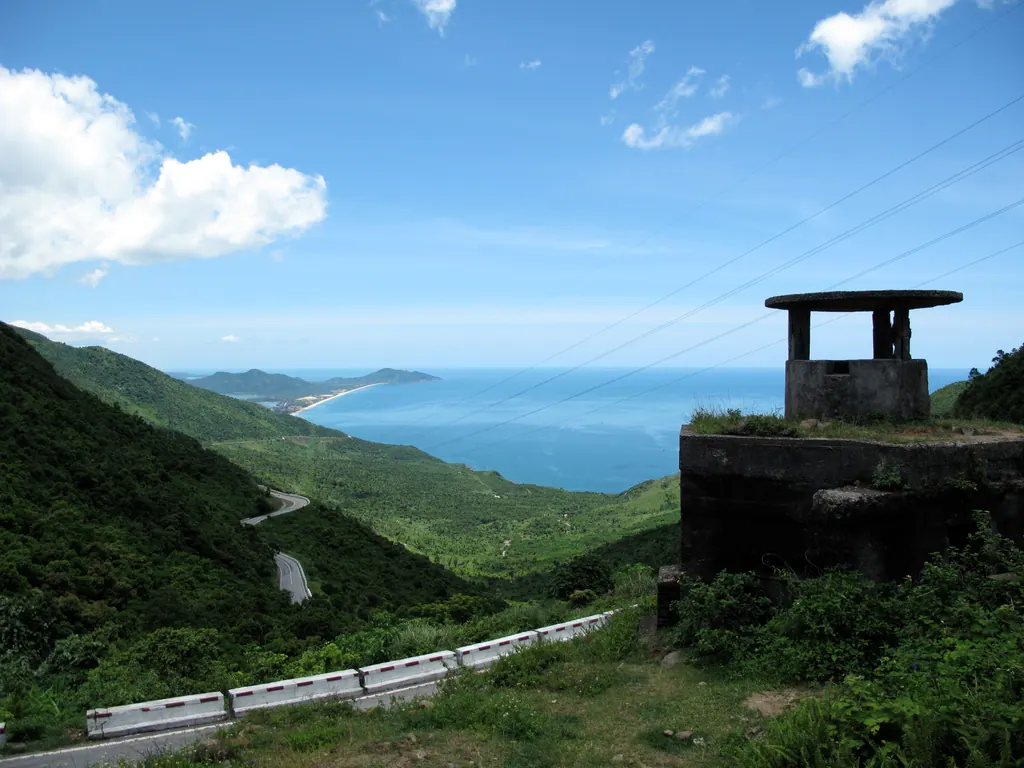
The most famous stretch is between Hue and Da Nang, where the line climbs around the base of the Hai Van Pass and runs along cliffs above the sea, past Lang Co lagoon. The trip takes about two and a half to three hours. Take a daytime train and sit on the sea side, which is the left side heading south from Hue to Da Nang. Soft seats cost roughly 80,000-190,000 dong (about $3-7). A tourist-oriented heritage train between Hue and Da Nang also runs on this section, with a stop at Lang Co.
Book on the official Vietnam Railways site (dsvn.vn) or at the station. Agency sites resell the same seats with a markup that can be large. Popular dates, especially around Tet, the Lunar New Year in January or February, sell out early.
Sleeper buses: cheap, overnight and not for everyone
Sleeper buses are the backbone of budget travel in Vietnam. They have two or three rows of reclining berths on two levels, you take off your shoes when you board, and they run overnight on most tourist routes. They are cheap and they save a hotel night. They are also cramped for anyone taller than about 1.75 meters, and the UK Foreign Office notes that bus crashes are fairly common, particularly at night. Choose a known operator, keep valuables on you, and wear the seatbelt if there is one.
On many routes, limousine vans are the better alternative. These are nine-seat or smaller vans with large reclining seats, often with hotel pickup. They cost a bit more and are usually a bit quicker.
The routes most travelers use:
- Hanoi to Sapa: about 5.5-7 hours on the expressway and mountain road. Sleeper buses and limousine vans cost around 280,000-450,000 dong (about $11-17). The alternative is the overnight train to Lao Cai, about eight hours, with soft sleeper berths from around 610,000 dong (about $23), followed by a 38-kilometer ride up to Sapa by local bus (around 50,000 dong, about $2) or shared van.
- Hanoi to Ninh Binh: about 2 hours by limousine van for around 200,000-350,000 dong (about $8-13). The train is just as practical here.
- Ho Chi Minh City to Dalat: an overnight sleeper bus or a daytime limousine, roughly 7-8 hours up into the highlands. Flying to Lien Khuong is the faster option.
- Ho Chi Minh City to Mui Ne: around four hours by bus now that the expressway is open. There is also a train from Saigon to Phan Thiet, the town next to Mui Ne. Phan Thiet airport is under construction and was not expected to open before about 2028.
Book through your hotel or a booking platform that shows the operator name, and check where the bus actually drops you. Some stop at bus stations outside town.
How do you get to Ha Long Bay?
Most visitors go on a cruise package that includes the transfer from Hanoi. The expressway trip takes about 2.5-3.5 hours. If you organize it yourself, shared limousine vans from Hanoi's Old Quarter to Ha Long's Tuan Chau harbor or Bai Chay start around 260,000 dong (about $10) one way in 2026. Lan Ha Bay, south of Ha Long, is reached via Cat Ba island or the port at Hai Phong.
The UK Foreign Office advises thinking carefully about boat safety in Ha Long Bay, where overcrowding and poor standards have caused accidents. Ask about the boat's registration and safety record, make sure you get a safety briefing, and check that there are life jackets.
Grab, taxis and the city metros
In every big city, Grab is the easiest way to get around. You can book a car or a motorbike taxi (GrabBike), see the price before you book, and pay in cash or by card. Xanh SM, an all-electric taxi and bike service, and Be are local alternatives with similar prices. For street taxis, stick to the big companies, such as Mai Linh and Vinasun, and make sure the meter is running.
Both big cities now have metro lines, though they are still small networks:
- Hanoi has Line 2A, an elevated line from Cat Linh to Ha Dong, and the elevated part of Line 3 from Nhon in the west toward Cau Giay. Single tickets cost around 8,000-15,000 dong (well under $1). The underground section of Line 3 toward Hanoi Railway Station is still under construction.
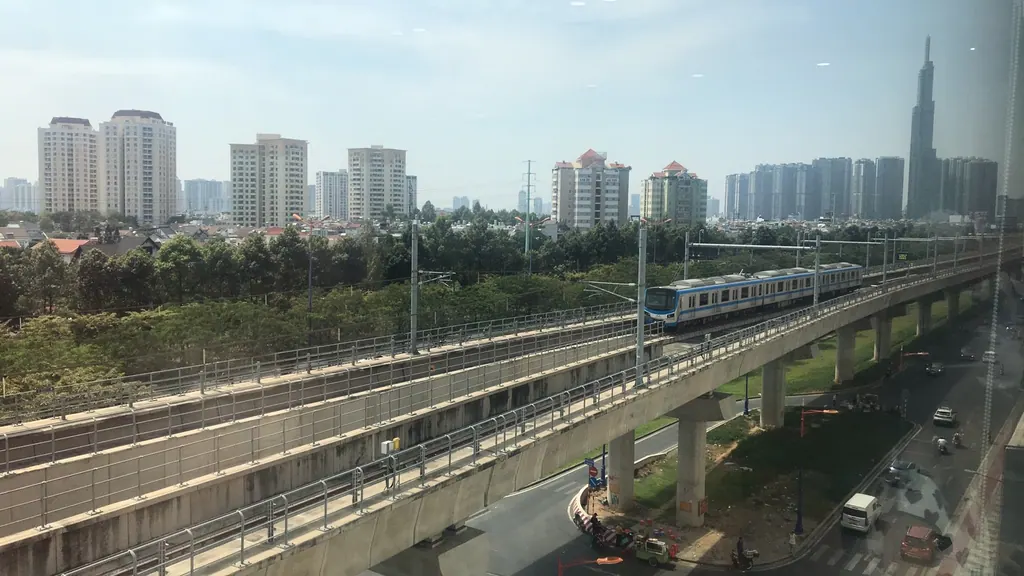
- Ho Chi Minh City opened Metro Line 1 in December 2024. It runs about 20 kilometers from Ben Thanh, next to the market, through Thu Duc to Suoi Tien, with 14 stations. Single fares were around 7,000-20,000 dong (under $1) in 2025, and a one-day pass cost about 40,000 dong (about $1.50).
Can you legally ride a motorbike in Vietnam?
Riding a scooter is the classic Vietnam image, and rentals are everywhere. The legal reality is stricter than most rental shops let on. Vietnam recognizes a foreign license only together with an International Driving Permit issued under the 1968 Vienna Convention, and the permit has to include the motorcycle category. The UK issues that version. The United States and Canada issue permits under the older 1949 Geneva Convention, which Vietnam does not accept, so a US or Canadian rider usually has no valid license at all.
That matters for two reasons. Police checks on foreign riders have increased, and fines for riding without a valid license were around 2,000,000-4,000,000 dong (about $75-155) in 2026, with the risk of the bike being impounded. More important, many travel insurance policies do not cover accidents when you ride without a valid license, which can turn a crash into an enormous hospital bill. Helmets are compulsory for riders and passengers. Read your policy wording before you get on.
If you do not have the right permit, the practical alternatives are good: GrabBike for short hops, an easy rider tour with a licensed local driver for the mountain loops in the north and around Dalat, or a car with a driver. The Hai Van Pass between Hue and Da Nang is a popular ride; motorbikes go over the pass, since the road tunnel below is closed to them.
Hoi An, Hue and the islands
Hoi An is the one place where a bicycle makes the most sense. The Ancient Town is largely closed to motor traffic at set hours, the land is flat, and the beaches at An Bang and Cua Dai are a short ride away. Many hotels lend bikes for free; rentals otherwise cost around 40,000-100,000 dong (about $1.50-4) a day.
Hue is spread along the Perfume River, with the Citadel on one bank and the royal tombs well outside town. A bicycle or a Grab works for the center, and a car with a driver or a river boat is the easy way to see the tombs in a day.
Phu Quoc has a small public bus network that started charging fares in January 2026, linking the airport, Duong Dong and the north and south of the island, but most visitors use Grab or rent a scooter. The island is big, about 50 kilometers long, so plan longer trips to the southern beaches and the cable car area. You can reach Phu Quoc by flight from most big Vietnamese cities or by fast ferry from Rach Gia and Ha Tien on the mainland.
Building a route that works
For a two- or three-week trip, many travelers combine the options like this: fly into Hanoi, take a van to Ha Long Bay and back, an overnight bus or train to Sapa, a short train to Ninh Binh, then fly to Da Nang. From there, use the train for the Hai Van Pass section to Hue, a car to Hoi An, and fly on to Ho Chi Minh City or Phu Quoc. That mix uses the train where the scenery is best and a plane where the distance is long.
A few practical rules make it easier:
- Buy train tickets direct on dsvn.vn and book overnight trains a few days ahead.
- Download Grab before you arrive and add a card.
- Avoid traveling around Tet if you can; transport sells out and prices rise.
- Keep a little cash in dong for buses, ferries and small towns.
- Do not ride a motorbike unless your license, permit and insurance all line up.
For more on the country, start at our Vietnam destination page. If your trip continues in the region, our guide to getting around the Philippines covers a very different island puzzle.
Frequently asked questions
How long does the train from Hanoi to Ho Chi Minh City take?
The fastest trains, SE1 and SE3, take around 32-34 hours for the roughly 1,726 kilometer trip. Most travelers break the journey into sections, such as Hanoi to Hue overnight and Hue to Da Nang by day.
Is Grab available everywhere in Vietnam?
Grab works in Hanoi, Ho Chi Minh City, Da Nang, Hoi An, Hue, Dalat, Nha Trang and Phu Quoc, among other places. In small towns and rural areas there may be few drivers, so arrange transport through your hotel.
Can I use my US driver's license to ride a scooter in Vietnam?
Not legally. Vietnam accepts foreign licenses only with an International Driving Permit under the 1968 convention that covers motorcycles, and the US issues permits under the 1949 convention. Riding without a valid license can also void your travel insurance.
Are sleeper buses in Vietnam safe?
Millions of people use them, but the UK Foreign Office notes that bus crashes are fairly common, especially at night. Choose a known operator, keep valuables close, and consider a limousine van or the train on routes where they exist.
Do I need cash for transport in Vietnam?
Grab, flights and train tickets can be paid by card, but local buses, some vans, ferries and small taxis often want cash in dong. Carry small notes for those.