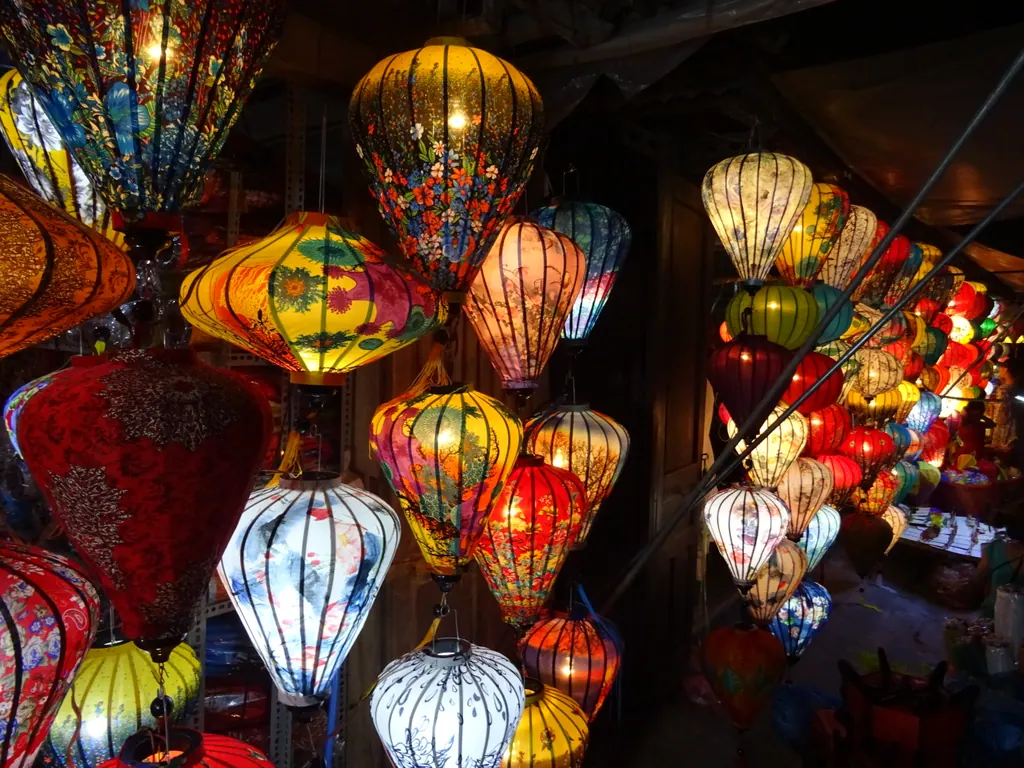
Somewhere between the second fitting and the final one, most visitors to Hoi An realize that shopping in Vietnam is not quite like shopping anywhere else. A jacket that did not exist two days ago now hangs on a mannequin with your name pinned to the sleeve. Down the street, a woman folds a silk lantern flat so it will fit in a suitcase, and in Hanoi an entire street sells nothing but paper offerings and tin boxes.
Vietnam rewards shoppers who know what they are looking for and punishes those who do not. The same market can sell genuine hand-embroidered Hmong textiles and factory-made copies of them, real pearls and painted shell beads, good coffee and flavored beans in pretty bags. Here is how the country's tailors actually work, which markets are worth your evening, what makes a good souvenir, and how to bargain and claim back tax without stress.
How do the Hoi An tailors work?
Hoi An has hundreds of tailor shops, most of them packed into and around Hoi An Old Town, the trading port that UNESCO added to its World Heritage List in 1999. The system is simple. You pick a style, either from the shop's catalogs, from a photo on your phone or by handing over a garment you want copied. You choose a fabric from bolts on the wall, the tailor takes a dozen or more measurements, and you pay a deposit.
From there, the clock starts. Many shops can produce a simple shirt or dress within 24 hours, but a suit realistically needs about three days with two or three fittings. Each fitting is where the real work happens: the tailor pins, chalks and adjusts, and you should feel free to ask for changes until it fits the way you want. Rushed orders are possible, but a rushed garment rarely fits as well.
Prices vary more than the signs suggest. Guides and shops in Hoi An quoted these rough ranges in 2026:
| Item | Typical range |
|---|---|
| Shirt | about 500,000-1,500,000 dong (about $20-60) |
| Dress | about 650,000-3,000,000 dong (about $25-115), depending on fabric |
| Two-piece suit | about 4,000,000-10,000,000 dong (about $150-400) |
The low end usually means polyester blends, the high end imported wool. Ask what the fabric actually is and burn-test a thread if you doubt it; "cashmere" labels on cheap bolts are common.
Being honest about quality
A Hoi An suit is not a Savile Row suit, and nobody should pretend otherwise. Many shops send the cutting and sewing to workshops outside the old town, and quality depends on who is behind the machine that day. Look at the details before you pay the balance: even stitching, straight seams, real buttonholes, a lining that does not pull, and patterns that match across the seams.
A few habits improve the odds:
- Order on day one. The longer the shop has, the more fittings you get and the better the result.
- Bring a reference. A favorite shirt or jacket to copy gives the tailor a template and gives you something to compare against.
- Be wary of recommendations from drivers and guides. Many earn a commission, which ends up in your price.
- Order fewer pieces. Two well-fitted items beat six that need altering at home.
- Ask about shipping. Most shops will mail finished clothes abroad, though it adds cost and time.
Hoi An's shoemakers work the same way, copying shoes and boots in leather within a couple of days, with similar variation in quality.
Hoi An after dark: lanterns and the night market
When the sun goes down, the old town switches to lantern light, and the Hoi An night market takes over Nguyen Hoang Street on An Hoi islet, just across the river from the Japanese Covered Bridge. Stalls set up from late afternoon and stay open until roughly 10 or 11 pm, with the biggest crowds between about 6:30 and 8:30 pm.
Be clear about what it is: a tourist market, with street food, phone cases, elephant trousers and souvenirs you will also find in Hanoi and Saigon. The reason to go is the lanterns. Silk lanterns stretched over bamboo frames are Hoi An's signature product, and the better ones fold flat for travel. Compare a few stalls, check that the frame collapses and reopens smoothly, and bargain gently.
To walk the heritage streets of the old town, foreign visitors need a ticket, which cost 120,000 dong (about $5) in 2026, according to the Hoi An heritage office. The night market itself is outside the ticketed core.
Hanoi: the Old Quarter and Dong Xuan
Hanoi's Old Quarter grew up as a grid of guild streets, and many still carry the names of the goods once sold there. The pattern survives in places: one street for tin boxes and metalwork, another for paper votive goods, another for bamboo ladders. Hang Gai is the best-known shopping street for visitors, lined with silk, embroidery and clothing shops, and it is a good place to compare silk scarves and ready-made ao dai.
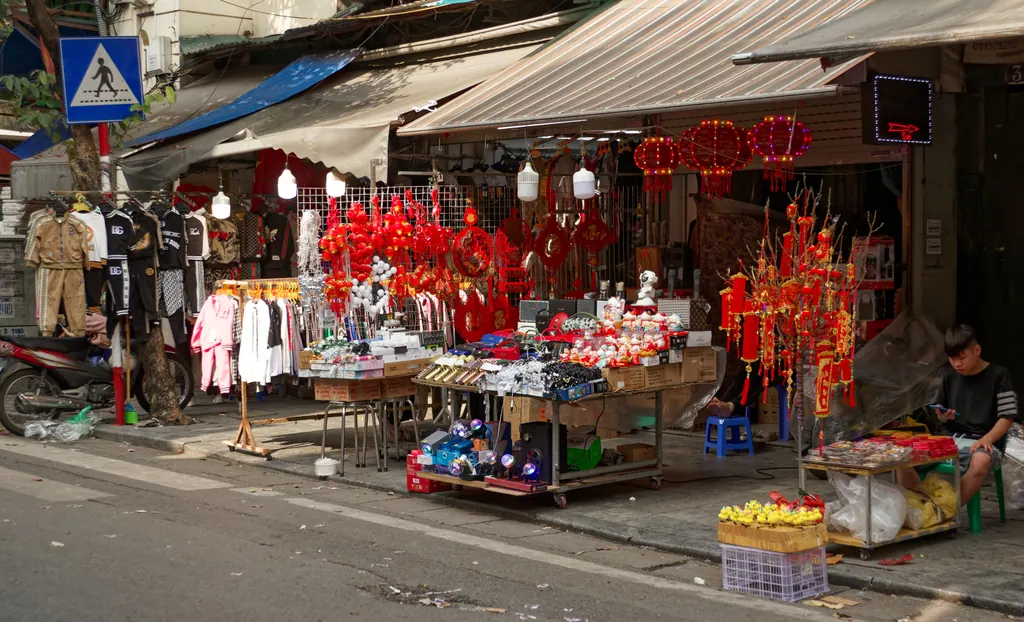
At the northern edge of the Old Quarter stands Dong Xuan, the largest covered market in Hanoi. The original market was built under French rule in 1889, and the current building is a reconstruction after a fire in 1994. It is mainly a wholesale market, with fabric, clothing, household goods and dried food, so it is more interesting as a slice of daily trade than as a souvenir stop. On Friday, Saturday and Sunday evenings, the streets between Hoan Kiem Lake and Dong Xuan close to traffic for the weekend night market, which is busier and more fun than the market building itself.
A side trip to Bat Trang
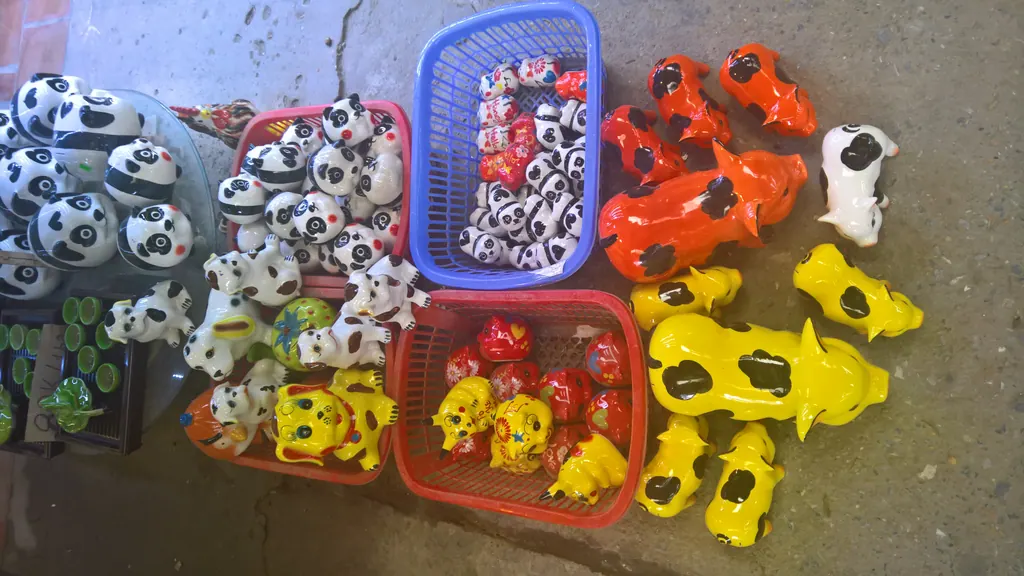
About 13-15 kilometers from central Hanoi, on the far bank of the Red River, the pottery village of Bat Trang has been making ceramics for centuries. Showrooms sell everything from blue and white vases to cheap glazed animal figurines, and many workshops let visitors try the wheel. Prices are generally lower than for the same pieces in central Hanoi, and shops are used to wrapping fragile items for flights.
Ho Chi Minh City: Ben Thanh and Saigon Square
In Ho Chi Minh City, the classic first stop is Ben Thanh Market, an early 20th-century market hall with a clock tower over its main entrance. The indoor market typically runs from early morning until about 6 pm, and when it closes, an outdoor night market and food stalls take over the surrounding streets until late evening.
Ben Thanh sells nearly everything: coffee, dried fruit, lacquerware, ao dai, conical hats and cheap clothing. It also has some of the highest opening prices in the country, so bargaining is expected. Saigon Square, a few minutes' walk away, is an indoor mall of small stalls selling clothing, bags, shoes and luggage, much of it overruns or imitations of international brands. Prices are usually marked, but there is often room to negotiate. Treat any "brand name" item at these prices as a copy, and remember that counterfeit goods can be seized by customs in many countries.
Central Vietnam beyond Hoi An: Da Nang and Hue
Da Nang's Han Market sits near the Han River in the city center. The ground floor is a working food market with dried squid, fish sauce and coffee, while the upper floor holds fabric stalls and ao dai tailors. A Vietnamese trade publication counted around 50 fabric stalls and 37 ao dai tailors there. For travelers based in Da Nang, it is a practical alternative to the tailors of Hoi An, with fewer tour groups and plenty of local customers.
In Hue, the old imperial capital, Dong Ba Market stretches along the Perfume River near the citadel. Its history goes back to the 19th century, when a market at the citadel's Dong Ba Gate was rebuilt and renamed under King Dong Khanh. The upper floors are where visitors head for handicrafts and fabric. Hue is famous for its conical hats, especially the "poem hats" from nearby Phu Cam village, with verses or images that only appear when you hold the hat up to the light. Hue's sesame candy also travels well in a suitcase.
The mountains and the south: Sapa, Dalat, Phu Quoc and Mui Ne
Sapa is the place for textiles made by the Black Hmong, Red Dao and other ethnic minority groups who live in the valleys around the town. Look for indigo-dyed hemp and cotton, batik made with beeswax, and dense cross-stitch embroidery. Much of what is sold in town is machine-made, so if you want handmade work, buy directly from makers in villages such as Cat Cat or Lao Chai, and expect to pay more for genuine pieces. The Sunday market in Bac Ha, a long drive from Sapa, is where Flower Hmong families come to trade, and it is worth an early start. Wash indigo pieces separately at first, since the dye bleeds.
Dalat has a cooler climate, so its market sells things the rest of Vietnam cannot grow well. The ground floor of Dalat Market is a local food market; the upper levels and the stalls around it are full of dried persimmons, strawberry jam, candied fruit and artichoke tea. In the evening, a night market spreads over the steps and the square in front of the market, with grilled street food and stacks of warm hats and jackets. Dalat is also one of Vietnam's arabica coffee regions, so it is a good place to buy beans.
Phu Quoc has the Dinh Cau night market in Duong Dong town, a long strip of seafood grills and souvenir stalls. The island is known for pearl farms, but this is where you need to be careful. Fake pearls made of glass, plastic or coated shell beads are common, and imported freshwater pearls are often sold as local. Real pearls are rarely perfectly round or identical, and they feel slightly gritty when rubbed gently against your teeth. For anything expensive, buy from an established pearl farm that issues a written certificate and receipt, not from a night market stall. Phu Quoc's peppercorns and fish sauce are safer buys.
Mui Ne is a beach town first and a shopping destination a distant second. Its evening food and souvenir stalls are fine for seafood dinners and a few trinkets. The real local product is fish sauce from the Phan Thiet area, but check your airline's rules before packing it: Vietnamese airlines generally refuse it in the cabin and accept it only well sealed in checked baggage.
What is actually worth bringing home?
If you only have room for a few things, these are the purchases most travelers are glad they made:
- Coffee. Vietnam is one of the world's largest coffee producers, mostly robusta from the Central Highlands. Buy whole or ground beans plus a small metal phin filter, and skip "weasel coffee", which is mostly flavored beans or comes from caged civets.
- Lacquerware. Bowls, trays and boxes with layers of lacquer and inlaid eggshell or mother of pearl. Cheap pieces are painted resin; good pieces feel heavy and have a deep, even shine.
- Silk. Scarves, ties and fabric by the meter. Real silk is cool to the touch and costs more than the polyester often sold next to it.
- Conical hats. Light, cheap and iconic, though awkward to pack. Hue's poem hats are the most interesting version.
- Bat Trang ceramics. Tea sets and small bowls travel best.
- Hmong textiles. Choose handmade pieces bought directly from the maker where possible.
- Tailored clothing. Worth it if you allow time for fittings.
How to bargain, pay and claim back VAT
Bargaining is normal in markets and at street stalls, but not in supermarkets, malls with price tags or established boutiques. A friendly, unhurried approach works best. Ask the price, make a counteroffer well below it, and meet somewhere in the middle. If the price does not work, smile and walk away; often the vendor calls you back. Once you agree on a price, pay it.
Pay in dong. Some tourist shops accept US dollars, but usually at a poor rate. Watch the zeros: the 20,000 and 500,000 dong notes are both bluish polymer notes and easy to confuse in poor light. Cards are widely accepted in malls and larger shops, less so at market stalls. For more on cash, cards and tipping, see our travel tips.
Foreign passport holders can claim back part of the VAT on goods bought in Vietnam and taken out of the country. Under the rules in force in 2026, the purchases must total at least 2,000,000 dong (about $77) at one participating store on the same day. The shop issues a combined invoice and refund declaration, which must be dated no more than 60 days before you leave. At the airport, you show the unused goods, invoice and passport to customs at least 30 minutes before departure, then collect the refund at a bank counter in the departure area. You receive 85% of the VAT paid; the remaining 15% goes to the bank as a fee. With VAT at 10%, or a reduced 8% on many goods until the end of 2026, the refund comes to roughly 7-8% of the price. Only shops registered for the scheme take part, which in practice means larger stores and malls rather than market stalls. The refund counters are at international airports such as Hanoi's Noi Bai, Ho Chi Minh City's Tan Son Nhat and Da Nang.
Planning your shopping route
If you are traveling the length of the country, plan around Hoi An. Place your tailor order on your first morning there and keep the last day free for a final fitting. Buy bulky items such as lanterns and conical hats near the end of the trip, and save coffee for Dalat or a good roastery in Ho Chi Minh City or Hanoi. Fragile Bat Trang ceramics are easiest to pack if you finish your trip in Hanoi.
For more ideas on where to shop in the region, see our guide to shopping in Taiwan, or browse everything we have written about Vietnam and shopping.
Frequently asked questions
How many days do you need for a tailored suit in Hoi An?
Plan on about three days for a suit, with two or three fittings. Shirts and simple dresses can often be ready within 24 hours, but more time almost always means a better fit.
Can you pay with US dollars in Vietnam?
Some tourist shops accept dollars, but usually at a poor exchange rate. Paying in Vietnamese dong is cheaper and expected at markets and street stalls.
What is the minimum purchase for a VAT refund in Vietnam?
In 2026, purchases had to total at least 2,000,000 dong (about $77) at one participating store on the same day, with a refund invoice issued no more than 60 days before departure.
Are the pearls sold at Phu Quoc night market real?
Some are, many are not. Glass, plastic and coated shell beads are common, so buy anything valuable from an established pearl farm that provides a certificate and receipt.
Is bargaining expected in Vietnamese markets?
Yes, at markets and street stalls it is normal. Stay friendly, counter well below the first price and settle in the middle. Shops and malls with price tags usually have fixed prices.
- UNESCO World Heritage Centre: Hoi An Ancient Town
- Hoi An Heritage: Announcement of the visiting in Hoi An Ancient Town
- LuatVietnam: Conditions for VAT refunds for foreigners upon departure
- Vietnam Law Magazine: Two percent VAT reduction extends to end of 2026
- Vietnam National Authority of Tourism: Dong Ba Market
- Hanoi Times: Dong Xuan Market, a busy trade center in Hanoi