Breakfast in Hanoi is a bowl of soup eaten on a plastic stool before 8 a.m. In Hue, the same meal is a different soup, spicier and red with chili oil. By the time you reach Ho Chi Minh City, breakfast is pork chop on broken rice, and the coffee has gone from hot and thick to sweet and poured over ice. Vietnam stretches more than 1,000 miles from north to south, and the food changes all the way down.
This guide follows the classic route from Hanoi and the mountains around Sapa, through the old imperial city of Hue and the central coast, to Saigon, the Mekong Delta and the islands: what to order, where locals eat it, what it costs in 2026 and how to eat street food without losing a day to your stomach.
How does Vietnamese food change from north to south?
Northern cooking is the most restrained: clear broths, black pepper, fewer herbs and little sugar. Central Vietnam, around Hue, is the land of chili and fermented shrimp paste, and its dishes are small, many and intricate, a legacy of the royal court. The south is sweeter and greener. Saigon dishes arrive with a basket of herbs, bean sprouts and lime, and coconut milk and palm sugar show up in both curries and desserts.
What ties it all together is fish sauce (nuoc mam), rice in every form, from noodles and paper to cakes and porridge, and the fresh herbs that come on the side of almost every meal.
What should you eat in Hanoi?
Pho is the obvious start, and Hanoi treats it as its own. In 2024, Vietnam's Ministry of Culture, Sports and Tourism added Hanoi pho to the country's list of national intangible cultural heritage. The Hanoi version is about the broth: beef bones simmered for hours, a hint of star anise and charred ginger, flat rice noodles and either beef (pho bo) or chicken (pho ga). A bowl at a street shop cost around 40,000-70,000 dong (about $1.50-2.70) in 2026, more in the tourist streets.
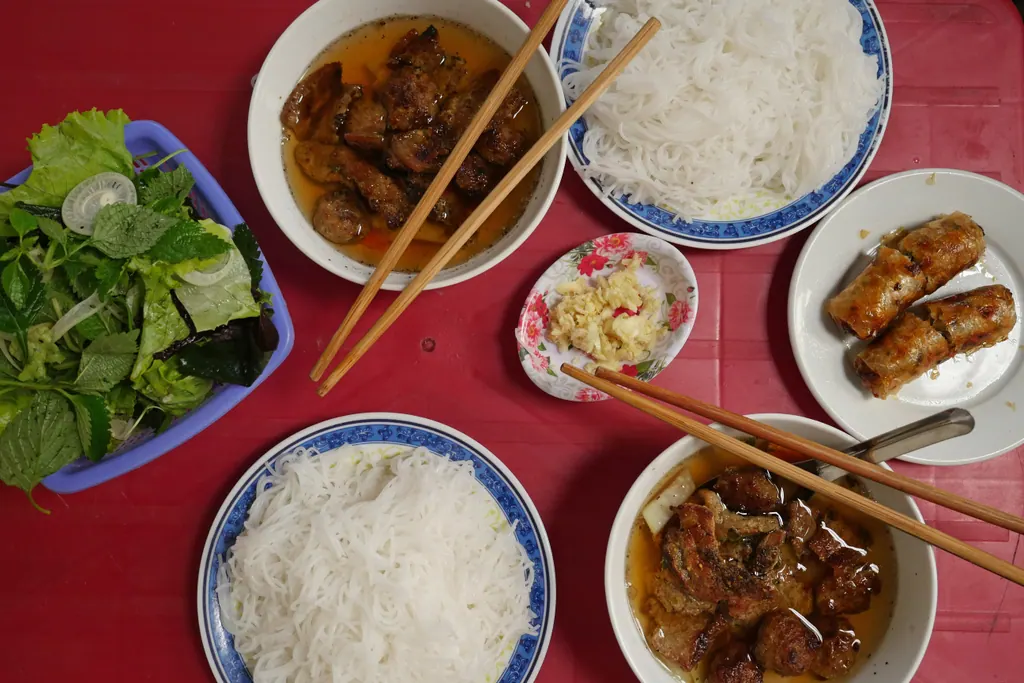
Bun cha is lunch, not dinner. Grilled pork patties and slices of pork belly come in a bowl of warm, sweet and sour dipping broth, with cold rice vermicelli and a plate of herbs on the side. Dip the noodles, add herbs, repeat. Former U.S. President Barack Obama and Anthony Bourdain shared a bun cha meal in Hanoi in 2016. Look for charcoal smoke on the sidewalk around midday.
Other Hanoi dishes worth finding:
- Banh cuon: steamed rice sheets rolled around minced pork and wood ear mushroom, a breakfast favorite.
- Cha ca: turmeric-marinated fish fried at the table with dill and spring onions, so linked to the city that a street in the Old Quarter is named after it.
- Bun rieu: a tangy tomato and crab noodle soup.
- Bia hoi: light, fresh draft beer brewed daily and sold on street corners for around 10,000-15,000 dong (about $0.40-0.60) a glass in 2026.
For browsing, Dong Xuan Market has a food section on its ground floor, and the streets of the Old Quarter around it are lined with specialist stalls that make one dish and nothing else.
What do people eat in Sapa, Ninh Binh and Ha Long Bay?
Trips out of Hanoi bring their own specialties. In Sapa, the cooking of the Hmong, Dao and other highland groups mixes with Vietnamese cuisine: rice cooked inside bamboo tubes (com lam), smoked buffalo meat, black pig, grilled skewers at the night stalls and hotpot with salmon or sturgeon farmed in the cold mountain streams. Thang co, a strong stew of horse meat and offal from Hmong markets, is the adventurous option.
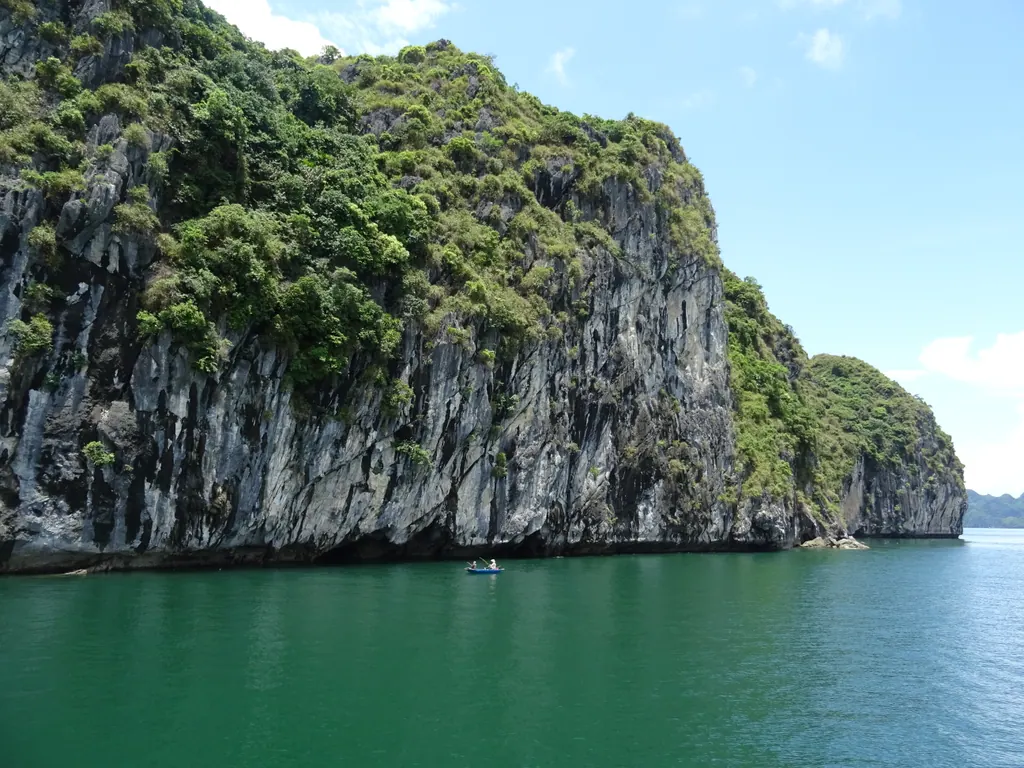
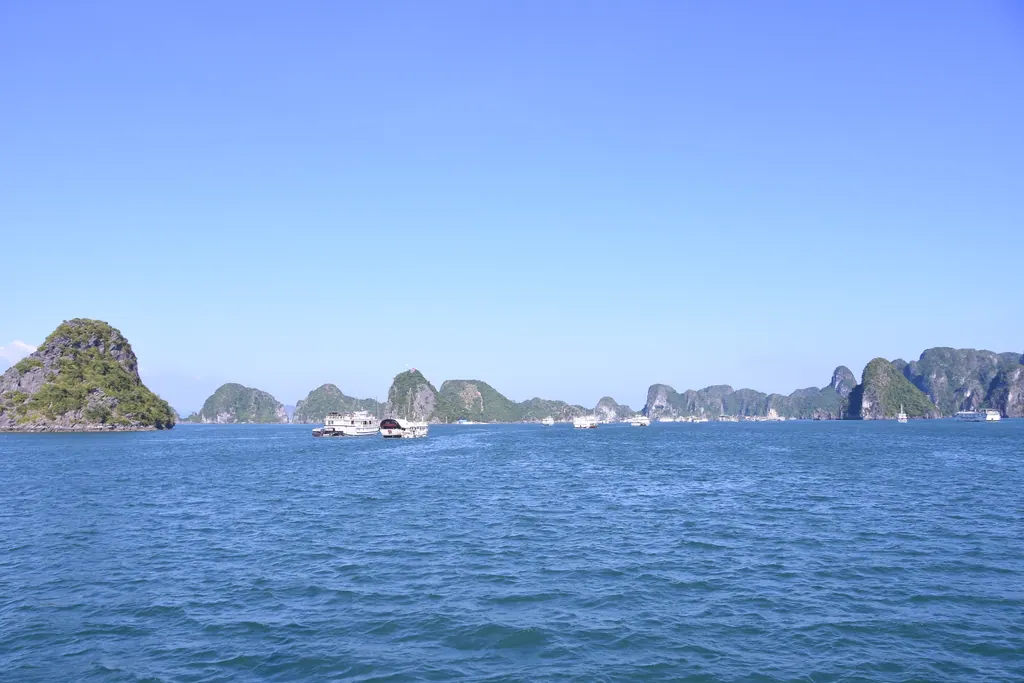
Ninh Binh, famous for its limestone karst landscape, is known for mountain goat (de nui), served grilled, steamed or as a salad with lemongrass and herbs, and for com chay, crisp crackers made from the scorched rice at the bottom of the pot (not to be confused with chay, vegetarian food, which is pronounced differently). On Ha Long Bay, seafood is the point: squid cakes (cha muc) are the local signature, and most overnight cruises serve shrimp, clams and fish as part of the package. On a cruise, check what the meals include, since drinks are often extra.
What makes Hue's food different?
Hue was the imperial capital of the Nguyen dynasty from 1802 to 1945, and the court kitchen left a deep mark. The city still favors many small, carefully made dishes over one big plate.
Bun bo Hue is the dish to travel for. The broth is built on beef and pork bones, scented with lemongrass and seasoned with fermented shrimp paste (mam ruoc), with chili oil floating on top. It comes with thick round rice noodles, beef shank, pork knuckle and often cubes of pork blood. It is spicier and more complex than pho.
Then work through the small things: banh beo (tiny steamed rice cakes topped with dried shrimp, eaten from saucers), banh bot loc (chewy tapioca dumplings with shrimp and pork, sometimes wrapped in banana leaf) and nem lui (pork grilled on lemongrass sticks and rolled in rice paper). Hue is also known for its many kinds of che, sweet soups of beans, jellies and coconut milk. Dong Ba Market, by the Perfume River, is the easiest place to try several of these in one go.
What is special about Hoi An and Da Nang?
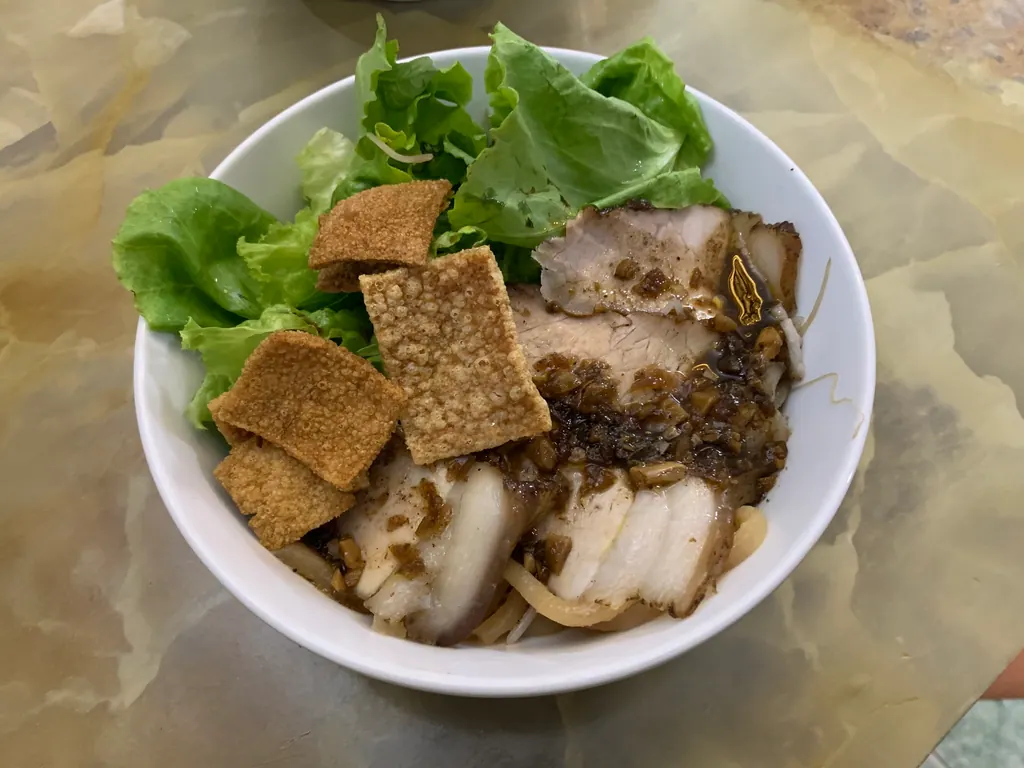
Hoi An's signature is cao lau. The noodles are thick, chewy and slightly yellow. According to Vietnam's tourism authority, they are traditionally made with water from the old Ba Le well and rice soaked in water mixed with wood ash, which gives them their texture and color. They come with slices of pork, greens, crunchy fried squares of dough and only a little sauce at the bottom of the bowl.
The other essentials of the area:
- Mi Quang: wide turmeric noodles with shrimp, pork or chicken, peanuts and a sesame rice cracker, served with just a ladle of rich broth. It is the defining dish of the old Quang Nam province, and you will find it in both Hoi An and Da Nang.
- Banh mi: Hoi An has a reputation for some of the best sandwiches in the country, with pate, cold cuts, pickles, herbs and chili in a crisp, airy baguette. A standard banh mi cost around 20,000-35,000 dong (about $0.80-1.35) in 2026.
- Com ga: chicken rice cooked in chicken stock and tinted with turmeric, topped with shredded chicken and herbs.
- White rose dumplings (banh bao banh vac): delicate shrimp dumplings shaped like flowers.
The Hoi An Central Market along the river has a busy food hall. In Da Nang, Han Market and Con Market are where locals buy and eat, and the seafood restaurants along My Khe beach sell fish, crab, clams and squid by weight from tanks out front. Ask the price per kilo before you choose, and check the weight.
What should you eat in Ho Chi Minh City?
Saigon eats around the clock, and much of it happens on the street. Start with com tam, broken rice topped with a grilled pork chop, shredded pork skin, a slice of steamed egg meatloaf and a fried egg, with sweet fish sauce on the side. It is the city's breakfast and lunch, and a plate cost around 35,000-60,000 dong (about $1.35-2.30) in 2026.
Hu tieu is the other local noodle soup: a clear, slightly sweet pork broth with thin rice or tapioca noodles, shrimp, pork and sometimes quail eggs, served either in broth or "dry" with the broth on the side. Add banh xeo, a crisp turmeric pancake stuffed with shrimp, pork and bean sprouts that you wrap in mustard leaves and herbs, and goi cuon, fresh summer rolls with peanut dipping sauce.
For a full evening of eating, Vietnam's national tourism site points to the city's food streets, among them Vinh Khanh Street in the former District 4, known for its snail and shellfish restaurants (oc). Ben Thanh Market in the center has a large food section, but expect higher prices than in the neighborhoods.
What is worth trying in the Mekong Delta, Phu Quoc and Mui Ne?
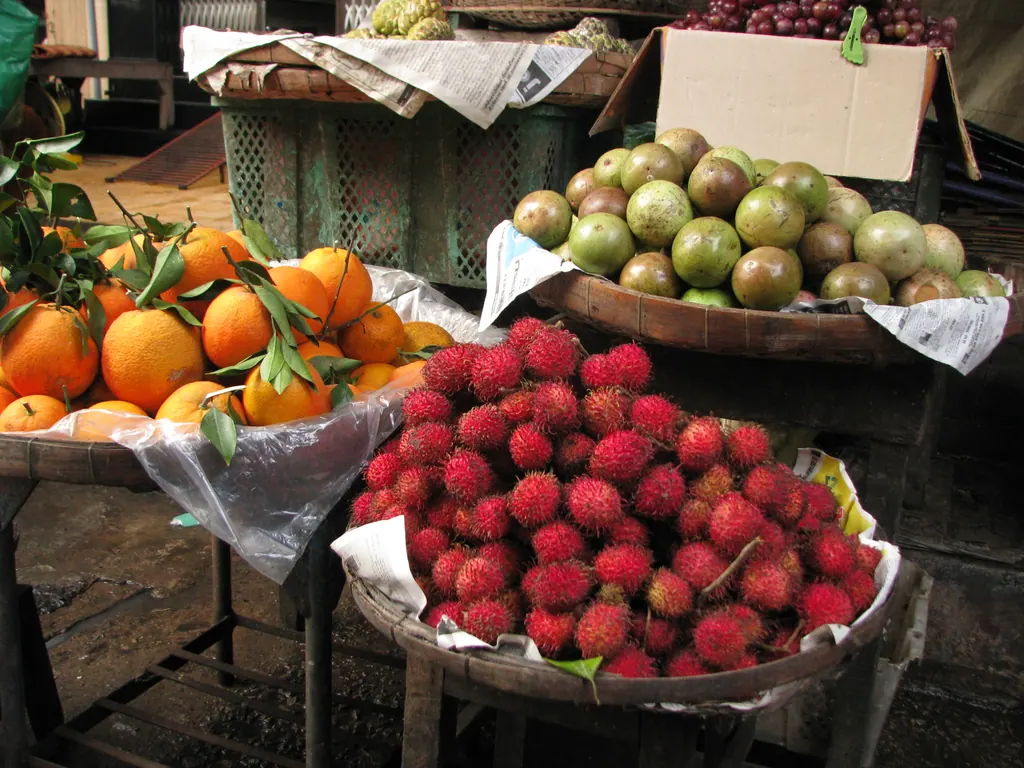
The Mekong Delta is Vietnam's fruit bowl. Rambutan, mangosteen, longan, star apple, pomelo, jackfruit, dragon fruit and durian are all grown here. The Cai Rang floating market near Can Tho is the best known place to see the produce trade, and it is most active just after sunrise. Back on land, try elephant ear fish fried whole and sour soups with tamarind.
Phu Quoc island is famous for its fish sauce. Made from anchovies fermented with salt in large wooden barrels, Phu Quoc fish sauce became the first Vietnamese product to receive Protected Designation of Origin status in the European Union, in 2012. The island also grows black pepper, and its night market in Duong Dong is lined with grilled seafood stalls. Note that airlines often restrict fish sauce in luggage, so check the rules before you buy a bottle as a souvenir.
Mui Ne, on the coast of Phan Thiet, is a fishing town as much as a beach resort. Its seafood restaurants grill scallops, squid, crab and fish, usually for less than in the big cities. Try banh can, small rice cakes cooked in clay molds and served with fish sauce, and dried squid as a snack.
What about Dalat?
The cool highland town of Dalat grows much of Vietnam's temperate produce: strawberries, avocados, artichokes, flowers and vegetables. Its signature street snack is banh trang nuong, sometimes called Vietnamese pizza: rice paper grilled over charcoal with egg, spring onion, dried shrimp and chili sauce. Wash it down with warm soy milk from the vendors at Dalat Market's night market, and take home artichoke tea.
How does Vietnamese coffee culture work?
Vietnam is one of the world's biggest coffee producers, and most of it is strong, dark robusta grown in the Central Highlands. Coffee is brewed slowly through a small metal filter (phin) placed on top of the glass, and the classic order is ca phe sua da: coffee with sweetened condensed milk over ice. Ca phe den da is the same without milk. In 2026, a glass at a street stall cost around 20,000-35,000 dong (about $0.80-1.35).
Egg coffee (ca phe trung) is Hanoi's contribution: egg yolk whipped with sugar and condensed milk into a thick, sweet foam on top of hot coffee. The usual story credits a bartender at Hanoi's Metropole hotel, Nguyen Van Giang, who created it in 1946 when milk was scarce. In Hue, salt coffee (ca phe muoi) is topped with lightly salted cream, and coconut coffee, blended with frozen coconut milk, is popular everywhere.
Can vegetarians and vegans eat well in Vietnam?
Yes, thanks to Buddhism. Vegetarian food is called chay, and many Buddhists eat vegetarian on the 1st and 15th days of the lunar month, so every city has restaurants serving it, often close to pagodas. Look for signs saying "com chay" (vegetarian rice) or "quan chay" (vegetarian restaurant). Menus often include meatless versions of pho, bun bo Hue and banh xeo. Ho Chi Minh City has the widest choice, and Hanoi, Hue and Hoi An are not far behind.
Outside chay restaurants, it is harder. Broths are almost always made with meat or bones, and fish sauce and shrimp paste go into nearly everything. The useful phrases are "toi an chay" (I eat vegetarian) and "khong nuoc mam" (no fish sauce). Vegans should also ask about egg in noodles and pastries.
How do you eat street food safely?
Street food is generally safe if you choose wisely. A few habits help:
- Eat where it is busy, especially with locals. High turnover means fresh ingredients.
- Choose dishes cooked to order or served boiling hot, like pho and grilled meats.
- Do not drink tap water. Ice in cafés and restaurants in the cities is usually factory made, but if you are unsure, skip it.
- Be cautious with raw herbs and shellfish in the first days if your stomach is sensitive, and carry oral rehydration salts.
As for etiquette: you sit on small stools, share tables with strangers and pay at the end. In tourist areas, ask the price first if there is no menu. Wet towels on the table may cost a few thousand dong if you open them. Do not stick chopsticks upright in a bowl of rice, since it resembles incense at a funeral. Tipping is not expected at street stalls, though it is appreciated in sit-down restaurants. Most street vendors take cash only, so carry small notes; a 500,000 dong note is hard to break at a noodle stall.
Planning your food trip
A day of eating out at street stalls and simple local restaurants can cost less than 300,000 dong (about $11.50) in 2026, which makes Vietnam one of the best value food destinations in Asia and a natural fit for budget travel. Restaurants in tourist areas and hotel dining cost several times more.
Plan your route around the food as much as the sights: pho and bun cha in Hanoi, a day in Hue for bun bo Hue and the royal small plates, cao lau in Hoi An, and Saigon's evening food streets at the end. Eat breakfast early, since many of the best soups sell out by mid morning. Find more inspiration on our Vietnam destination page, and if you are combining countries, compare with our guides to food in Taiwan and food in the Philippines, or browse more in food and drink.
Frequently asked questions
What is the national dish of Vietnam?
Pho, the beef or chicken noodle soup from the north, is the dish most Vietnamese and visitors would name. Hanoi pho was added to Vietnam's list of national intangible cultural heritage in 2024.
How much does a meal cost in Vietnam?
At street stalls in 2026, a bowl of pho cost around 40,000-70,000 dong (about $1.50-2.70) and a banh mi around 20,000-35,000 dong (about $0.80-1.35). Restaurants in tourist areas charge considerably more.
Is street food in Vietnam safe to eat?
Generally yes, if you eat at busy stalls with high turnover and choose dishes that are cooked to order or served very hot. Avoid tap water and be careful with raw shellfish in your first days.
Is it easy to be vegetarian in Vietnam?
It is easy in the cities thanks to Buddhist vegetarian restaurants, signposted com chay or quan chay. Elsewhere, broths are usually meat-based and fish sauce is in most dishes, so ask for no fish sauce (khong nuoc mam).
Do you tip in restaurants in Vietnam?
Tipping is not expected at street stalls or simple local eateries. In sit-down restaurants a small tip for good service is appreciated, and some upscale places add a service charge to the bill.
- Ha Noi-styled pho gains recognition as national intangible cultural heritage (Hanoi government portal)
- Cao Lau: The culinary mystery of Hoi An (Vietnam National Authority of Tourism)
- Unique cuisine characteristic of Hue city (Vietnam National Authority of Tourism)
- HCMC: A Feast in the Streets (Vietnam Tourism)
- Commission Implementing Regulation (EU) No 928/2012, Phu Quoc (PDO)
- Vietnam travel advice: health (GOV.UK)