In the Philippines, "Kain na tayo" ("let's eat") is not only an invitation. It is closer to a greeting, and you will hear it from people who have only just met you. Food runs through the day in a way that surprises many first time visitors: rice at breakfast, a snack in the late afternoon called merienda, a full lunch and dinner, and a stall selling grilled skewers or sweet rice cakes on almost every corner in between.
Filipino food has a quieter reputation abroad than Thai or Vietnamese cooking, which undersells strong regional traditions, from the garlic sausages of the Ilocos coast to the coconut stews of Bicol and the smoked pork of the mountains. This guide covers the dishes worth knowing, how Filipinos actually eat, which regions and islands are known for what, and what you can expect to pay. Prices are rounded and from 2026, at roughly 60 pesos to the US dollar.
What makes Filipino food different?
The short answer is sourness. Where neighboring cuisines lean on chili or fish sauce, Filipino cooking reaches for vinegar, calamansi (a small, tart citrus), tamarind and unripe fruit. Vinegar kept food safe in a hot climate long before refrigerators.
The second thing to know is how many layers there are. Austronesian cooking (grilling, souring, coconut milk, rice) forms the base. Chinese traders brought noodles, spring rolls and soy sauce, which became pancit, lumpia and toyo. More than three centuries of Spanish rule, from 1565 to 1898, left names, stews, cured sausages and a love of whole roast pig. American rule added canned goods and a fast food habit. Spread across more than 7,600 islands, the same dish can taste very different in Luzon, the Visayas and Mindanao.
Which dishes should you try first?
Adobo. The closest thing to a national dish: chicken or pork (often both) braised in vinegar, soy sauce, garlic, bay leaf and black peppercorns until the sauce turns dark and glossy. The Spanish gave it the name, but the method of cooking in vinegar predates them. Every family has its own version.
Sinigang. A sour soup, usually soured with tamarind, with pork, shrimp or milkfish and vegetables such as water spinach, radish, long beans and okra.
Kare-kare. Oxtail, tripe and vegetables in a thick peanut sauce, served with a small dish of bagoong (fermented shrimp paste). The stew is mild; the bagoong supplies the punch.
Sisig. Chopped pig's face and ears, grilled and seasoned with calamansi, onions, chili and often chicken liver, then served sizzling on a hot plate, frequently with a raw egg cracked on top. The modern version is credited to Lucia Cunanan, known as Aling Lucing, in Angeles City in Pampanga in the 1970s, and Angeles now calls itself the sisig capital of the country. The word sisig itself is far older and appears in a Kapampangan dictionary from 1732.
Kinilaw. Raw fish, usually tuna or mackerel, cured in vinegar with ginger, onion, chili and sometimes coconut milk. It is at its best on the islands, where the fish was swimming that morning.
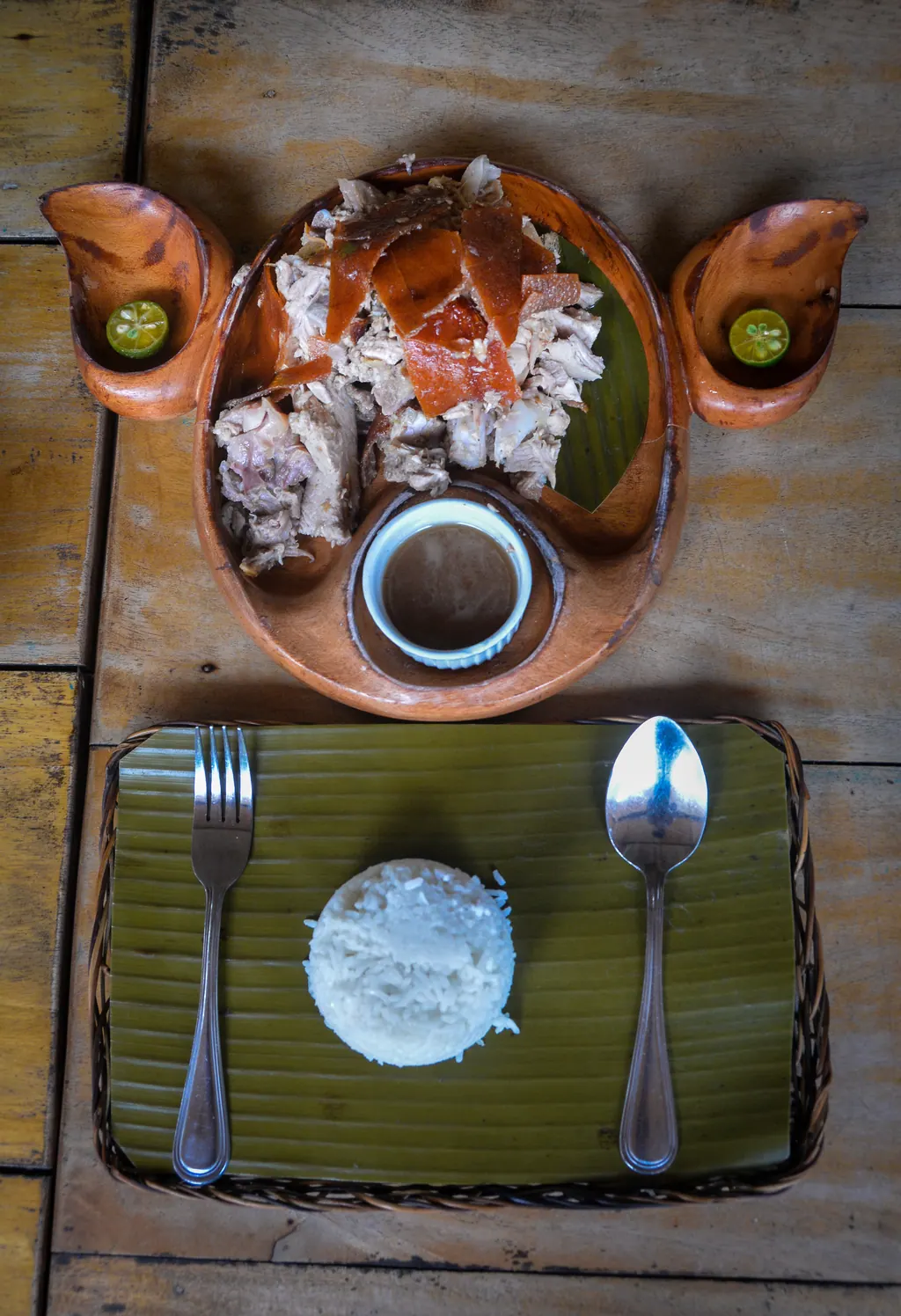
Lechon. A whole roast pig, cooked on a bamboo spit over charcoal for hours until the skin turns glassy and crisp. In Manila it usually comes with a sweet liver based sauce. In Cebu the belly is stuffed with lemongrass, garlic, spring onions and other aromatics, and the meat is seasoned so well that locals say it needs no sauce at all.
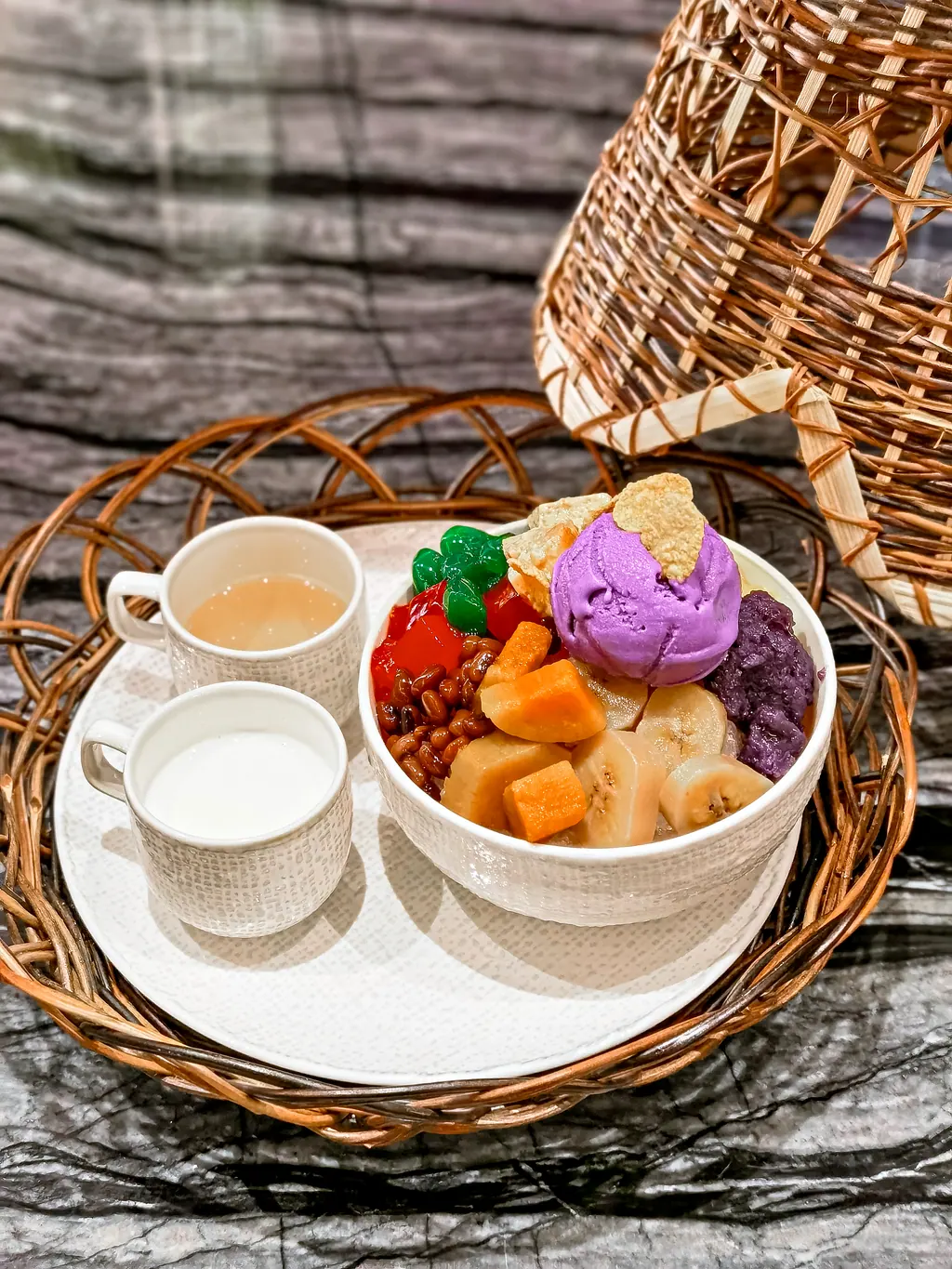
Halo-halo. The name means "mix mix", and that is the instruction. Shaved ice and evaporated milk go on top of sweet beans, jackfruit, palm fruit, coconut strips, gelatin and sweetened banana, crowned with leche flan and purple ube (yam) jam or ice cream. Stir it all together before you start.
Also look for pancit (stir fried noodles, eaten at birthdays for long life), lumpia (spring rolls) and lechon kawali (pork belly boiled, then deep fried).
How do Filipinos eat in a typical day?
Rice comes with everything. A meal without rice is considered a snack, and many Filipinos eat it three times a day. Breakfast is often a "silog": garlic fried rice (sinangag) and a fried egg (itlog) with a meat. Tapsilog comes with cured beef, longsilog with sausage.
Merienda fills the gap. In the mid afternoon people snack on rice cakes, turon (banana and jackfruit rolled in a wrapper and fried in caramel), banana cue, pancit or bread.
Carinderias and turo-turo are where most people eat lunch. A carinderia is a small canteen with the day's dishes kept in pots behind glass. Turo-turo literally means "point point": you point at the dishes you want, get them on a plate with rice, and pay at the end. It is the cheapest and often the best way to try home style cooking, and a plate with rice and one or two dishes costs around 60-150 pesos (about $1-2.40), more in Manila and tourist areas. Go at lunchtime, when the food is freshest.
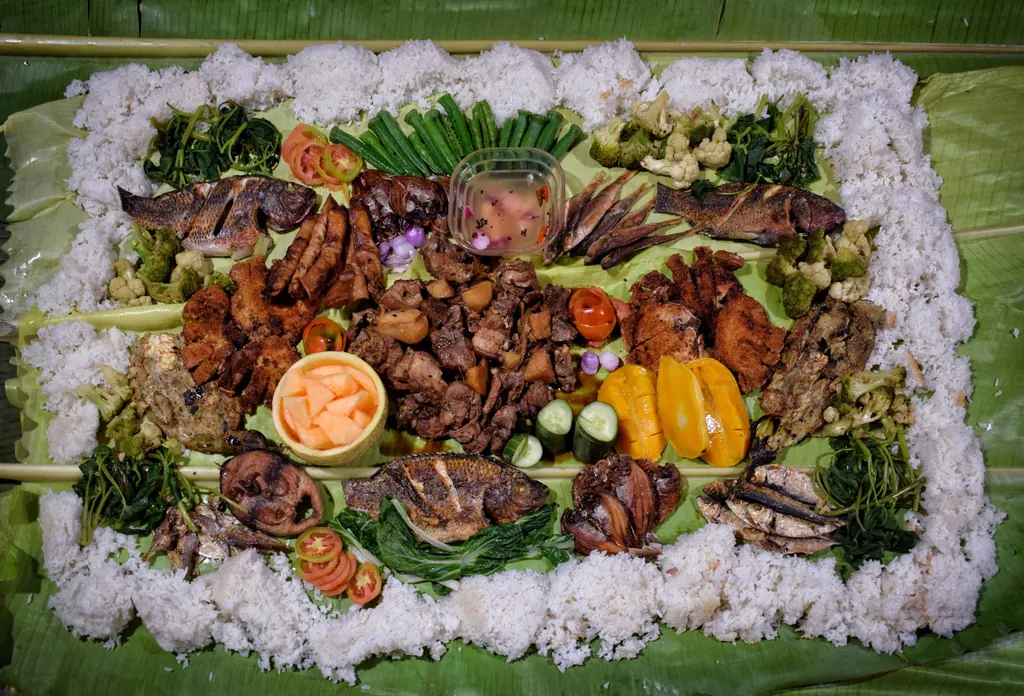
Kamayan means eating with your hands. In a kamayan or "boodle fight" meal, rice and dishes are piled in a long line on banana leaves and everyone eats together without cutlery. It started as a military tradition and many restaurants now offer it as a set. In everyday meals, Filipinos use a spoon in the right hand and a fork in the left, using the fork to push food onto the spoon. Knives are rare at the table.
Sawsawan is the sauce on the side. Most tables have small dishes for mixing your own dip from vinegar, soy sauce, calamansi, chili and fish sauce. Grilled meat and fried fish are meant to be dipped.
What does each region do best?
Manila and Pampanga
Manila is the easiest place to sample food from the whole country. Binondo, founded in 1594 and often described as the oldest Chinatown in the world, is good for dumplings, hopia (pastries) and Chinese Filipino noodle shops. At the dampa seafood markets, such as the one on Macapagal Boulevard in Pasay, you buy fish, crab and prawns from the stalls and pay a nearby restaurant to cook them the way you like (called paluto). In Makati, the weekend markets in Salcedo Village on Saturdays and Legazpi Village on Sundays run from around 7 a.m. to 2 p.m. and gather regional food in one place. Pampanga, a couple of hours north, is widely seen as the country's culinary heartland and the home of sisig.
Ilocos, Vigan and the Cordillera
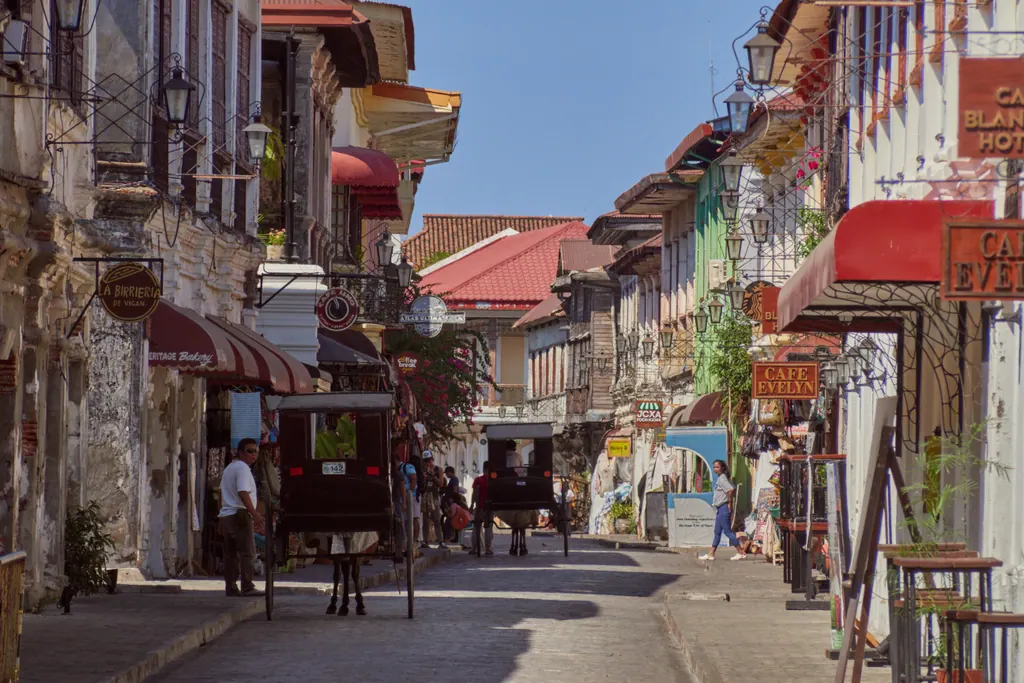
The northwest coast of Luzon has bold, garlicky food. In Vigan, the UNESCO listed Spanish colonial town, the signature snack is the Vigan empanada: a crisp orange shell made from rice flour, filled with green papaya, egg and the local longganisa, a short, garlicky sausage. The stalls by Plaza Burgos are the classic place to try one, usually with spicy cane vinegar. Ilocos is also home to bagnet, crisp deep fried pork belly, and pinakbet, vegetables cooked with bagoong.
Up in the Cordillera, around Banaue and Sagada, the food changes again. Look for etag, salt cured pork that is smoked or dried for days and used to flavor soups, and tapuy, a rice wine made from heirloom rice that is central to Ifugao rituals. Pinikpikan, a chicken soup with etag, is a traditional dish, though the old way of preparing the chicken (beating it before slaughter) is controversial, and some travelers prefer to skip it. Sagada's cafes are also known among Filipino travelers for lemon pie and yogurt. For the cultural side of the region, see our guide to culture and festivals in the Philippines.
South Luzon: Tagaytay, Batangas and Bicol
Tagaytay, on the ridge above Taal Lake, is where Manila goes for the weekend to eat bulalo, the beef marrow soup that suits its cooler air. The surrounding province of Batangas grows kapeng barako, a strong coffee made from the Liberica species with a bold, almost smoky taste.
Bicol, in the far southeast of Luzon around Mayon Volcano, cooks with coconut milk and chili more than any other region. Laing (taro leaves simmered in coconut milk) is the local classic, and pili nuts are the favorite souvenir. The famous Bicol express (pork in coconut milk with plenty of chili) has a twist in its tale: it is usually credited to a cook in Malate, Manila, who named it after the train that ran from Manila to Legazpi.
Cebu and its islands
Cebu is lechon country. Carcar, south of Cebu City, has a section of its public market given over to roast pig and is also known for chicharon (pork cracklings). In Cebu City, the barbecue strip off Fuente Osmeña, known for decades as Larsian and rebranded by the provincial government in 2023 as Sugbo Sentro Fuente Osmeña, serves grilled skewers with puso, rice cooked in a woven coconut leaf pouch. Carbon Market, the city's oldest market, is good for fruit and dried mangoes.
Further out, Bantayan Island is known for its eggs and its dried fish, and many travelers on the way south to Oslob stop at the roadside lechon stalls on the coast road.
Bohol, Dumaguete and the central islands
Bohol's sweet signature is calamay from the town of Jagna: a sticky mix of glutinous rice, coconut milk and brown sugar, sealed in a coconut shell with a red band. Look also for peanut kisses, small meringue cookies shaped like the Chocolate Hills. Dumaguete, across the water in Negros Oriental, is a laid back university town known for silvanas (frozen cashew meringue sandwich cookies) and budbud, sticky rice wrapped in banana leaves.
Palawan, Siargao and Puerto Galera
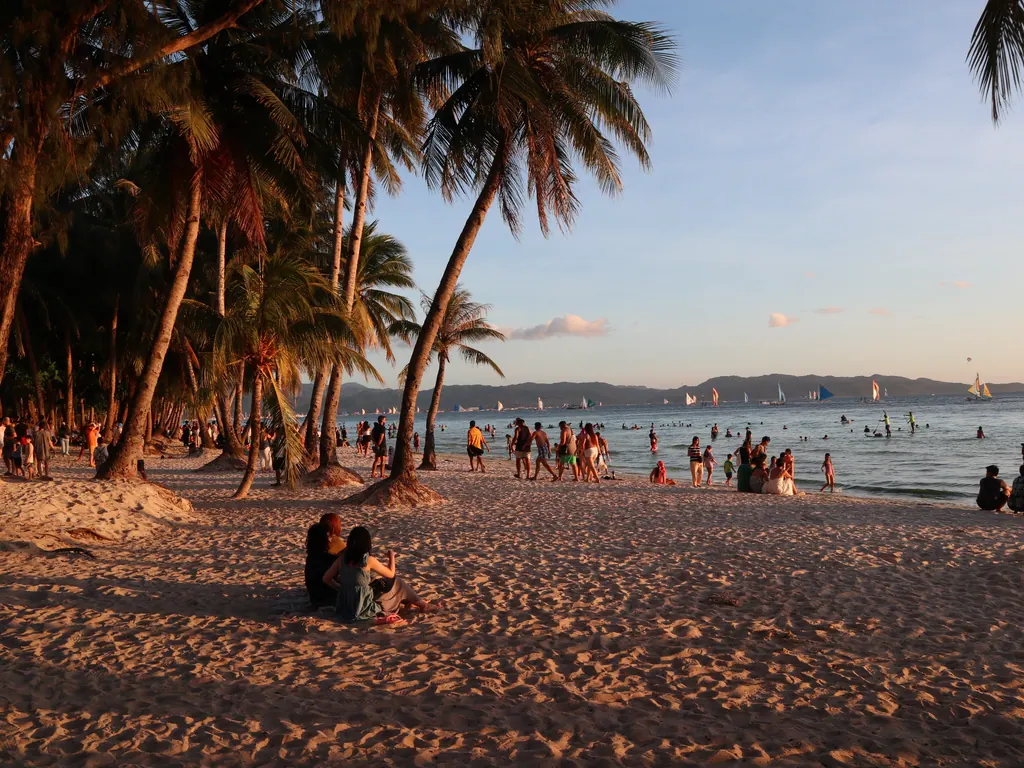
On the islands, the best food is the simplest: grilled fish, squid and prawns, kinilaw and fresh fruit. Island hopping tours from El Nido and Coron usually include a lunch of grilled seafood and rice served on the boat or a beach. Palawan is known for its cashews, and in Puerto Princesa you can try tamilok, a mangrove shipworm eaten raw with vinegar and calamansi that tastes a little like an oyster. Siargao, the surf island, is good for kinilaw and seafood barbecue, and Puerto Galera's beaches have grills along the sand in the evening.
What street food is worth trying?
Street food comes out in force in the late afternoon. The usual lineup:
- Isaw: grilled chicken or pork intestines on skewers, dipped in spiced vinegar. Other grilled skewers include chicken feet ("adidas") and pork ears.
- Fish balls, squid balls and kikiam, deep fried and dipped in sweet or spicy sauce. Skewers cost a few pesos each.
- Kwek-kwek: quail eggs in orange batter, deep fried.
- Banana cue and turon: caramelized bananas on a stick or in a wrapper.
- Taho: warm silken tofu with brown sugar syrup and sago pearls, sold by vendors carrying two buckets on a pole, mostly in the morning.
- Balut: a fertilized duck egg, boiled and eaten with salt or vinegar. It is a famous dare for visitors, but for many Filipinos it is just an evening snack with beer.
Choose stalls with a steady stream of local customers and food cooked in front of you. Many visitors stick to bottled water and are careful with ice in rural areas.
What should you drink?
San Miguel. San Miguel Brewery was founded in Manila in 1890, and its Pale Pilsen is the default beer across the country. Red Horse is its stronger sibling. A bottle from a sari-sari (corner) store costs around 60-80 pesos (about $1-1.30), and around 100-200 pesos ($1.70-3.30) in bars and beach resorts.
Calamansi and buko. Calamansi juice, sweetened and served over ice, is the classic cooler. Buko juice is drunk straight from a young green coconut, often with the soft flesh scooped out afterward.
Tuba and lambanog. Tuba is a mildly alcoholic wine made from fermented coconut sap, common in the Visayas and drunk fresh. Lambanog is its distilled version, a strong coconut spirit associated with Quezon province.
Barako coffee. Kapeng barako from Batangas and Cavite is strong, heavy and very different from the arabica in most cafes. Many local restaurants still serve instant coffee by default, so ask for brewed barako if you want the real thing.
How much does food cost in the Philippines?
Local food is very cheap; imported food, wine and Western restaurants are not. These are rough 2026 prices.
| What | Typical price |
|---|---|
| Carinderia plate with rice and one or two dishes | around 60-150 pesos (about $1-2.40) |
| Silog breakfast at a local eatery | around 100-180 pesos (about $1.60-2.90) |
| Vigan empanada | around 50-80 pesos (about $0.80-1.30) |
| Street food skewers | a few pesos to around 30 pesos (under $0.50) each |
| Halo-halo | around 80-200 pesos (about $1.30-3.20) |
| Main course at a mid range restaurant | around 300-600 pesos (about $4.80-9.70) |
| Bottle of San Miguel in a bar | around 100-200 pesos (about $1.60-3.20) |
Restaurants in Manila's business districts, Boracay and resort areas of Palawan charge far more. Many sit down restaurants add a 10 percent service charge to the bill, and when they do, an extra tip is not expected. Carinderias and street stalls do not expect tips. Most small places only take cash, so carry small notes. For more practical advice on money and safety, see our travel tips.
Before you order: a few practical tips
- Order to share. Filipino meals are served family style, with several dishes and plenty of rice in the middle of the table. Two people can comfortably share three dishes.
- Eat lechon in Cebu, sisig in Pampanga, empanada in Vigan. The classic dishes are made everywhere, but the version in their home region is usually the one people talk about for years.
- Bring pasalubong. Filipinos traditionally bring food gifts back from trips, and the regional specialties (dried mangoes from Cebu, calamay from Bohol, pili nuts from Bicol, barako coffee from Batangas) make easy souvenirs.
- Vegetarians need patience. Pork and shrimp paste are in a large share of dishes, including many that look like vegetables. Learn "walang karne" (no meat) and expect cities to be easier than villages.
If you enjoy food led travel in Asia, our guide to food in Taiwan covers another island nation where the best meals cost very little. And for more on where to go, start at our Philippines destination page.
Frequently asked questions
What is the national dish of the Philippines?
There is no official national dish, but adobo, meat braised in vinegar, soy sauce, garlic and bay leaf, is the one most Filipinos would name. Lechon and sinigang are close contenders.
Is Filipino food spicy?
Mostly not. Filipino cooking leans sour and savory rather than hot, and chili is usually added at the table. Bicol in southeast Luzon is the big exception, with dishes like Bicol express and laing cooked with plenty of chili.
Is street food safe to eat in the Philippines?
Most travelers eat street food without problems if they pick busy stalls where food is cooked fresh in front of them. Drink bottled or filtered water rather than tap water, and be more careful with raw dishes such as kinilaw if your stomach is sensitive.
Do you tip in restaurants in the Philippines?
Many sit down restaurants add a 10 percent service charge, and then no extra tip is expected. Where there is no service charge, leaving small change or around 10 percent is appreciated. Carinderias and street stalls do not expect tips.
What is the best place in the Philippines for lechon?
Cebu is the most famous, especially the town of Carcar south of Cebu City, where lechon is stuffed with lemongrass and aromatics and served without sauce. In Manila, the La Loma district in Quezon City also has a long lechon tradition.
- Angeles City Tourism: Sisig and Aling Lucing
- Municipality of Jagna: Welcome to Jagna
- Philstar: The route that inspired the dish, origin of Bicol Express
- Philstar: Larsian reopens
- Philippine News Agency: Batangas coffee farmers seek support for kapeng barako
- Philippine Department of Tourism USA: 5 must-try delicacies in Vigan