On the third Sunday of January, Cebu City wakes up to drums. By mid-morning, dancers in costumes the color of candy are moving down the street in a two-steps-forward, one-step-back rhythm, holding small statues of the Christ Child above their heads, while a crowd of millions shouts "Pit Señor!" A week later, Iloilo does it again. Then Kalibo, then Baguio, and so on through the year, until it is October and Bacolod is full of smiling masks.
Festivals are the loudest way into Filipino culture, but they are only the top layer. Underneath sit more than three centuries of Spanish rule, almost half a century of American influence and Indigenous traditions that are far older than either, from the rice terraces of the Cordillera to the burial cliffs of Sagada. This guide goes through the big festivals and when they happen, the heritage sites worth building a trip around, and the etiquette that will make you a welcome guest at both.
Which festivals are worth planning a trip around?
The Philippines has a fiesta for almost every town and every saint, so the question is less "is something happening?" than "which one is worth the crowds?" These are the festivals that draw travelers from around the country and abroad. Dates follow a set pattern, but organizers adjust programs every year, so confirm the schedule with the local tourism office before you book.
| Festival | Where | When |
|---|---|---|
| Feast of the Black Nazarene (Traslación) | Quiapo, Manila | January 9 |
| Ati-Atihan | Kalibo, Aklan | Climax on the third Sunday of January |
| Sinulog | Cebu City | Third Sunday of January |
| Dinagyang | Iloilo City | Fourth Sunday of January |
| Panagbenga | Baguio | All of February, big parades at the end of the month |
| Kaamulan | Malaybalay, Bukidnon | About a month in spring (March to April in 2026) |
| Holy Week | Nationwide, notably Bantayan Island | March or April, moves with Easter |
| Pahiyas | Lucban, Quezon | May 15 |
| MassKara | Bacolod | October, peaking mid to late month |
| Lanzones Festival | Camiguin | Third or fourth week of October |
The January Santo Niño trio
Three of the biggest festivals honor the Santo Niño, the child Jesus, and they fall within about ten days of each other.
Sinulog in Cebu City is the largest. The name comes from a Cebuano word for the forward and backward motion of a river current, which is the basic step of the dance. The festival builds over a week of novena masses and processions, and the Grand Parade on the third Sunday of January is the main event; in 2026 it fell on January 18 and local media reported more than 5 million spectators. Hotels fill months in advance.
Ati-Atihan in Kalibo, on Panay Island, is often called the mother of Philippine festivals. Its climax falls on the same Sunday as Sinulog, but the feel is different: less choreographed competition, more open street party where visitors join the drumming and dancing. Participants traditionally blacken their faces with soot, a custom linked to a local legend about the Ati, the island's Indigenous people, and a practice that has drawn debate in recent years.
Dinagyang in Iloilo City follows a week later, on the fourth Sunday of January (January 25 in 2026). Its tribe competition is known for tight, athletic choreography, and Iloilo is also home to Miagao Church, one of the UNESCO Baroque churches.
Flowers, harvests and masks
Panagbenga, Baguio's flower festival, runs through February. The name is a Kankanaey word for a season of blooming, and the festival began in the 1990s to lift the city after the devastating 1990 Luzon earthquake. The street dance parade and float parade are the highlights; in 2026 they took place on February 28 and March 1.
Kaamulan in Bukidnon, on Mindanao, is the one festival on this list built entirely around Indigenous culture. Seven tribal groups of the province, among them the Talaandig, Higaonon and Manobo, take part with rituals, music and street dancing. It usually runs for about a month, but the timing has shifted: in 2026 it opened on March 19, with the street dancing in mid-April.
Pahiyas in Lucban, Quezon, falls every May 15, the feast of San Isidro Labrador, patron saint of farmers. Houses along the route are covered in rice, vegetables, fruit and kiping, thin leaf-shaped rice wafers dyed in bright colors. It is a festival you walk through rather than watch, and a long day trip from Manila.
MassKara in Bacolod, on Negros, began in 1980, a year when the sugar-dependent province was in crisis. Its name joins "mass" with the Spanish "cara," face, and its trademark is the smiling mask. In 2026 the city scheduled the festival for October 1-18, with the major events in the last ten days.
The Lanzones Festival on Camiguin celebrates the island's sweet lanzones fruit harvest in the third or fourth week of October, with street dancing in the capital, Mambajao. In 2026 the main festival ran October 18-25.
Faith beyond the parades
Two religious events are worth knowing about even if you do not plan around them. On January 9, the image of the Black Nazarene is carried through the streets of Quiapo in Manila in a procession that draws millions of barefoot devotees and can last a full day or longer. It is a serious crowd risk; watch from the edge.
Holy Week changes the country. Many businesses close from Maundy Thursday to Easter Sunday, transport is packed as people go home to their provinces, and towns hold processions and passion plays. Bantayan Island, off northern Cebu, is known for its Holy Week processions and fills up, so book far ahead.
How did Spain, America and the Indigenous past shape the country?
It helps to see Filipino culture as layers. The oldest belongs to the many Indigenous groups of the archipelago, whose rice terraces, weaving, music and oral epics predate any outside influence. Spain claimed the islands from 1565 and ruled for over three centuries, which explains the Catholic faith that is still central to daily life, the stone churches, the town plazas and many Spanish words in Filipino languages. The United States took control in 1898 and stayed until independence in 1946, leaving English as a widely spoken language, a public school system and towns like Baguio, designed as a summer capital. Chinese traders, present long before the Spanish, left their mark on food, commerce and architecture.
Where is the Spanish colonial heritage best preserved?
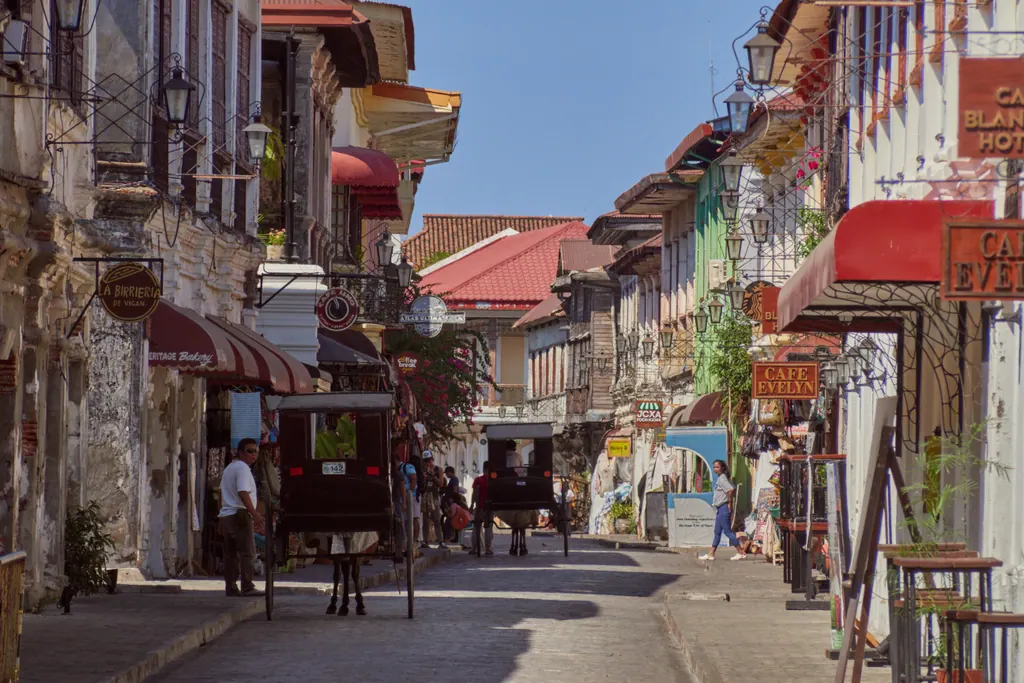
Vigan, in Ilocos Sur, is described by UNESCO as the most intact example of a planned Spanish colonial town in Asia, and was inscribed as a World Heritage Site in 1999. Founded in the 1570s, it became a trading hub where Chinese, Ilocano and Spanish influences merged in its mansions: stone ground floors, wooden upper floors and capiz shell windows. Calle Crisologo, the cobbled main street, is closed to cars, and horse-drawn kalesa still carry visitors around. Go early or late in the day; at midday the street fills with tour groups.
Intramuros, the old walled city of Manila, was founded as the Spanish capital in 1571. Most of it was destroyed in the Battle of Manila in 1945, and much of what you see today is reconstruction, but the walls, Fort Santiago and San Agustin Church remain. San Agustin, completed in 1607, is considered the oldest stone church in the country and was the only building in Intramuros to survive the battle. It is also one of the four UNESCO Baroque Churches.
Cebu City is where the Spanish story began. Magellan's Cross, in a small kiosk near the city hall, marks the place where Ferdinand Magellan's expedition planted a cross in 1521; tradition holds that the original is encased inside the one you see. Next door, the Basilica Minore del Santo Niño keeps the Santo Niño image that Magellan reportedly gave to the newly baptized queen of Cebu, regarded as the oldest Christian relic in the Philippines. Fort San Pedro, a short walk away, completes the walk.
Which churches should you see?
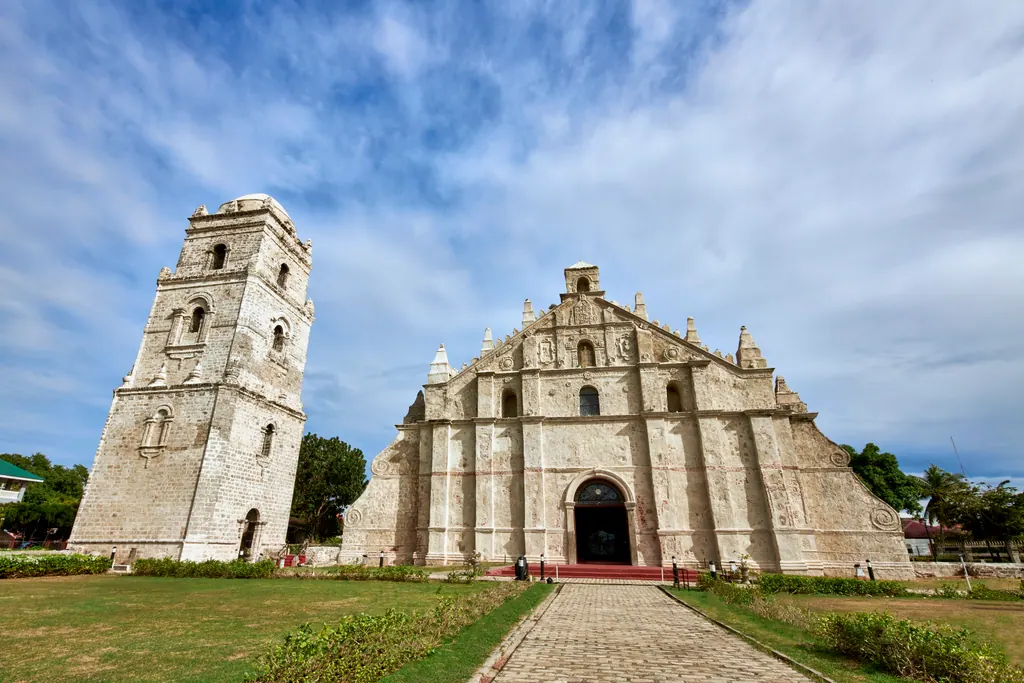
In 1993, UNESCO listed four churches together as the Baroque Churches of the Philippines, describing them as a reinterpretation of European Baroque by Chinese and Filipino craftsmen. They are San Agustin in Manila, San Agustin in Paoay (Ilocos Norte), Nuestra Señora de la Asunción in Santa Maria (Ilocos Sur) and Santo Tomas de Villanueva in Miagao (Iloilo).
Paoay is the most photographed, with huge buttresses on its sides, a style often called earthquake Baroque because the walls were built to survive tremors. Santa Maria sits on a hill reached by a long stairway. Miagao's sandstone facade is carved with a coconut tree and local plants, a striking example of how local builders made the style their own. Paoay and Santa Maria combine easily with Vigan on a road trip through the Ilocos region.
Bohol has some of the country's oldest churches outside the UNESCO list, including Baclayon and Loboc. Many were badly damaged in the magnitude 7.2 earthquake of October 2013. Baclayon was restored and reopened in 2018, while restoration elsewhere has taken longer, so check what is open before you plan a church route.
Other stops with colonial history include Dumaguete on Negros, with an 18th century bell tower and Silliman University, founded by American missionaries in 1901, and the Cagsawa Ruins in Albay, the bell tower of a church buried by the eruption of Mayon Volcano in 1814. Mayon is still one of the most active volcanoes in the country, so check the current alert level from PHIVOLCS before visiting.
What should you know about the Cordillera?
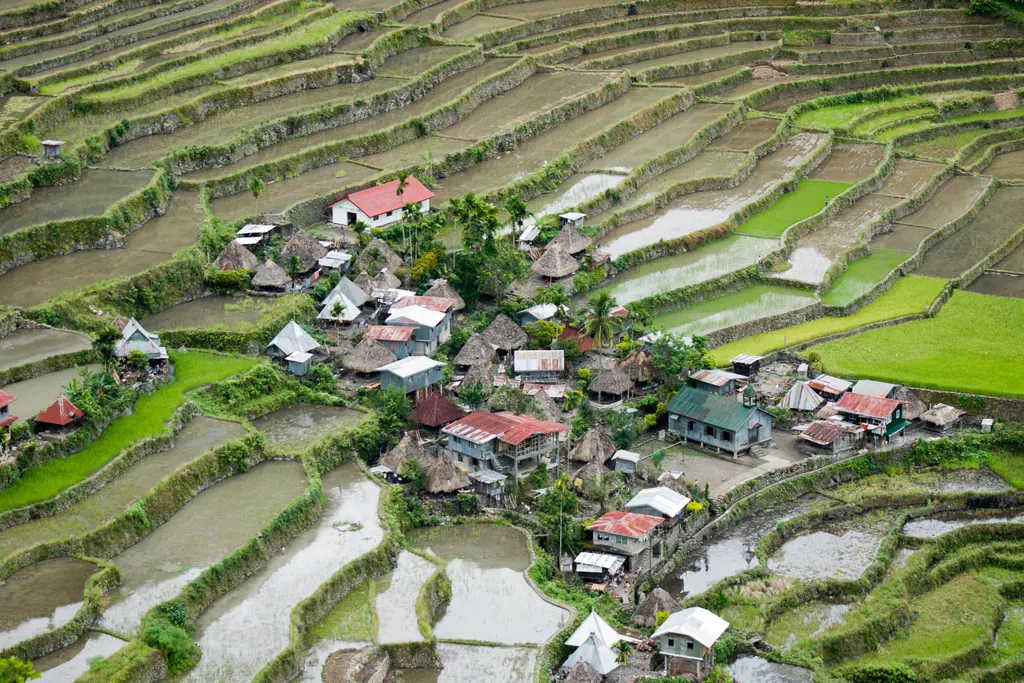
The mountains of northern Luzon hold the country's most important Indigenous heritage. The Rice Terraces of the Philippine Cordilleras were inscribed by UNESCO in 1995, covering five terrace clusters in Ifugao province: Batad and Bangaan in Banaue, Mayoyao, Hungduan and Nagacadan in Kiangan. They were carved into the slopes by hand, and are still farmed by Ifugao families using a water system shared across the community. The site was placed on the List of World Heritage in Danger in 2001 because of neglect and abandoned terraces, and removed from it in 2012 after restoration work. The Hudhud, the chanted epics of the Ifugao, are on UNESCO's list of intangible heritage. Batad, the most famous cluster, is reached by road and then on foot from Banaue, the usual base.
Sagada, in Mountain Province, is known for its hanging coffins, wooden coffins placed on ledges and in crevices of limestone cliffs, a burial practice of the local Igorot people that is now rare but not extinct. The best-known site is in Echo Valley. Visitors must register at the municipal tourism office, pay an environmental fee and hire an accredited local guide for most sites, including Echo Valley. These are burial grounds for families who still live in the town: do not touch the coffins, keep your voice down and do not take bones or objects.
How do you behave as a guest?
Filipinos are known for warm hospitality, and small gestures of respect go a long way.
- Use "po" and "opo." Adding "po" to a sentence, and saying "opo" for yes, is a sign of respect toward older people. Visitors who try are always appreciated.
- Expect the mano. Younger Filipinos greet elders by taking their hand and touching it to their forehead. You are not expected to do it yourself.
- Dress for church. Cover your shoulders and knees in churches and at the Santo Niño basilica, and keep quiet during mass.
- Ask before you photograph. This matters especially in Cordillera villages and with Indigenous performers at festivals.
- Take off your shoes in someone's home, and accept food or drink when offered.
- Read the nonverbal signals. Filipinos often point with their lips and say yes by raising their eyebrows. A direct "no" is rare, so a vague "maybe" can mean no.
- Stay patient. Losing your temper in public rarely helps.
Tipping is appreciated rather than required; see our money and tipping tips for the bigger picture.
How to plan your trip around festivals and heritage
If festivals are the main goal, January is the month: you can see Sinulog in Cebu and Dinagyang in Iloilo a week apart, with a ferry or short flight between them, and add Ati-Atihan if you skip Sinulog's main day. Book accommodation as early as possible.
For heritage, the dry season from roughly December to May is the easiest time, especially for the Ilocos and Cordillera regions, where heavy rain in the wet months can cause landslides on mountain roads. A two-week northern loop could run from Manila and Intramuros to Baguio, Sagada, Banaue and Batad, then west to Vigan, Santa Maria and Paoay. A Visayas route can pair Cebu's heritage sites with Bohol's churches and Iloilo's Miagao.
During big festivals, keep valuables in a front pocket and agree on a meeting point, since phone signals often drop in huge crowds. For more on the country, see our Philippines destination page, and browse more culture articles or general travel tips before you go.
Frequently asked questions
What is the biggest festival in the Philippines?
Sinulog in Cebu City is usually named the biggest, with local media reporting more than 5 million spectators at the 2026 Grand Parade. The Feast of the Black Nazarene in Manila on January 9 draws even larger crowds, but it is a religious procession rather than a festival.
Are Sinulog and Ati-Atihan on the same day?
Yes, both peak on the third Sunday of January, Sinulog in Cebu City and Ati-Atihan in Kalibo on Panay. To see two big January festivals, pair one of them with Dinagyang in Iloilo, held a week later.
What is the best month to visit the Philippines for festivals?
January has the highest concentration, with the Black Nazarene, Sinulog, Ati-Atihan and Dinagyang within about two weeks. February brings Panagbenga in Baguio, May has Pahiyas and October has MassKara and the Lanzones Festival.
Do you need a guide to see the hanging coffins in Sagada?
Yes, for most sites. Visitors register at the municipal tourism office, pay an environmental fee and hire an accredited local guide, including for Echo Valley.
Which UNESCO World Heritage Sites in the Philippines are about culture?
Three cultural sites are on the list: the Baroque Churches of the Philippines (1993), the Rice Terraces of the Philippine Cordilleras (1995) and the Historic City of Vigan (1999). The country's other World Heritage Sites are natural, such as Tubbataha Reefs and the Puerto Princesa Underground River.
- Baroque Churches of the Philippines, UNESCO World Heritage Centre
- Rice Terraces of the Philippine Cordilleras, UNESCO World Heritage Centre
- Historic City of Vigan, UNESCO World Heritage Centre
- MassKara Festival 2026 set on October 1-18, Bacolod City Government
- Sinulog 2026 wraps up early, drawing 5.2M spectators, SunStar
- Camiguin to celebrate 47th Lanzones Festival, Daily Tribune
- Kaamulan 2026 opens with sacred rites, unity call, Inquirer