
Ask a Filipino when to visit and you will probably hear two words before you hear a month: amihan and habagat. They are the names of the two monsoon winds that take turns over the archipelago, and they decide far more than whether it rains. They decide which side of an island has calm water, which ferry ports run, which beach on Boracay is flat and which is full of kitesurfers, and whether the surf at Siargao is worth the trip.
The Philippines has more than 7,000 islands spread over roughly 1,800 kilometers from north to south, so a single "best month" only gets you halfway. This guide goes through the seasons, the typhoon calendar, the holiday crowds and the main destinations one by one, using 30 years of climate data from PAGASA, the national weather service.
How do the seasons actually work?
PAGASA divides the year into a rainy season from June to November and a dry season from December to May. The dry season has two halves: a cool dry period from December to February and a hot dry period from March to May. Across the lowland weather stations, the coolest month averages about 25.5°C (78°F) and the warmest, May, about 28.3°C (83°F). In Manila the average afternoon high climbs from about 30°C (86°F) in January to 34°C (93°F) in April and May.
The monsoons sit on top of that calendar:
- Amihan, the northeast monsoon, usually arrives in late October or November and lasts until about March. It brings cooler, drier air to most of the country, but it also pushes rain onto coasts that face east and north.
- Habagat, the southwest monsoon, usually starts in late May or June and lasts until about October. PAGASA describes it as warm, moist winds that bring rain to the western part of the country.
That second point is the one most travel calendars miss. "Dry season" mostly describes the western half of the Philippines: Manila, Palawan, Boracay, Mindoro and western Visayas. The Pacific side, including Bicol, Samar, eastern Mindanao and Siargao, often gets its heaviest rain during amihan, exactly when Palawan is at its sunniest. PAGASA dates the start and end of each monsoon every year, and the dates shift by a few weeks.
Rainy days month by month
The table shows the average number of days with at least 1 mm of rain, from PAGASA's climatological normals for 1991-2020. Surigao City is the closest PAGASA station to Siargao, and Legazpi sits at the foot of Mayon Volcano.
| Month | Manila | Coron (Palawan) | Cebu (Mactan) | Legazpi (Mayon) | Surigao (Siargao) | Baguio (mountains) |
|---|---|---|---|---|---|---|
| Jan | 3 | 3 | 12 | 18 | 24 | 3 |
| Feb | 3 | 2 | 9 | 13 | 19 | 3 |
| Mar | 3 | 3 | 7 | 14 | 19 | 5 |
| Apr | 3 | 4 | 5 | 12 | 15 | 8 |
| May | 7 | 11 | 9 | 13 | 10 | 18 |
| Jun | 11 | 17 | 13 | 14 | 12 | 19 |
| Jul | 16 | 21 | 15 | 18 | 12 | 24 |
| Aug | 16 | 19 | 13 | 16 | 10 | 25 |
| Sep | 16 | 20 | 14 | 17 | 11 | 22 |
| Oct | 11 | 14 | 15 | 18 | 16 | 13 |
| Nov | 8 | 7 | 12 | 20 | 21 | 7 |
| Dec | 8 | 6 | 14 | 22 | 23 | 5 |
Three patterns stand out. Manila and Palawan have a sharp dry season from January to April, with Coron averaging only about 23 mm of rain in February against more than 500 mm in July. Cebu is the most even of the six, with no month truly dry and no month truly drenched. And Surigao and Legazpi run almost in reverse: their wettest months are November to January, while May to September is comparatively dry.
When is typhoon season?
According to PAGASA, an average of about 20 tropical cyclones enter the Philippine Area of Responsibility each year, and about eight or nine of them cross the country. The peak runs from July through October, when close to 70 percent of the typhoons develop. The UK Foreign Office puts the main typhoon period at June to November.
Most storms form in the Pacific near the Marianas and Caroline Islands and track northwest, so the eastern seaboard and northern Luzon take the most hits: Bicol, Samar, Leyte and the Cagayan Valley. PAGASA notes that this track spares Mindanao most direct hits, which is why Camiguin, Davao and much of the south are often suggested for travel in the wet months. "Most" is not "all", though. Typhoon Rai struck Siargao as a super typhoon on December 16, 2021, and late-season storms in November and December do reach the Visayas.
A typhoon season trip is perfectly possible and much cheaper, but plan for it:
- Build in a buffer day or two before an international flight, especially if you depend on a ferry or a small domestic airport.
- The Philippine Coast Guard suspends sea travel when storm signals are raised, sometimes for several days.
- Island-hopping tours in El Nido and Coron are cancelled when the sea is rough.
- Follow PAGASA's bulletins rather than general weather apps once a storm is named.
Palawan: El Nido, Coron and Puerto Princesa
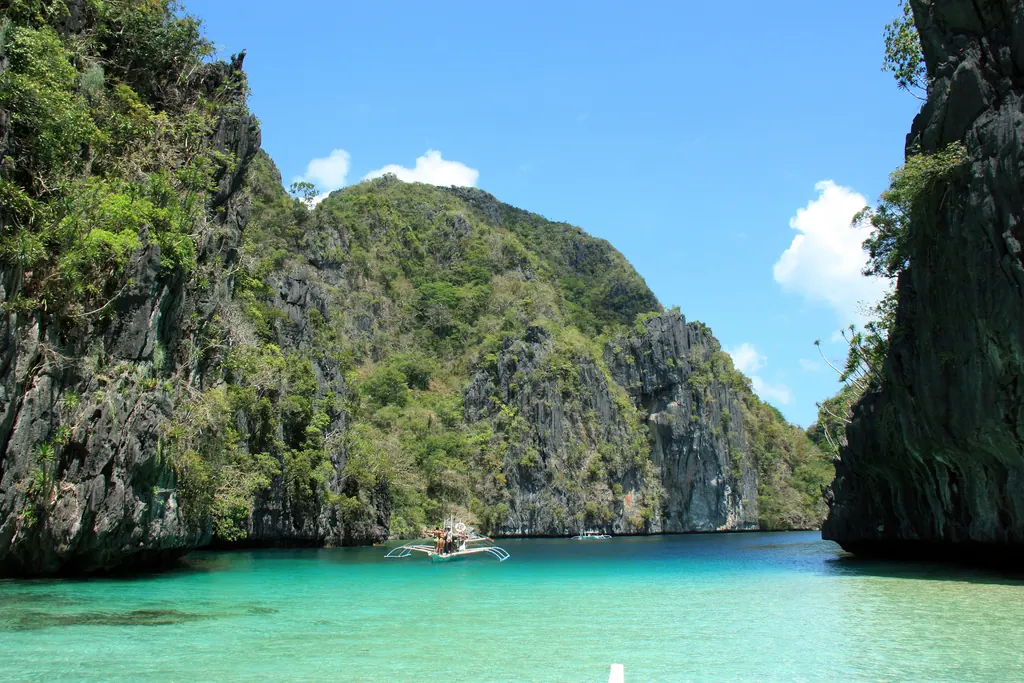
Palawan is the clearest case of a western, habagat-exposed destination. The best months are roughly December to April, when the sea in Bacuit Bay and around Coron is calm, visibility is good and boat tours run almost every day. March and April are the hottest and the most reliably flat, which suits snorkeling around the lagoons and wreck diving in Coron Bay.
From June to October the southwest wind brings swell and rain to the west coast. Tours still run on many days, but some routes are switched to more sheltered islands and others are cancelled outright. November and May are shoulder months, often fine and noticeably quieter. For what to do once you are there, see our guide to beaches and nature in the Philippines.
Boracay and the switch between two beaches
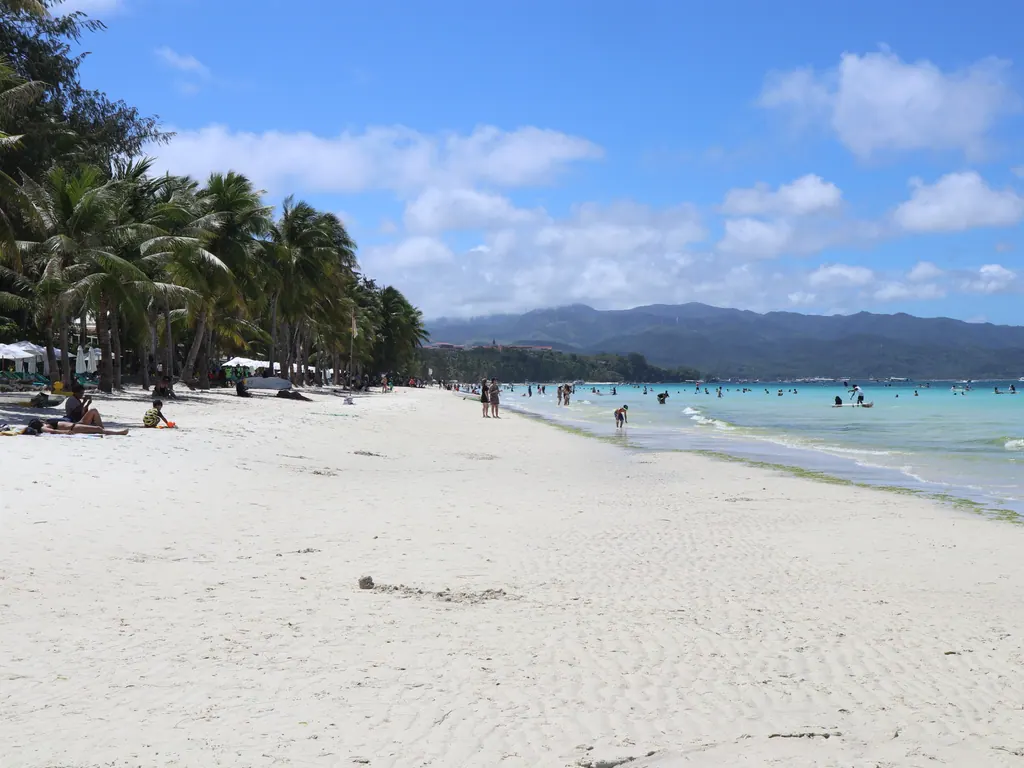
Boracay is small, but its seasons are dramatic because of how the island faces the wind. White Beach on the west side is sheltered during amihan, from about November to March, and the water is often glassy. At the same time Bulabog Beach on the east side gets the full northeast wind, which makes it the island's kitesurfing and windsurfing beach in those months.
When habagat arrives, the roles swap. The southwest wind blows straight onto White Beach, bringing waves and the occasional red flag, while Bulabog turns calm. Boats from Caticlan may also shift from Cagban port to the east-side Tambisaan port when the wind demands it. Boracay is still enjoyable from June to October, and far cheaper, but if the long, flat White Beach of the postcards is the point of your trip, aim for December to May.
Cebu, Bohol and Bantayan
Central Visayas has the most balanced weather in the table, which makes Cebu and Bohol reasonable choices in almost any month. The driest stretch on Mactan is March to May. Moalboal, on Cebu's sheltered west coast, is a year-round snorkeling and diving base, and its famous sardine schools stay close to shore through the year. Bantayan Island, off northern Cebu, is calmest in the dry months.
On Bohol, the Chocolate Hills earn their name in the dry season, when the grass turns brown. In the rainy months they are green.
Cebu has one non-weather date to know: the Sinulog festival on the third Sunday of January fills Cebu City's hotels weeks in advance. Read more about it in our guide to culture and festivals in the Philippines.
Siargao, Camiguin and the south
Siargao follows the Pacific pattern. The surf season for Cloud 9 and the other reef breaks is mainly during habagat, roughly August to December, when the prevailing wind blows offshore on the island's east coast. The surfing competition at Cloud 9 is usually held in that window, typically around September or October. If you want calmer seas for island hopping to Naked, Daku and Guyam islands, and fewer rainy days, the PAGASA data for nearby Surigao points to roughly April to September. December to February is the wettest period, with Surigao averaging more than 20 rainy days a month.
Camiguin, a small volcanic island off northern Mindanao, lies south of the main typhoon track and has fairly even rainfall. The Lanzones Festival, held in October, is the island's busiest time.
The mountains: Banaue, Sagada and Baguio
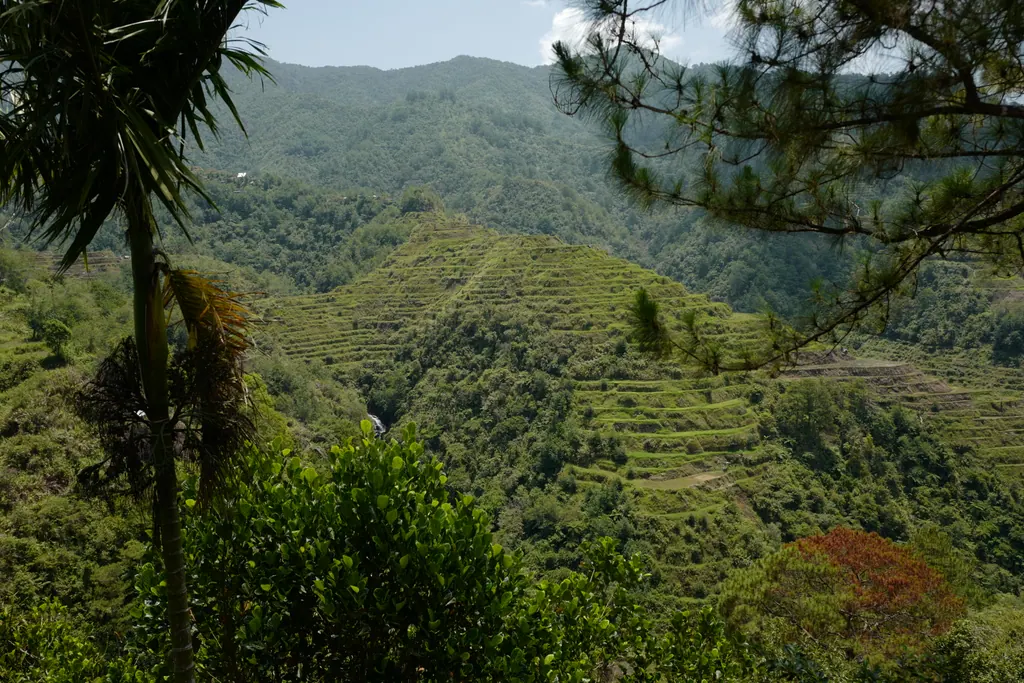
The Cordillera is a different climate altogether. Baguio sits at about 1,500 meters, and its average annual temperature is around 19°C (66°F). In January the average low drops to about 13°C (55°F), and Sagada and the Banaue area can feel similar on clear nights, so bring a fleece. December to April is the dry and clear season here. The cold months are also when Sagada's well-known "sea of clouds" at dawn is most likely.
The rainy season in the mountains is serious. Baguio averages close to 1,000 mm of rain in August alone, and the mountain roads to Banaue, Batad and Sagada are prone to landslides from July to October. The terraces change color with the rice cycle, from flooded and mirror-like after planting to green and then gold before harvest, so the scenery differs depending on when you come. Our guide to Philippine volcanoes and rice terraces covers the routes and treks.
Mayon and Bicol
Mayon's perfect cone is famously shy: clouds often cover the summit, especially in the wet months. Legazpi's rainiest period is November to January, when amihan pushes moisture onto the Pacific coast, so the best odds of a clear view are roughly March to May.
Mayon is an active volcano with a permanent danger zone around it. Its alert level changes quickly, so check the current PHIVOLCS bulletin before you plan a hike or an ATV tour on its slopes.
Puerto Galera and Mindoro
Puerto Galera, a short trip south of Manila, follows Manila's rhythm: dry from roughly December to May and wetter during habagat. Its deep, sheltered bays make it less exposed than many islands, and diving continues through much of the year. It is busy on weekends as one of the easiest beach escapes from the capital. For the trip there, see getting around the Philippines.
Holy Week, Christmas and other busy periods
Weather is only half the planning. The Philippines is a deeply Catholic country, and two holiday periods reshape travel:
- Holy Week (Semana Santa) falls in March or April. In 2027, Easter Sunday is March 28, so Maundy Thursday and Good Friday are March 25 and 26. Filipinos leave the cities in huge numbers, beaches like Boracay, Puerto Galera and Bantayan fill up, ferries and buses sell out, and some businesses close on Thursday and Friday.
- Christmas in the Philippines starts early, with decorations and carols from September. The peak travel weeks are from mid-December to early January. Simbang Gabi, the series of dawn masses from December 16 to 24, is a lovely tradition to see, but domestic flights and resorts book up fast.
Families also travel during the school break, roughly April and May. If you want dry-season weather with fewer domestic crowds, January to early March is the sweet spot.
Our pick, depending on what you want
- Classic beach trip to Palawan or Boracay: January to April, avoiding Holy Week if you can.
- Mountains and rice terraces: February to April, dry and still cool at night.
- Surfing Siargao: August to November, accepting more rain and typhoon risk.
- Diving Cebu or Moalboal: almost any month, with March to May the calmest.
- Lowest prices and fewest tourists: June to October, ideally based in Cebu, Bohol or the south, with flexible plans.
- Seeing the most in one trip: late January to early March, when nearly every region is either dry or in its comfortable shoulder season.
Whatever you pick, check PAGASA's seasonal outlooks a few weeks before departure, and read more on our Philippines destination page.
Frequently asked questions
What is the cheapest time to visit the Philippines?
The rainy season, roughly June to October, has the lowest hotel rates and the fewest foreign tourists. It is also peak typhoon season, so keep your plans flexible and leave a buffer before international flights.
Is it safe to visit the Philippines during typhoon season?
Many travelers visit between July and October without problems, but storms can cancel ferries and flights for days. Follow PAGASA bulletins, avoid tight connections, and consider basing yourself in Cebu, Bohol or northern Mindanao, which are hit less often than the eastern seaboard and northern Luzon.
Is December a good month to visit the Philippines?
For Palawan, Boracay and Manila, December is the start of the dry season and a good month, though Christmas and New Year are the busiest and most expensive weeks. Siargao and Bicol are among the wettest places in the country in December.
How hot does the Philippines get in April and May?
In Manila the average afternoon high is about 34°C (93°F) in April and May, according to PAGASA's 1991-2020 normals, and humidity makes it feel hotter. The mountains around Baguio and Sagada stay much cooler, with highs around 25°C (77°F).
When is the rainy season in Siargao?
Siargao's wettest months are usually November to February, when the northeast monsoon brings rain to the Pacific coast. PAGASA data for nearby Surigao shows May to September with the fewest rainy days.