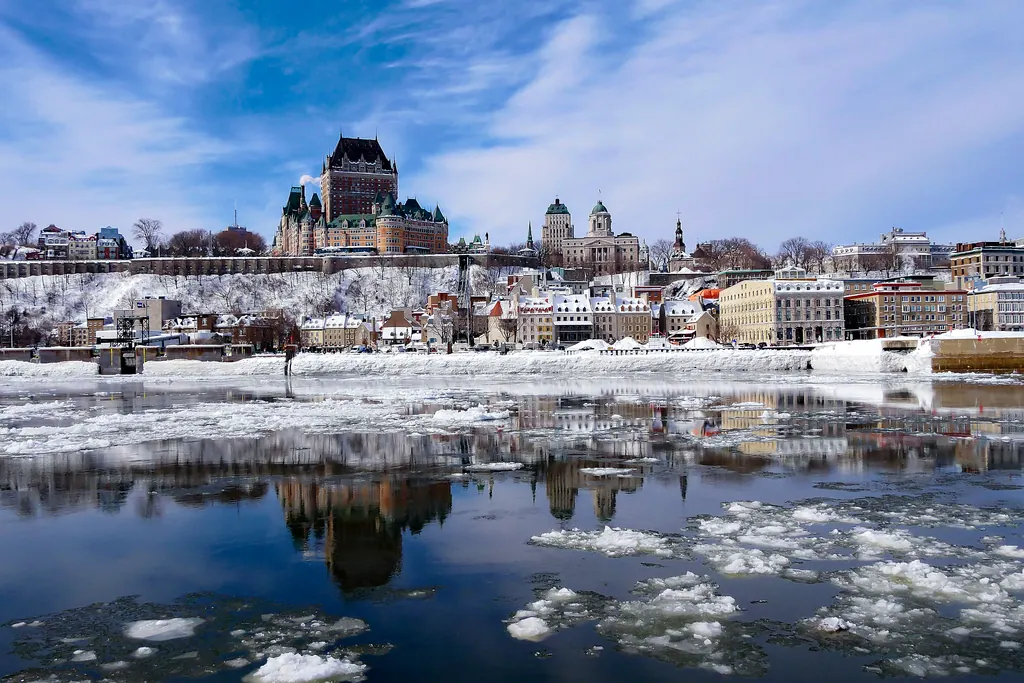
Most cities look their best in summer. Quebec City is the exception. When the snow piles up on the steep copper roofs of the old town, the stone houses of the Lower Town glow under the streetlights and the St. Lawrence River fills with drifting ice, one of the oldest cities in North America looks like it was built for winter, which in a sense it was.
The cold is real, and we will not pretend otherwise. But a few days in Quebec City between December and March can be one of the most memorable short trips you can take from the United States, with a European feel just a short flight from many U.S. cities. Here is what makes the season special, what there is to do, how cold it really gets and how to plan your trip.
Why Quebec City Works So Well in Winter
Old Quebec was founded by the French in 1608, and its historic district was listed by UNESCO in 1985. It is the only city north of Mexico that still has its fortified city walls, and the compact old town, split between the Upper Town on the cliff and the Lower Town by the river, is easy to explore on foot even in snow.
Winter brings out the city's best side. Snow softens the 17th and 18th century stone houses, the cafés and bistros are warm and inviting, and French is the language you hear on the street. For many Americans, it is the closest you can get to a winter city break in Europe without crossing the Atlantic.
How Cold Does It Get?
Cold. In January, the coldest month, the average high is about 18°F (-8°C) and the average low about 0°F (-18°C), and wind off the river can make it feel colder. Snow is common from December through March.
That said, the city is used to it. Sidewalks in the old town are cleared, many attractions are indoors, and you can always duck into a café to warm up. Pack proper winter boots with good grip, thermal layers, a warm hat, gloves and a scarf, and you will be fine.
The Winter Carnival in February
The highlight of the season is the Carnaval de Québec, which calls itself the largest winter carnival in the world. The 73rd edition runs from February 5 to 14, 2027, with activities spread across sites in the Upper Town, including outdoor concerts on most nights.
The carnival's mascot is Bonhomme, a cheerful snowman in a red cap and a colorful sash, and you will see him everywhere. Highlights traditionally include night parades, snow sculptures, outdoor dance parties and the ice canoe race, where teams paddle and push canoes across the partly frozen St. Lawrence River. Most activities require the Effigie, a small pass worn on your coat. For 2027 it cost 39 Canadian dollars plus tax (about $27 in 2026) at the regular price, with a cheaper presale price until mid-January.
Christmas in the Old Town
If you prefer a quieter trip, come in late November or December. The German Christmas Market of Quebec City fills the old town with wooden huts, mulled wine and German treats. In 2026 it runs from November 19 to December 23, open Thursday through Sunday until December 13 and then daily from December 17 to 23. The Petit-Champlain quarter, with its narrow streets below the cliff, is especially pretty with its Christmas decorations.
A Toboggan Slide From 1884
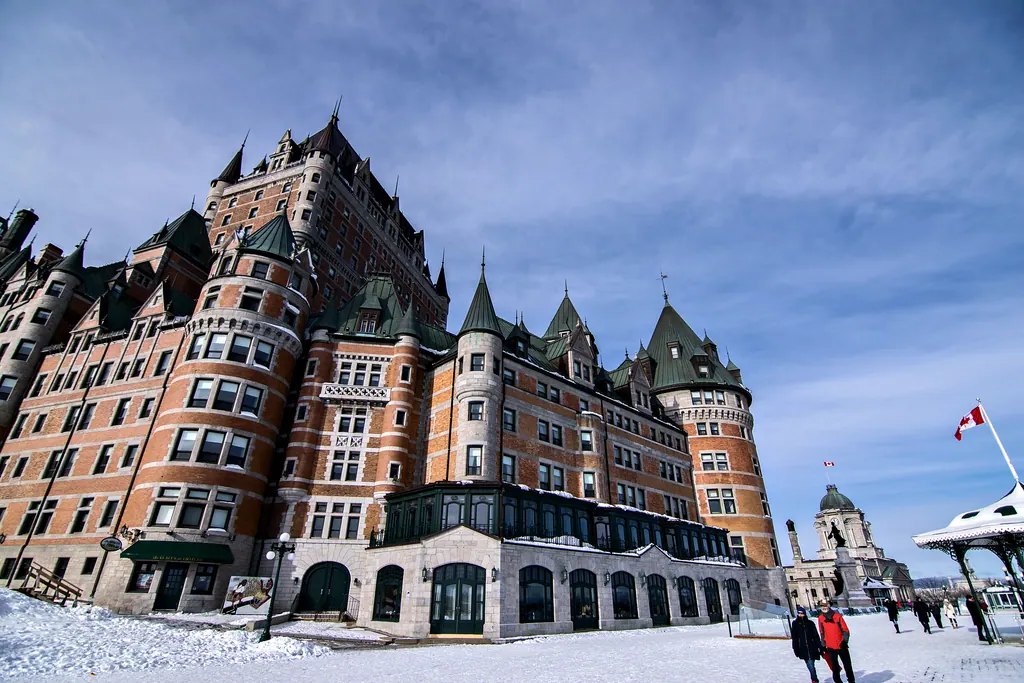
On the Dufferin Terrace, the wide boardwalk in front of the Château Frontenac, a toboggan slide has been part of winter in Quebec City since 1884. The Au 1884 slide sends wooden toboggans racing down a steep, icy track with views over the river. For the 2026 to 2027 season it runs from December 4, 2026, to March 21, 2027, weather permitting, and a regular ticket costs 5 Canadian dollars (about $3.50 in 2026) per person per ride.
The Château Frontenac itself, the castle-like hotel that opened in 1893 and dominates the skyline, is worth a visit even if you are not staying there. Walk through the lobby, have a drink in the bar and take in the views.
Montmorency Falls in Ice
About 15 minutes by car from the old town, Montmorency Falls drops 272 feet (83 meters), about 98 feet (30 meters) more than Niagara Falls. In winter the spray freezes around the base, building a large ice cone known locally as the Pain de Sucre, or sugarloaf, and the cliffs turn into walls of ice.
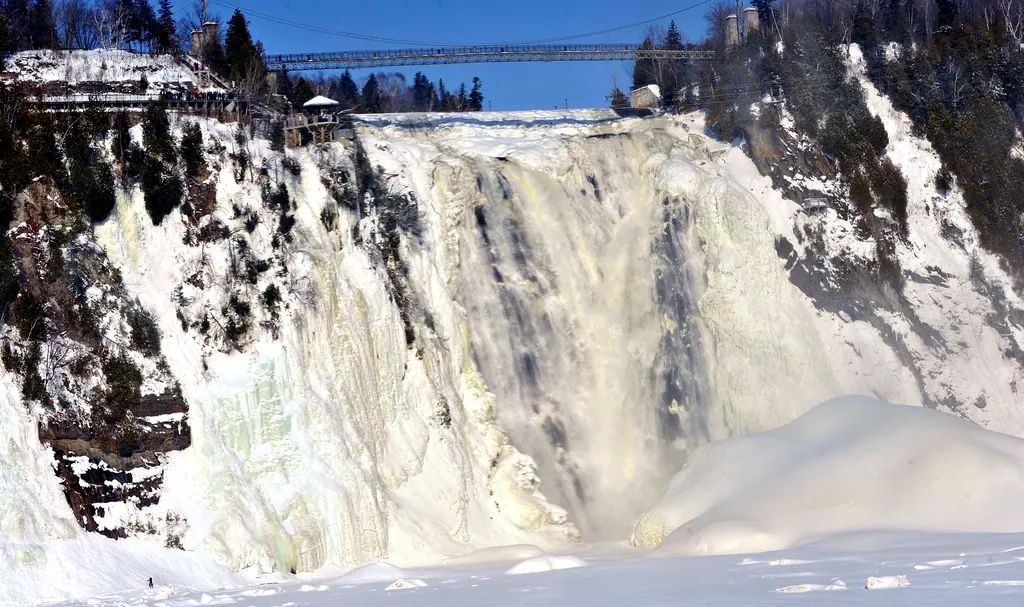
The park managed by Sépaq is open year-round, but some trails, including the long panoramic staircase, close in winter, and you should never walk on the ice cone. The cable car only runs during certain winter periods, so check the schedule before you go.
A Night in the Ice Hotel
Outside the city at Village Vacances Valcartier, about 20 minutes north of Quebec City, the Hôtel de Glace is rebuilt from snow and ice every winter, with themed suites, an ice bar and an ice chapel. For the 2026 to 2027 season it opens for visits on December 26, 2026, weather permitting, and stays open until March 21, 2027, with overnight stays from January 4 to March 13, 2027. A visit is the easiest option; online tickets started at about 25 Canadian dollars (about $17.50 in 2026). Sleeping there is a real adventure, and we explain what it involves in our guide to ice hotels.
More Ways to Enjoy the Snow
- Take the ferry to Lévis. The short ferry crossing to Lévis runs all year and pushes through the ice of the St. Lawrence in winter. The real reward is the view of Quebec City and the Château Frontenac on the way back.
- Walk the walls. Parts of the fortifications can be walked, and the views over the snowy rooftops are excellent.
- Go dog sledding or snowshoeing. Operators near the city offer half-day trips. See our guide to dog sledding trips for what to expect.
- Eat like a local. Winter is the season for poutine, tourtière (a spiced meat pie) and maple taffy rolled in snow.
Planning Your Trip
Getting there: Quebec City's Jean Lesage International Airport has flights from several U.S. hubs, and many travelers fly to Montreal and take the train or drive about three hours to Quebec City. If you fly, you need a valid passport. When crossing by land, a passport card, a NEXUS card or an enhanced driver's license also works under the Western Hemisphere Travel Initiative.
Money: Canada uses the Canadian dollar. Cards are accepted almost everywhere, and tipping customs are similar to those in the U.S. (see our guide to tipping in the USA and Canada).
Language: French is the main language, but most people working in hotels, restaurants and attractions in the old town speak English. A "bonjour" when you walk in is always appreciated.
How long: Three or four nights is enough to see the old town, the falls and the carnival or Christmas market at a relaxed pace.
When to Go
For the full winter experience with the carnival, aim for the first half of February and book your hotel well in advance. For Christmas lights and the market without the carnival crowds, come in late November or the first half of December. January is the quietest and often the coldest month, which also makes it the best time to find a good hotel rate in the old town. Whichever you choose, dress warmly, and let the city show you why it might be the best winter destination in North America. For more ideas, explore our Canada page.
Frequently asked questions
Is Quebec City worth visiting in winter?
Yes, if you dress for the cold. The snowy old town, the Winter Carnival, the toboggan slide and the frozen Montmorency Falls make winter one of the most atmospheric times to visit.
When is the Quebec Winter Carnival in 2027?
The 73rd Carnaval de Québec runs from February 5 to 14, 2027.
How cold is Quebec City in January?
The average high is about 18°F (-8°C) and the average low about 0°F (-18°C), and wind can make it feel colder.
Do Americans need a passport for Quebec City?
You need a passport to fly to Canada. By land or sea, a passport card, NEXUS card or enhanced driver's license is also accepted.