On a map, the drive from Memphis to Nashville looks like the least exciting road trip in America: one interstate, a straight line east, about 210 miles of farmland and forest. Plenty of people treat it as a three-hour transfer between two music cities and never leave the left lane.
That is a mistake. The stretch of Interstate 40 between the two cities is officially called the Music Highway, and the exits along it lead to the childhood school of Tina Turner, the home of a railroad legend, a quiet state park with wooded lakes and the ranch where Loretta Lynn lived. Here is how long the drive takes, which stops are worth your time, and how to turn a transfer into a real road trip.
How Long Is the Drive From Memphis to Nashville?
Without stops, the drive is about 210 miles and takes around 3 hours and 15 minutes via I-40, depending on where you start and end and on traffic at the city edges. Navigation could hardly be simpler: you join I-40 East in Memphis and follow it all the way to downtown Nashville.
The highway is well supplied with gas stations, restaurants and restrooms, especially around Jackson, which sits roughly halfway. In 1997 the Tennessee General Assembly designated I-40 between Memphis and Nashville as the Music Highway, and you will see the brown signs along the way.
| Stop | I-40 exit | Rough distance from Memphis |
|---|---|---|
| Brownsville (Tina Turner Museum) | Exit 56 | About 50 miles |
| Jackson (Casey Jones Village) | Exit 80 | About 85 miles |
| Natchez Trace State Park | Exit 116 | About 120 miles |
| Hurricane Mills (Loretta Lynn's Ranch) | Exit 143 | About 145 miles |
| Nashville | About 210 miles |
Before You Leave Memphis
If you have time, start with a morning in Memphis itself. Graceland, Elvis Presley's home, is the obvious stop, but music fans should also make time for Sun Studio, where Elvis, Johnny Cash and Jerry Lee Lewis recorded early hits, and the Stax Museum of American Soul Music. The National Civil Rights Museum, built around the Lorraine Motel where Martin Luther King Jr. was assassinated in 1968, is one of the most important museums in the South.
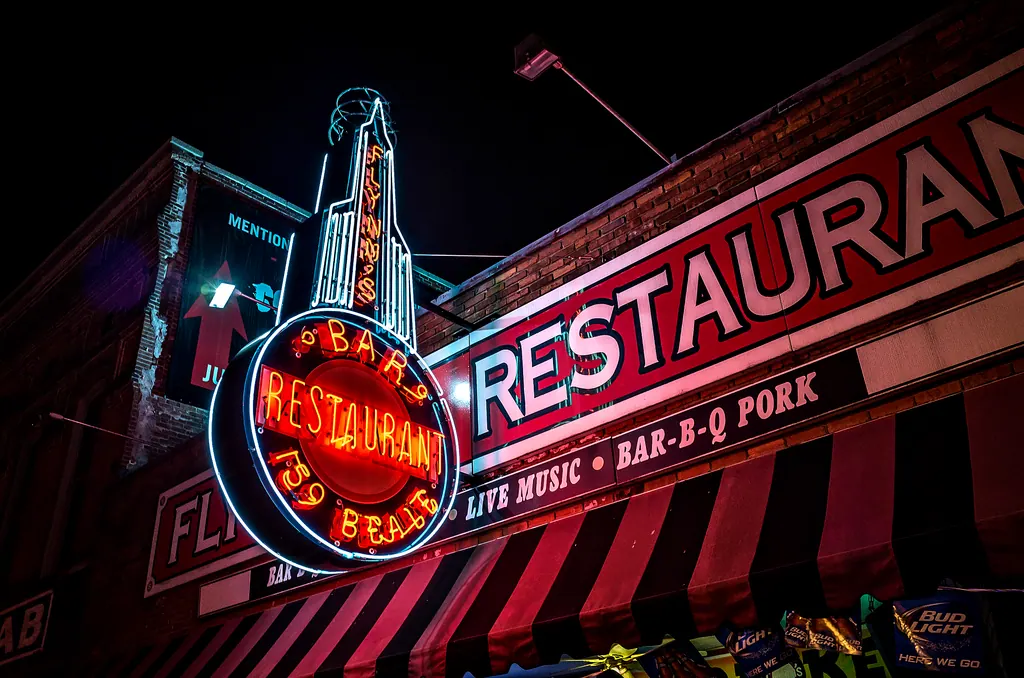
Spend your last evening on Beale Street, where the blues clubs and neon signs make a fitting send-off before the drive east.
Brownsville: Tina Turner's School and the Blues
About 50 miles east of Memphis, take Exit 56 for the West Tennessee Delta Heritage Center in Brownsville. It is home to the world's only Tina Turner Museum, set inside the Flagg Grove School, the small rural schoolhouse she attended as a child, which was moved to the site. The museum shows stage costumes, gold records and personal items.
The same grounds include the last home of the blues musician Sleepy John Estes and exhibits on the music, cotton farming and the Hatchie River of West Tennessee. According to the center, it is open from 9 a.m. to 5 p.m. Monday through Saturday and from 1 p.m. to 5 p.m. on Sunday. Allow an hour or so.
Jackson: Casey Jones and Rockabilly
Jackson, at Exit 80, is the natural lunch stop. Casey Jones Village is built around the Casey Jones Home and Railroad Museum, which honors the railroad engineer who died in a train wreck in Mississippi in 1900 and became a folk hero through the ballad that bears his name. The museum includes his family home, moved to the site, and railroad memorabilia.
Jackson also has the International Rock-A-Billy Hall of Fame, dedicated to the rockabilly sound that grew out of West Tennessee in the 1950s. If you are traveling with kids, the Tennessee Safari Park in nearby Alamo, a drive-through park where animals come up to the car, is a popular detour.
Natchez Trace State Park: A Break in the Woods
After a few hours of museums, the best stop on the route may be the one with no exhibits at all. Natchez Trace State Park, at Exit 116 near Wildersville, is a large forested park with several lakes, hiking trails and picnic spots right off the interstate. It is a good place to stretch your legs, and in fall the reflections of the trees in the lakes are lovely.
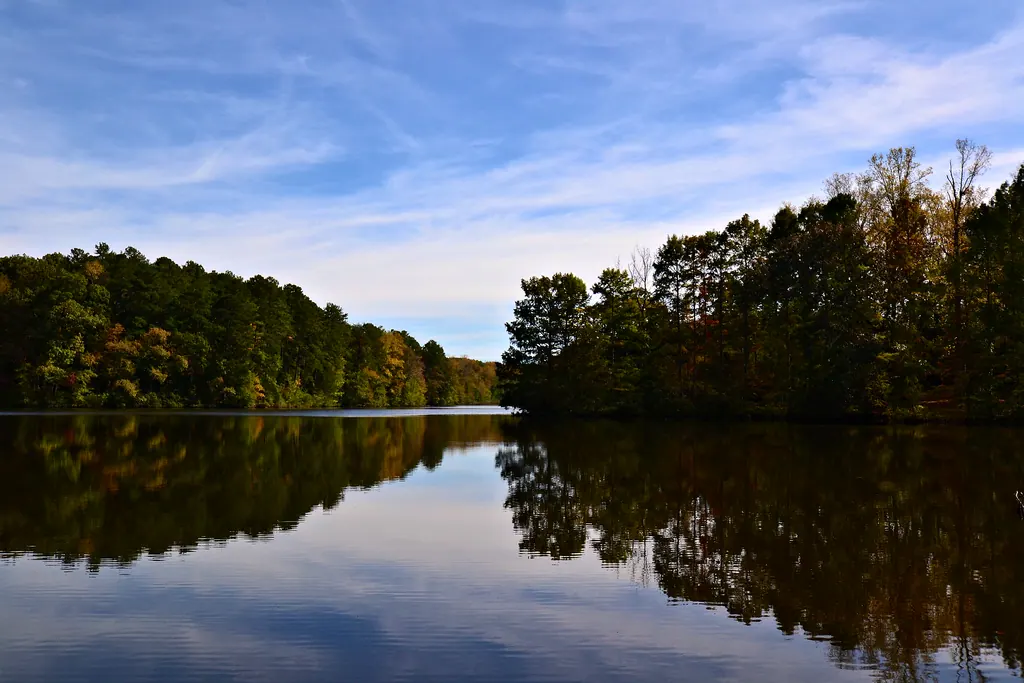
Note that the state park is not the same as the Natchez Trace Parkway, the scenic road that starts near Nashville. More on that below.
Hurricane Mills: Loretta Lynn's Ranch
At Exit 143, a short drive north of the interstate, lies Hurricane Mills, the small community where country singer Loretta Lynn lived on her ranch until her death in 2022. Loretta Lynn's Ranch is a visitor destination with tours of her plantation home, a museum about her life and career and a campground. Check opening times before you go, since tours and seasons vary.
Arriving in Nashville
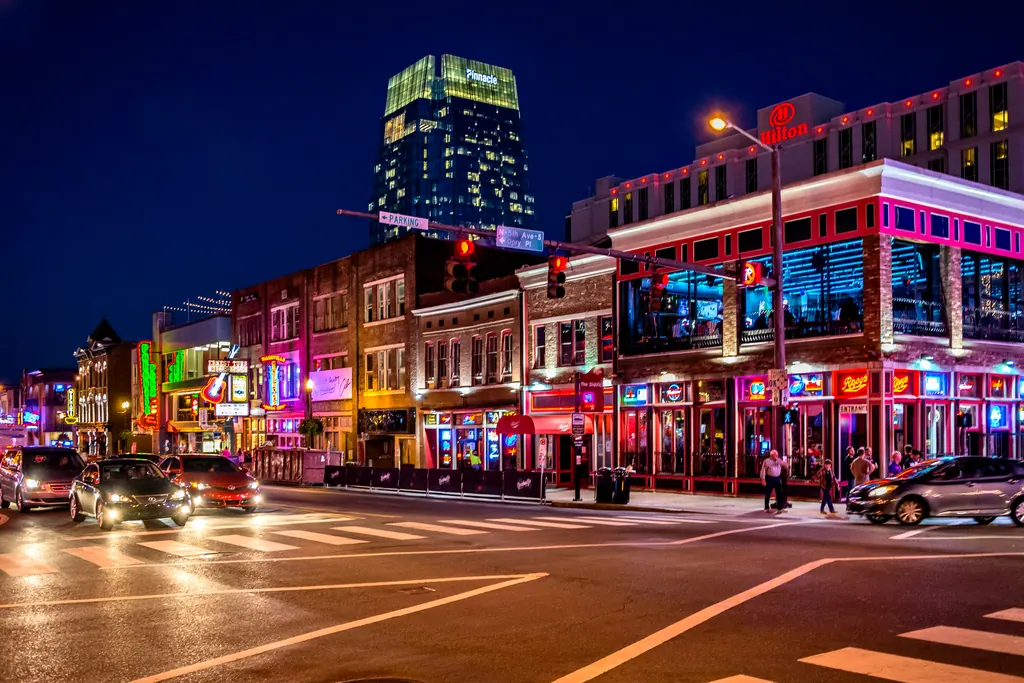
The interstate brings you right into downtown Nashville. Fittingly for the end of the Music Highway, the city's classics are all about music: the Ryman Auditorium, known as the Mother Church of Country Music, the Country Music Hall of Fame and Museum, the Johnny Cash Museum and, out by the Cumberland River, the Grand Ole Opry. In the evening, the honky-tonks of Lower Broadway have live music from midday until late, often with no cover charge.
A Slower Way Back: The Natchez Trace Parkway
If you are driving a loop rather than a one-way trip, consider a different route back. The Natchez Trace Parkway, run by the National Park Service, starts just southwest of Nashville and runs 444 miles to Natchez, Mississippi, along an old travel corridor used by Native Americans and early settlers. There are no billboards, no commercial trucks and a maximum speed of 50 mph.
You can follow the parkway south to Tupelo, Mississippi, where Elvis Presley was born, and then drive about 110 miles northwest back to Memphis. It turns a three-hour drive into a full day, but it is one of the most peaceful drives in the South.
How to Plan Your Trip
- One day: Leave Memphis in the morning, visit Brownsville, eat lunch in Jackson, stop at Natchez Trace State Park and arrive in Nashville for dinner and live music.
- Two days: Add Shiloh National Military Park, about an hour's drive south of Jackson, where one of the bloodiest battles of the Civil War was fought in April 1862, and spend the night in Jackson.
- Three days or more: Drive back via the Natchez Trace Parkway and Tupelo for a full loop.
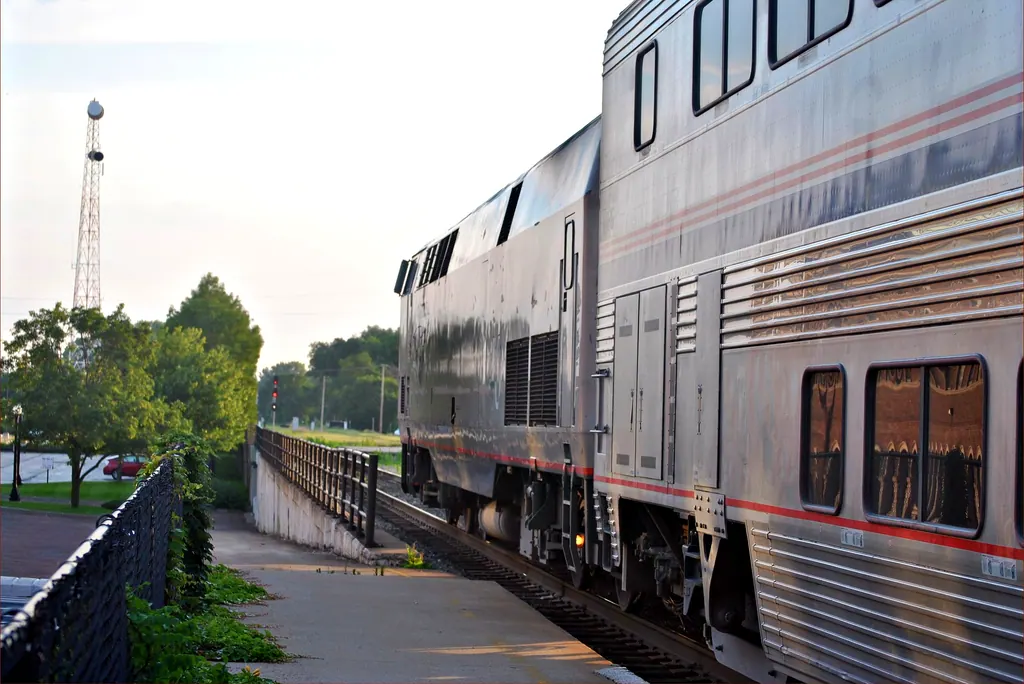
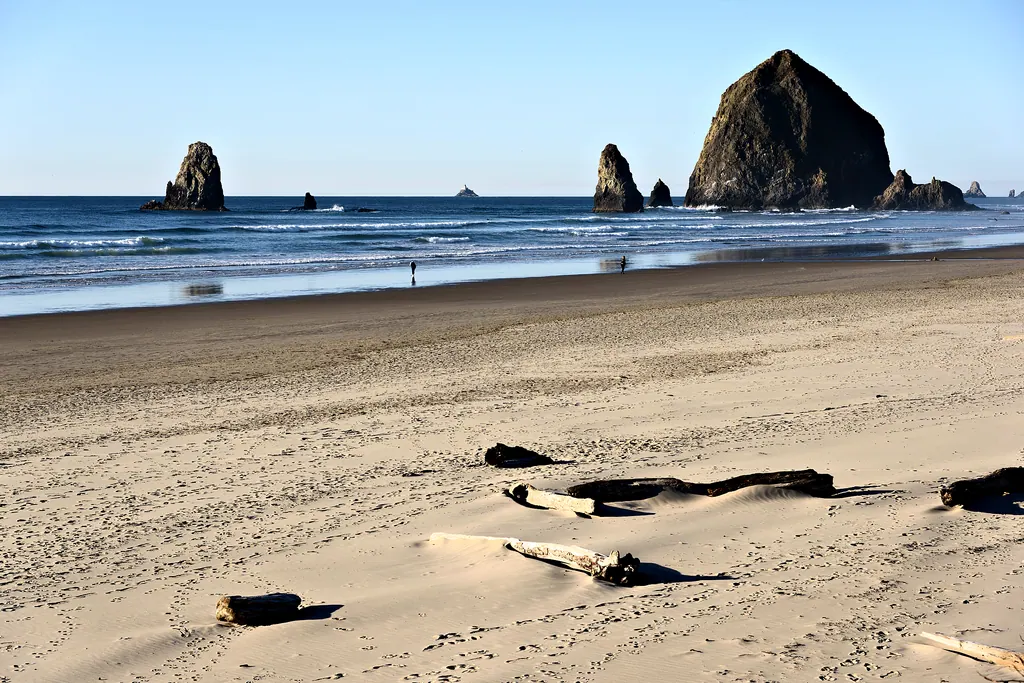
If you are combining both cities, the City of New Orleans train stops in Memphis, and you could pick up a rental car there. For more ideas, see our guides to the Oregon Coast road trip and the Central Texas barbecue trail, or browse all our road trips.
Frequently asked questions
How long is the drive from Memphis to Nashville?
About 210 miles, or around 3 hours and 15 minutes on I-40 without stops.
What is the best stop between Memphis and Nashville?
Music fans should not miss the Tina Turner Museum in Brownsville, while Natchez Trace State Park is the best place to stretch your legs. Jackson, about halfway, is the natural lunch stop.
Why is I-40 in Tennessee called the Music Highway?
In 1997 the Tennessee General Assembly designated I-40 between Memphis and Nashville as the Music Highway, linking the two music cities.
Is there a scenic alternative to I-40?
Yes. You can drive the Natchez Trace Parkway between Nashville and Tupelo, Mississippi, and continue to Memphis. It takes a full day.