Bali has been selling its crafts to visitors for about a century. Painters in Ubud began working for foreign buyers in the 1930s, and entire villages in Gianyar still organize their working day around one craft: silver in one place, wood in the next, canvases in the one after that. Add the boutiques of Seminyak, the surf shops of Canggu and Uluwatu, and the bargain lanes of Kuta, and the island turns into one long shopping street with rice fields in between.
The hard part is not finding things to buy. It is knowing which stall sells the real thing, what a fair price looks like, and whether that carved mask will make it through customs at home. This guide goes region by region, then covers what is worth your suitcase space and how to bargain without spoiling anyone's day.
Where does Ubud fit into a shopping trip?
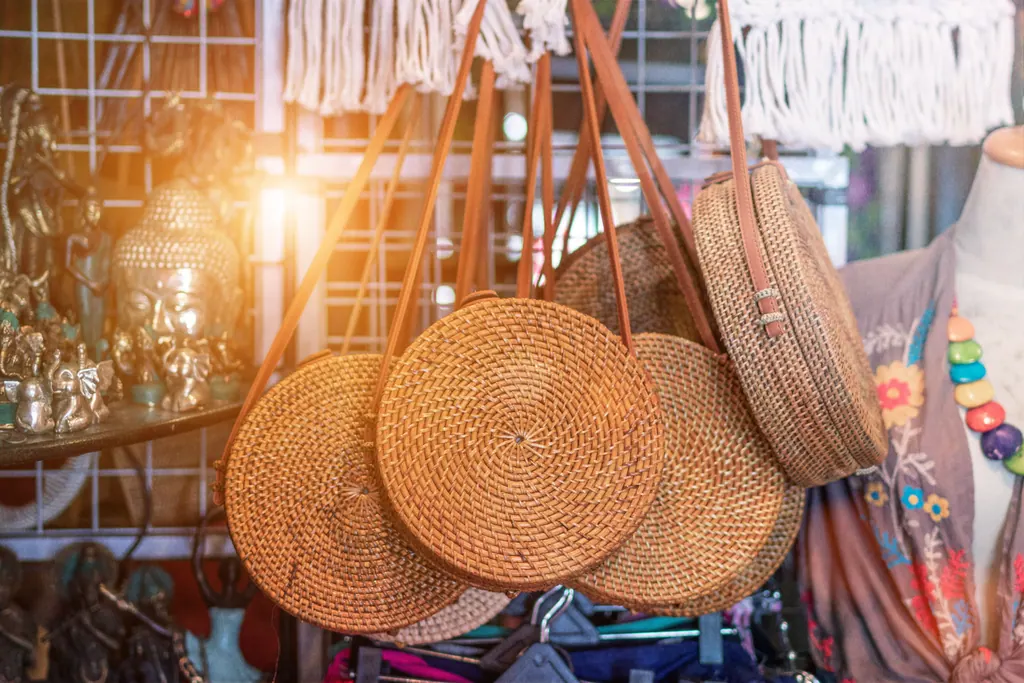
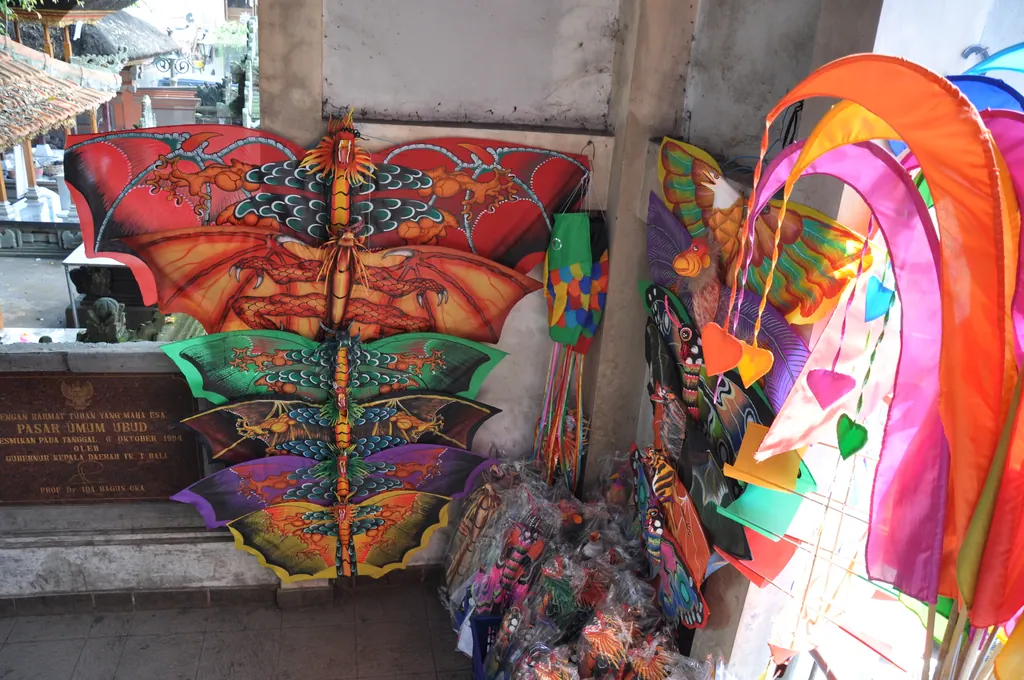
For most visitors, Ubud is the center of Balinese craft shopping, and the Ubud Art Market (Pasar Seni Ubud) is the obvious place to start. It sits across the road from Ubud Palace, at the top of Monkey Forest Road, and fills a two-level building plus the lanes around it with sarongs, rattan bags, batik shirts, wind chimes, kites, wooden bowls and silver earrings. Stalls generally open from around 8 a.m. until late afternoon, though hours vary by vendor.
Go early. Before about 8 a.m., the lower level still works as a traditional produce market where locals buy flowers, fruit and offerings, and the vendors upstairs are setting up with time to talk. By late morning the tour buses arrive and the narrow aisles fill. Many travelers also find that the first price of the day can be softer: some Balinese sellers believe the first sale (penglaris) brings luck for the rest of the day, so they are keen to close it.
Be honest with yourself about what the Art Market is. Much of the stock is the same across dozens of stalls, and a good share of it is made in workshops elsewhere in Bali or on Java. It is ideal for gifts and holiday clothes, less so for one-of-a-kind pieces. For those, walk along Jalan Hanoman, Jalan Dewi Sita and the upper part of Monkey Forest Road, where small galleries, jewelers and textile shops sell at fixed prices.
The craft villages between Denpasar and Ubud
The road from Denpasar up to Ubud runs through a string of villages that have specialized in a single craft for generations. They are easy to visit on the way to or from Ubud with a hired driver, and they are where you see the work being done.
- Celuk is the silver and gold village. Workshops line the main road, many with artisans working at benches behind the showroom. Prices for sterling silver are often quoted by weight, so ask how many grams a piece is and compare between two or three shops. Several workshops run half-day jewelry classes where you make your own ring or pendant.
- Mas is known for woodcarving. Expect everything from small figures and masks to large statues and furniture, with the finest pieces carved from hard, slow-growing woods. The best galleries are serious, and prices for master-carved work reflect that.
- Batuan gave its name to a style of painting: dense, detailed scenes of village life, ceremonies and legends, often in dark ink tones packed edge to edge. A good Batuan painting takes weeks or months to make, so a price in the millions of rupiah is normal.
- Tegallalang, north of Ubud and best known for its rice terraces, has a long stretch of roadside shops selling carved wood, rattan, home decor and painted figures. Many sell wholesale to shops abroad, so prices can be lower than in Ubud if you buy several items.
Many shops pay commission to the driver who brings you, and it is built into your price. If you want a better deal, tell your driver you only want to visit the shops you name.
Is Sukawati Art Market worth the trip?
Sukawati Art Market sits on Jalan Raya Sukawati in Gianyar, about 10 kilometers south of Ubud. It is larger, rougher and cheaper than the Ubud Art Market, with three blocks of stalls selling paintings, wooden carvings, batik, masks, rattan bags, beaded jewelry and household decorations. Many local shop owners buy their stock here, which tells you something about prices.
The market is usually open from early morning until about 6 p.m., but many stalls only get going around 9 or 10 a.m. Cash is king, since few vendors accept cards, and you will need to bargain hard. Come with patience and a list, and watch out for mass-produced pieces described as handmade.
Seminyak and Canggu: boutiques instead of bargaining
The southwest coast is where Bali's fashion and design scene lives, and the shopping feels completely different. In Seminyak, Jalan Kayu Aya (often called Jalan Oberoi), Jalan Petitenget and Jalan Raya Seminyak are lined with independent boutiques selling linen and resort wear, swimwear, leather sandals, jewelry, ceramics and homeware, much of it designed and made on the island. Seminyak Village and Seminyak Square add air-conditioned browsing.
Prices are fixed and roughly in line with what you would pay for similar design labels in Europe or North America, so do not try to haggle. What you get in return is quality and originality you will not find at the markets.
Canggu has followed the same path with a more casual, surf-flavored edge. Jalan Batu Bolong and Jalan Pantai Berawa have concept stores mixing clothing, surfboards, natural skin care and handmade homewares, and weekend markets such as the Love Anchor market on Batu Bolong bring together small stalls with clothing, jewelry and street food. Expect fixed prices and card payments in most shops, and a little friendly bargaining at the market stalls.
Kuta, Legian and the beach malls
Kuta is Bali's bargain basement. Jalan Legian and the small lanes (gang) between it and the beach are full of shops selling cheap T-shirts, board shorts, sarongs, sunglasses, sandals and souvenirs, and the Kuta Art Market near the beach covers the same ground in one compact block. Legian, just to the north, continues in the same style along Jalan Legian and Jalan Melasti, with slightly calmer streets.
This is also where the fakes are most obvious. Designer bags, watches and sports shirts are sold openly, and quality is mixed. Customs authorities in many countries can confiscate counterfeit goods, so think twice before packing them.
For fixed prices, international brands and air conditioning, head to Beachwalk Shopping Center, an open-air mall facing Kuta Beach, which is typically open from around 10 a.m. to 10 or 11 p.m. A little further south in Tuban, Discovery Shopping Mall offers a similar mix closer to the airport.
Tanah Lot and Uluwatu: souvenirs with a view
At Tanah Lot, the sea temple on the west coast, you cannot reach the temple without walking a long lane of souvenir stalls. Sarongs, wooden carvings, Bintang singlets, rattan bags and paintings are piled high, and the vendors are used to tourists on a tight schedule. Prices start high, so either bargain with confidence or wait and buy the same items at Sukawati or in Ubud. One practical tip: most temple visits require a sarong, and buying one here is easy if you did not bring one.
On the Bukit Peninsula, shopping is more scattered. Small stalls near Uluwatu Temple sell sarongs and souvenirs, and the roads behind Padang Padang, Bingin and Uluwatu have surf shops, swimwear brands, beach clothes and a few small markets aimed at the surfers who stay there. It is not a place for a shopping day, but it is good for swimwear, rash guards and board shorts from Bali-made surf brands.
What is actually worth buying?
| Item | Where to look | Rough price at markets in 2026 |
|---|---|---|
| Cotton sarong | Ubud Art Market, Sukawati, Kuta | 50,000-100,000 rupiah (about $3-6) |
| Round rattan bag | Ubud, Sukawati, Tegallalang | 100,000-250,000 rupiah (about $6-15) |
| Simple sterling silver ring | Celuk, Ubud | 150,000-500,000 rupiah (about $9-30) |
| Small wooden carving or mask | Mas, Sukawati, Tegallalang | 50,000-200,000 rupiah (about $3-12) |
| 250 grams of Kintamani coffee | Supermarkets, coffee shops, Ubud | 60,000-120,000 rupiah (about $4-7) |
| Spa oil or body scrub | Supermarkets, Ubud, Seminyak | 40,000-150,000 rupiah (about $2.50-9) |
These are guide prices for bargained market goods, based on an exchange rate of about 16,500 rupiah to the dollar. Boutique prices in Seminyak and Canggu are several times higher.
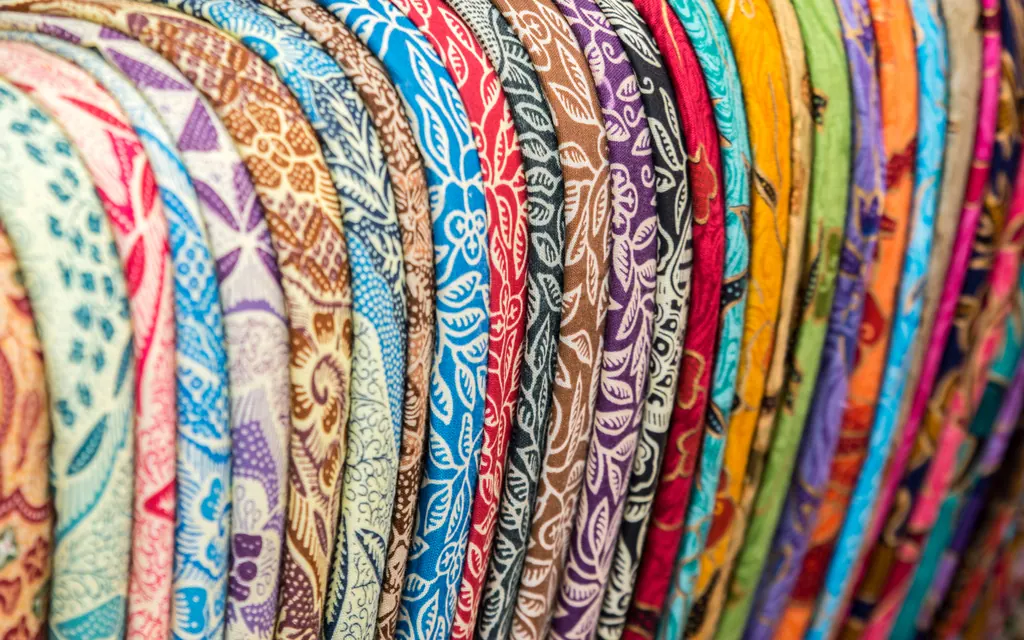
Batik and ikat. Indonesian batik is on UNESCO's list of Intangible Cultural Heritage, and the real thing is made by applying wax to cloth before dyeing. Hand-drawn batik (batik tulis) is the most expensive, stamped batik (batik cap) is cheaper, and much of what you see at markets is simply printed fabric. Hold the cloth up to the light: on genuine batik the pattern shows almost as clearly on the back. Bali's own woven cloth is endek, a type of ikat where the threads are dyed before weaving. The village of Tenganan in east Bali is famous for geringsing, a rare double ikat that takes years to complete.
Silver. Look for a "925" stamp, and buy from a workshop or a shop that can tell you the weight. Very cheap "silver" at beach stalls is often plated.
Coffee. Arabica from the Kintamani highlands has a protected geographical indication, and bags are sold in supermarkets as well as at coffee plantations. Many plantation tours push kopi luwak, coffee made from beans passed through civets. Animal welfare groups have documented civets kept in small cages to produce it, so many travelers choose to skip it.
Spa products. Frangipani and coconut oils, lulur body scrubs, handmade soaps and incense are light, cheap and genuinely Balinese. Supermarkets often stock the same brands as spa shops for less.
How do you bargain in Bali?
At markets, roadside shops and beach stalls, bargaining is expected. In malls, supermarkets and boutiques, it is not. A few habits make it easier for everyone:
- Ask the price, then counter at around a third to half of it, depending on how high the opening price feels. Settle somewhere in between.
- Stay friendly. A smile and a joke go further than a hard stare, and walking away politely is often the best move, since vendors frequently call you back with a lower price.
- Only start bargaining if you actually want the item. Agreeing a price and then not buying is considered rude.
- Carry small notes. Paying 80,000 rupiah with a 100,000 note is easy; paying with a stack of large notes weakens your position.
- Remember the scale. The difference between two prices is often 10,000 or 20,000 rupiah (under $1.50), which matters far more to the seller than to you.
Most markets are cash only, but ATMs are easy to find in Ubud, Kuta, Seminyak and Canggu, and many shops accept QR payments and cards. For more on handling money on the road, see our travel tips.
Taking wooden souvenirs home
Wood, rattan, bamboo, seeds and dried plants are the souvenirs most likely to cause trouble at customs, because they can carry insects.
Australia is the strictest. The Department of Agriculture, Fisheries and Forestry says travelers must declare wooden articles and other plant material on the Incoming Passenger Card. A biosecurity officer then decides whether the item needs inspection, and items with bark, insect holes or seeds can be treated at your cost, sent back or destroyed. Not declaring can lead to a fine, so if in doubt, declare.
The United States asks travelers to declare all agricultural products. According to the USDA's Animal and Plant Health Inspection Service, handicrafts made with natural materials such as sticks with bark, bamboo, straw or grasses can carry invasive insects and plant diseases. Finished, smooth carvings are usually fine, but declare them and expect an inspection.
When buying, choose pieces that are fully finished, varnished or painted, with no bark and no tiny holes or sawdust (a sign of wood-boring insects). Ask larger shops whether they can fumigate and ship items for you with the paperwork included. Shipping is also the sensible choice for big carvings and furniture.
A simple plan for a shopping day
If you only have one day, start at the Ubud Art Market at around 8 a.m., then hire a driver south through Mas, Celuk and Batuan, finishing at Sukawati before the afternoon heat. Save Seminyak or Canggu for an evening of boutique browsing near the beach, and leave room in your bag for coffee and spa oils from a supermarket on your last day. For more of the island, browse our Bali articles and the wider Indonesia destination page, or compare Bali with another island of markets in our guide to shopping in Taiwan.
Frequently asked questions
What is the best market in Bali for souvenirs?
For choice and atmosphere, the Ubud Art Market is the easiest start. For lower prices and a bigger selection, Sukawati Art Market south of Ubud is where many local shop owners buy their own stock.
Should you bargain in Bali?
Yes at markets, roadside shops and beach stalls, where a first counteroffer of a third to half of the asking price is normal. No in malls, supermarkets and the fixed-price boutiques of Seminyak and Canggu.
Can I bring wooden souvenirs from Bali into Australia?
Usually yes, but you must declare all wooden items on the Incoming Passenger Card. Biosecurity officers may inspect them, and items with bark or insect damage can be treated at your cost or destroyed.
Is silver from Bali real?
Workshops in Celuk and reputable jewelers sell genuine 925 sterling silver, usually stamped and priced by weight. Very cheap pieces from beach stalls are often only plated.
Do markets in Bali accept credit cards?
Most market stalls are cash only, so carry small rupiah notes. Malls, boutiques and many shops in tourist areas accept cards and QR payments.