Bali is small enough to cross in a day and varied enough that two travelers can come home describing completely different islands. One spent a week watching surfers from a limestone cliff on the Bukit, the other woke before dawn to climb a volcano and spent the afternoons walking between flooded rice paddies. Both were right about Bali.
The catch is that where you sleep shapes almost everything. Traffic around the south of the island is slow, and a beach that looks close on the map can take an hour or more to reach in the afternoon. So instead of a list of "best beaches," this guide walks through Bali region by region: what the water is actually like, who each area suits, and how to fit the rice terraces, the volcano and the reefs around a sensible base.
What is the south coast really like?
Most visitors land at Ngurah Rai International Airport near Kuta and stay within an hour of it. The south splits into three very different areas.
Uluwatu and the Bukit Peninsula
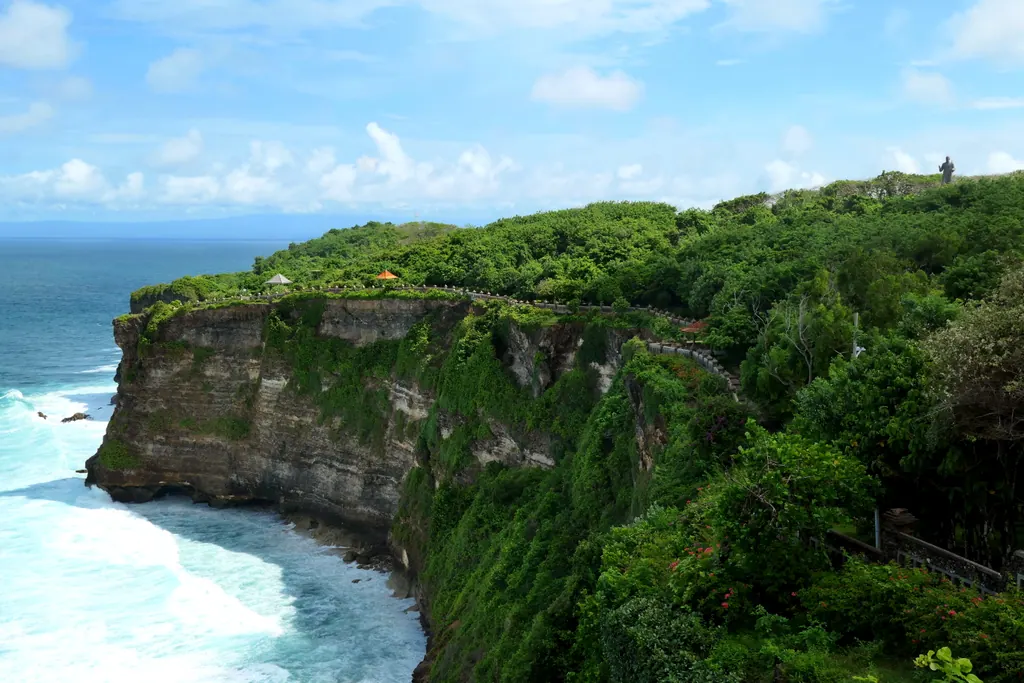
The Bukit is the dry, hilly limestone peninsula at the island's southern tip, and it is the most dramatic coast in Bali. The beaches here sit at the foot of tall cliffs, reached by long staircases: Padang Padang, Bingin, Suluban beside the Uluwatu break, Dreamland and Balangan are the names you will hear most. The sand is pale and the water is a startling turquoise on calm days, but much of the shoreline is reef, and at high tide some beaches nearly disappear.
This is also Bali's most famous surf coast. Uluwatu, Padang Padang and Bingin are reef breaks for experienced surfers, and the waves break over shallow, sharp coral. Beginners are better off watching from a cliff top café than paddling out.
The big set piece is Pura Luhur Uluwatu, the sea temple perched on a cliff on the peninsula's western edge. Sunset here draws large crowds, partly for the light and partly for the Kecak fire dance performed in an open amphitheater beside the temple. In 2026, temple entry was around 50,000 rupiah (about $3) for foreign adults, with a sarong included, and the Kecak ticket is sold separately, at around 150,000-200,000 rupiah (about $9-12). The temple's long-tailed macaques are famous for grabbing sunglasses, phones and hats, so keep loose items in a zipped bag.
The Bukit suits surfers, couples and anyone who likes views more than nightlife. It does not suit travelers who want to walk from their hotel onto a long swimmable beach.
Canggu, Seminyak and Kuta
The west coast north of the airport is one long run of dark sand facing the Indian Ocean, and it is Bali at its most social. Kuta is the original package-tour beach: crowded, noisy and full of vendors, but also the island's classic place to learn to surf, with dozens of schools working the gentle beach break. Legian and Seminyak are a notch more upscale, with sunset beach clubs, boutiques and restaurants. Canggu, further north at beaches such as Batu Bolong, Echo Beach and Berawa, has grown from rice fields into a busy hub for surfers, cafés and long-stay visitors.
The surf along this stretch is friendly for learners at Kuta and Batu Bolong, and more serious at reef breaks like Echo Beach. Swimming is another story. The waves are steady, the beaches face the open ocean and rip currents are common (more on that below).
Expect crowds and traffic, especially in Canggu, where narrow lanes clog with scooters at peak hours. This coast suits first-time surfers, groups of friends, and anyone who wants restaurants and nightlife within walking distance.
Nusa Dua and Sanur
On the east side of the south, the mood changes completely. Nusa Dua is a planned resort enclave of large hotels behind a gated entrance, with a long, tidy beach and water protected by an offshore reef. Sanur, further north, is older and lower key, with a long beachfront path for walking and cycling and a reef that keeps the water calm most of the time.
These are the easiest beaches in Bali for families with small children and for anyone who simply wants to swim. The tradeoff is the tide: at low tide the water can be very shallow and full of seagrass, so a swim may mean a long wade. Sanur is also the main departure point for fast boats to Nusa Lembongan and Nusa Penida.
Where should you go for snorkeling and diving?
For underwater Bali, head away from the south.
Amed is a string of fishing villages on the island's dry northeast coast, with black sand beaches, colorful jukung outrigger boats and Mount Agung rising behind. The coral starts close to shore, so you can often snorkel straight off the beach. A short drive north, Tulamben is known for the wreck of the USAT Liberty, a World War II cargo ship that lies in shallow water near the beach and is one of the most popular dives in Indonesia.
Menjangan Island lies off the northwest coast inside West Bali National Park. It is known for steep coral walls and clear water, and boats leave from Labuhan Lalang. In 2026, park operators listed entry for foreigners at around 200,000 rupiah (about $12) on weekdays and around 300,000 rupiah (about $18) on weekends and public holidays, and boats must take a park guide. Most people visit on an organized day trip or stay in the Pemuteran area, about half an hour away.
Diving standards vary between operators. The UK Foreign Office notes that diving schools in Indonesia are not always held to the same standards as at home, so look for an established center affiliated with an international training agency and check the equipment before you go.
Is Ubud worth it for the rice terraces?
Ubud, in the hills about an hour or more north of the airport, is the base for most of Bali's inland nature: rice terraces, river valleys and jungle walks. There are no beaches, but the cooler evenings and greenery are a deliberate change of pace.
Tegallalang, north of Ubud, is the terraced valley that appears in most photos of Bali. It is beautiful and easy to reach, and it is also very commercial, with swings, cafés and paths where farmers ask for small donations. Entry was around 25,000-50,000 rupiah (about $1.50-3) in 2026, and donation points along the paths typically ask for around 10,000-20,000 rupiah (about $1). Come early in the morning, before the tour buses.
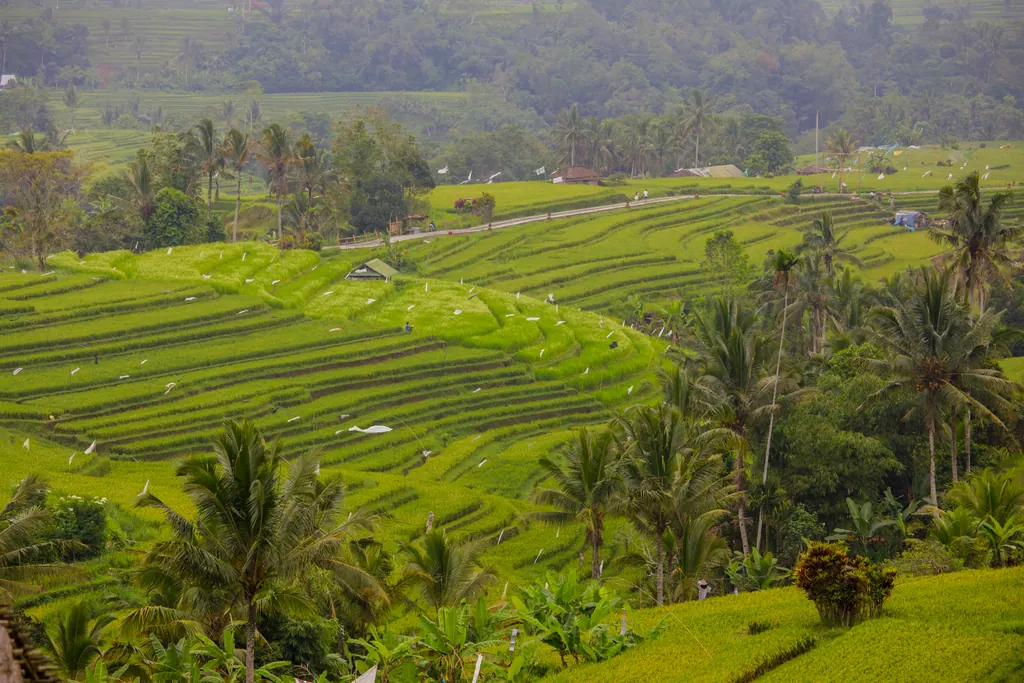
Jatiluwih, in Tabanan in west central Bali, is bigger, quieter and more rewarding for walkers. It lies within the Catur Angga Batukaru area, one of the five components of the UNESCO World Heritage site Cultural Landscape of Bali Province, inscribed in 2012. The listing protects the subak, the cooperative irrigation system that shares water between farmers through a network of canals and water temples. Marked walking routes run through the paddies, and an hour or two on foot gives a far better sense of the landscape than a photo stop. Entry was around 75,000 rupiah (about $5) for foreign adults in 2026, though prices change often, so bring cash.
The terraces look different through the year. Fields are flooded after planting, bright green as the rice grows and golden before harvest, and the cycle does not follow a single calendar across the island.
How hard is the Mount Batur sunrise hike?
Mount Batur is an active volcano in the Kintamani highlands, its summit at about 1,717 meters (5,633 feet). The sunrise trek is the most popular hike in Bali. Most groups start between 2 and 4 a.m., climb for roughly two hours on loose volcanic gravel and reach the top as the sun rises behind Mount Agung and Mount Rinjani on neighboring Lombok.
It is a real climb but not a technical one, and reasonably fit travelers manage it fine. Bring a headlamp, proper shoes and a warm layer, since it is cold at the summit before dawn. Hikers go with a local guide arranged through the village guide association at the trailhead, and in 2026 the guide fee was commonly quoted at around 300,000-600,000 rupiah (about $18-36) per group, plus a permit. Many travelers book a package from Ubud that includes the pickup, guide and breakfast.
Batur is active, and the authorities can close the mountain or set exclusion zones at short notice. The UK Foreign Office advises respecting exclusion zones and following local instructions, so check the status before you book.
Which waterfalls are worth the trip?
Bali's waterfalls make good half-day trips from Ubud or the north.
- Tegenungan, south of Ubud, is the easiest to reach and the busiest.
- Tibumana and Kanto Lampo, east of Ubud, are smaller and greener, with short walks down to the pools.
- Sekumpul, in the north near Singaraja, is often called the most impressive on the island, a group of tall falls in a deep valley. It requires a steep walk with many steps and is best visited with a local guide.
Waterfalls are at their most powerful in the rainy season, but trails get slippery and flash floods can make swimming dangerous after heavy rain. Ask locally before getting in the water.
When is the best time for beaches and hiking?
Bali has two seasons. The dry season, roughly April to October, brings sunnier days, lower humidity and the best conditions for hiking, diving and the west coast surf breaks. It is also the busiest time, with July and August the peak, along with the Christmas and New Year holidays.
The wet season, roughly November to March, brings heavy, often short downpours, high humidity and murkier water on some coasts, along with more plastic washing up on the west coast beaches. It is greener, cheaper and quieter, and the east coast surf around Sanur and Keramas tends to work better in these months.
Also plan around Nyepi, the Balinese Day of Silence. For 24 hours the whole island shuts down: no lights, no traffic, and the airport closes for the entire day. In 2026, Nyepi fell on March 19. Hotels stay open, but guests must stay on the property.
How safe is swimming in Bali?
The ocean is Bali's biggest everyday risk for visitors. The west and south coasts face the open Indian Ocean, and strong rip currents form on popular beaches such as Kuta, Seminyak and Canggu, as well as some of the Bukit coves. Australia's Smartraveller has warned of drownings at Bali beaches and notes that many beaches are unpatrolled.
- Swim only where lifeguards are present, and between the flags where they are set out. A red flag means do not swim.
- If a current pulls you out, do not swim against it. Float, signal for help, and swim parallel to the beach to escape it.
- Watch the reef. Many Bukit beaches have shallow, sharp coral at low tide, and reef cuts get infected easily in the tropics.
- Use a life jacket on boat trips, especially the fast boats to the Nusa islands. The UK Foreign Office warns that sea conditions can change rapidly.
For more on staying safe abroad, see our safety section and the rest of our Indonesia coverage.
What do you need to know before you arrive?
The tourist levy. Since February 14, 2024, every international visitor to Bali pays a one-time tourist levy of 150,000 rupiah (about $9) per trip, on top of any visa fee. The money is used for protecting Bali's nature and culture, according to the provincial government. The easiest way to pay is in advance on the official Love Bali website, which emails a voucher with a QR code. There is also a payment counter at the airport.
Bali belly. Traveler's diarrhea is common enough to have its own nickname. Do not drink tap water, be cautious with ice outside established restaurants, and wash or sanitize your hands before meals. A basic kit with oral rehydration salts is worth packing. Our health and vaccinations section covers general travel health.
Plastic. Bali has banned single-use plastic bags, straws and polystyrene since 2019, and in 2025 the provincial government also banned the production and distribution of single-use plastic water bottles under 1 liter. Bring a refillable bottle. Many hotels, cafés and dive centers have refill stations.
Methanol. Both the UK Foreign Office and Smartraveller warn about methanol poisoning from contaminated alcoholic drinks in tourist areas, including drinks bought in licensed bars. Stick to sealed bottles and known brands, and avoid cheap spirits and cocktails of uncertain origin.
Getting around. The UK Foreign Office reports a large increase in moped and motorbike accidents in Bali, some fatal. Many visitors find a car with a driver for a day of sightseeing a sensible alternative to renting a scooter.
So where should you stay?
For a first trip of ten days or so, many travelers split their time between two bases: one on the coast and one inland. A few combinations that work well:
| Traveler | Coast | Inland or second base |
|---|---|---|
| Families with young children | Sanur or Nusa Dua | Ubud |
| First-time surfers | Kuta or Canggu | Ubud |
| Experienced surfers | Uluwatu and the Bukit | Canggu |
| Snorkelers and divers | Amed or Tulamben | Pemuteran for Menjangan |
| Hikers and walkers | Sanur | Ubud, with a night near Kintamani or Jatiluwih |
Give the drives honest time. Ubud to Amed or Pemuteran is a journey of several hours, so it is better to move bases than to attempt long day trips. And if Bali's mix of volcanoes, terraces and reefs appeals, it is worth comparing with the Philippines' volcanoes and rice terraces and beaches and nature in the Philippines. More beach trips are collected under beach holidays.
Frequently asked questions
How much is the Bali tourist levy and how do I pay it?
International visitors pay a one-time levy of 150,000 rupiah (about $9) per trip, a rule in place since February 2024. You can pay in advance on the official Love Bali website, which emails a QR voucher, or at a counter at the airport.
Which Bali beach is best for families with small children?
Sanur and Nusa Dua have reef-protected water that stays calm most of the year, which makes them the easiest choices for young swimmers. Check the tide, since low tide can leave the water very shallow.
Can beginners surf in Bali?
Yes. Kuta and Batu Bolong in Canggu have gentle beach breaks and many surf schools. The famous Bukit breaks such as Uluwatu and Padang Padang break over shallow reef and are for experienced surfers only.
Is Tegallalang or Jatiluwih better for seeing rice terraces?
Tegallalang is closer to Ubud and very photogenic but busy and commercial. Jatiluwih, part of a UNESCO World Heritage site, is larger and quieter, with walking routes through the paddies, but it is a longer drive.
Do I need a guide to climb Mount Batur?
In practice, yes. Sunrise hikes are run with local guides arranged through the village guide association at the trailhead or included in a tour package, and the mountain can close at short notice when volcanic activity increases.