Around 70 percent of South Korea is mountains. That number surprises many first-time visitors, who arrive in Seoul, see a skyline of apartment towers and assume the country is one long city. Then they notice the hikers on the subway at 7 a.m. on a Saturday, in matching jackets with poles strapped to their backpacks, heading for granite peaks that start where the metro line ends.
Korea's outdoors is unusually easy to reach: a volcanic island is an hour's flight from Seoul, national parks sit at the end of bus routes, and almost every mountain trail passes a temple. Below are the places worth building a trip around, what they cost, how the seasons change them and the unwritten rules Korean hikers follow. Prices are 2026 figures, converted at around 1,350 won to the dollar.
Why does everyone go to Jeju?
Jeju is a volcanic island off the south coast, about 73 kilometers across, and the country's favorite holiday destination. In 2007 UNESCO listed three of its sites as a World Heritage Site, Jeju Volcanic Island and Lava Tubes: Hallasan, the tuff cone of Seongsan Ilchulbong and the Geomunoreum lava tube system. Together they tell the story of how the island was built.
Hallasan is South Korea's highest mountain at 1,947 meters, a broad, gentle volcano with a crater lake, Baengnokdam, at the top. Two trails reach the summit: Seongpanak (9.6 km one way, long but gradual) and Gwaneumsa (8.7 km, steeper and more scenic). Entry to the park is free, but since 2021 the summit sections need a free online reservation through the Hallasan National Park website, limited to 1,000 hikers a day on Seongpanak and 500 on Gwaneumsa. Since 2025 you can walk the lower parts of both trails without booking. Each route has a checkpoint partway up with a cutoff time, late morning to early afternoon depending on the season, and rangers turn back anyone who arrives late. Plan on 8-9 hours round trip. The shorter Eorimok and Yeongsil trails, which do not need a reservation, climb to the plateau below the summit and are many people's favorite half day on the island.
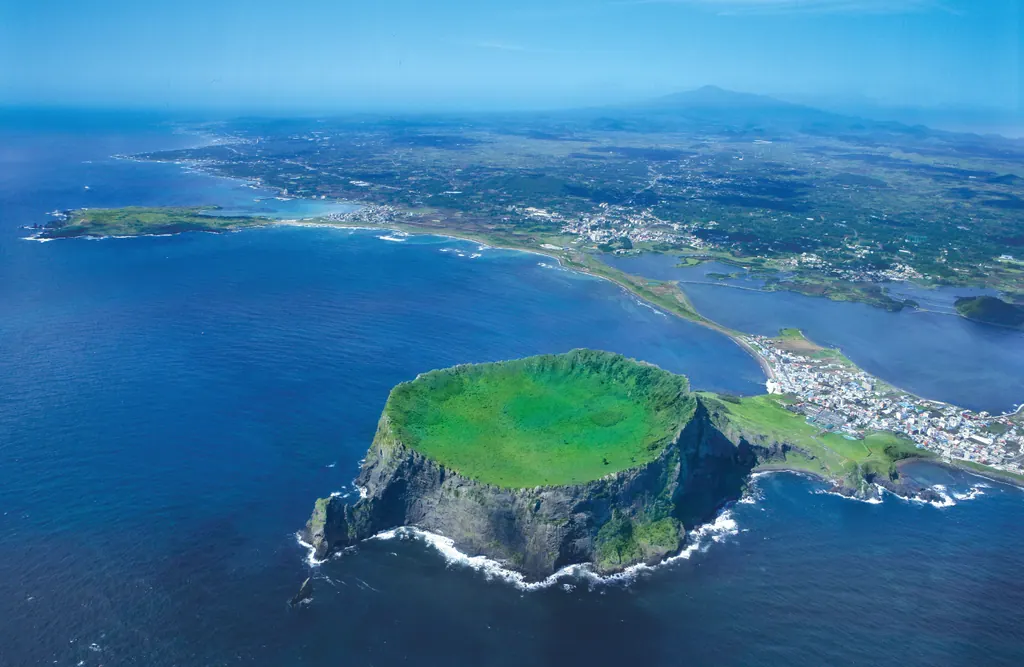
Seongsan Ilchulbong, "Sunrise Peak," is a 182-meter crater that rose from the sea around 5,000 years ago. The stairs to the rim take 20-30 minutes, and the view down into the grassy bowl is one of Korea's best-known images. Entry was around 5,000 won (about $4) in 2026, and the site closes on the first Monday of each month. Come early; by mid-morning the tour buses have arrived.
Manjanggul is a lava tube more than 7 kilometers long, of which about 1 kilometer is open to visitors. It closed for safety work after a rockfall in late 2023 and reopened in May 2026. Expect a cool, damp walk ending at a lava column more than 7 meters tall. Entry is a few thousand won.
The Olle trails
Jeju Olle is a network of walking routes that loops the whole coast: 21 numbered main routes plus several side routes, around 437 kilometers in total. Each takes most of a day, and you do not need to walk them all. Route 7 along the cliffs west of Seogwipo, past the sea stack of Oedolgae, and Route 10 around the foot of Sanbangsan are good single days.
Where are Jeju's best beaches for swimming and snorkeling?
Jeju's beaches are a mix of white shell sand and black volcanic rock, and the water is a clear, almost tropical turquoise on sunny days. It is not the tropics, though: the sea is warmest in August and September, and in May or October many swimmers want a wetsuit.
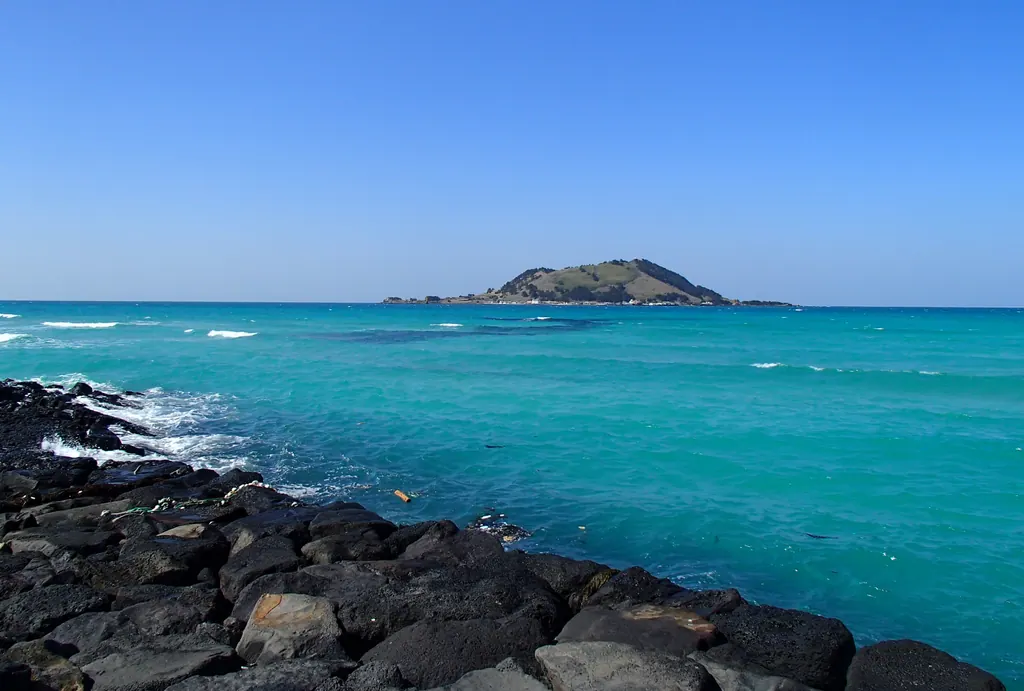
- Hyeopjae and Geumneung on the west coast are shallow, calm and bright, with the small island of Biyangdo on the horizon. They are the best choice with children.
- Hamdeok in the northeast is 30 minutes from Jeju City, with a sandy cove, rocky edges for snorkeling and an easy coastal path.
- Woljeongri and Gimnyeong further east have pale sand between lava rock. Woljeongri is known for its cafés and wind; Gimnyeong has sheltered pools among the rocks that are good for a snorkel on calm days.
- Jungmun Saekdal on the south coast catches the swell and is Jeju's best-known surf beach.
The snorkeling is about rock pools and coastal reef rather than coral gardens. Divers rate the waters off Seogwipo, around the islet of Munseom, much more highly: the walls there are covered in soft coral, and several dive shops in Seogwipo run boat dives. Official beaches have lifeguards in summer, roughly from late June or July to late August. Outside those dates, and at any time when the flag is red, swimming is at your own risk, and jellyfish warnings are posted in some years.
The haenyeo
Jeju's women divers, the haenyeo, have harvested shellfish, sea urchins and seaweed from the seabed for centuries, holding their breath without tanks. Many of them are now in their 60s and 70s. UNESCO added the culture of the Jeju haenyeo to its list of Intangible Cultural Heritage in 2016. At the cove below Seongsan Ilchulbong, haenyeo regularly show how they work, and the Haenyeo Museum in Gujwa explains the history. If you see divers in the water elsewhere, give them space: the areas they work are often off limits to swimmers and snorkelers.
Which national parks are worth the trip?
South Korea has 23 national parks, the newest being Palgongsan near Daegu, designated at the end of 2023. Entry to all of them is free. Three stand out for visitors.
Bukhansan sits on Seoul's northern edge and is one of the busiest parks in the country. Its highest peak, Baegundae, is 836 meters of bare granite with steel cables on the final section. The climb takes 4-5 hours round trip, and you can reach the trailheads by subway and bus.
Seoraksan, on the northeast coast near Sokcho, is Korea's most famous mountain park, with jagged granite ridges, waterfalls and the temple of Sinheungsa. Most visitors walk the valley floor and take the cable car up to the Gwongeumseong fortress ruins, around 15,000 won (about $11) round trip. The fitter option is Ulsanbawi, a wall of rock reached by a long stair climb, 3-4 hours round trip. The highest peak, Daecheongbong at 1,708 meters, is a long, hard day or an overnight with a shelter stay.
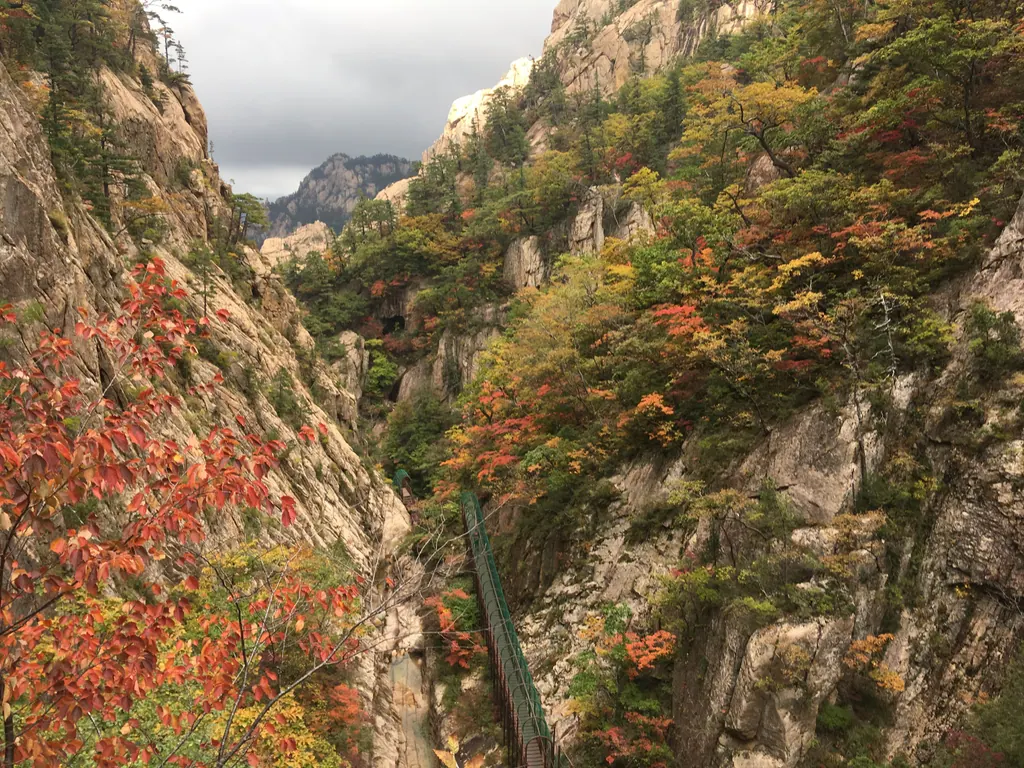
Jirisan became Korea's first national park in 1967 and is still the largest on land. Its highest peak, Cheonwangbong, reaches 1,915 meters, the highest on the mainland. Jirisan is the park for longer walks: the main ridge is often hiked over two or three days, with nights in mountain shelters that must be booked in advance through the Korea National Park Service.
Further south, Gyeongju pairs history with nature. The pine forests of Namsan, part of Gyeongju National Park and the UNESCO-listed Gyeongju Historic Areas, hide hundreds of Buddha figures carved into the rock, and an easy hike links several of them. Bomun Lake, on the east side of town, is lined with cherry trees.
Fitter hikers coming from bigger mountains may find these peaks modest; they are day hikes rather than Himalayan treks. What makes them special is the rock, the temples and how easy they are to reach.
What about Busan's beaches and the east coast?
Busan is Korea's second city and its beach capital. Haeundae is about 1.5 kilometers of sand backed by high-rises, packed with umbrellas in July and August. In 2026 its official swimming season ran from June 26 to September 15. Gwangalli, a short subway ride away, faces the lit-up Gwangan Bridge and hosts a free drone light show over the water every Saturday night, at 8 and 10 p.m. from March to September and at 7 and 9 p.m. from October to February, weather permitting. Songjeong is quieter and good for beginner surfers, and the coastal walks at Igidae and Taejongdae show the city's rocky side.
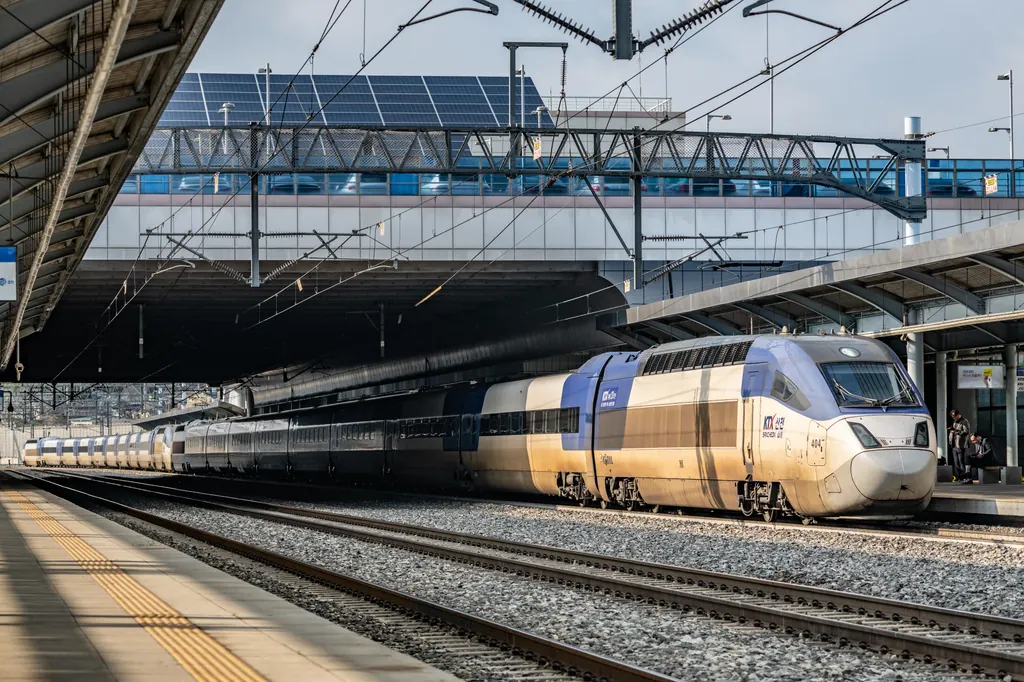
The east coast of Gangwon Province is where many Koreans go for summer holidays and winter sunrises. The KTX train runs from Seoul to Gangneung in about two hours. Gyeongpo is the main beach, with a long strip of pine forest behind it and a lagoon for cycling. South of town, Jeongdongjin is famous for sunrise over the sea. Inland, the Sogeumgang valley and the fir-lined path to Woljeongsa temple in Odaesan National Park make good half-day hikes. North of Gangneung, Yangyang has become Korea's main surf town.
Nami Island, a small, tree-lined island in the Bukhangang river about 60 kilometers northeast of Seoul, is a popular day trip made famous by the 2002 drama "Winter Sonata." The rows of ginkgo and metasequoia trees are at their best in late October and early November. A ticket including the short ferry ride cost roughly 16,000-19,000 won (about $12-14) in 2026, depending on where you buy it. Bikes, tandems and e-bikes are rented by the half hour on the island, and the riverside paths are flat. The ITX-Cheongchun train from Seoul to Gapyeong takes about an hour, then it is a short taxi or bus to the ferry wharf.
Hot springs and jjimjilbang
Korea's hot spring towns are quieter than Japan's, but they are a good way to end a hike. Onyang, south of Seoul on subway Line 1, is one of the oldest and was used by Joseon kings; Yuseong in Daejeon, Dongnae in Busan and Cheoksan near Seoraksan are others.
More common is the jjimjilbang, a 24-hour bathhouse with hot pools, saunas and a heated common room where families sleep on mats. Entry typically costs around 10,000-20,000 won (about $7-15), more at large complexes such as Spa Land in Busan's Centum City. The rules are simple: the baths are separated by gender and used without swimwear, you shower thoroughly before getting in, and long hair is tied up. In the shared areas everyone wears the T-shirt and shorts you are given at the counter.
Can you see nature at the DMZ?
The Demilitarized Zone between North and South Korea has been almost untouched since 1953, and wildlife has moved in. The best-known residents are cranes. Every winter, from around November to February, the farmland of the Cheorwon basin just south of the DMZ hosts more than 1,000 red-crowned cranes and several thousand white-naped cranes, a large share of the world population of both species, according to the East Asian-Australasian Flyway Partnership.
The Civilian Control Zone just south of the border is open only on organized tours or official programs, including guided walks on the DMZ Peace Trail, which must be booked in advance and require your passport. Stay on marked paths: there are still mines in the area.
When is the best season for the outdoors?
- Spring (late March to May): Cherry blossoms reach Jeju first, usually in late March, followed by Jinhae near Busan in early April and Seoul in early to mid April. Yellow dust and fine dust can haze the views on some days.
- Summer (June to August): The monsoon, called jangma, usually brings heavy rain from late June to late July. After that comes beach season, with hot, humid weather. Typhoons can hit Jeju and the south coast from August to September.
- Autumn (September to November): Most Koreans' favorite season. The leaves turn first on Seoraksan, usually by early to mid October, and reach Seoul in late October and early November. Expect crowds on the famous trails.
- Winter (December to February): Cold and dry, with snow on Hallasan and Seoraksan. Bring crampons.
Another thing to check is fire season. Each spring, roughly from mid-February to mid-May, and in autumn from mid-November to mid-December, the Korea National Park Service closes some trails to prevent wildfires. In spring 2026 it restricted 148 sections across 19 parks. Check the park's website before you set off.
How do Korean hikers do it?
A few habits will help you fit in on Korean trails:
- Start early. Trails are often busy by 8 a.m., and many high routes have afternoon cutoffs, after which you will not be allowed to start.
- Greet people. A quick "annyeonghaseyo" to other hikers is normal, especially on quieter trails.
- Keep alcohol off the mountain. Since 2018, drinking has been banned at designated places in national parks, including summits, shelters and many trails. Fines are 50,000 won (about $37) for a first offense and 100,000 won (about $74) after that.
- No cooking, campfires or wild camping. Cooking and camping are only allowed at designated sites and shelters, and smoking is banned in the parks.
- Stay on marked trails. Off-trail areas are often closed for conservation, and rangers fine people who stray.
Trail signs usually include English, and the parks are well marked and safe to hike alone. Carry more water than you think in summer, and take trash home, since bins are rare.
A good first trip
With a week, combine Seoul with Bukhansan for a day, then fly to Jeju for three or four days: Hallasan on one day, the east with Seongsan Ilchulbong and Manjanggul on another, and one or two days of beaches and an Olle route. With more time, add Busan and its coastal walks, or take the train to Gangneung and on to Seoraksan for the east coast's mountains and sea. More ideas are in our South Korea guides and active holidays, and if you want warmer water, compare with the Philippines' islands and reefs.
Frequently asked questions
Do you need a reservation to hike Hallasan on Jeju?
Only for the summit. The Seongpanak and Gwaneumsa trails to the crater rim need a free online reservation through the Hallasan National Park website, with 1,000 places a day on Seongpanak and 500 on Gwaneumsa. Shorter trails such as Eorimok and Yeongsil need no booking.
Do Korean national parks charge an entrance fee?
No. Entry to South Korea's 23 national parks is free. You pay only for extras such as cable cars, parking, shelters and campsites.
When can you swim at Korean beaches?
Official beaches have lifeguards from around late June or July to late August. In 2026 Busan's Haeundae ran from June 26 to September 15, and Gwangalli from July 1 to August 31. The sea is warmest in August and September.
Is Jeju good for snorkeling?
It is decent rather than world class. Rocky coves such as Gimnyeong and Hamdeok are fine for a snorkel on calm summer days, while divers head to the soft coral walls around Munseom off Seogwipo.
When do the autumn leaves turn in South Korea?
Seoraksan usually turns first, by early to mid October, and the color moves south and to lower ground through the month, reaching Seoul in late October and early November.
- UNESCO World Heritage: Jeju Volcanic Island and Lava Tubes
- UNESCO Intangible Cultural Heritage: Culture of Jeju Haenyeo (women divers)
- Hallasan National Park (Jeju Special Self-Governing Province)
- Jeju Olle Foundation
- Busan Metropolitan City: Busan Assesses Tourism Readiness and Safety Ahead of Beach Opening (2026)
- The Korea Times: New laws punish mountain-top drunkards (2018)
- Korea National Park Service
- East Asian-Australasian Flyway Partnership: Year of the Cranes, Cheorwon